
KOVEA Core Lite 1.5 Review: A Lightweight Solo Tent With More Room Than Most UL Shelters
KOVEA Core Lite 1.5 Review: A lighter backpack feels great until your ultralight tent leaves you cramped, short on storage, or wrestling with a complicated pitch at sunset. With a 1.38 kg minimum weight, a double-wall design, two vestibules, and a 210 cm sleeping area, this Korean solo tent aims to offer a more comfortable balance.
I’m K-papa, a Korea-based creator who enjoys introducing useful Korean products to readers around the world.
This is a research-based review built from KOVEA’s official specifications and four Korean user reports. K-papa did not personally use or photograph this tent.

Why the KOVEA Core Lite 1.5 Review Points to a Practical Solo Tent
KOVEA officially lists the Core Lite 1.5 as a one-person, self-supporting lightweight tent. Its external pole system allows the fly and inner tent to remain connected during setup, which should be useful when pitching in unsettled weather.
The complete package weighs 1.7 kg, while the minimum configuration drops to 1.38 kg when the groundsheet, storage case, guy lines, and eight of the ten included stakes are removed. One Korean owner independently measured 1.37 kg after taking out the groundsheet and stakes, closely matching KOVEA’s published figure.
This is not a sub-1 kg shelter for aggressive ultralight hikers. It is better understood as a practical middle ground: light enough for regular backpacking, but built with a roomier interior and a more protective double-wall structure.
The 210 cm sleeping area makes a real difference
The inner tent measures 210 × 100 × 100 cm. One reviewer, approximately 170 cm tall, reported that the 210 cm floor length kept both the sleeping mat and feet away from the tent walls. The same owner also had usable space beside a wide air mat.
A second owner described the interior as spacious for a 1.5-person model, although the official capacity remains one person. Two adults would not be a realistic fit.
The tent has doors and vestibules on both sides. That gives a solo camper two ways to enter, improves the sense of openness, and provides separate areas for shoes or compact gear. One reviewer felt the vestibule was large enough for cooking, but using a stove inside or close to a tent carries serious fire and carbon-monoxide risks. Outdoor cooking away from the fabric is the safer choice.


The weight looks good, but the packed volume is less impressive
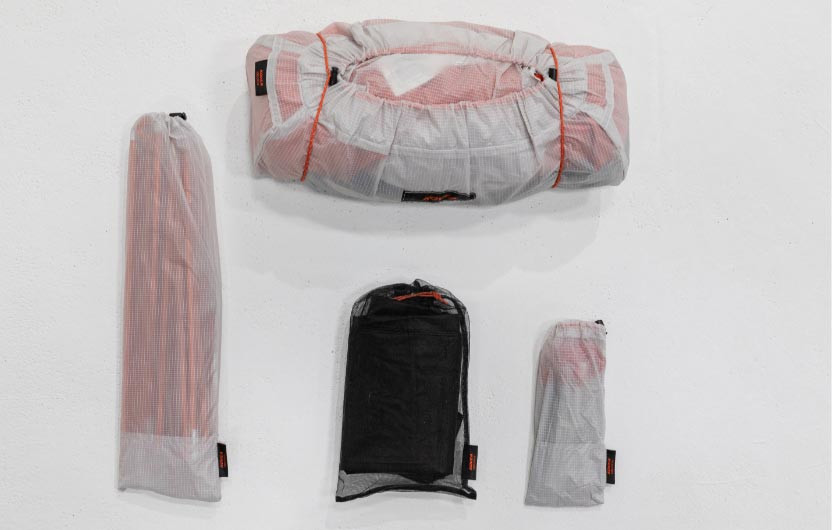
The supplied carrying bag does not have a compression system. One owner found the packed tent bulky enough to attach outside a small backpack and later purchased a separate compression sack.
That distinction matters. A 1.38 kg minimum weight sounds competitive, but weight and packed volume affect a backpack differently. Hikers using low-capacity packs should check whether the original package fits their packing system.
The included groundsheet also weighs about 200 g according to one user report. KOVEA gives the inner floor a 40D nylon ripstop construction with a 3,000 mm waterproof rating, so weight-conscious campers may decide to leave the groundsheet behind on clean, non-abrasive terrain. Doing so increases the risk of floor damage, especially on gravel or rough platforms.
| What Korean Users Appreciated | What Could Become a Dealbreaker |
|---|---|
| Minimum weight close to KOVEA’s claimed 1.38 kg | Full 1.7 kg package is not truly ultralight |
| 210 cm inner length and useful solo width | Too narrow for two sleepers |
| Two doors and two vestibule areas | Original storage bag lacks compression |
| Fast external-pole setup | Foot area may still need staking for full length |
| Tougher 40D floor fabric | Mostly mesh inner exposes insects to view |
| Bright gray-and-orange appearance | Thin 15D fly requires careful handling |
Is it freestanding or semi-freestanding?
KOVEA describes the Core Lite 1.5 as self-supporting. Its main pole structure can hold the tent upright, making initial positioning easier than with a trekking-pole shelter.
However, one Korean owner reported that the foot end contracted inward unless it was staked out, reducing the usable inner length. In practical English-language terminology, that behavior is closer to a semi-freestanding design.
The fairest description is that the main structure supports itself, but proper staking is still necessary to obtain the intended floor shape and interior length. Buyers who frequently camp on solid platforms should account for this and carry appropriate deck anchors.

The mesh inner is great for airflow, less so for bug-sensitive campers
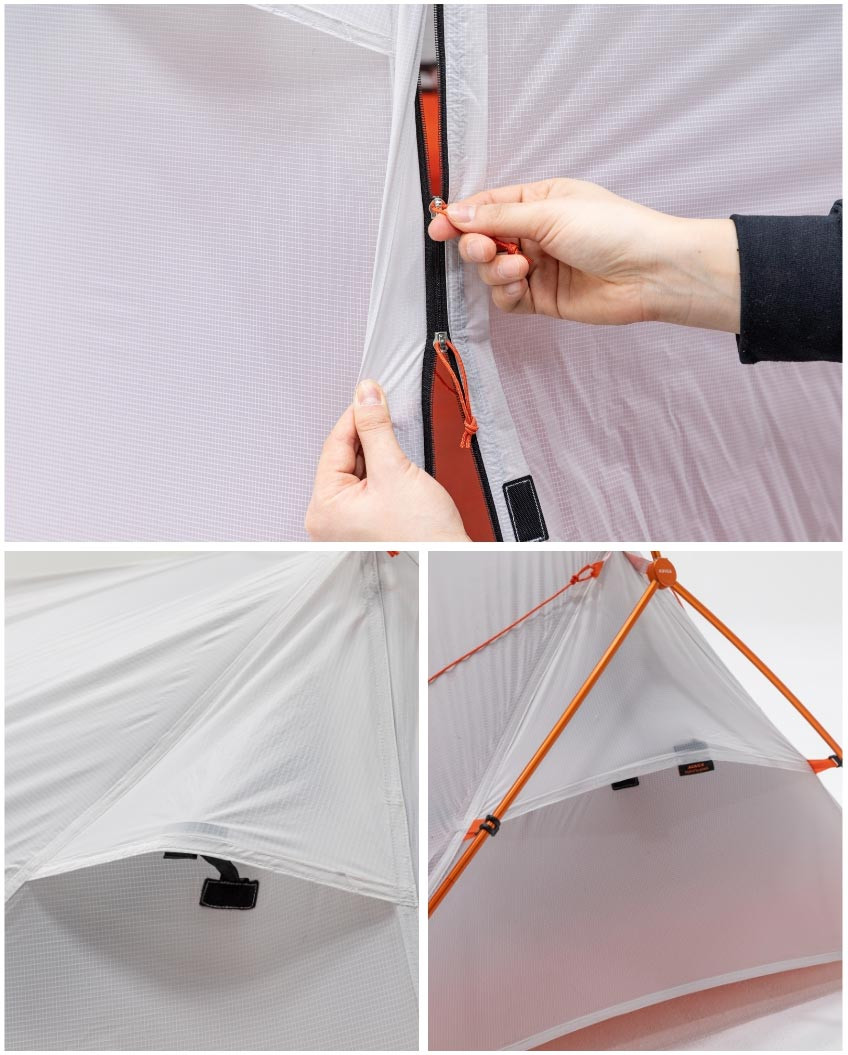
Most of the inner body is mesh. That should help air movement in warm three-season conditions, and the double-wall layout keeps the sleeping compartment separate from the fly.
Two Korean reviewers described the mesh as noticeably stiff. They interpreted it differently: one associated the firmness with a more robust feel, while another regarded it as less refined than mesh commonly found in dedicated backpacking tents.
One owner strongly disliked being able to see insects trapped between the mesh and the pale fly. This is partly a visual comfort issue rather than proof of a functional defect, but it could matter to campers who are particularly uncomfortable around bugs. A solid-inner tent would provide more privacy, warmth, and visual separation.
The same owner also received a tent with loose threads near the zipper and worried about long-term mesh damage. Another reviewer, by contrast, praised the sewing and seam-sealing quality and experienced no zipper snagging. These reports suggest possible unit-level variation rather than a problem demonstrated across every sample.
Materials favor durability over the lowest possible number on a scale
KOVEA uses a 15D nylon ripstop fly with silicone and PU coatings and a published 2,000 mm waterproof rating. The floor is more substantial 40D nylon ripstop rated to 3,000 mm. The poles are listed as 7001 aluminum with an 8.5 mm diameter.
The 40D floor helps explain why the Core Lite 1.5 is heavier than highly specialized solo shelters. It may also make the tent more forgiving for beginners who are not ready to manage extremely delicate fabrics.
The four supplied reviews did not provide meaningful evidence from sustained rain, strong wind, or long-term use. One owner specifically said the first trip had no rain, wind, or condensation. The waterproof ratings are official specifications, not confirmation of real-world storm performance.
Since photos and text have their limits, here is a review video to give you a real sense of the product’s actual size and feel.

The KOVEA Core Lite 1.5 balances a 1.38 kg minimum weight with a roomy solo interior, but its packed size and mesh inner deserve consideration.
Who should buy the KOVEA Core Lite 1.5?
The Core Lite 1.5 makes the most sense for solo campers who want to reduce pack weight without giving up a double wall, two entrances, useful vestibule space, or a 210 cm sleeping length. It also looks approachable for someone moving from car camping into backpacking.
It is less suitable for:
- Hikers targeting a complete shelter weight below 1 kg
- Couples hoping to share one tent
- Campers who need a compact package for a small backpack
- People who prefer a solid inner in cool weather or bug-heavy locations
- Buyers expecting proven storm performance from the available reports
- Campers who cannot reliably stake out the foot section
A trekking-pole shelter may suit hikers prioritizing minimum weight and volume. A solid-inner double-wall tent would be a better alternative for colder trips, greater privacy, or less visible insect activity.
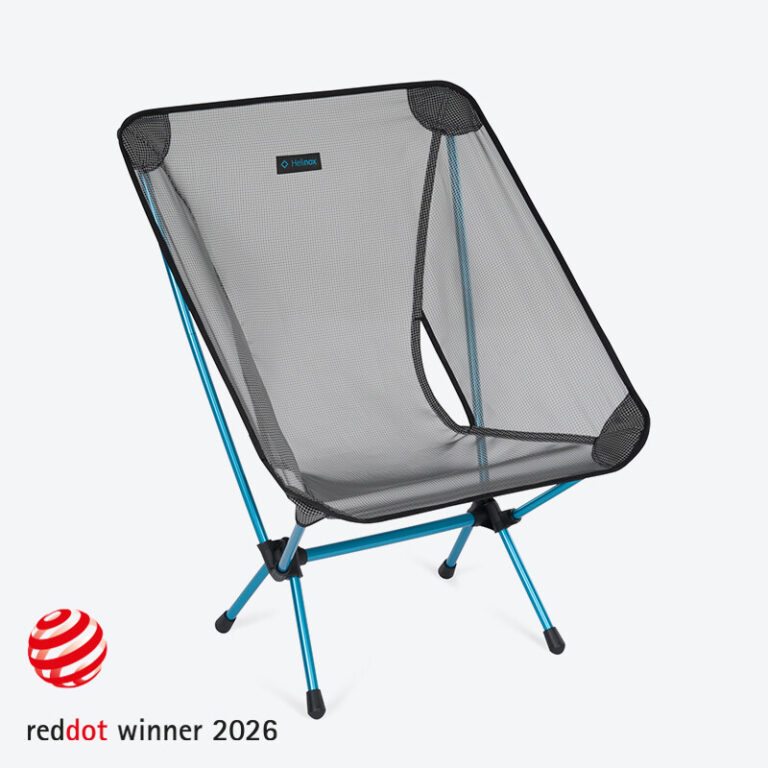
If you are building a comfort-focused solo camping setup rather than chasing the lowest possible pack weight, you may also want to read my Helinox Chair One (re) review to see whether its improved comfort and stability justify the extra weight.
The research-based verdict
The KOVEA Core Lite 1.5 is a sensible solo backpacking tent rather than an extreme ultralight shelter. Its strongest qualities are the long inner compartment, dual-door layout, external pole system, protective double wall, and durable floor.
The main compromises are a bulky non-compressing storage bag, a 1.7 kg complete weight, the need to stake the tent into its full shape, and an inner made almost entirely from stiff mesh. Quality impressions also differed between individual owners.
For a beginner or moderate-distance backpacker who values space and familiar tent construction, those compromises may be reasonable. Anyone counting every gram or regularly camping in cold, windy, or insect-heavy conditions should compare alternatives before purchasing.

Product images courtesy of KOVEA : KOVEA Official Website
How I Researched This Review
This review compares KOVEA’s official product description and specification table with four Korean blog posts supplied for this article. The official material was used for dimensions, capacity, fabrics, waterproof ratings, pole material, included components, and published weight.
The Korean reports were used to assess setup, packed volume, interior space, mesh feel, workmanship, and the difference between the advertised self-supporting structure and the need to stake out the foot section. Conflicting quality reports were kept separate because they came from different individual tents.
KOVEA Core Lite 1.5 FAQ
How much does the KOVEA Core Lite 1.5 weigh?
KOVEA lists a minimum weight of 1.38 kg and a complete weight of 1.7 kg. The lighter figure excludes the groundsheet, case, guy lines, and most of the supplied stakes. One Korean owner measured 1.37 kg after removing the groundsheet and stakes.
Is the KOVEA Core Lite 1.5 fully freestanding?
The main pole structure supports the tent, but one owner reported that the foot end needed staking to maintain the full inner length. It is safest to treat it as a semi-freestanding shelter that must be properly staked for its intended shape.
Can two people sleep in the Core Lite 1.5?
No, it is officially a one-person tent. The 100 cm inner width offers comfortable room for one sleeping mat and some personal items, but it is too narrow for two adults to sleep normally.
Is it suitable for tall campers?
The 210 cm inner length is more accommodating than many compact solo tents, but suitability depends on sleeping position, mat thickness, and body height. Taller buyers should remember that the full length may depend on correctly staking the foot section.
Can the KOVEA Core Lite 1.5 handle rain?
The fly has an official 2,000 mm waterproof rating, while the floor is rated to 3,000 mm. Those specifications suggest three-season rain protection, but the supplied Korean reports did not include a thorough test in prolonged or heavy rain.
Does it come with a groundsheet?
Yes. KOVEA includes a groundsheet, ten aluminum stakes, four guy lines, the pole set, inner tent, fly, and storage case. One owner reported that the groundsheet weighed approximately 200 g.
Is the tent good for backpacking beginners?
Yes, particularly for beginners who prefer a conventional double-wall tent and a relatively straightforward external-pole pitch. Its main drawbacks for new backpackers are the bulky packed size and the need to understand how the foot section should be staked.
Is the KOVEA Core Lite 1.5 available outside Korea?
International availability was not confirmed in the supplied material. Buyers outside Korea should check current sellers, shipping policies, import charges, and whether after-sales support is available in their country.