LocknLock All-New Food Waste Cooler 5L Review: Who Is It Really For?
LocknLock All-New Food Waste Cooler 5L Review: This research-based guide examines whether refrigerated storage can control food-waste odors and fruit flies more effectively than an ordinary kitchen bin.
If food scraps sit in your kitchen for several days before collection, sealing them inside an ordinary bin may not be enough. Warm temperatures continue to accelerate decomposition, leaving you with stronger odors and a greater chance of fruit flies.
The LocknLock All-New Food Waste Cooler 5L takes a different approach: it keeps scraps cold until disposal day. It does not grind, dry, or reduce waste. Instead, its job is to slow spoilage and make short-term storage more manageable.
I’m K-papa, a Korea-based creator introducing useful Korean products to international readers. This research-based review compares LocknLock’s official product information with six Korean user reviews, including feedback on both the current models and an older 3L version.
Quick buying decision: Is this the right solution for you?
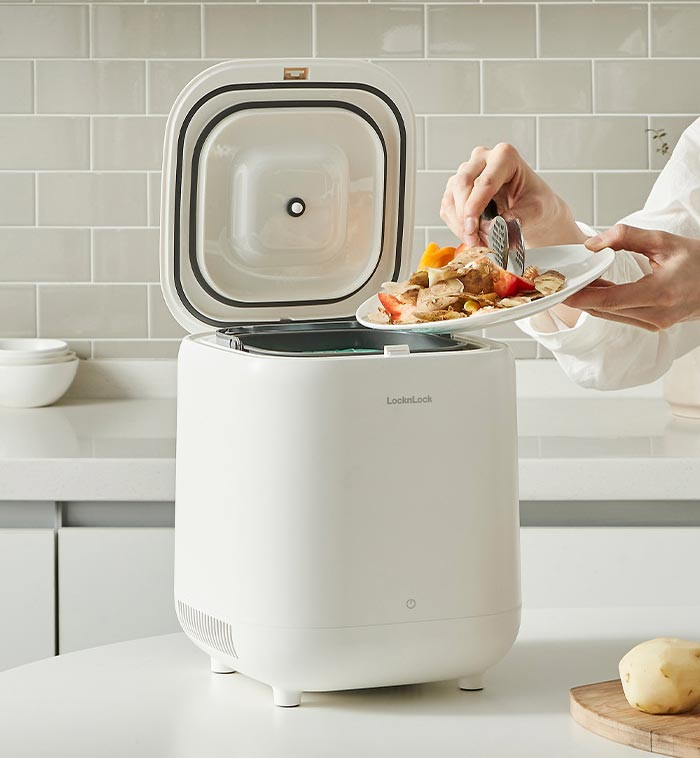
The LocknLock cooler makes the most sense for households that produce a moderate amount of food waste but cannot dispose of it every day. Its main appeal is straightforward operation: place a bag inside, add scraps, close the lid, and keep the unit powered.
It is particularly suitable for:
- Apartments with scheduled food-waste collection
- Couples and small families that cook regularly
- Kitchens where odors and fruit flies become a summer problem
- Buyers who find powered food-waste processors too large, expensive, or demanding to maintain
It is less convincing for people who want to reduce the volume of their waste, eliminate disposal trips, or keep another electrical appliance off the countertop. Noise sensitivity also matters, because the 5L model is not completely silent.
The short answer: this is a practical cold-storage appliance, not a food-waste disposal machine.
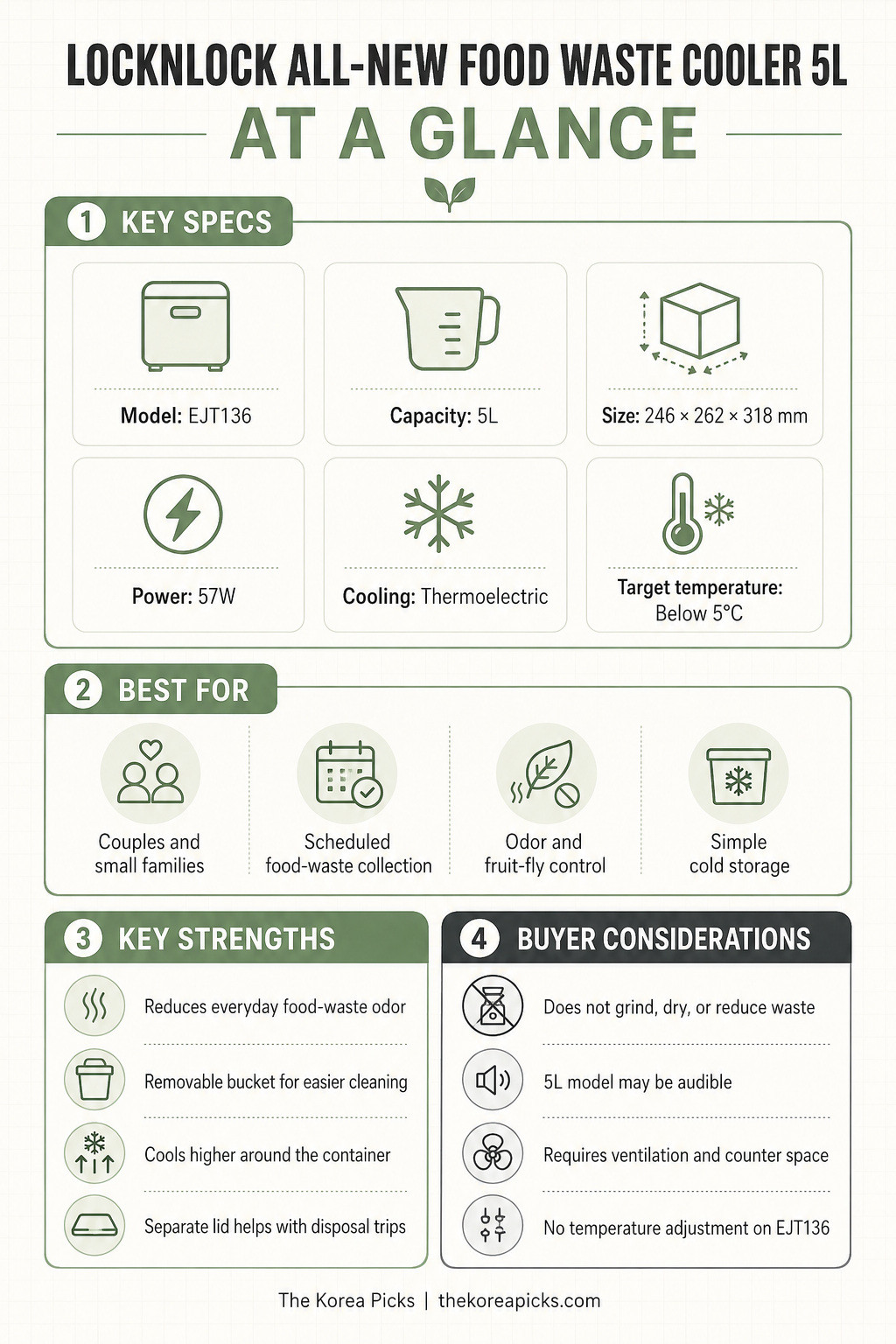
At a glance: the LocknLock Food Waste Cooler 5L’s key specifications, strengths, limitations, and ideal users.
LocknLock All-New Food Waste Cooler 5L Review: What It Actually Does
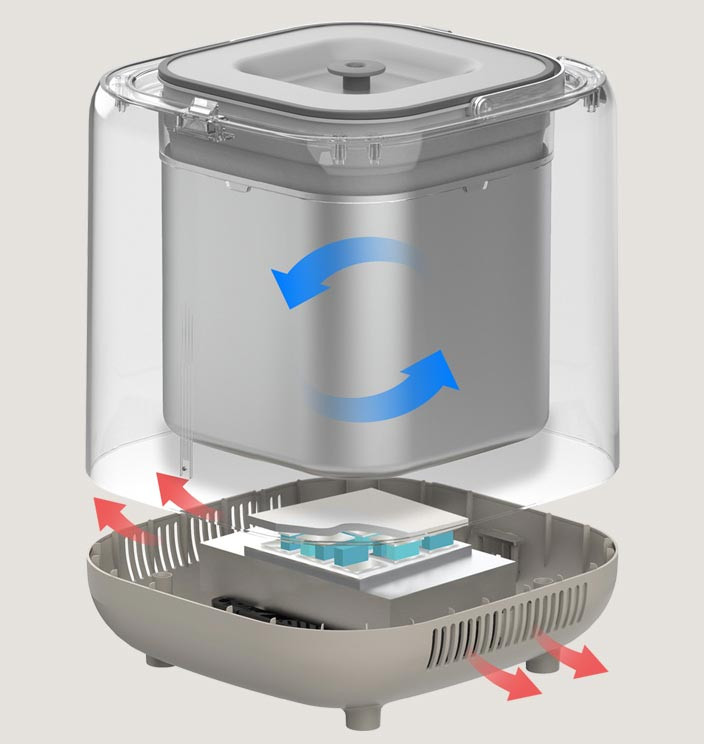
LocknLock’s official description says the unit uses thermoelectric semiconductor cooling to maintain an internal temperature below 5°C. The aluminum surface inside the body extends toward the upper section, helping cool more than just the bottom of the removable container.
That distinction is important. One reviewer who had previously owned an older LocknLock 3L model said its cooling performance weakened after more than a year. When that older unit was filled close to the top, the upper scraps reportedly developed mold and attracted fruit flies. The same reviewer found that the All-New 5L version cooled the upper contents more effectively.
This does not mean scraps can be stored indefinitely. Cooling slows decomposition; it does not sterilize waste or stop every odor-producing process. Strong-smelling scraps such as kimchi may still be noticeable when the lid is opened.
The product’s other practical features include:
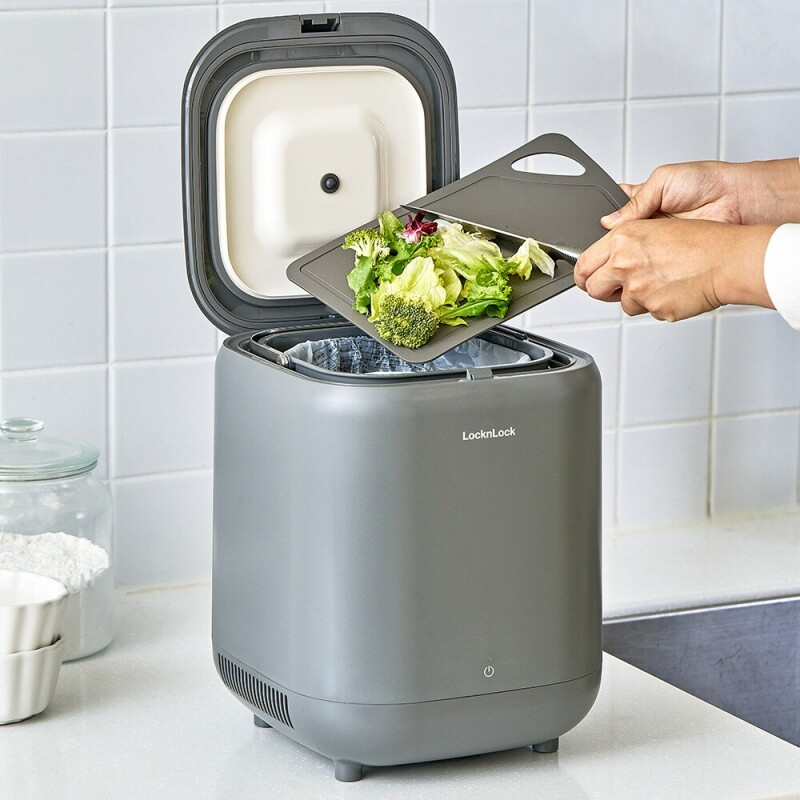
- A removable inner container with a carrying handle
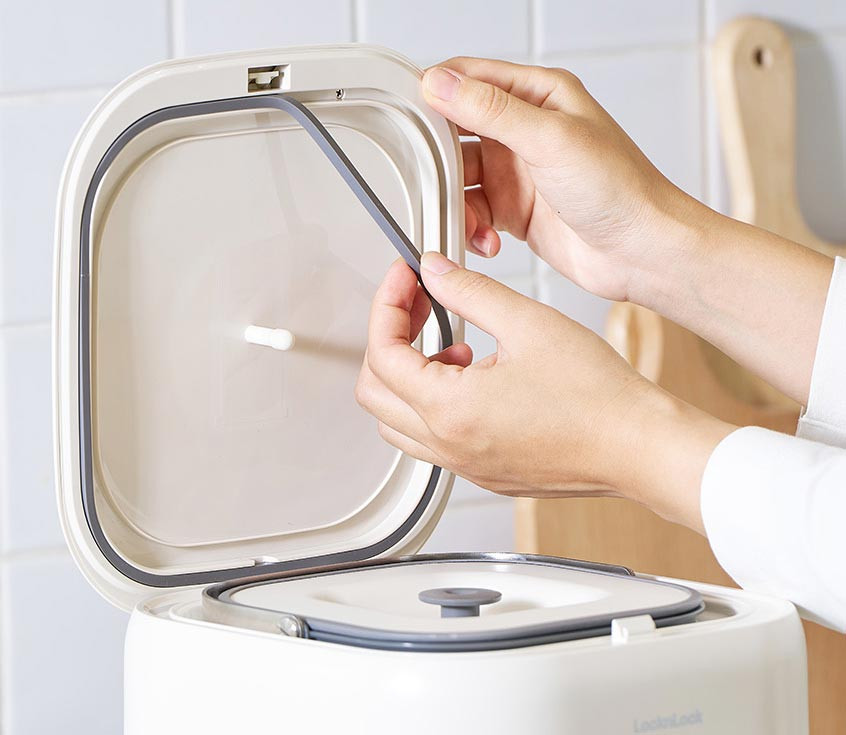
- A bag-retaining ring
- A detachable lid for the inner container
- A sealed main lid
- A touch-sensitive power control
- Non-slip feet
- Condensation-resistant construction
- Side and rear ventilation areas for heat released by the cooling system
The inner-container lid is especially useful when taking waste outside. It can be removed from its storage position inside the main lid and fitted to the bucket, helping conceal the contents and contain odors during the trip to the collection point.
Official specifications
The supplied official materials identify the reviewed unit as the 5L model EJT136.
| Specification | Official information |
|---|---|
| Product name | LocknLock All-New Food Waste Cooler 5L |
| Model | EJT136 |
| Capacity | 5L |
| Dimensions | 246 × 262 × 318 mm |
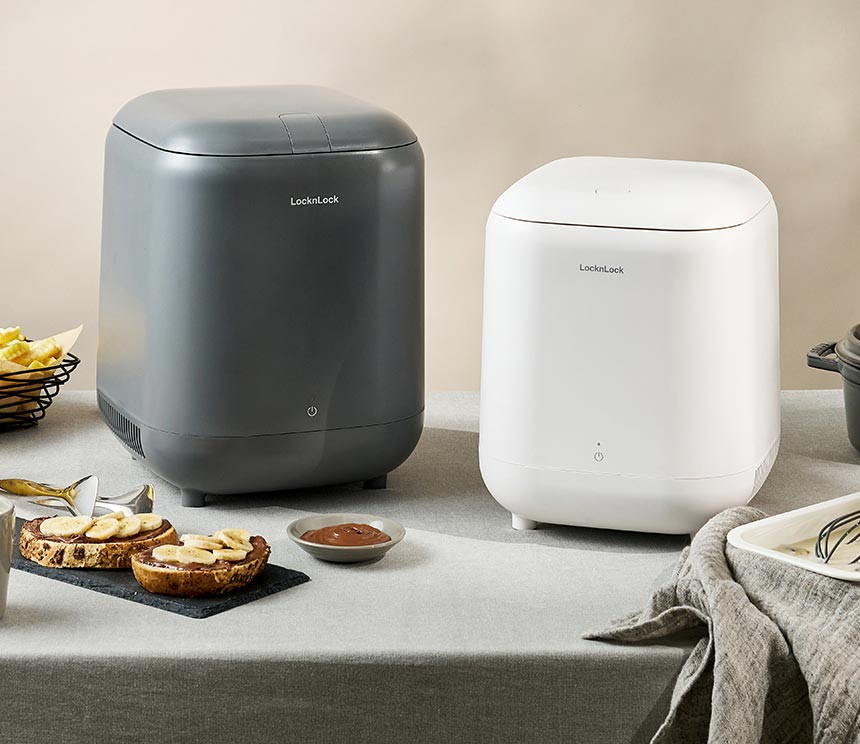
| Colors | White and gray |
| Cooling method | Thermoelectric semiconductor cooling |
| Target internal temperature | Below 5°C |
| Rated voltage | 220–240V, 60Hz |
| Power consumption | 57W |
| Main materials | ABS, stainless steel, silicone rubber and aluminum |
| Included structure | Main body, removable inner container, bag-retaining ring and inner-container lid |
| Temperature adjustment | Not available on EJT136 |
The official documentation provided for this review does not state the product’s weight. Buyers should also note the electrical specification: a product designed for 220–240V, 60Hz should not be connected overseas without first confirming local voltage, frequency, plug compatibility, and warranty conditions.
What Korean users repeatedly appreciated
Odor control was the clearest benefit
Odor reduction appeared consistently across the owner reports. Users of the current 3L model described keeping scraps for one or more days without the smell spreading through the kitchen. One reviewer reported storing waste for roughly a week and a half with little noticeable odor outside the unit, although that is longer than a cautious routine should normally require.
A six-month owner also reported satisfactory odor control through the Korean summer. Another long-term reviewer said the cooler had largely eliminated the smell that previously came from the sink area.
These accounts support a sensible conclusion: low-temperature storage and a closed lid can substantially reduce everyday food-waste odor. They do not prove that the appliance eliminates every smell under all conditions.
Fewer problems with fruit flies
Several reviewers connected the cooler with fewer fruit flies and other small insects around their food waste. That is credible in practical terms because the scraps are enclosed and kept colder than they would be in a conventional countertop bin.
Results still depend on operation and cleaning. A lid left open, a power interruption, liquid spilled around the rim, or an aging unit that no longer cools properly can change the outcome.
Cleaning is simpler than maintaining many processors
Owners repeatedly liked the removable bucket. Rather than cleaning the cooling chamber after every disposal, the inner container can be lifted out by its handle and washed separately.
LocknLock’s instructions say the aluminum interior of the main body must not be washed with running water. It should be wiped instead. The intake and exhaust vents also need to remain unobstructed and free of accumulated dust.
Everyday use in different households
One-person households
Although this review focuses on the official 5L materials, several supplied reviews cover the All-New 3L model. Those accounts suggest that 3L is usually the more proportionate choice for a person living alone.
One user placed 1L bags inside a 3L cooler without using the retaining ring, while another successfully used 2L bags. This shows that the nominal capacity does not necessarily force owners to wait until the entire container is full.
For a solo household producing only a small amount of waste, the 5L model may occupy more space and encourage longer storage than necessary. The smaller current model deserves consideration, provided buyers verify its exact model number and specifications.
Couples and families
The 5L unit becomes more appealing when cooking produces larger quantities of vegetable peelings, fruit scraps, leftovers, or fish and meat trimmings. Extra capacity reduces the chance that scraps will reach the lid before collection day.
The larger size does not remove the need for regular disposal. Refrigerated food waste is still waste, and emptying it before the bag becomes overloaded will make cleaning and handling easier.
Small kitchens and apartments
At 246 × 262 mm across the base, the 5L cooler is compact compared with many grinding or drying processors, but it still requires planning. It needs:
- A level, stable surface
- Access to an appropriate electrical outlet
- Clearance around the ventilation areas
- Protection from splashing water
- Enough room above the unit to open the lid
One studio-apartment owner placed a smaller model beside the sink but added a barrier to protect it from splashes. The same reviewer used a support beneath the appliance because the countertop was uneven. Those are personal solutions rather than manufacturer-supplied accessories, but they illustrate why installation deserves attention.
Since photos and text have their limits, here is a review video to give you a real sense of the product’s actual size and feel.
Drawbacks to understand before buying
The 5L model produces audible operating noise
Feedback on noise was mixed. Some reviewers of the 3L model considered it quiet or easy to ignore. The owner who directly compared an older 3L unit with the All-New 5L model, however, said the 5L was noticeably louder and could be heard from the living room.
Another 3L owner initially noticed some sound but reported that it disappeared after adjusting the unit’s placement. This suggests that both model and installation surface can affect the experience.
The important point is that thermoelectric cooling still requires heat management. Buyers expecting complete silence should be cautious, especially in a studio apartment where the kitchen and sleeping area share one space.
The power control can be switched off accidentally
One reviewer found the 3L model’s touch-sensitive power button too easy to trigger. The appliance remained off for half a day before the user noticed. Another owner reported a similar accidental press and learned to check that the indicator light was on.
This was not documented as a shared complaint about the 5L model, so it should not be generalized to every version. It is still worth checking the power indicator after wiping the appliance or working around it.
Condensation and warm exhaust air are normal possibilities
LocknLock’s guidance explains that condensation can develop on the body or lid depending on indoor temperature and humidity. Moisture should be wiped away with a dry cloth.
Warm air from the ventilation area is also expected because the unit must release heat removed from the chamber. Neither condition automatically indicates a defect. Restricted airflow, however, can reduce performance, so the cooler should not be pressed tightly against surrounding objects.
EJT136 does not have temperature adjustment
The supplied comparison review specifically distinguishes EJT136 from EJT336. EJT136, the 5L white-and-gray version documented in the official material, does not provide adjustable temperature control.
Buyers should check the model number rather than assuming that every LocknLock food-waste cooler offers identical controls, colors, or capacity.
Korean user feedback at a glance
| What Korean Users Appreciated | What Buyers Should Consider |
|---|---|
| Noticeably less odor in normal use | Strong-smelling scraps may still smell when opened |
| Fewer fruit-fly problems during warm weather | Cooling does not process or reduce the waste |
| Removable bucket is convenient to carry and wash | The electrical main body cannot be rinsed |
| Bag-retaining ring keeps suitable bags in place | Smaller bags may not fit the ring properly |
| Separate bucket lid helps during disposal trips | 5L lid operation requires more than a single press |
| Current design cools higher around the container | The 5L model may be audible in nearby rooms |
| Cleaner appearance than storing waste in a freezer | Counter space, ventilation and an outlet are required |
Food waste cooler vs. food waste processor
A food-waste cooler and a processor solve different parts of the problem.
The LocknLock stores scraps at a low temperature until you take them out. It leaves their volume essentially unchanged, so you still need an accepted bag, collection bin, or local disposal method.
A grinding, drying, or microbial processor may reduce the amount of waste or change its form. In return, these appliances are generally larger and involve additional cleaning, filters, consumables, longer processing cycles, or higher purchase costs, depending on the type.
If you would rather reduce food waste than simply keep it cold, read my Smartcara 400 Pro X Review: Ending Kitchen Sludge for Good. It explains how a drying-and-grinding processor differs from refrigerated storage in daily operation, maintenance, and the type of waste it produces.
Choose the cooler if your main complaints are odor, insects, and storing scraps between scheduled disposal days. Consider a processor if reducing volume and making fewer disposal trips matter more than simplicity.
A conventional sealed bin remains the least complex alternative for someone who can take waste outside every day. A dedicated freezer arrangement is another method used by some households, but several Korean reviewers chose this cooler because they did not want food waste stored alongside groceries.
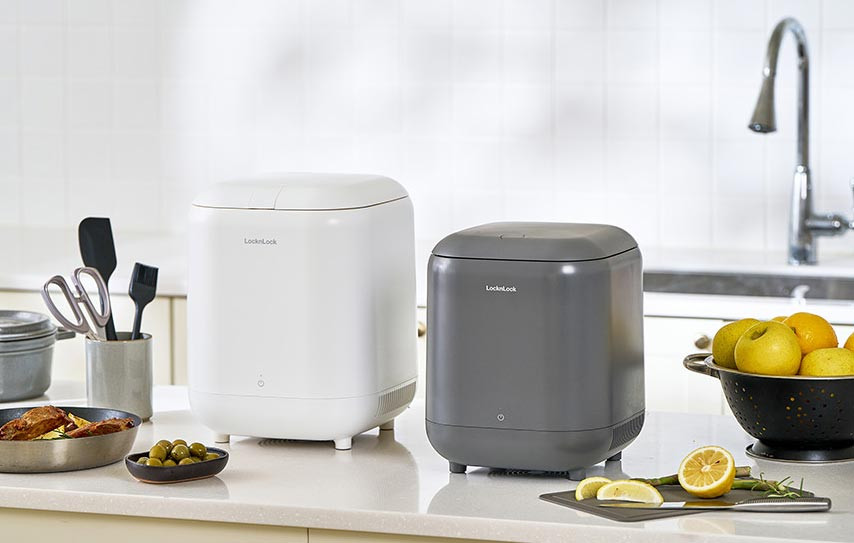
Product images courtesy of LocknLock : Brand Official Website
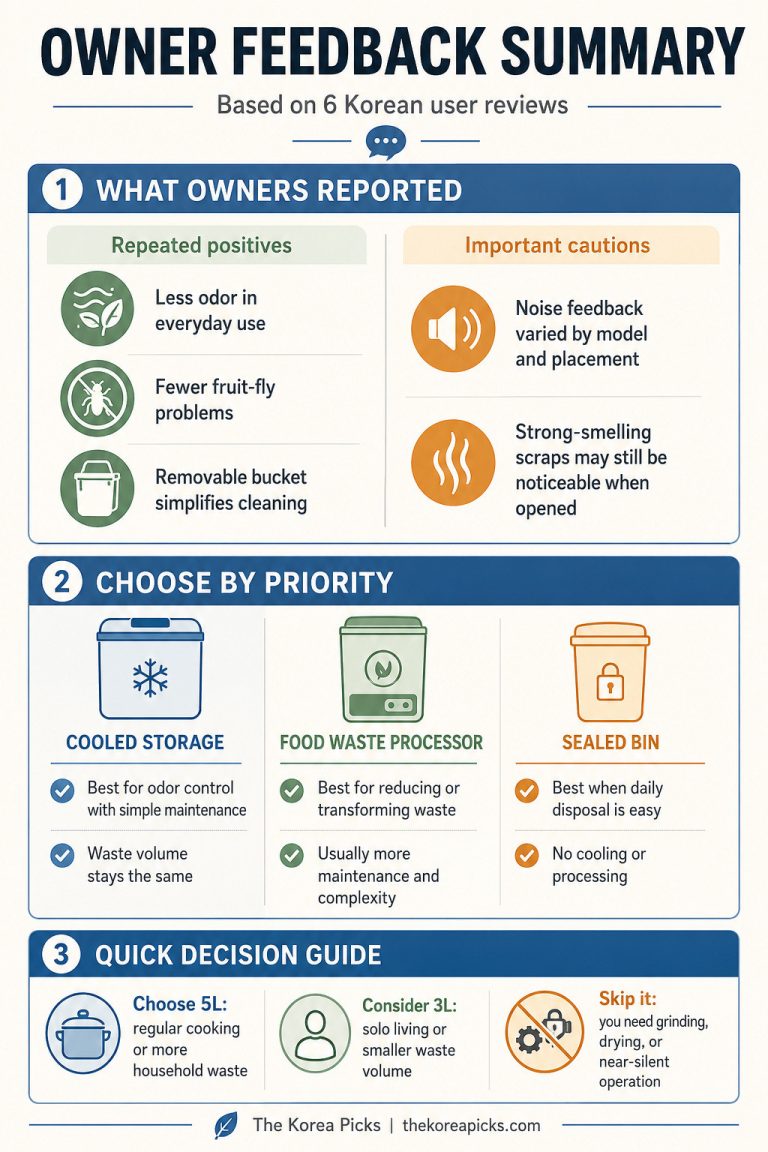
Based on six Korean user reviews, this summary compares owner feedback, food-waste solutions, and the best choice for different households.
Who should buy it—and who should skip it
Consider the LocknLock All-New Food Waste Cooler 5L if you:
- Regularly need to keep food scraps for a few days
- Cook enough that a 3L container may fill too quickly
- Struggle with odors or fruit flies during warm weather
- Want simpler maintenance than a processing appliance
- Have a stable, ventilated place near a compatible outlet
- Prefer keeping food waste separate from your household refrigerator or freezer
Consider another solution if you:
- Want an appliance that grinds, dries, or reduces waste
- Produce so little waste that daily disposal is easy
- Live in a very quiet studio and are sensitive to fan-like noise
- Do not have protected countertop or floor space
- Need adjustable temperature control
- Cannot confirm electrical compatibility, service, or replacement support in your country
The research-based verdict
The LocknLock All-New Food Waste Cooler 5L addresses a narrow but genuine household problem. It makes the waiting period before food-waste collection less unpleasant by combining cold storage, a closed container, and a removable bucket.
Its strongest case comes from the consistency of the Korean owner feedback. Odor control, fewer fruit-fly problems, and easy bucket cleaning appeared repeatedly across different periods of use. The current cooling structure also appears to address an important weakness reported with an older version: insufficient cooling toward the top of a full container.
The compromises are equally practical. It does not make the waste disappear, the 5L model can be audible, and it takes permanent space near an electrical outlet. EJT136 also lacks temperature adjustment.
For couples or small families that cook often and cannot discard scraps daily, the 5L model looks worthwhile. A solo resident should compare it with the current 3L version before committing to the larger capacity. Overseas buyers need one additional layer of caution: confirm the precise model, voltage requirements, plug type, warranty coverage, and local disposal rules before ordering.
How I Researched This Review
This article is based on LocknLock’s supplied official product description and documentation for the 5L EJT136 model, together with six Korean blog reviews.
The user reports covered the All-New 3L and 5L coolers, periods ranging from two months to roughly one year, and one direct comparison with an older 3L version. I treated comments about odor control and cleaning as stronger evidence where they appeared across multiple reviews. Model-specific complaints, including the 5L noise level and the 3L touch control, remain identified as narrower reports.
This is a research-based review rather than a hands-on test by K-papa.
Frequently Asked Questions
Does the LocknLock Food Waste Cooler process food waste?
No. It refrigerates food scraps until disposal but does not grind, dry, dehydrate, or reduce them. You must still remove the bag or container and dispose of the contents according to local rules.
Does the LocknLock Food Waste Cooler stop all odors?
It can substantially reduce odors, but it cannot guarantee complete odor elimination. Korean users commonly reported that smells no longer spread around the kitchen, although strongly scented scraps may still be noticeable when the lid is opened.
Is the 3L or 5L model better?
The 3L model is generally more suitable for one-person households and light cooking, while 5L provides more room for couples, families, or frequent meal preparation. Disposal frequency and available kitchen space matter as much as household size.
Is the 5L LocknLock Food Waste Cooler noisy?
The 5L model produces some operating sound. One owner comparing it with an older 3L unit could hear it from the living room. Other reports concerning the 3L version were more favorable, so buyers sensitive to noise should consider both the model and installation location.
Can the inner bucket be washed?
Yes. The removable bucket can be taken out and washed, but the electrical main body and aluminum cooling chamber should not be rinsed under running water. LocknLock instructs users to wipe the main unit and keep its ventilation openings clear.
Does model EJT136 have temperature control?
No. The provided comparison information identifies EJT136 as a model without adjustable temperature control. Because other LocknLock versions may differ, check the complete model number before purchasing.
Can the Korean model be used overseas?
Possibly, but compatibility must be verified first. The supplied documentation specifies 220–240V and 60Hz for EJT136. Confirm your country’s voltage, frequency, plug standard, warranty support, and any requirements for a suitable electrical converter before importing it.