Nanji Campground Seoul Guide: Urban Camping at Hangang Park and How Foreigners Can Book
Hello! I’m K-papa, a creator currently living in Korea. I run a blog that introduces useful Korean products and Korean culture to international readers. In this guide, I’ll introduce Nanji Campground Seoul, an urban campsite inside Hangang Park where travelers can camp without leaving the city.
Seoul has become a world-class travel destination. It is a vast city with countless attractions, but when most people picture Seoul, they tend to think of high-rise buildings, streets that stay brightly lit late into the night, shopping, and crowded neighborhoods. Yet within this enormous city, there is also a campground where you can pitch a tent, cook dinner, and spend the night.
That place is Nanji Campground, located inside Nanji Hangang Park in Mapo-gu.
What makes it special is that you can enjoy a day with a tent, camping chairs, and a barbecue without traveling far from central Seoul.
Nanji Campground allows Seoul residents to enjoy nature as part of their everyday lives. For first-time visitors to Korea, simply discovering that it is possible to go camping within Seoul may feel surprisingly refreshing.

Where Is Nanji Campground?
Nanji Campground is located inside Nanji Hangang Park at 28 Hangangnanji-ro, Mapo-gu, Seoul. It sits on the northern side of the Hangang River, close to the Sangam-dong area, where you will also find Seoul World Cup Stadium, Haneul Park, and Noeul Park.
Because it is called a “Hangang Park campground,” it is easy to assume that the river will be visible directly from every tent. However, the campsites are not arranged in a row immediately beside the water. Depending on your camping zone, nearby facilities, and the location of trees, you may not have a clear view of the river from inside the campground.
Instead, a short walk outside the campground leads to the wide walking paths, bike trails, and riverside scenery of Hangang Park. The real advantage of Nanji Campground is not necessarily enjoying river views from inside your tent, but combining camping and a walk along the Hangang River in a single itinerary.
Why Do Seoul Residents Visit Nanji Campground?
Camping farther away requires a great deal of preparation, from organizing equipment to planning the trip.
Nanji Campground, however, is close to the city, making it suitable for a short camping trip without extensive preparation. You can arrive on Friday afternoon and return home on Saturday morning, or choose a weekday for a simple overnight stay. If spending the night feels like too much, you can reserve only a barbecue zone and enjoy an outdoor meal for a few hours.
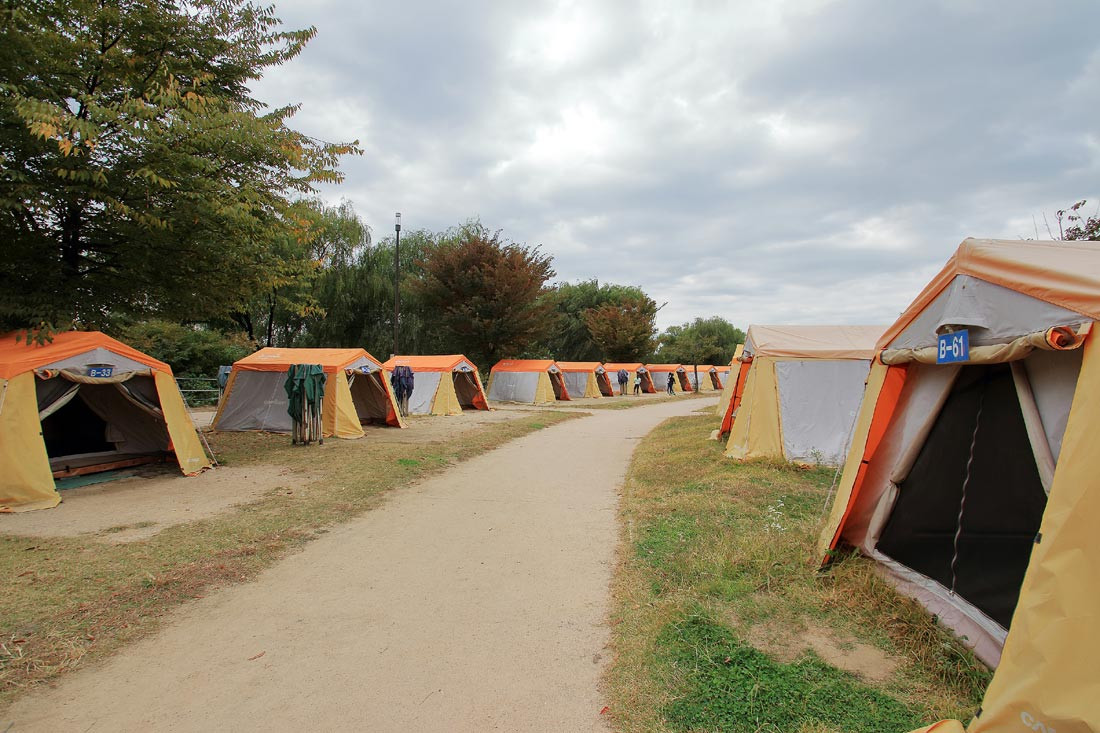
People use the campground in many different ways. Some bring full-size tents and complete camping setups, while families enjoy the more open atmosphere of the grassy areas. Beginners can choose glamping without bringing their own equipment, and groups of friends can visit simply to share dinner.
This variety captures the character of Nanji Campground. Camping here is less about making a grand escape from the city and more about spending an ordinary weekend in a slightly different way.
Choosing the Right Camping Zone
Nanji Campground has a General Camping Zone, Free Camping Zone, Glamping Zone, Barbecue Zone, and Campfire Zone. Although some of the names may sound similar, the required equipment and the way each area is used are quite different.
General Camping Zone
This is the most familiar option for visitors who want to bring their own tent and camping equipment for an overnight stay. The area is divided into several sections based on capacity and ground type, with either wooden deck or gravel campsites available.
Deck sites provide a flat surface and reduce concerns about dirt or mud after rain. However, regular tent stakes cannot be driven into the deck, so it is better to bring a freestanding tent or suitable equipment for securing a tent on a wooden platform.
For gravel sites, check your tent size and the type of stakes you need in advance. The ground can be hard, so suitable stakes, a hammer, and a thick sleeping mat can make your stay much more comfortable.
Electricity is available in some parts of the General Camping Zone, but there is no guarantee that the outlet will be located directly beside your tent. You may need a sufficiently long outdoor extension cord. Be sure to check the reservation page for power limits and rules governing electric heating appliances.
Free Camping Zone
“Free camping” does not mean that the campground is free of charge or available without a reservation. You must reserve a designated Free Camping Zone option online before entering.
This area offers a more open camping experience on grass, making it suitable for families or larger groups. However, areas with limited shade can become very hot during the day, and electricity may not be available. Check the reservation conditions carefully before booking.
If you prefer a good location, it is wise to arrive well before the official entry time. According to visitor reviews, some Free Camping Zone users may choose their spots on a first-come, first-served basis after arriving. The exact site allocation process may change depending on current operations, so it is safest to follow the instructions provided by the campground office on the day of your visit.
Glamping Zone
The Glamping Zone is the most practical option for international travelers who may find it difficult to purchase camping equipment in Korea or transport a large tent.
Basic tent facilities are already set up, so you do not need to pitch a tent from scratch.
However, you should not assume that everything will be provided as it would be at a hotel. Check each reservation option to find out whether bedding, cooking utensils, tableware, and personal toiletries are included. If you arrive with only the word “glamping” in mind, you may have to purchase additional supplies after checking in.
Barbecue Zone
The Barbecue Zone is a suitable choice if you want to experience a Korean-style outdoor meal without staying overnight. You use the fire pit or barbecue facilities during a designated time slot and leave when your session ends.
It is also a good option for travelers with a short itinerary in Korea or anyone who feels uncomfortable sleeping in a tent. You can bring meat and vegetables from a nearby market or supermarket, and some ingredients may also be available at the campground store.
However, the store’s inventory and prices may differ from those of a large supermarket. If you want a specific type of meat, vegetables, or sauce, it is better to purchase it before entering the campground.
Campfire Zone
The Campfire Zone is designed for spending time around a fire, an activity known in Korean as bulmeong, or relaxing while watching the flames.
This does not mean that you can freely light a fire at any campsite. Rules apply to where fires may be used, which equipment is permitted, and whether firewood can be brought into the campground. You should only use designated facilities.
Individual fire pits may be restricted in grassy areas to prevent fires and damage to the grass.

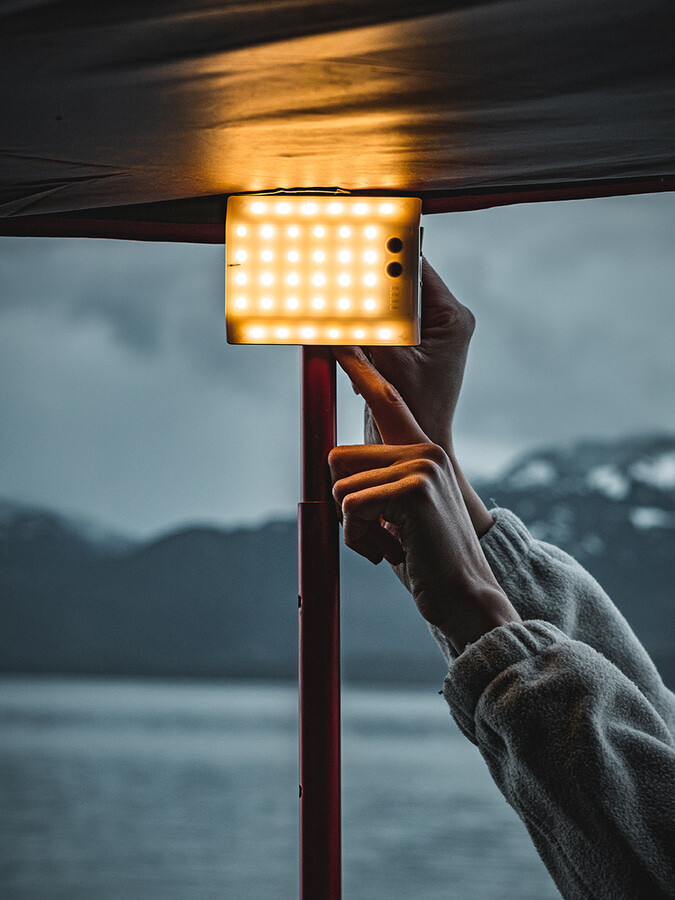
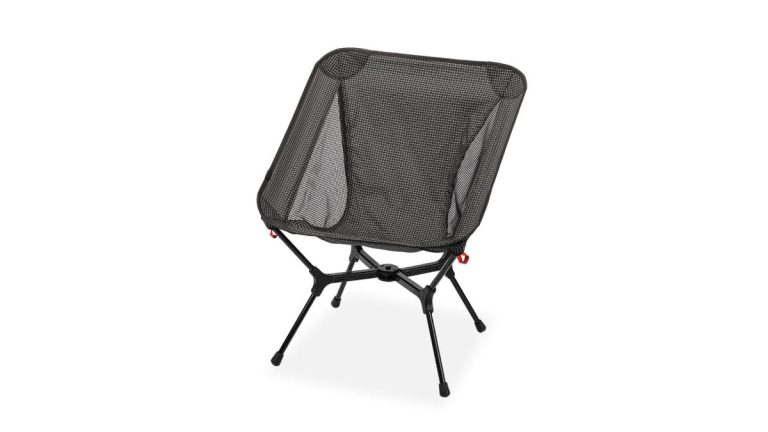
If you are bringing your own gear to Nanji Campground Seoul, a compact chair and a practical lantern can make your stay more comfortable. Read my KOVEA Light Chair X Review: A 1kg Camping Chair With a Fast One-Touch Frame for a lightweight seating option, or see the CLAYMORE Lamp Athena Review: Mood Lighting and Mosquito Mat Heating in One Lantern for a lantern designed to provide warm lighting while heating a mosquito-repellent mat.
What Are the Hours and Fees?
Camping zones, prices, and check-in times may change depending on the season and operating policies. The conditions shown on the payment page should therefore be treated as final.
| Zone | Standard Capacity | Listed Fee | Typical Hours |
|---|---|---|---|
| General Camping Type A | 2 people | KRW 15,000 | 2:00 p.m. to 11:00 a.m. the following day |
| General Camping Types B, C, and D | 4 people | KRW 20,000 | 2:00 p.m. to 11:00 a.m. the following day |
| Free Camping Zone | 4 people | KRW 15,000 | Check the reservation option for the entry time |
| Glamping Zone | 4 people | KRW 100,000 | 3:00 p.m. to 11:00 a.m. the following day |
| Barbecue Zone | 4, 8, or 12 people | KRW 10,000–20,000 | Morning and afternoon sessions |
| Campfire Zone | 8 or 15 people | KRW 5,000–10,000 | Mainly evening sessions |
These fees do not include transportation, parking, food, or personal camping equipment. Depending on what is provided with the reservation, glamping visitors may also need to bring additional supplies.
Nanji Campground is relatively affordable compared with private campgrounds or hotels in Seoul. However, you should consider not only the price but also the difficulty of transporting equipment and making a reservation.

How Foreigners Can Book Nanji Campground
Advance online reservations are the standard way to use Nanji Campground, rather than arriving and looking for an available site. Reservations are made through the Seoul Public Service Reservation website, and most spaces are allocated on a first-come, first-served basis.
According to recent visitor information, reservations for the following month open at 2:00 p.m. KST on the 15th of each month. Reservations may fill quickly for Saturdays during the pleasant spring and fall seasons, as well as the days before public holidays.
The general reservation process is as follows:
- Visit the Seoul Public Service Reservation website.
- Create a Seoul integrated membership account and log in.
- Search for “Nanji Campground.”
- Choose General Camping, Free Camping, Glamping, or Barbecue.
- Check the date, number of visitors, and camping zone.
- Enter the reservation details and complete payment.
- Save the reservation confirmation screen and payment details.
For international travelers, account registration and identity verification are likely to be more difficult than searching the website. Some Seoul reservation services require identity verification using a Korean mobile phone number. Short-term travelers without a Foreigner Registration Number or a Korean phone number registered in their own name may be unable to complete the registration process.
For this reason, you should not wait until the reservation date to create an account for the first time. Foreign residents in Korea who can complete identity verification should create their account and test the login process before reservations open.
Short-term travelers should contact Nanji Campground or the Seoul reservation service before making a payment to confirm which verification methods are available. You may ask your accommodation staff to help you use the website or make an inquiry in Korean. However, be careful about making a reservation under someone else’s name, as this could cause problems if identification is checked at the campground.
You should also confirm whether the reservation name must match the identification of the visitor arriving at the campground. Staff may check the reservation holder’s ID and distribute admission wristbands according to the registered number of visitors.
Realistic Ways to Secure a Popular Weekend Reservation
On the day reservations open, it is best to log in at least 10 to 15 minutes early. You should also decide on your preferred date and zone in advance so that you can immediately move to your second choice if the first option sells out.
Your chances will be lower if you insist on booking only Saturday glamping. Expanding your options to include weekdays, Sundays, the General Camping Zone, or the Barbecue Zone will give you more choices.
Even if you fail to secure a reservation at first, it may not be completely over. Canceled spaces sometimes reappear a few days before the scheduled visit. Several visitor reviews mention securing canceled reservations before the full-refund period ended.
However, cancellation and refund policies may change. Instead of relying on refund rates mentioned in older reviews, check the cancellation policy for the current reservation option.
How to Get to Nanji Campground
Nanji Campground is located within Seoul, but it is not directly outside a subway station. On the day of your visit, I recommend checking the latest route using Naver Map, KakaoMap, or a Seoul public transportation app.
Travelers using public transportation should consider the following:
- Choose an option that requires less equipment, such as the Glamping Zone or Barbecue Zone.
- Minimize your luggage by using a backpack and a wheeled bag.
- Consider taking a taxi for the final part of the journey.
- Save the Korean address on your phone so you can show it to the driver.
- If you plan to leave late at night, check your return transportation in advance.
If you are driving, you will use the Hangang Park parking lot. Vehicles cannot enter the individual campsites, so you must transport your equipment after parking. Handcarts are available at the campground, but you may have to wait when many visitors arrive at the same time.
Recent reviews repeatedly mention that the parking lot can become crowded around weekend check-in time. If you are visiting on a Saturday during a popular camping season, allow extra time for parking and transporting your equipment rather than planning to arrive at the exact check-in time.
Official tourism information lists the parking fee as KRW 10,000. Visitor reviews state that the Hangang Park parking lot charged KRW 1,000 for the first 30 minutes, KRW 200 for each additional 10 minutes, and up to KRW 10,000 per day. Check the posted information when entering for the actual fee and any available discounts.

What Are the Showers, Sinks, and Restrooms Like?
Nanji Campground has restrooms, showers, washing-up sinks, a store, and waste-sorting facilities. Most of the campground is relatively flat, making it easier to transport large items and move between facilities.
Visitor reviews mention that hot water was available at the washing-up sinks, but it is still a good idea to bring your own dish soap and sponge. Food waste should be placed in the designated bins, while general waste and recyclable items should be separated according to the posted instructions.
Because this is a public campground, facility conditions can vary depending on how crowded it is and how visitors use the shared spaces. It is best to think of them as basic communal camping facilities rather than hotel-quality bathrooms.
Video: A closer look at Nanji Campground Seoul, including its camping zones, tent facilities, shared amenities, and overall atmosphere inside Nanji Hangang Park.
The Best Seasons to Visit
Spring and fall are the most comfortable seasons for pitching a tent and enjoying an outdoor meal. The days are warm and the evenings are cool, but competition for popular weekend reservations is also at its highest.
During summer, shade, ventilation, and rain preparation are especially important in the grassy areas. The area around the Hangang River can be humid, and sudden rain showers are possible. In winter, you should first check which heating appliances are permitted and what power limits apply.
I visited Nanji Campground a few years ago during the summer. The cool evening breeze made it a wonderful place to cook and enjoy camping food, but I also came away with one less pleasant memory: the mosquitoes. If you are planning a summer visit, I strongly recommend bringing mosquito repellent or at least a mosquito-repellent lantern.
For international visitors using Nanji Campground for the first time, a weekday in late spring or early fall may be a good choice. The weather is relatively mild, and both reservations and parking are less demanding than on weekends.
Who Is Nanji Campground Best For?
Nanji Campground may be especially interesting for travelers who:
- Want to spend an unusual night within Seoul
- Want a closer look at how Koreans spend their weekends
- Want to combine a Hangang walk with an outdoor meal
- Want to experience glamping or a barbecue without a car
- Prefer a public campground with restrooms and a store over camping deep in the mountains
- Want a relatively accessible outdoor activity with family or friends
On the other hand, another campground may be a better fit if you expect complete peace and quiet, a direct river view from your tent, or total privacy. Nanji Campground’s appeal comes more from its proximity to the city than from being surrounded by deep wilderness.
Fun Tip
Take a walk through Hangang Park before dinner. Walk along the riverside as the sun begins to set, then return to the campground to prepare ramen or a barbecue. It is a much more natural way to experience how Seoul residents spend their weekends.
Quick Checklist Before Your Visit
- Create your Seoul reservation account in advance and test the login.
- Check the reservation holder’s ID requirements and on-site admission conditions.
- Confirm whether a tent is provided or whether you need to bring your own.
- Check the final part of your public transportation route and how you will return.
- Consider the parking fee and possible weekend congestion.
- Confirm whether electricity is available and check the permitted power limit.
- Check where fires and firewood are allowed.
- Confirm shower operating hours and seasonal availability.
- Check cancellation or operating policies for rain, extreme heat, or strong winds.
- Review the latest fees and rules on the official reservation page immediately before your visit.
Nanji Campground offers a chance to see another side of Seoul without leaving the city. Even if skyscrapers are not visible beyond your tent, the enormous city continues moving just outside the park. That closeness turns camping from a major expedition into an experience almost anyone can try for a day.
For first-time visitors to Korea, Nanji Campground creates a different kind of memory from visiting another famous attraction. You prepare dinner in the Hangang breeze, wash your dishes at a communal sink, pack up your tent the next morning, and return to the Seoul of subways and high-rise buildings.
Perhaps it is through these ordinary moments that travelers can come a little closer to experiencing a real weekend in the lives of Seoul residents.
🗣️K-papa’s Quick Korean Lesson!
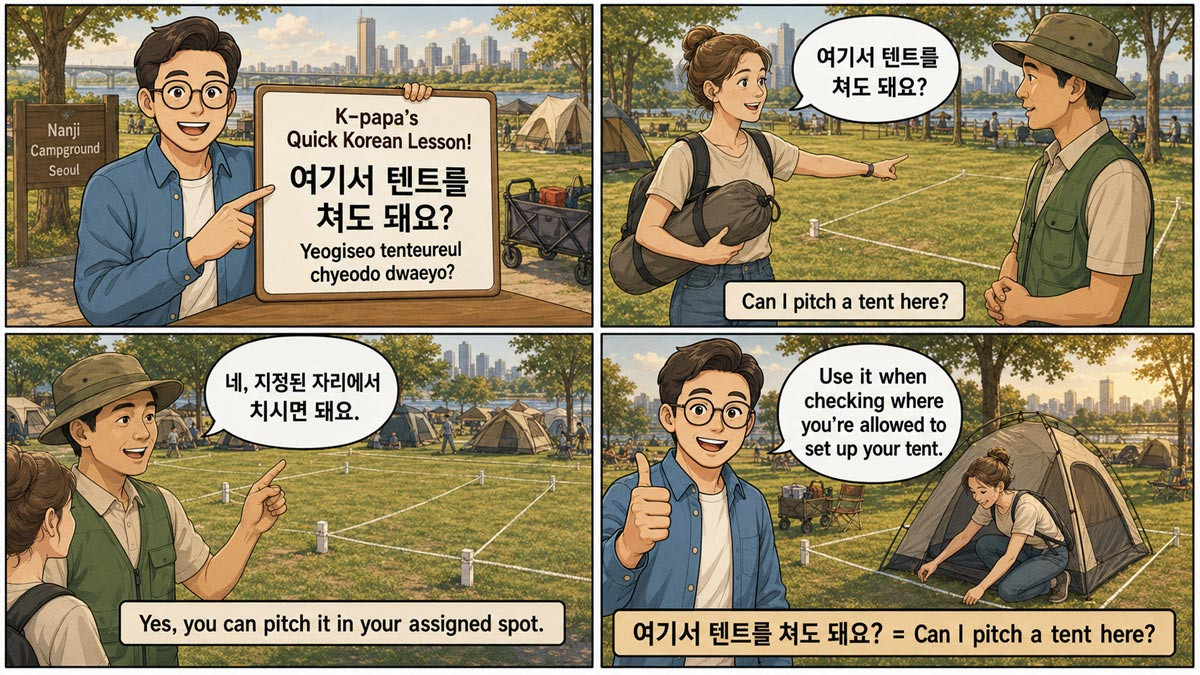
Korean phrase: 여기서 텐트를 쳐도 돼요?
Romanization: Yeogiseo tenteureul chyeodo dwaeyo?
Pronunciation: Yuh-gee-suh ten-tuh-reul chyuh-do dwae-yo?
Meaning: “Can I pitch a tent here?”
Example: “At a campground, you can ask a staff member, ‘Can I pitch a tent here?’ to check whether you are allowed to set up in that spot.”