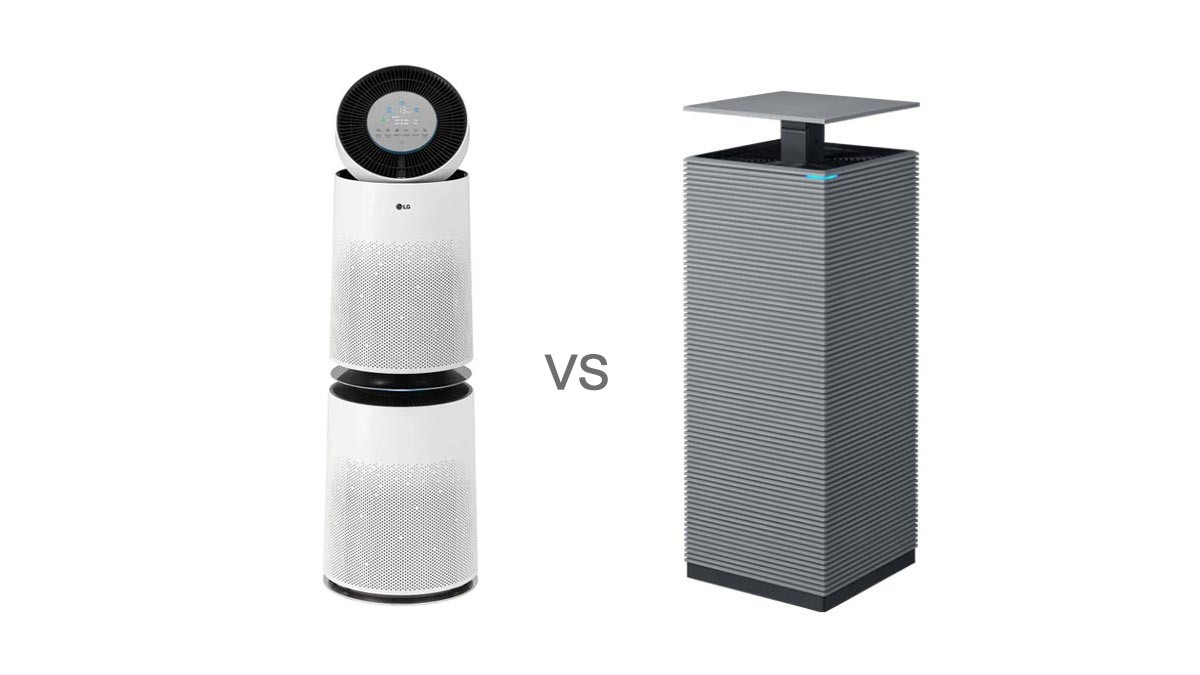
LG PuriCare AS305DWWA vs Coway Noble AP-2023K: Power or Better Design?
LG PuriCare AS305DWWA vs Coway Noble AP-2023K is a choice between greater coverage and a more compact, furniture-friendly design. Both are premium Korean air purifiers, but they suit different room sizes, ownership preferences, and household priorities.
A large air purifier can improve the air in an open-plan home, but it also becomes a permanent part of the room. That makes this choice about more than filtration: you are deciding how much coverage, floor space, maintenance, and visual presence you are willing to live with.
This LG PuriCare 360° AS305DWWA vs Coway Noble AP-2023K comparison asks one practical question: Is LG’s larger-capacity, dual-tower design worth the extra size, or is Coway’s slimmer and more customizable purifier the better fit for everyday living?
I’m K-papa, a creator currently living in Korea. I own and use an LG PuriCare 360° air purifier and have been satisfied with its performance and the convenience of LG’s after-sales service in Korea. However, I have not personally used the Coway AP-2023K or tested these exact models side by side.
The comparison below therefore combines my LG ownership perspective with official specifications, three Korean sources for each model, and one Korean comparison article. Manufacturer claims, reported user experiences, and my editorial conclusions are treated separately.
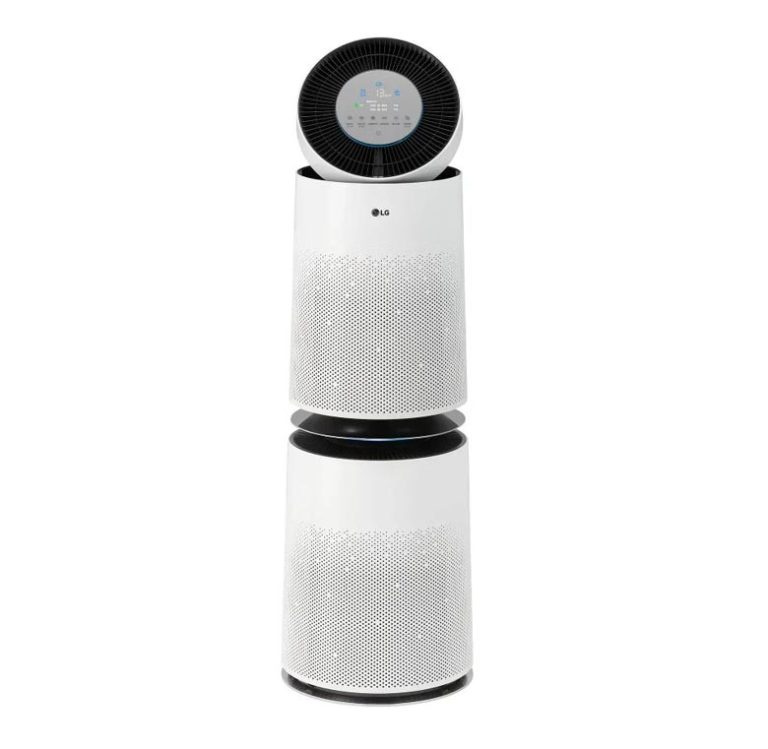
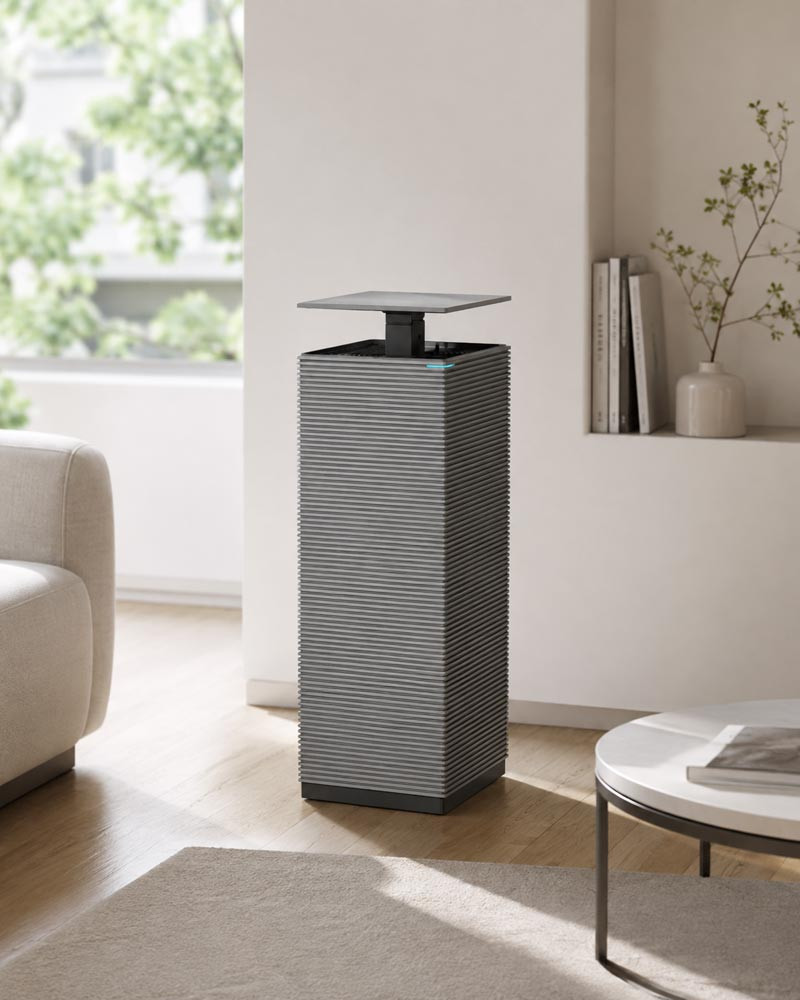
Image credit: LG Official Website
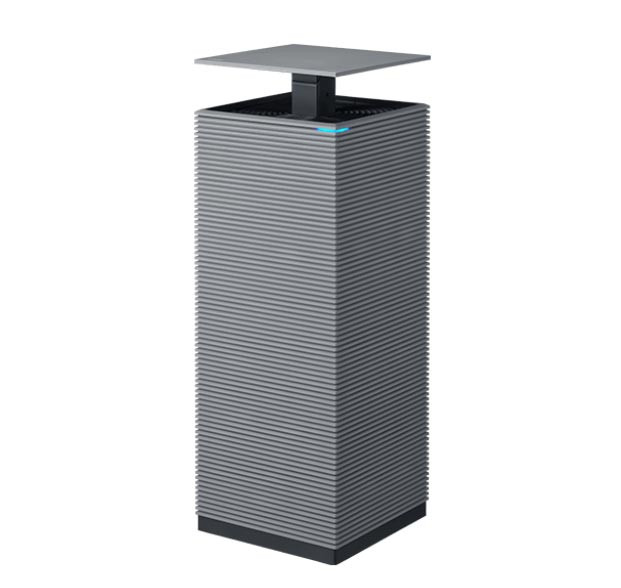
Image credit: Coway Official Website
The Short Answer
Choose the LG PuriCare AS305DWWA if you need one purifier for a large open living area and place greater value on officially rated coverage and long-distance air circulation than on compact dimensions.
Choose the Coway Noble AP-2023K if your space is smaller, the purifier will remain highly visible, or you want selectable filters and more control over airflow direction.
Choose neither if you live outside Korea and cannot confirm voltage compatibility, replacement-filter availability, warranty coverage, and local repair support before ordering.
The most important fact is easy to miss: these are not truly equal-capacity rivals. LG is officially rated for 100 m², while Coway is rated for 67 m². Coway is easier to accommodate, but it should not be treated as a smaller machine delivering the same certified coverage.
LG PuriCare 360° AS305DWWA vs Coway Noble AP-2023K: Key Differences
| Buying Priority | LG PuriCare AS305DWWA | Coway Noble AP-2023K | Better Fit |
|---|---|---|---|
| Official coverage area | 100 m² | 67 m² | LG for larger spaces |
| Dimensions | 376 × 376 × 1,073 mm | 320 × 320 × 805 mm | Coway for limited space |
| Weight | 19 kg | 15.7 kg | Coway |
| Rated power consumption | 70 W | 55 W | Coway on the stated rating |
| Korean energy-efficiency grade | Grade 2 | Grade 3 | LG |
| Airflow concept | 360° intake with dual filtration and a top Clean Booster | Four-sided intake with selectable airflow modes and Air Pop-Up outlet | Depends on the room |
| Particle sensing | PM1.0, PM2.5 and PM10 displayed | PM1.0, PM2.5 and PM10 displayed | Similar on paper |
| Filter approach | Two 360° purification filters | Four-sided filter system with two selectable Air Matching filters | Coway for customization |
| App | LG ThinQ | Coway IoCare | Depends on preferred ecosystem |
| Exterior choices | Creamy Snow | Five listed colors | Coway |
| Mobility | Optional moving-wheel accessory | Hidden wheels described in Coway materials | Coway |
The energy-efficiency grades above are Korean ratings and should not be interpreted as international efficiency certifications. Likewise, rated power consumption does not reveal how much electricity either purifier will use in your home because actual consumption changes with fan speed, operating time, sensor response, and selected mode.

The Trade-Off That Matters Most: Capacity Versus Livability
LG’s advantage begins with its official 100 m² coverage rating. The AS305DWWA is a two-level purifier with two cylindrical filter sections and a Clean Booster above them. LG says the booster sends purified air as far as 7.5 meters and cleans 24% faster under the company’s stated test conditions.
That design makes sense in a large Korean apartment where the living room and kitchen share one open area. Instead of simply processing the air immediately beside the machine, LG is explicitly trying to move filtered air farther across the room.
It is a substantial appliance, though. At 1,073 mm tall and 19 kg, it behaves more like a fixed piece of furniture than something you will casually move between the living room and bedroom.
The Coway is considerably easier to place. Its 320 × 320 mm footprint is smaller than LG’s 376 × 376 mm base, and at 805 mm tall it sits much lower in the room. The difference is visible, not merely numerical.
Coway’s 67 m² rating is appropriate for a different buying need. It may be the more sensible choice for a medium-size living room, but official evidence does not support the claim that it offers the same coverage as the 100 m² LG.
That distinction matters more than any dramatic “which is better?” verdict. A purifier that fits neatly beside your sofa is not a bargain if it is undersized for the intended area. Equally, buying LG’s extra capacity for a small room may leave you paying for a large tower you never needed.
Air Intake and Circulation: Two Different Strategies
Both machines collect air from multiple sides, but they distribute filtered air differently.
LG uses cylindrical 360-degree intake around both the upper and lower sections. Its Clean Booster can rise and direct purified air outward, with multiple airflow settings available. The dual-level structure also gives LG separate intake zones closer to the floor and higher in the room.
For a large, open space, that combination is compelling. LG’s design is built around reach.
Coway draws air through four sides into what it calls a 4D purification filter system. Its Air Pop-Up outlet supports several airflow patterns, including whole-room circulation, front-focused airflow, and rear indirect airflow. That gives the user more control over where the outgoing air is directed.
This is a genuinely useful difference.
LG is the stronger choice when the priority is moving air across a larger room. Coway may feel more adaptable when the purifier sits near a sofa, desk, wall, or pet area and you want to change the direction of the airflow.
Neither manufacturer’s filtration percentage should be converted directly into a prediction of whole-room performance. Both brands advertise removal of 0.01 μm particles at 99.999% under specified test conditions, but a laboratory filter test is not the same as measuring how quickly every part of a furnished home becomes cleaner.
Room shape, purifier placement, open doors, cooking, ventilation, ceiling height, and fan mode all affect real-world results.
Filtration: Simplicity or Household-Specific Customization?
The LG AS305DWWA uses two 360° purification filters, one in each level of the tower. Official materials describe particle filtration and the removal of several household odor and gas sources.
This arrangement is straightforward, but there is an ownership consequence: the machine contains two main filter units. Replacing two filters can be more expensive than replacing one, although a meaningful cost comparison is impossible without current filter prices and replacement intervals under the same usage conditions.
Coway takes a more modular approach. Its system includes prefilters, deodorizing layers, selectable Air Matching filters, and a central 4D Air Clean V Care filter. Depending on availability and the service plan, buyers can select Air Matching filters aimed at concerns such as allergens, pets, smoke, new-home pollutants, or additional deodorization.
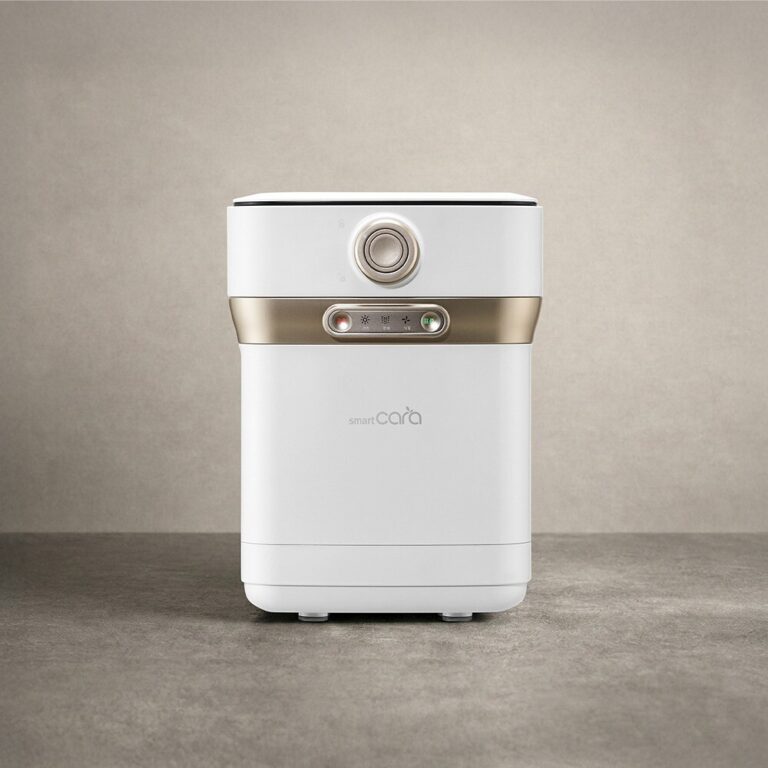
Air purifiers can help manage lingering cooking odors and airborne particles, but they do not remove the food waste that causes some kitchen smells. For a different approach to kitchen odor control, read my Smartcara 400 Pro X review.
That flexibility is Coway’s clearest functional advantage. A home with a shedding pet may prioritize a different filter combination from a newly occupied apartment or a household that cooks frequently.
There is a catch for international owners: specialized filtration only remains useful when the correct replacement filters can be purchased locally. Before importing the Coway, confirm that the exact AP-2023K filters—not just generic “Coway Noble” filters—are available in your country.
The same warning applies to LG’s two AS305DWWA filters. A purifier without reliably available consumables eventually becomes a very handsome fan.
Sensors, Automatic Operation, and Apps
Both models provide fine-particle information and smartphone control, but their software belongs to different ecosystems.
LG lists PM1.0, PM2.5, and PM10 monitoring, odor sensing, automatic operation, filter-status information, and Wi-Fi connectivity through the ThinQ app. Its AI operation is designed to respond automatically to changing indoor air conditions.
That automatic behavior reflects how I prefer to use an air purifier: leave it running and allow the sensor to react rather than constantly changing fan speeds. In my own use of LG PuriCare, the combination of performance and convenient service support in Korea has been satisfying. That is an ownership impression, not a controlled measurement of the AS305DWWA against the Coway.
Coway also displays PM1.0, PM2.5, PM10, gas, temperature, and humidity information. The IoCare app supports remote monitoring and operation, filter-life checks, timers, and scheduled combinations of modes and settings.
One comparison source described IoCare as more intuitive and ThinQ as more information-rich. That judgment came from a Coway-affiliated rental blog, so I would not treat it as an independent usability test. App preferences are also highly personal.
A better decision rule is this:
- Choose LG if you already manage other LG appliances through ThinQ.
- Choose Coway if its scheduling and airflow personalization better match your routine.
- For an imported unit, verify that the app, account registration, Wi-Fi functions, and regional services work in your country.
Design and Placement: Coway’s Strongest Argument
The Coway Noble looks intentionally architectural. Its horizontal lines, square tower shape, concealed controls, and five listed colors make it easier to coordinate with furniture and wall finishes.
Calling one product “more beautiful” is subjective, but the physical evidence behind Coway’s placement advantage is not. It is 56 mm narrower, 268 mm shorter, and 3.3 kg lighter than the LG. Coway also describes hidden wheels for moving it around the home.
Several Korean Coway sources emphasized its furniture-like appearance. Those sources were promotional in tone, but the official dimensions and product images support the broader conclusion: Coway is less visually dominant.
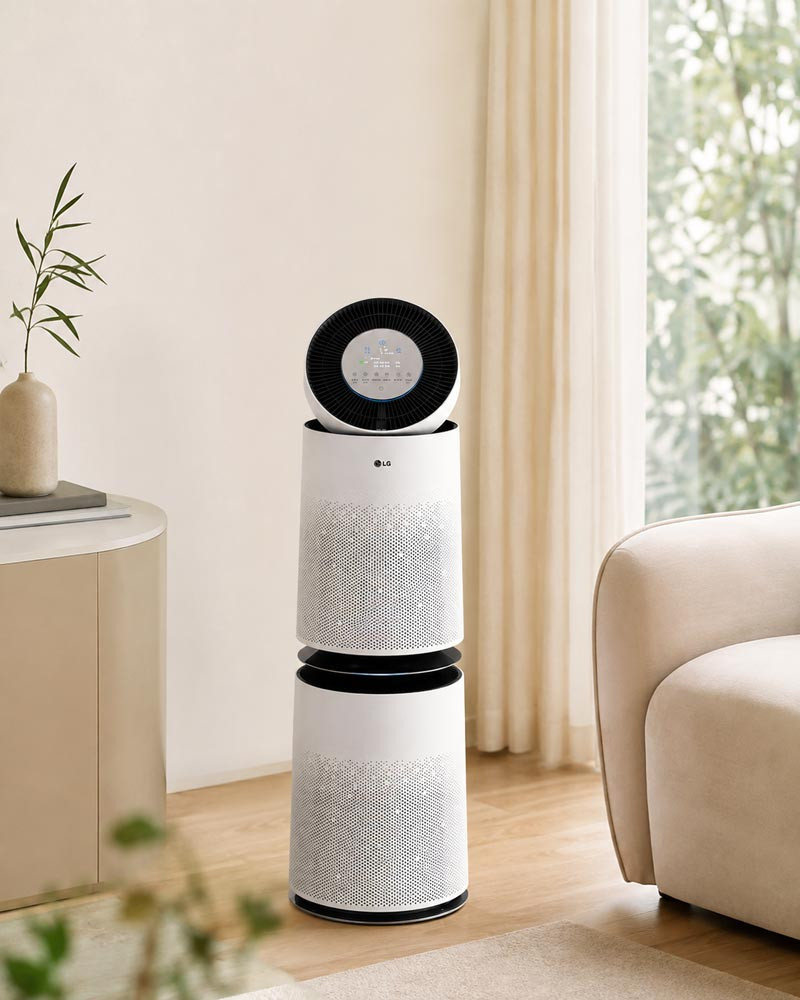
LG’s cream-white cylindrical tower is clean rather than unattractive. One LG owner reported that it occupied less space than expected and blended naturally into the living room despite its two-level construction. My own view is that LG looks reassuringly substantial, but no one will mistake it for a side table.
There is no wrong preference here. Coway tries to disappear into the interior; LG makes its function obvious.
Noise: The Evidence Does Not Support a Clear Winner
Noise is one area where the supplied evidence conflicts.
An LG owner described the machine as quiet enough for nighttime use. Another LG-focused source warned that the Clean Booster may become noticeable at high output. The Coway-affiliated comparison article characterized the Coway as quieter and the LG as more audible, particularly when the booster was operating.
Those statements can all be true in different modes and rooms.
A purifier operating gently after the air is clean will sound very different from the same machine reacting to cooking particles at maximum airflow. Distance from a bed or sofa also changes the experience.
Because the supplied official data does not provide directly comparable sound measurements under identical test conditions, I would not declare a noise winner. Buyers sensitive to sound should check measured decibel results for the exact models or hear them operating at their highest intended fan settings.
Coway’s smaller capacity should not automatically be translated into “quieter,” just as LG’s larger fan system does not mean it will always be loud.
Maintenance, Movement, and Service
LG’s filters require regular exterior cleaning and eventual replacement. The machine’s 19 kg weight was a repeated concern in the LG material, and one owner ordered the separately sold moving-wheel accessory after finding the unit difficult to move between rooms.
If the LG will remain in one large living area, this is a minor issue. If you expect one purifier to travel between the kitchen, bedroom, and living room every day, the size becomes difficult to ignore.
Coway’s hidden wheels make that routine more realistic. In Korea, Coway also offers rental arrangements with either scheduled professional visits or self-management, depending on the contract. The appeal is not only spreading out the purchase cost; it is outsourcing filter schedules and periodic cleaning.
However, rental prices and terms can change, and the comparison source promoting Coway was connected to its rental business. Current total contract cost—not only the monthly payment—should be compared with outright purchase before signing.
LG has a strong nationwide service presence in Korea. Convenient LG service is one reason I remain satisfied as an owner. That advantage should not be assumed outside Korea, where an imported Korean-market model may not qualify for local warranty repairs.
Coway’s managed-care advantage is similarly dependent on location. If no local Coway service plan covers the AP-2023K, much of its Korean ownership proposition disappears.
Where the Korean Sources Agree—and Where They Don’t
The strongest point of agreement is physical rather than emotional:
- LG offers greater officially rated coverage but is taller and heavier.
- Coway is smaller and more interior-friendly.
- Both provide multi-directional intake, particulate sensing, automatic modes, and app control.
- Filter access and replacement cost should be considered before purchase.
- High-output modes may sound different from quiet automatic operation.
The evidence becomes weaker when it moves from specifications to sweeping performance claims.
The LG sources praised rapid circulation in large living rooms, but two of the three were primarily technical or sales-oriented rather than independent long-term ownership reports. The Coway sources repeatedly praised design, filter customization, and managed care, yet all three had substantial rental or promotional language.
The single direct comparison favored Coway for design, quietness, app simplicity, and rental value—but it openly acknowledged that it was a Coway-affiliated blog. Its observations are useful questions to investigate, not neutral proof that Coway wins.
There is also no controlled evidence here comparing purification speed, odor removal, noise, or operating cost in the same room. Those points remain unresolved.
Buying Either Model Outside Korea
International buyers should pause before importing either purifier. Large Korean appliances can become expensive to own once shipping, filters, repairs, and regional restrictions enter the picture.
LG officially lists the Korean AS305DWWA at 220 V / 60 Hz. Do not connect it in another electrical system based only on plug shape or a simple travel adapter. Confirm voltage and frequency compatibility with a qualified local source.
The supplied Coway material does not give me enough verified electrical information to make an international compatibility claim for the AP-2023K. Check the rating label or official manual for the exact unit offered by the seller.
Before ordering either model, confirm:
- Exact model number and country version
- Local voltage and frequency compatibility
- Shipping cost and import taxes
- Availability and price of every required replacement filter
- Whether the app and account features work in your region
- Local warranty eligibility
- Who pays return shipping if the unit arrives damaged
- Whether local technicians will service an imported Korean model
If these questions do not have clear answers, a locally supported air purifier is the safer purchase—even if its specifications look less exciting.
K-papa’s Decision Guide
Choose the LG PuriCare AS305DWWA if:
- You need the larger 100 m² official coverage rating.
- Your living room and kitchen form one broad, open space.
- Long-distance airflow is more important than compact dimensions.
- You plan to leave the purifier in one main location.
- You live in Korea and value LG’s established service network.
- You already use the ThinQ ecosystem.
Choose the Coway Noble AP-2023K if:
- Its 67 m² rating is sufficient for your intended room.
- You want a smaller and less visually dominant appliance.
- Color choice and interior coordination matter.
- You want selectable filters for specific household concerns.
- Directional airflow modes are useful for your layout.
- You can access Coway’s filter supply or managed-care service where you live.
Choose neither if:
- You need more than 67 m² of coverage but cannot accommodate LG’s size.
- You want one lightweight purifier to carry between floors.
- Compatible filters are difficult or expensive to obtain locally.
- The seller cannot confirm voltage, warranty, returns, or regional app support.
- You are comparing them only because of a temporary rental promotion rather than room size and long-term ownership cost.
What Would Change This Recommendation?
A verified local Coway price that includes regular filter replacement and professional care could make the AP-2023K the better-value choice in Korea.
A strong discount on the LG, combined with reasonably priced replacement filters, would make its greater capacity easier to justify.
Outside Korea, local warranty and parts support could outweigh almost every hardware difference. If only one model has authorized service and readily available filters in your country, that model becomes the more rational purchase—provided its coverage suits the room.
Comparable independent measurements of clean-air delivery, maximum-mode noise, and annual filter cost could also change the conclusion. The supplied sources do not provide those measurements under matching conditions.
[Infographic Placeholder: Original decision-focused comparison infographic titled “LG AS305DWWA or Coway AP-2023K?” with two simple product silhouettes and three decision paths—choose LG for 100 m² coverage and long-range circulation; choose Coway for a 67 m² room, smaller dimensions, and filter customization; choose neither when local filters, voltage compatibility, or warranty support cannot be confirmed. Include verified dimensions, weight, rated power, and a small note stating that manufacturer filtration claims are based on brand-specific test conditions.]
How I Researched This Comparison
This comparison used the official Korean product information supplied for the LG PuriCare AS305DWWA and Coway Noble AP-2023K, including specifications, filter descriptions, airflow features, app functions, dimensions, and manufacturer test claims.
I also reviewed three Korean sources focused on the LG, three focused on the Coway, and one article comparing the two brands. The source quality was uneven. One LG article described an actual installation and early ownership experience, while the other LG material included technical summaries and strong sales language. The Coway articles were closely connected to rental promotion, and the direct comparison was published by a Coway-affiliated rental source.
For that reason, promotional prices, urgency claims, unsupported superlatives, and broad statements about user satisfaction were not treated as independent evidence.
I own and use an LG PuriCare 360° purifier and have been satisfied with its performance and service experience in Korea. I have not personally used the Coway AP-2023K, conducted instrument-based tests, or compared these exact products side by side.
Frequently Asked Questions
Is the Coway AP-2023K as powerful as the LG AS305DWWA?
The official coverage ratings say no. LG lists 100 m², while Coway lists 67 m². This does not prove that LG is better in every room, but it does mean the Coway should not be presented as an equal-coverage alternative.
Which model is better for a large living room?
LG is the stronger candidate when the room genuinely requires close to its 100 m² capacity and can benefit from the Clean Booster’s long-range circulation. Coway may be sufficient—and easier to place—when 67 m² covers the intended area.
Which air purifier is easier to maintain?
That depends on location and ownership method. Coway’s Korean rental service can include scheduled filter care, while LG offers a well-established Korean service network. For self-managed or international ownership, exact filter availability and cost matter more than the brand’s domestic service reputation.
Is the Coway Noble quieter than the LG PuriCare?
The supplied sources do not establish this conclusively. One Coway-affiliated comparison favored Coway, but an LG owner also reported quiet nighttime operation. Directly comparable decibel measurements for the same operating conditions were not provided.
Can I use these Korean air purifiers in the United States or Europe?
Do not assume so. LG lists the Korean AS305DWWA as 220 V / 60 Hz, which does not directly match every international electrical system. The Coway unit’s exact electrical rating should be verified from its label or official manual. Warranty, app support, filters, and repairs also require confirmation before importing.
About the Author
K-papa is a creator living in Korea who researches Korean camping gear and kitchen and living products for international readers. Learn more about K-papa and how The Korea Picks researches its reviews on the About page.