Why Korean Campers Swear by CLAYMORE 3Face Mini: A Local’s Honest Review
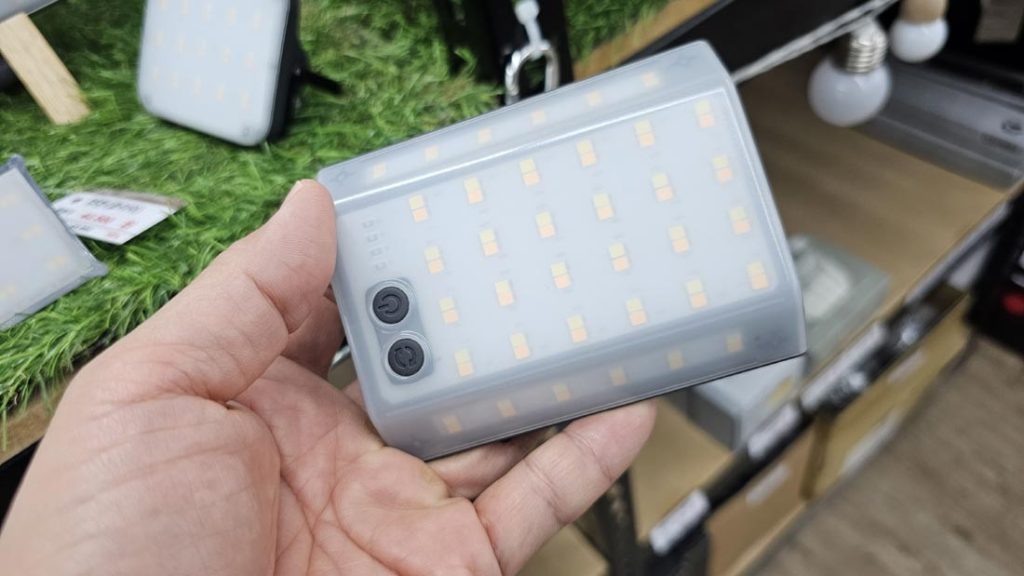
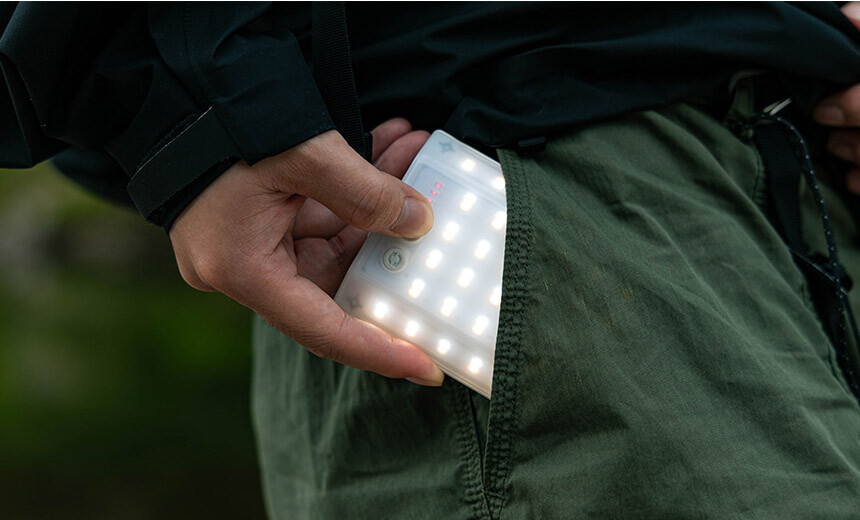
The 3Face Mini was small enough to sit comfortably in my hand, which gives a clearer sense of scale than a standard product image.
If you step into any campsite across South Korea right now, you will notice a distinct shift in how outdoor enthusiasts light up their tents. Gone are the days of bulky, single-directional lanterns that cast harsh, deep shadows. Instead, a sleek, pocket-sized powerhouse is dominating the local scene.
Hey there, global camping community! I’m K-papa, a local creator and outdoor gear enthusiast living and breathing the camping culture right here in South Korea. If there is one thing Korean campers are obsessed with, it’s maximizing efficiency without sacrificing “gamseong” (that perfect, cozy outdoor aesthetic).
The CLAYMORE 3Face Mini is a compact rechargeable camping light made by a Korean outdoor lighting brand. I recently examined and photographed it in person to see how its actual size, materials, controls, light output, and rear leather strap compare with the impression given by product images and specifications.
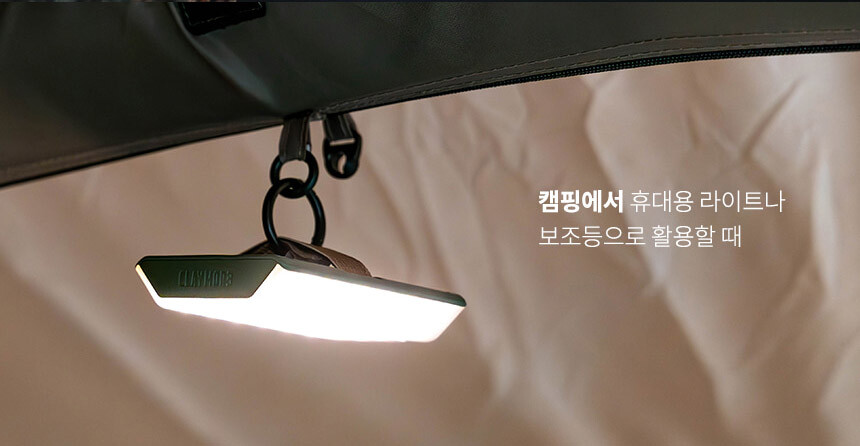
[Image credit: Prism Official Website]
Key Specifications: The Power in Your Pocket
Before we look at how it behaves in the wild, let’s look at the hard data provided by the manufacturer. Claymore didn’t compromise on the internals despite shrinking the footprint.
| Feature | Specification Details |
| Model Name | CLF-500LG/DG (Claymore 3Face Mini) |
| Brightness | 40 to 800 Lumens |
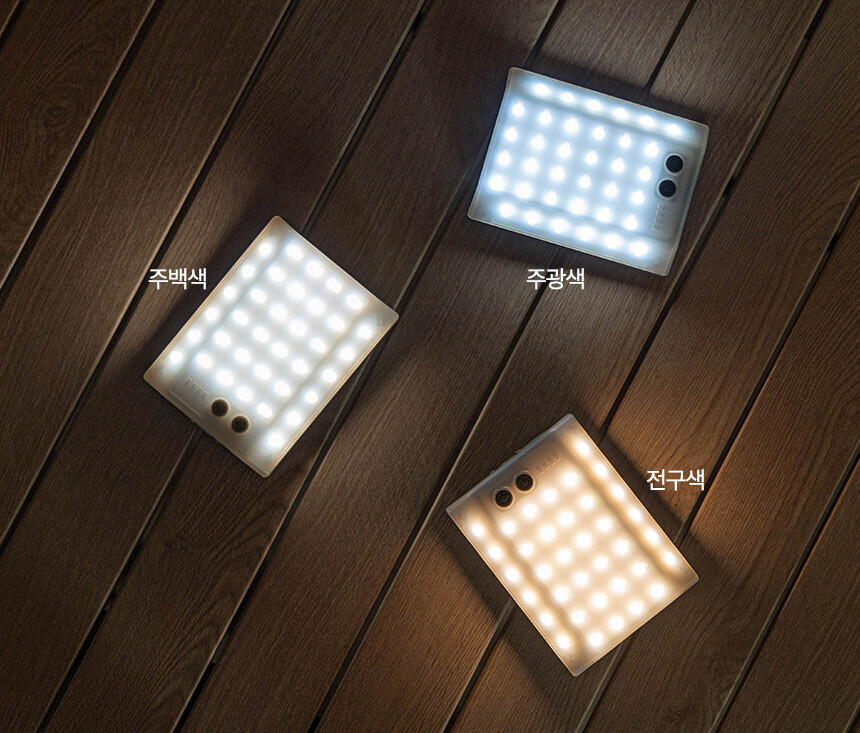
| Light Modes / Color Temps | 3 Modes: Warm (3,000K), Natural White (4,200K), Cool White (6,500K) |
| Battery Type & Capacity | Lithium-Polymer 3.7V 5,000mAh (18.50Wh) |
| Run Time | 6 hours 30 minutes (Max Brightness) up to 60 hours (Min Brightness) |
| Charging Time | 2 hours 40 minutes via USB Type-C (5V 2A Input) |
| Power Bank Output | 5V 2A (Can charge external devices) |
| Waterproof Rating | IP54 Dust and Splash Resistant |
| Dimensions & Weight | 78 x 102.5 x 19.7 mm | 159 grams |
| Country of Manufacture | South Korea (Prism Co., Ltd.) |
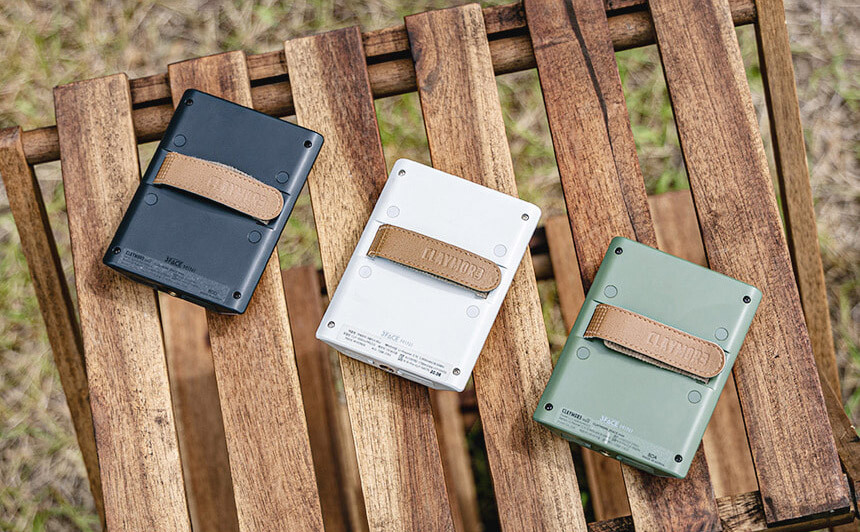
[Image credit: Prism Official Website]
What I Noticed in Person
The first thing I noticed was how compact the 3Face Mini felt in my hand. It is small enough to fit in a large pocket or compact gear pouch, but its light output did not feel weak for its size. The three illuminated surfaces provided enough light to brighten the inside of a tent clearly.
The plastic exterior felt smooth and refined, while the two control buttons had a satisfying, premium-feeling action when pressed. These details made the product feel more substantial than I expected from such a compact light.
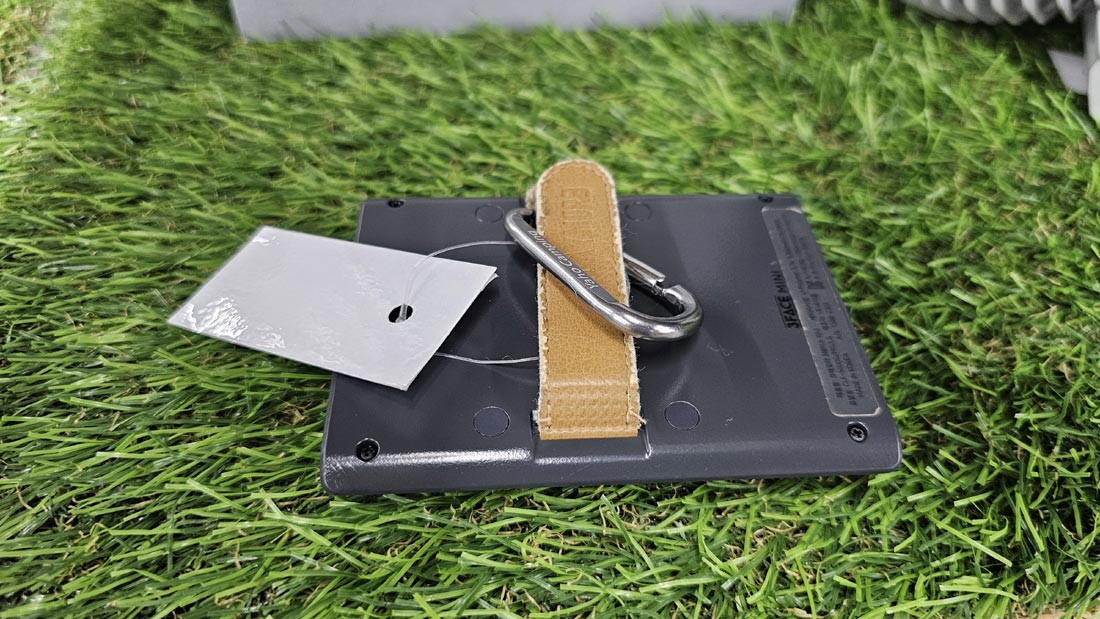
The rear leather strap adds warmth to the otherwise modern plastic design. Because it is real leather, it will likely develop creases and signs of use over time. Some campers may see this as natural character, while others may prefer to keep that in mind before buying.
My overall impression was that it would work best as a compact secondary light. It is the kind of small, versatile camping light I would consider adding to my own setup for use inside a tent or around a table.
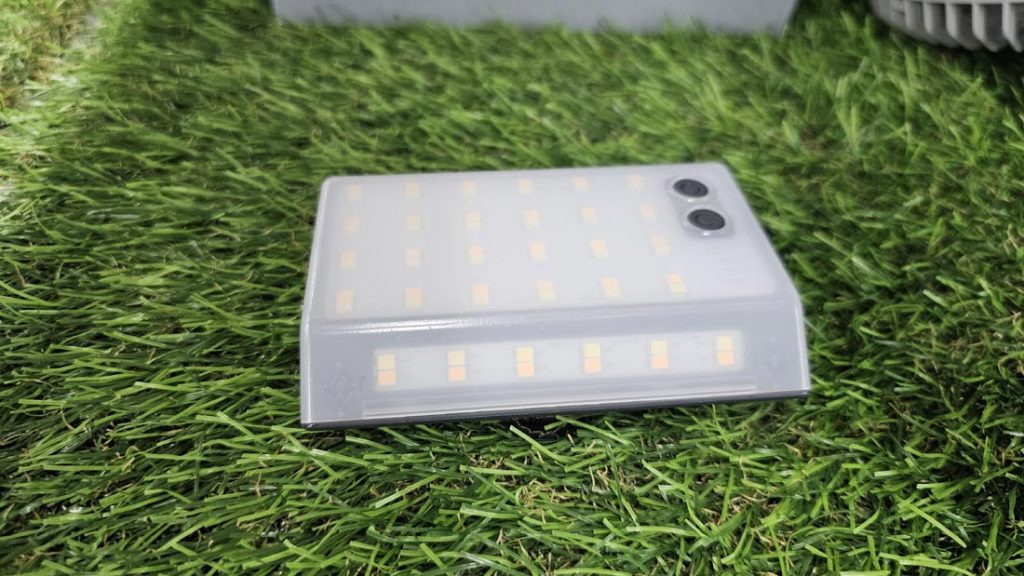
The angled side panel shows how the LEDs extend beyond the front face to distribute light in three directions.
1. The Power of Three-Dimensional Illumination
Most standard compact lanterns feature a flat, one-sided LED panel. When hung from the center of a tent, they beam straight down, creating harsh glare in the middle and leaving the corners pitch black.
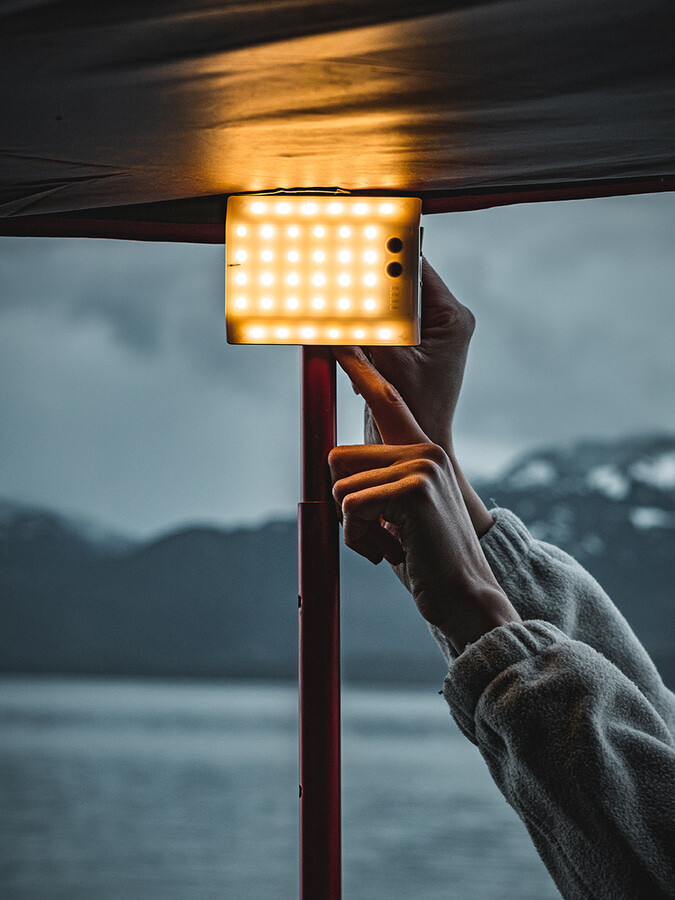
The three-sided design spreads light more broadly than a conventional flat LED panel. By placing premium Korean LED chips across three distinct angled panels, the light diffuses outward at a wide angle. When you click it on inside a tent or under a tarp, the entire living space fills with an even, ambient glow. Shadows are significantly reduced, making activities like cooking dinner or reading with family feel incredibly natural.
[Image credit: Prism Official Website]
2. Form Factor vs. Heavyweight Output
When you first pull the 3Face Mini out of its premium hard-shell carrying case, your immediate thought will likely be, “Is this really going to be bright enough?” It fits comfortably within the palm of an average hand and weighs a mere 159 grams.
With an official maximum output of 800 lumens, it provides considerably more brightness than its compact size might suggest.
[Image credit: Prism Official Website]
3. Thoughtful Local Engineering
True quality is found in the small details that only experienced campers notice. Take the built-in leather strap on the back, for instance. Instead of a basic, loose loop, it features three distinct preset hanging holes. When you attach it to a tent ceiling or lantern pole using the included carabiner, the fixed alignment ensures the light stays locked in place rather than spinning around or shifting angles when the wind hits your shelter.
Furthermore, the hard-case pouch is an unsung hero. Claymore included a protective internal divider mesh pocket. This prevents the included charging cable, O-ring, and carabiner from rubbing against the plastic lens filter while bouncing around inside a car trunk or a packed backpacking frame.

[Image credit: Prism Official Website]
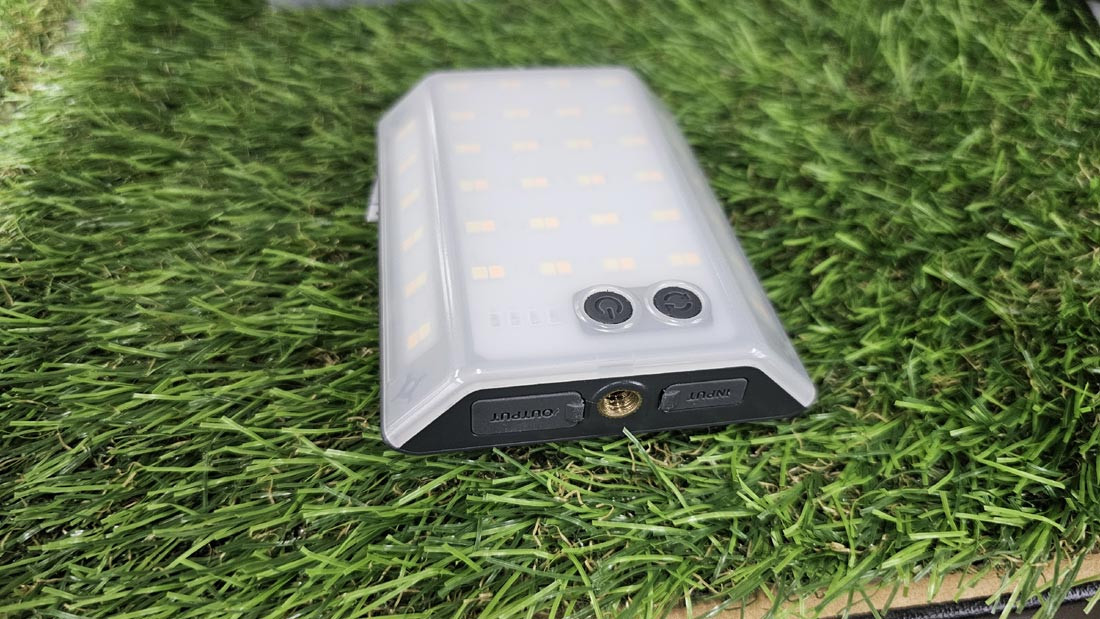
The two control buttons, covered input and output ports, and threaded mounting socket are visible along the front and lower edge.
The rear leather strap and included metal carabiner provide a compact hanging setup, although the leather may develop character with repeated use.
Pros & Cons: An Honest Assessment
No piece of gear is absolutely flawless. To help you make a smart investment, here is a balanced view of where this lantern excels and where it hits its limits.
The Pros
- Exceptional Space Efficiency: The ultra-wide 3-way light spread lights up an entire shelter with a tiny physical footprint.
- Dual-Function Power Bank: The built-in 5,000mAh battery pulls double duty. In an emergency, its USB-C output turns the lantern into a power bank to top off your smartphone, eliminating the need to carry an extra standby battery on minimalist overnight trips.
- Granular Atmosphere Control: A simple long-press on the power button gives you smooth, seamless brightness adjustments, while the mode button toggles through three distinct color temperatures to match your mood.
- Rugged IP54 Build: Built in Korea with highly durable polycarbonate materials, it easily withstands unexpected rain showers, high humidity, and dusty environments.
- Intuitive UI: Controlled entirely by just two distinct buttons, meaning anyone can master the SOS strobe mode or brightness levels instantly without a manual.
The Cons
- No Simultaneous Power Bank Use: Due to its internal circuitry protections, you cannot use the lantern to light your camp while simultaneously utilizing the power bank function to charge your phone.
- Cold Weather Battery Mindfulness: As with all high-performance Lithium-Polymer cells, keeping the unit stored in temperatures below -10°C (14°F) can degrade battery lifespan over time. Long-term storage requires keeping it topped off at 50% to 60% capacity in a dry environment.
[Image credit: Prism Official Website]
K-papa’s Local Expert Tips: Getting the Most Out of Your 3Face Mini
If you decide to add this little gem to your kit, here are a few expert ways to maximize its utility based on how we use it in the Korean peninsula:
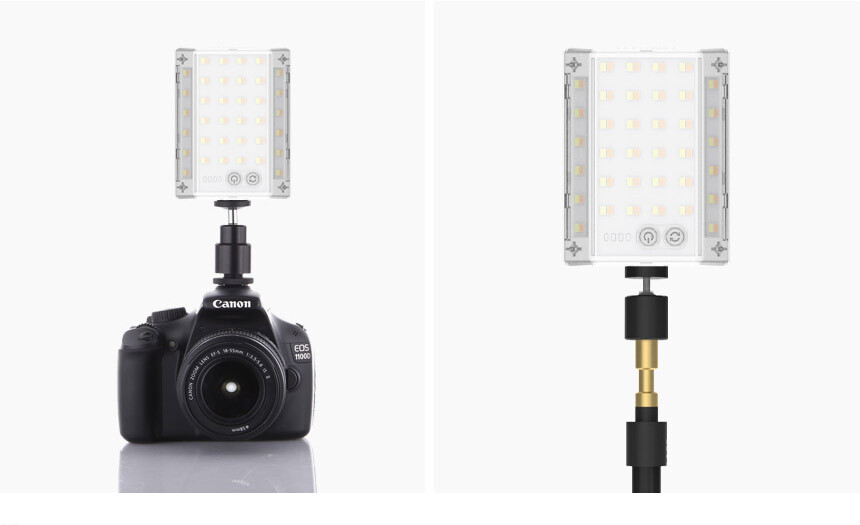
- The Tripod Master: The side of the 3Face Mini features a native 1/4-inch threaded screw hole. This isn’t just an afterthought—it perfectly matches standard camera tripods, flexible gorilla pods, or specialized camping light stands. Setting it up on a mini-tripod next to your outdoor cutting board provides the ultimate shadow-free cooking light.
- The “Gamseong” Color Transition: When you are prepping ingredients or firing up a camping stove, toggle the light to 6,500K Cool White for maximum clarity and safety. The moment dinner is served and you pour a cup of coffee, drop it down to 3,000K Warm Light. It instantly softens the camp vibe and pairs beautifully with a crackling campfire.

[Image credit: Prism Official Website]
Final Verdict: Is It Worth It?
After examining the CLAYMORE 3Face Mini in person, its compact size, three-sided light spread, smooth exterior finish, and satisfying button action stood out most to me. Although it fits comfortably in one hand, it provides enough light to illuminate the inside of a tent clearly.
I see it primarily as a compact secondary light for use inside a tent, around a camping table, or on a compatible light stand. The rear leather strap may develop visible signs of use over time, but it also gives the product a distinctive appearance. Overall, it is a small and versatile camping light I would consider adding to my own setup.
“If you love Claymore’s reliable engineering and battery efficiency, you should definitely pair your lighting setup with their legendary cooling gear. Check out my [Comprehensive Claymore Fan V1040 Review: The Ultimate Wireless Camping Circulator] to see how to keep your tent both perfectly lit and blissfully cool.”