How IGT Tables Changed the Way Koreans Build a Campsite
Walk through a popular campground in Korea on a Saturday afternoon, and you will probably notice something unusual about the tables.
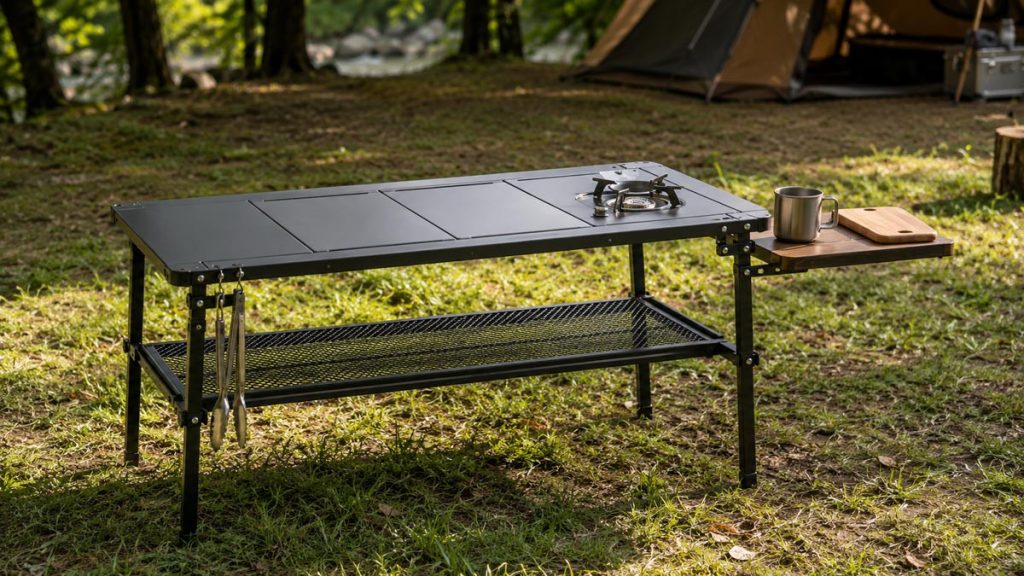
Many of them are not simple folding tables with four legs and a flat top. Instead, they look like carefully assembled workstations. A stove may sit flush with the tabletop. A slim storage basket hangs underneath. Side panels hold cups and cooking tools, while an extension table creates extra room for plates, lanterns, or a small water container.
This is the world of IGT tables in Korean camping.
IGT usually refers to the “Iron Grill Table” concept—a modular table system that allows campers to combine different frames, inserts, burners, trays, and accessories. Although the idea did not begin as a uniquely Korean invention, Korean campers embraced it with remarkable enthusiasm.
The reason goes beyond appearance.
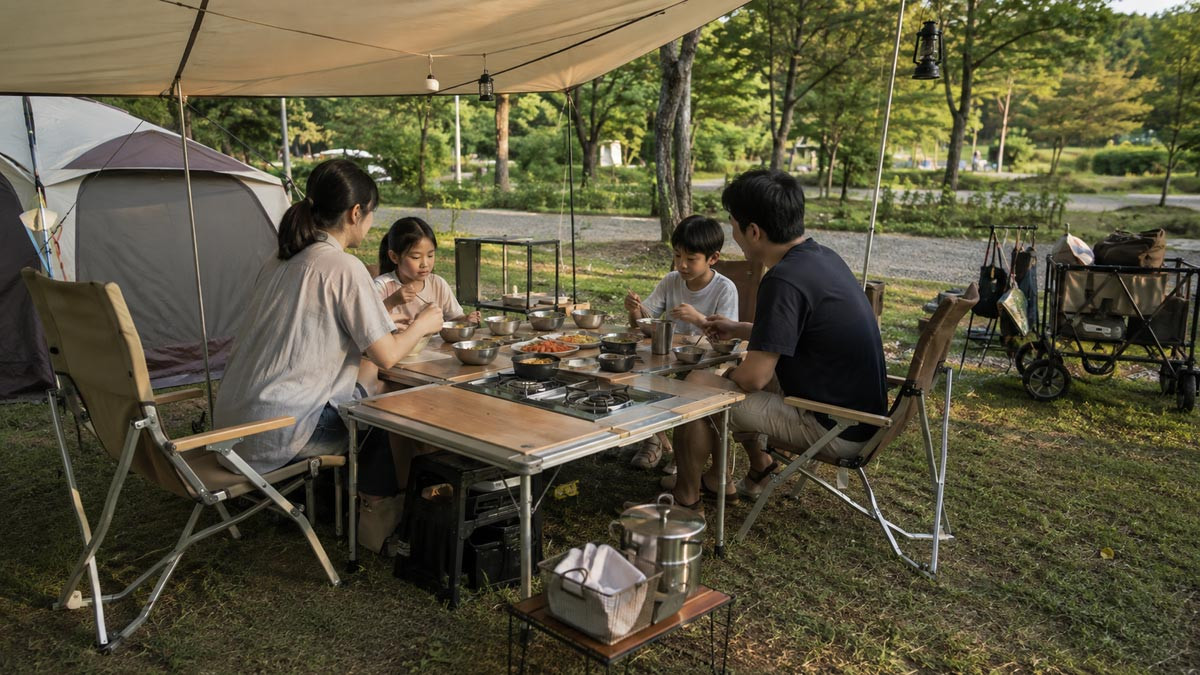
IGT tables fit the way many Koreans camp: cooking together, sharing food, organizing small spaces, and treating the campsite as a temporary outdoor home.
It Started With a Simple Problem: Too Much Gear, Not Enough Space
Korean campsites are not always large.
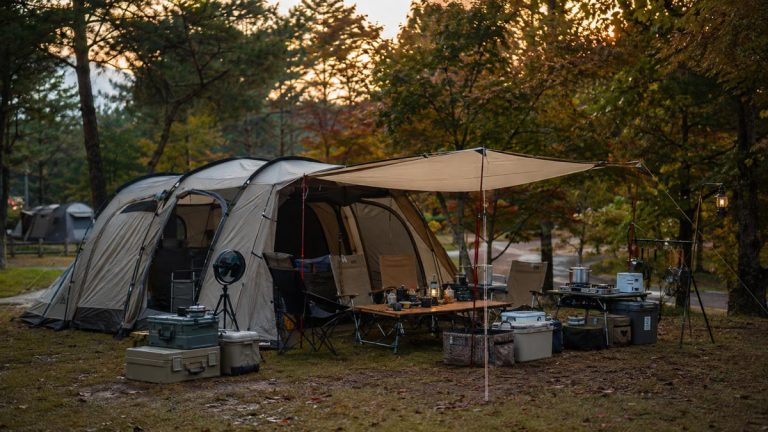
Some campgrounds provide spacious individual plots, but many popular locations divide limited land into relatively compact sites. A family may need to fit a tent, shelter, chairs, coolers, cooking equipment, storage boxes, and a vehicle into one assigned area.
A standard camping table does only one job. It gives you a flat surface.
An IGT setup can do several jobs within almost the same footprint. It may function as a cooking station, dining table, storage area, and equipment rack at the same time. Campers can place a compatible burner inside the table rather than setting a separate stove beside it. Accessories can be attached to the sides or suspended below the frame.
This creates a more organized campsite without requiring another large piece of furniture.
That efficiency matters in Korea, where campers often bring more equipment than the size of their campsite might suggest. A modular table helps all that gear feel manageable.
Korean Camping Often Revolves Around Cooking
For many Korean families, camping food is not limited to sausages, sandwiches, or simple one-pot meals.
A normal camping menu might include grilled pork belly, stew, instant noodles, rice, side dishes, seafood, or late-night snacks. Breakfast could involve another round of cooking instead of a cold meal eaten quickly before packing.
In other words, the cooking area receives a lot of attention.
When several dishes are prepared and shared, a small portable stove placed on top of an ordinary table can become inconvenient. It takes up serving space, and people sitting around the table must be careful not to touch the hot burner or knock over a pot.
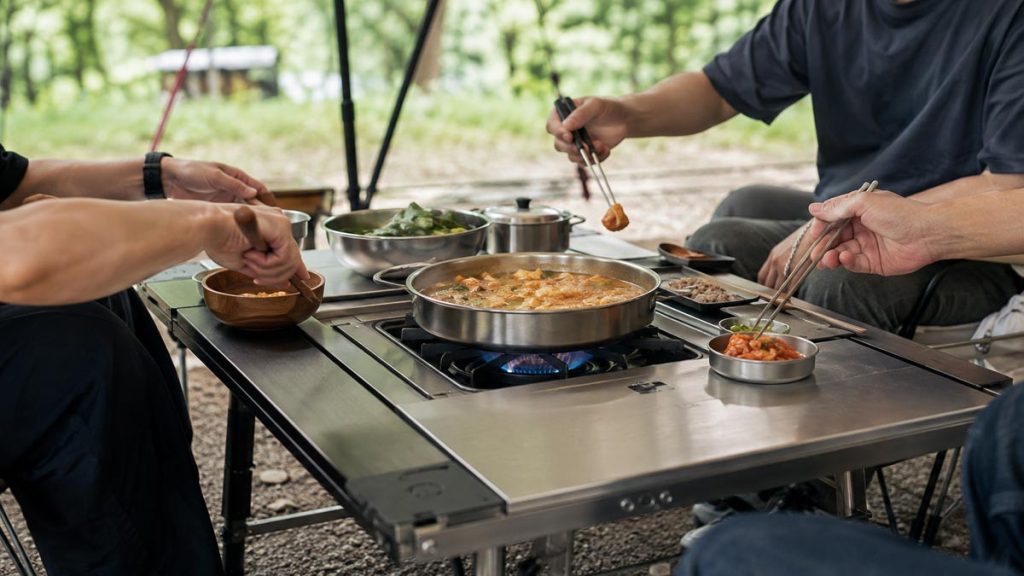
An IGT-style layout changes that experience. The burner can sit securely inside the frame, with its cooking surface at a more natural height. Ingredients, utensils, and dishes can be arranged around it. Everyone can remain close to the food without the stove feeling like an awkward object added at the last minute.
This layout works especially well with the Korean habit of eating directly from shared pans and pots.
A bubbling stew in the middle of the table is not merely food preparation. It becomes part of the conversation. Someone adds noodles. Another person divides the meat. A child asks when the rice is ready. The cooking continues while everyone is already eating.
The table becomes the social center of the campsite.
The Appeal of Building a System One Piece at a Time
Another reason IGT tables became popular is that campers do not need to create a complete setup immediately.
They can start with a frame and a few basic panels. Later, they may add a burner unit, mesh tray, extension table, hanging rack, storage bag, or another frame. The layout can grow as their camping habits become clearer.
This gradual process has a strong appeal.
Buying a finished table is a single decision. Building a modular system feels more personal. Campers compare configurations, measure available space, and decide where every component should go. Even people using similar frames can create very different setups.
One camper may build a compact solo cooking station. Another may connect several tables for a family of four. Some campers prefer a low configuration that matches low chairs, while others choose a standing-height kitchen layout.
There is satisfaction in finding the combination that finally feels right.
There is also danger, of course. Once the system begins, it becomes very easy to think, “One more accessory would complete it.” Then the new accessory creates the need for another bag, rack, or extension.
IGT camping can save table space while quietly consuming storage space at home.
What I Noticed at Korean Campgrounds
When I first began paying attention to IGT setups, I assumed most of their popularity came from their appearance. A well-arranged modular table certainly looks impressive, especially when it matches the chairs, storage boxes, and shelter.
But after watching how families actually used these tables, I understood the practical side.
People were not constantly standing up to reach a separate cooking area. The person preparing the food could stay involved in the conversation. Children had a clear place to sit, while hot cookware remained in a more controlled position. Small tools were attached to the table rather than scattered across the ground.
The best setups did not necessarily have the most accessories. They simply made movement around the campsite easier.
That changed my view. An IGT table is not automatically better because it looks more sophisticated. It becomes useful when each component solves a real problem for the camper.
I have also seen the opposite: beautiful systems that took a long time to assemble and seemed too large for the meal being prepared. They photographed well, but I wondered whether the owner was serving the table or the table was serving the owner.
That is an important distinction.
Camping Gear Became Part of Personal Style
Modern Korean camping has developed a strong visual culture.
Campers often coordinate the colors and materials of their equipment. Beige tents may be paired with natural wood furniture. Black shelters may contain darker metal tables, lanterns, and storage boxes. Some sites feel warm and rustic; others look almost industrial.
Social media helped accelerate this trend. Campsite photos became a way to document not only a trip but also a personal style. A modular table is ideal for this because its layout is easy to customize and change.
The open frame, replaceable panels, and visible accessories create a sense of intentional design. Everything appears to have a place.
Korean camping brands responded by offering their own compatible tables, connectors, trays, hangers, and decorative parts. As more choices entered the market, campers were no longer limited to one brand or one visual style.
This widened the appeal of the IGT concept. It was no longer simply a premium table system. It became a broad category of modular camping furniture.
Compatibility Made the Market Grow Faster
The word “IGT” is now often used loosely in Korea.
Campers may use it to describe many tables built around a similar modular format, even if the products come from different manufacturers. This does not mean that every component fits every frame. Measurements, locking mechanisms, and tolerances can differ.
However, the expectation of compatibility changed how people shop.
Instead of asking only, “Is this a good table?” campers began asking:
- Will my burner fit inside it?
- Can I connect it to my current frame?
- Are replacement panels available?
- Can I use accessories from another brand?
- How small does it become when packed?
- Will the height match my chairs?
These questions turn a table into an ecosystem.
A product becomes more attractive when buyers believe they can keep using it as their needs change. That is particularly valuable for campers who do not want to replace an entire setup every time they purchase a new stove or adjust their campsite layout.
Still, compatibility should never be assumed from appearance alone. Two products may look almost identical while differing by a few millimeters. Before buying parts from different brands, it is wise to check the exact dimensions and connection method.
A Good IGT Setup Reduces Unnecessary Movement
One of the less glamorous advantages of a modular table is workflow.
At home, a kitchen is arranged so that frequently used items are within reach. A campsite usually begins as an empty patch of ground. Campers must create a kitchen from nothing each time they arrive.
If the stove, ingredients, cooking tools, dishes, and waste container are spread across several tables and boxes, preparing one meal can involve a surprising amount of walking, bending, and searching.
A thoughtfully arranged IGT table shortens those movements.
The burner sits in a fixed position. Tongs can hang from one side. Ingredients remain on a nearby panel. Frequently used items fit into a tray beneath the table. A side extension provides a temporary place for hot cookware.
None of these changes sounds dramatic on its own. Together, they make cooking feel calmer.
This may be one reason experienced campers often care more about layout than the number of items they own. Convenience is not always about adding equipment. Sometimes it comes from placing existing equipment in better positions.
Why Low-Style Camping Helped IGT Tables Spread
Low chairs and low tables have been common in Korean camping for years. They create a relaxed atmosphere and keep everyone at a similar eye level.
IGT systems work naturally with this style because many frames offer low configurations or adjustable legs. Campers can cook and eat from the same seated position instead of moving repeatedly between a tall kitchen and a low dining area.
For families, this can make the campsite feel more connected. One person is not isolated at a separate cooking station while everyone else sits around the table.
However, low-style cooking is not comfortable for everyone. Taller campers may find that leaning forward becomes tiring, particularly during longer meal preparation. A low table that feels pleasant for dining may not be ideal for chopping ingredients or washing dishes.
Some campers solve this by separating the two functions: a standing-height kitchen for preparation and a low IGT table for shared cooking and dining.
The most attractive layout in a photograph is not always the most comfortable layout for your body.
The Downsides Are Easy to Underestimate
IGT tables offer flexibility, but they are not automatically light, cheap, or simple.
A basic frame may seem reasonably priced. The final cost changes when blank panels, legs, bags, stove adapters, side extensions, and storage accessories are added. By the time the setup feels complete, the total can be much higher than expected.
Weight is another issue.
Metal frames and multiple inserts can become heavy when packed together. Some campers divide the parts among several bags, which makes each bag easier to carry but increases the number of items that must be loaded and unloaded.
Assembly time also matters. A large modular kitchen may be enjoyable during a three-night trip, yet feel unnecessary for a quick overnight stay.
Cleaning can be more complicated as well. Oil from grilling may reach the panels, frame gaps, burner, and accessories. A single flat table is often easier to wipe down.
For campers who mostly eat prepared food or cook one simple dish, a traditional folding table may be the smarter choice.
Who Will Benefit Most From an IGT Table?
An IGT system is especially useful for campers who cook frequently and want their stove, table, and storage to operate as one unit.
It may suit you if:
- Meals are an important part of your camping trips.
- You regularly use a compatible single-burner stove.
- You camp with family or friends and share food at the table.
- You enjoy adjusting and improving your campsite layout.
- You prefer organized gear over several unrelated pieces of furniture.
- You want a system that can expand gradually.
It may be less suitable if:
- You prioritize the lightest possible equipment.
- Most of your trips last only one night.
- You rarely cook at the campsite.
- You dislike assembling multiple parts.
- You have very limited storage space at home.
- You are likely to buy accessories simply because they are available.
The last point deserves honest consideration. Modular gear can make a campsite more efficient, but it can also encourage endless purchasing. The goal should be to build a table that supports your camping—not a collection that constantly asks for another component.
Start With the Meal, Not the Accessories
If you are planning your first IGT setup, imagine an actual camping meal before choosing the parts.
Where will the stove sit? Who will cook? How many people need table space? Where will you put a hot lid? Can children reach the burner? Which tools must remain nearby? What happens when it rains and everything moves inside the shelter?
These questions are more useful than copying a setup seen online.
Begin with the frame, correct leg height, enough flat panels, and a safe place for the burner. Use that arrangement on several trips before adding more accessories. The missing pieces will become obvious through use.
You may discover that you need a side extension more than a hanging shelf. You may decide that an extra blank panel is more valuable than a specialized insert. You might even realize that your original table was already sufficient.
A campsite should become easier to use as the system grows. If every upgrade makes packing and assembly more complicated, it may not be an upgrade at all.
More Than a Table
The popularity of IGT tables in Korean camping reflects several parts of Korea’s camping culture at once: compact campsites, elaborate shared meals, enthusiasm for coordinated gear, and a desire to turn temporary outdoor space into a comfortable living area.
That combination made modular tables feel almost inevitable.
They allow campers to cook, eat, organize, and socialize within one connected space. They can be practical without being plain, and customizable without requiring a completely new setup every season.
But the real value of an IGT table is not measured by how many accessories are attached to it.
The best system is the one that lets you stop thinking about equipment once the meal begins. When the stew is bubbling, the chairs are filled, and the conversation continues around the table, the frame itself should quietly disappear into the experience.
That, more than any fashionable setup photo, explains why IGT tables found such a lasting place in Korean camping.