Why Korean Campers Decorate Their Campsites Like Outdoor Living Rooms
Arrive at a Korean campground in the late afternoon and you might notice something interesting.
Some campsites don’t look like temporary places where people simply sleep outdoors.
They look like someone carefully moved a small living room into the forest.
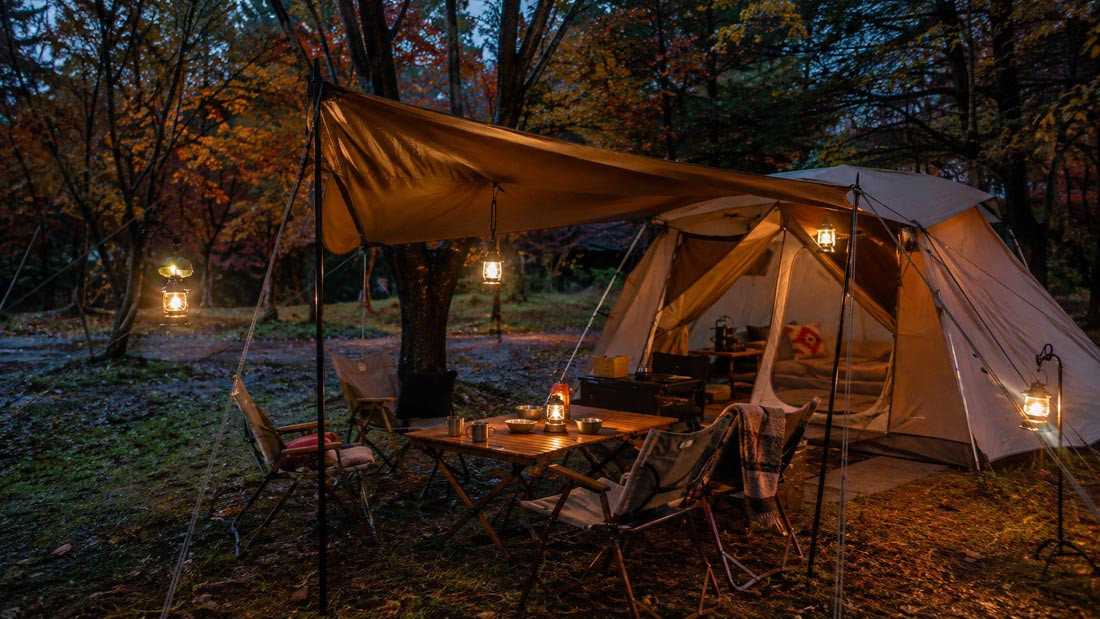
There may be a wooden table in the center, matching chairs arranged around it, warm lanterns hanging overhead, a soft rug underfoot, and neatly chosen cups and plates waiting for dinner. As the sun disappears, small lights begin glowing around the campsite.
Suddenly, it doesn’t feel like a patch of dirt with a tent on it.
It feels like home.
I’m K-papa, a Korean creator living in Korea, and this is one part of Korean camping culture that I find especially fascinating. I’ve seen plenty of campsites where the owner clearly spent time thinking about how the space should feel, not just how it should function.
And honestly?
Sometimes I walk past one of those beautifully arranged sites and slow down without realizing it.
You just want to look.
So why do Korean campers put so much effort into turning campsites into outdoor living rooms?
The answer isn’t simply “because they like camping gear.”
It’s much more emotional than that.
Camping in Korea Isn’t Always About Escaping Comfort
There are different ways to imagine camping.
For some people, the appeal is simplicity.
Take only what you need. Leave civilization behind. Sleep under the stars. Wake up, pack everything, and move on.
That kind of camping certainly exists in Korea too.
But another style has become very familiar here: creating a comfortable temporary home outdoors.
The goal isn’t necessarily to prove how little you can survive with.
Sometimes it’s almost the opposite.
You already spend enough of your week rushing around, commuting, answering messages, taking care of the family, and staring at screens.
Then the weekend arrives.
You drive out of the city, set up your campsite, make coffee, sit down and finally think:
Okay. I’m not going anywhere for a while.
In that moment, comfort doesn’t feel like cheating at camping.
It feels like the whole point.
The Korean Idea of “Gamseong Camping”
If you browse Korean camping content, you may come across the word gamseong (감성).
It is difficult to translate perfectly with one English word. Depending on the situation, it can refer to emotion, mood, sentiment, atmosphere, or a certain aesthetic feeling.
So gamseong camping (감성 캠핑) isn’t simply about owning pretty things.
It is about creating a mood.
Warm-colored lighting instead of harsh white light.
Wood, canvas, fabric, and natural colors that blend together.
A table that looks inviting when dinner arrives.
A lantern casting a small pool of light while everything beyond the campsite becomes dark.
Individually, none of those things seems especially important.
Together?
They can completely change the feeling of an evening outdoors.
I think this is where people sometimes misunderstand decorative Korean camping. From the outside, it can look like a lot of effort just to make a campsite look good.
But when you’re actually sitting there after sunset with a warm drink in your hand, the atmosphere doesn’t feel pointless at all.
It becomes part of the memory.
The Campsite Has “Rooms,” Even Without Walls
Look carefully at a well-arranged Korean campsite and you may notice something familiar.
It has a layout.
There is a place for cooking.
A place for eating.
A place where everyone sits and talks.
A sleeping area.
Sometimes there is even a small corner that seems to exist for no practical reason other than looking nice.
In other words, people often organize a campsite almost like a home.
A table can become the equivalent of the dining room.
A group of chairs becomes the living room.
The tent becomes the bedroom.
And the tarp or shelter above everything acts almost like a roof connecting those spaces.
There may not be walls, but mentally, the boundaries are there.
That’s one reason the phrase “outdoor living room” feels so appropriate.
People aren’t simply placing equipment on the ground.
They’re creating a temporary living space.
Lighting Changes Everything After Sunset
During the day, even a beautifully decorated campsite can look fairly ordinary.
Then the sun goes down.
This is when Korean campsite styling often comes alive.
Lanterns become incredibly important—not only because people need to see, but because different types of light create completely different moods.
One powerful white light can illuminate an entire site.
Useful?
Absolutely.
Romantic?
Not exactly.
Several smaller warm lights create something very different.
A lantern on the table makes dinner feel cozy. Another hanging from a pole softly illuminates the seating area. A small decorative light near the tent adds warmth without making the entire campground look like a parking lot under stadium lights.
I’ve always thought nighttime is when a campsite shows its real personality.
During daylight, you’re looking at objects.
After dark, you’re looking at atmosphere.
There is a moment at Korean campgrounds that I really like: dinner is finished, the cooking has slowed down, the campground becomes quieter, and all you see between the trees are little pools of warm light from neighboring sites.
That doesn’t feel like shopping or decoration.
It feels peaceful.
Why So Many Campsites Have a Color Theme
Another thing you may notice is coordination.
One campsite may be mostly beige and wood.
Another is olive green and black.
Someone else prefers tan canvas, vintage-style lighting, and wooden furniture.
Occasionally you’ll see a very modern black-and-gray setup that looks almost architectural.
None of this is required for camping.
Your coffee tastes exactly the same whether your mug matches your chair or not.
Probably.
But humans are strange creatures.
We decorate bedrooms. We choose curtains that work with our walls. We spend far too long deciding between two almost identical shades of beige for a sofa.
Why would all of that suddenly disappear just because we’re outdoors?
For campers who enjoy decorating, selecting colors and materials is another creative part of the hobby.
The campsite becomes a small canvas.
The Table Is Often the Heart of the Campsite
If I had to choose one place that feels most like the center of Korean family camping, I wouldn’t choose the tent.
I’d choose the table.
That’s where the interesting part of the day happens.
Coffee in the morning.
Fruit in the afternoon.
Dinner preparation.
Korean barbecue sizzling nearby.
Someone reaching across the table for another side dish.
Parents talking while the children are busy doing something else.
And later, perhaps drinks and a long conversation after dark.
The sleeping tent matters, of course.
But you may spend far more of your waking hours around the table.
So it makes sense that many campers pay attention to how this area feels.
A table isn’t just somewhere to put food.
For a weekend, it becomes the family’s dining room.
Korean Home Interior Culture Doesn’t Stop at the Front Door
Korea has a strong interest in interior styling, small-space organization, cafés, home décor, and visually pleasing everyday objects.
You can see that aesthetic sensitivity in plenty of ordinary places.
Coffee shops are an obvious example.
Walk through Seoul or another Korean city and you’ll find cafés where someone has clearly thought about every chair, lamp, cup, wall texture, and plant.
That same enjoyment of atmosphere can travel to the campsite.
If someone enjoys creating a comfortable space at home, it isn’t surprising that they might enjoy doing the same thing outdoors.
The difference is that a campsite disappears after two days.
Oddly enough, maybe that’s part of the appeal.
You create something.
You enjoy it.
Then you take it all apart.
Next weekend, you can create something slightly different.
Social Media Definitely Plays a Role—But It Isn’t the Whole Story
We should talk about the obvious part.
Photos.
Beautiful campsites photograph very well.
A warm lantern, canvas tent, wooden table, steaming cup of coffee, and autumn trees in the background practically ask to be photographed.
Instagram, YouTube, Korean blogs, and online camping communities have certainly helped people discover campsite styles and share their own setups.
Someone sees an attractive campsite online and thinks:
I like that.
Then they adapt part of the idea to their own setup.
Trends spread.
Colors become popular.
Certain styles appear everywhere for a while.
But I don’t think social media explains everything.
If decoration were purely for photographs, people would stop caring once the camera was put away.
They don’t.
The lights stay on.
The chairs remain arranged around the table.
People sit there for hours.
The atmosphere is being experienced, not just photographed.
That’s an important difference.
Seasons Give Korean Campers a New Room to Decorate
Korea has four distinct seasons, and the atmosphere of camping changes dramatically throughout the year.
Spring brings fresh green scenery and cool evenings.
Summer means longer days, shade, fans, cold drinks, and finding ways to survive humidity with your dignity intact.
Autumn may be the dream season for many campers—cooler air, changing leaves, and evenings that practically demand a warm lantern.
Then winter arrives and everything feels different again.
The colors, fabrics, lighting, food, and overall mood can shift with the season.
For people who enjoy campsite styling, this means the same campsite doesn’t have to feel the same every time.
A setup that feels perfect in October may feel completely wrong in July.
And that’s fun.
Camping becomes something you can reinterpret throughout the year rather than repeat exactly.
Decorating Can Make Family Camping Feel More Personal
This is probably the part I understand most as a father.
When you camp with family, the campsite isn’t only your sleeping location.
For a day or two, it’s where family life happens.
You eat there.
You talk there.
You watch your children play from your chair.
Someone gets hungry at the wrong time.
Someone can’t find something that is almost certainly right in front of them.
Someone says they’re cold five minutes after insisting they weren’t cold.
In other words, it’s still family life.
Just outdoors.
Making that space comfortable and pleasant can make the whole weekend feel more special.
Children may not care whether the lantern matches the table.
They probably don’t care about your carefully selected color palette either.
But they remember sitting together at night.
They remember roasting or grilling something.
They remember the lights.
They remember waking up somewhere that wasn’t home.
Sometimes adults decorate the space, but what we’re really decorating is the memory around it.
A Beautiful Campsite Doesn’t Have to Be Perfect
Here’s the part that gets lost online.
Real campsites are messy.
A jacket ends up hanging over a chair.
There are wet wipes on the table.
A half-empty water bottle appears in the middle of your beautiful arrangement.
Someone leaves their shoes exactly where you didn’t want them.
Then the wind blows something over.
That’s camping.
And personally, I think a campsite becomes more interesting once it stops looking like a catalog.
A perfectly styled photograph may get attention online, but the campsite I want to sit in is one that looks comfortable enough that nobody is afraid to use it.
A good outdoor living room should still be lived in.
Otherwise, what’s the point?
Why Korean Campers Decorate Campsites Like Living Rooms
So why has the outdoor-living-room style become such a recognizable part of Korean camping culture?
Because for many campers, the campsite isn’t simply a place to pitch a tent.
It’s a weekend home.
Decorating it makes the space feel personal. Warm lighting makes the evening slower. A thoughtfully arranged table brings everyone together. Colors and materials allow campers to express their own tastes.
And perhaps most importantly, all of it creates a psychological boundary between everyday life and the weekend.
You haven’t simply driven somewhere else.
You’ve made a different little world for two days.
Then Sunday comes.
The lanterns come down.
The chairs fold.
The outdoor living room disappears into the car.
And honestly, that moment always feels a little sad.
Which is probably a sign that the space mattered more than we thought.
K-papa’s Take
When I see a beautifully arranged campsite in Korea, the expensive equipment isn’t usually what catches my attention first.
It’s the feeling.
A warm light over the table.
A chair facing the trees instead of a screen.
Dinner taking much longer than it would at home because nobody is in a hurry.
That, to me, explains Korean-style campsite decorating better than any list of gear ever could.
Yes, people want their campsite to look nice.
Yes, taking a good photo can be part of the fun.
But I think something more human is happening underneath all of that.
We spend all week living inside rooms someone else designed—apartments, offices, classrooms, cafés.
Then we go camping and, for one weekend, get to build our own little room under the sky.
Maybe that’s why we enjoy decorating it so much.