Why Korean Families Love Car Camping
Friday evening has a particular feeling when you have children.
The school week is over. Work is finally loosening its grip. Everyone wants to do something together, but nobody wants the “something” to become another complicated project that requires three days of recovery afterward.
This is where Korean family car camping begins to make sense.
Not because the car itself is exciting. Usually, it isn’t. And not because every Korean family dreams of filling a vehicle with outdoor equipment and disappearing into the mountains every weekend. They don’t.
The appeal is much more ordinary than that.
A car gives a family options.
I’m K-papa, a Korean dad with two daughters, and that’s the part of car camping I understand most easily. Family outings rarely go exactly as imagined. Someone gets cold. Someone wants a different snack. The weather changes. A child who had endless energy ten minutes ago suddenly looks as if she has completed an expedition across Antarctica.
With family camping, flexibility isn’t a luxury. Sometimes it is the difference between a good memory and a very long drive home.
First, What Does “Car Camping” Mean in Korea?
There is a small language problem here.
For some English speakers, “car camping” can mean sleeping inside a vehicle. Korea has that style too, commonly associated with chabak — literally a form of overnighting with the car. But when people talk more broadly about family-oriented auto camping, the important idea is often that the car can reach or stay close to the campsite.
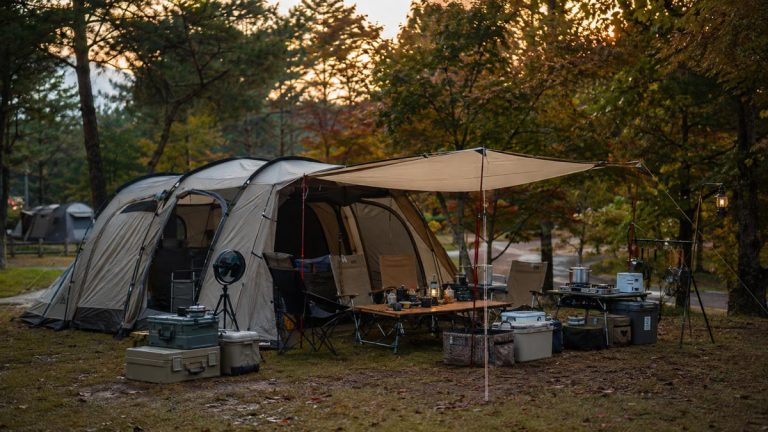
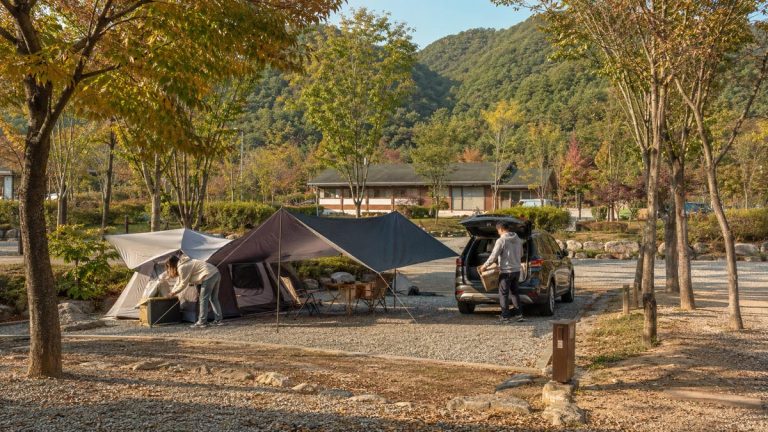
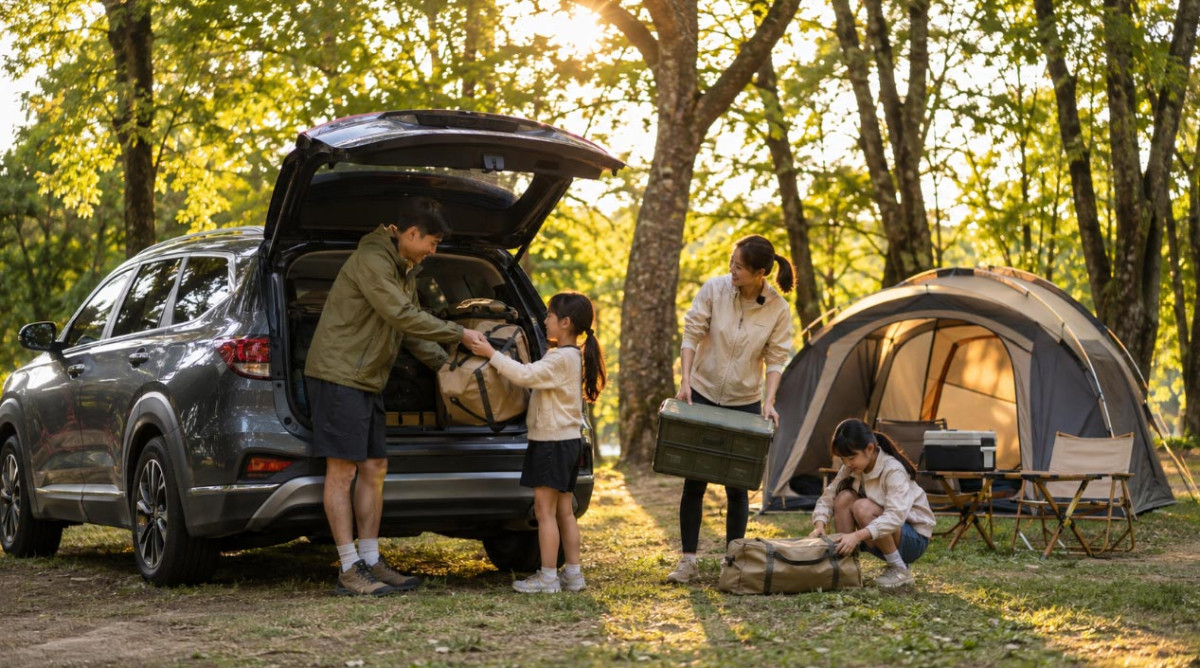
The family drives to the campground, unloads near the site, sets up its outdoor space, and keeps the vehicle within practical reach where the campground layout allows it.
That sounds like a minor logistical detail.
For parents, it isn’t minor at all.
The car becomes a bridge between ordinary home life and outdoor life. You can leave the apartment in familiar clothes, travel together, carry what the family needs, arrive at a designated campground, and create a temporary outdoor home without turning the journey itself into a test of endurance.
That accessibility is a big part of the attraction.
The Real Luxury Is Having a Backup Plan
When I was younger, I probably thought of outdoor freedom as needing less.
As a father, I see freedom a little differently.
Sometimes freedom is knowing there is a dry jacket in the car.
Or another blanket.
Or the snack your child insisted she didn’t want when you left home and now absolutely needs.
The vehicle gives families a buffer against the small surprises that come with spending time outdoors. It offers storage, transport, and — depending on the situation — a familiar place to regroup for a moment.
That doesn’t make the camping experience less authentic. At least, I don’t think it does.
There’s a tendency to imagine that “real” camping must involve suffering a little. Carry less. Go farther. Make everything harder. That can be a wonderful style of camping for people who love it.
But parents often have a different objective.
They aren’t necessarily trying to prove that the family can survive outdoors with the minimum possible equipment. They may simply want everyone to spend a Saturday outside, eat together, watch the sky get dark, and go to bed tired for the right reasons.
Car camping makes that goal more forgiving.
Somewhere Between an Outing and a Tiny Adventure
This is the part I think outsiders sometimes miss when they look at Korean family camping.
A weekend doesn’t need to become a grand wilderness expedition to feel like an adventure to a child.
Sleeping somewhere different is already unusual.
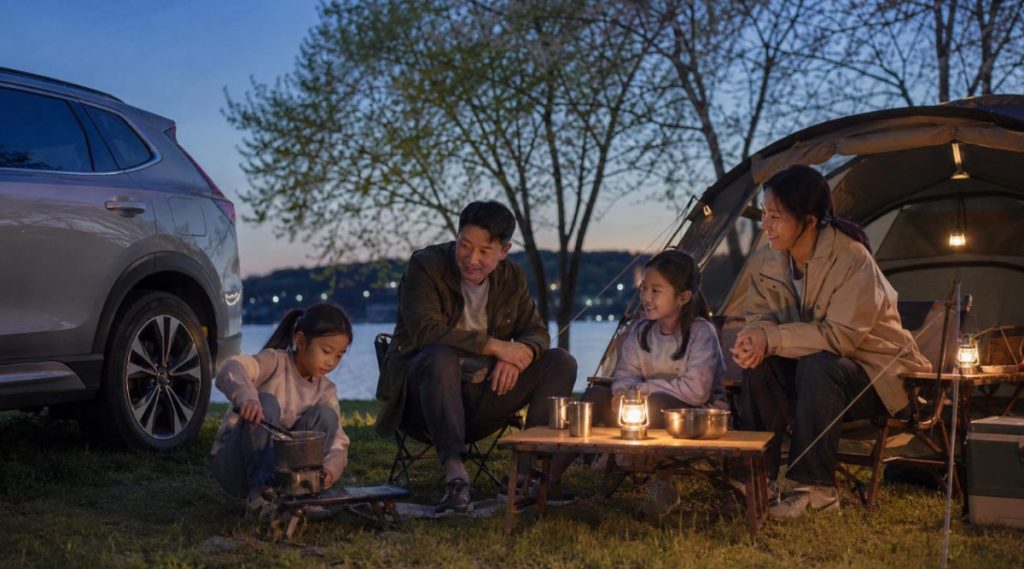
Eating breakfast outside feels different from eating the exact same food at the kitchen table. Walking around a campground with a flashlight after sunset can feel far more exciting when you’re small than adults remember. Even rain sounds different on a tent roof.
Children are very good at finding novelty in things adults have learned to ignore.
As a dad, that changes the way I judge a family trip. Adults can become obsessed with whether a destination is impressive enough. Children may remember something completely different: the strange shadow made by a lantern, helping with breakfast, a bug that landed on the table, or the fact that everyone stayed outside longer than usual.
That is why car camping occupies such a useful middle ground.
It is farther from routine than a normal afternoon outing, but it doesn’t have to carry the pressure of a major family vacation.
You go away for a little while.
Home is still within reach.
Emotionally, those two things work surprisingly well together.
Why the Car Changes the Family Equation
Try planning almost anything with children and you quickly discover that one person is rarely just one person.
A child also brings changes of clothes, food preferences, bedtime habits, weather concerns, entertainment, sudden tiredness, and a remarkable ability to need something immediately after you decided it was unnecessary.
I say that with affection.
Mostly.
This is where a vehicle changes the calculation. It allows parents to plan around uncertainty without requiring every family member to carry everything personally. If the morning is colder than expected, there’s room for another layer. If dinner plans change, there may be alternatives. If something isn’t needed, it can remain in the vehicle rather than occupying the living area.
The important point isn’t how much equipment Korean campers bring — that’s a different conversation entirely. It’s that the vehicle gives family camping a forgiving infrastructure.
Parents don’t have to predict the entire weekend perfectly.
And anyone who has raised children knows how valuable that is.
The Journey Is Part of the Weekend
There is another reason the car matters that has almost nothing to do with carrying things.
The family is together before the campsite even appears.
A drive changes the rhythm of a day. The city gradually gives way to a different view. Conversation comes and goes. Someone falls asleep. Someone asks how much longer it will take, possibly much earlier than seems reasonable.
Then you arrive.
That transition matters.
Korean urban life can move quickly. School schedules, work, commuting, appointments and household routines have a way of dividing a family into separate little timelines. A weekend drive does the opposite for a while: everybody is going to the same place.
I don’t want to romanticize traffic. A slow road is still a slow road, and a child asking “Are we there yet?” does not become more poetic because there are trees outside the window.
But the movement from apartment to campsite gives the weekend a beginning. You can feel that ordinary life has been paused for a moment.
I think that feeling is part of what families are really buying with their time.
At the Campsite, Ordinary Family Life Gets Rearranged
The funny thing about family camping is that many activities are not actually new.
You still prepare food.
You still tell children to put things back where they found them.
You still wonder where somebody left a sock.
You still have to clean up.
The setting changes everything.
At home, dinner can become something everyone completes before moving to the next task. Outdoors, cooking and eating can become the evening itself. A simple drink feels better when you sit down after setting up. Conversation stretches because there is no room next door that someone urgently needs to disappear into.
This, more than any particular tent or camping product, is what I find appealing about family car camping.
It takes familiar family routines and moves them somewhere that makes everyone notice them again.
You aren’t necessarily creating a completely new family experience.
You’re changing the background.
Sometimes that’s enough.
Children Get a Little More Room to Be Capable
Family camping also gives children small jobs that feel more meaningful outdoors.
They can help carry light items, organize their own corner, prepare something simple for a meal, hold a flashlight, or remember where a shared item belongs. None of these tasks is dramatic, but outside the home they can feel more important.
I like that.
As parents, it is easy to do everything ourselves because it’s faster. Much faster, usually.
But camping naturally creates moments when children can participate instead of simply being entertained. A tiny task becomes part of making the temporary family space work.
Of course, this can also mean that a job taking thirty seconds somehow takes seven minutes.
That’s family life.
The value isn’t efficiency. It’s participation.
And when everyone has contributed something, even something small, the campsite begins to feel like a place the family made together rather than a destination the parents delivered.
The Part Beautiful Camping Photos Usually Leave Out
Now for the less romantic side.
Family car camping still takes work.
Things have to be packed. The car has to be loaded. The family has to get there. The campsite has to be set up. Weather can turn uncooperative. Children can become tired exactly when the adults are busiest. And after the peaceful outdoor weekend comes the part nobody puts on the hero image: packing everything again.
Then there is the trip home.
Then unloading.
Then laundry.
This is why I hesitate whenever camping is presented as effortless relaxation. It can be deeply relaxing, but somebody usually did quite a lot of work to create that relaxed moment.
Car camping doesn’t remove that work.
What it does is make many parts of it manageable for an ordinary family. You can transport more easily, keep useful things within reach, and adapt when the plan changes.
For me, that distinction matters. The appeal isn’t that car camping makes family camping easy.
It makes it possible enough to do again.
That’s much more important.
Korean Family Car Camping Isn’t About Escaping Family Life
When people talk about getting outdoors, they often use the language of escape.
Escape the city. Escape work. Escape routine.
Family car camping feels slightly different to me.
You don’t escape family life. You bring it with you.
The snack requests come too. So do the small disagreements, the missing socks, the bedtime negotiations and the question nobody can answer: “Where did we put that thing we just had?”
But all of it happens under a different sky.
That’s why I think the popularity of car-supported camping among Korean families makes sense. The car lowers the practical barrier between a busy urban week and a night outdoors. It gives parents room for imperfect planning. It lets children experience something that feels adventurous without requiring the entire family to become hardcore outdoor specialists.
Most importantly, it creates a block of time in which everyone is sharing the same place and the same small problems.
As a father, I don’t think family memories always come from extraordinary destinations. Sometimes they come from ordinary moments that happened somewhere slightly unusual.
A warm breakfast outside.
A child carrying something proudly because she was asked to help.
Someone falling asleep on the drive home before the car has gone very far.
None of those moments needs expensive equipment or a perfect campsite to matter.
The car simply makes it easier to get the family there.
And maybe that’s the most honest answer to why Korean families love car camping.