
Glasslock Classic White Edition 10-Piece Set Review: Practical Glass Storage for Everyday Korean Meals
This Glasslock Classic White Edition 10-Piece Set review examines its four container sizes, glass construction, sealing system, everyday usability, and key limitations based on official specifications and Korean owner feedback.
Quick Verdict
Best for: One- or two-person households that regularly store side dishes, sauces, leftovers, and meal-prep portions.
Biggest advantage: Four practical capacities, transparent glass bodies, and four-sided locking lids make food identification and refrigerator organization easier.
Main drawback: The containers are noticeably heavier than plastic alternatives, while the removable silicone seals require regular cleaning and correct installation.
Not suitable for: Anyone seeking lightweight lunch containers, large bulk-storage boxes, or oven-safe cookware.
Final buying assessment: Based on Glasslock’s official specifications and four Korean owner reviews, this is a well-balanced starter set for refrigerated food storage and microwave reheating. The 715 mL containers are likely to be the most frequently used pieces.
This is a research-based guide. The conclusions are based on Glasslock’s official product information and four Korean owner reviews. K-papa did not personally test this product.
Glasslock Classic White Edition 10-Piece Set Review: What Is Included?
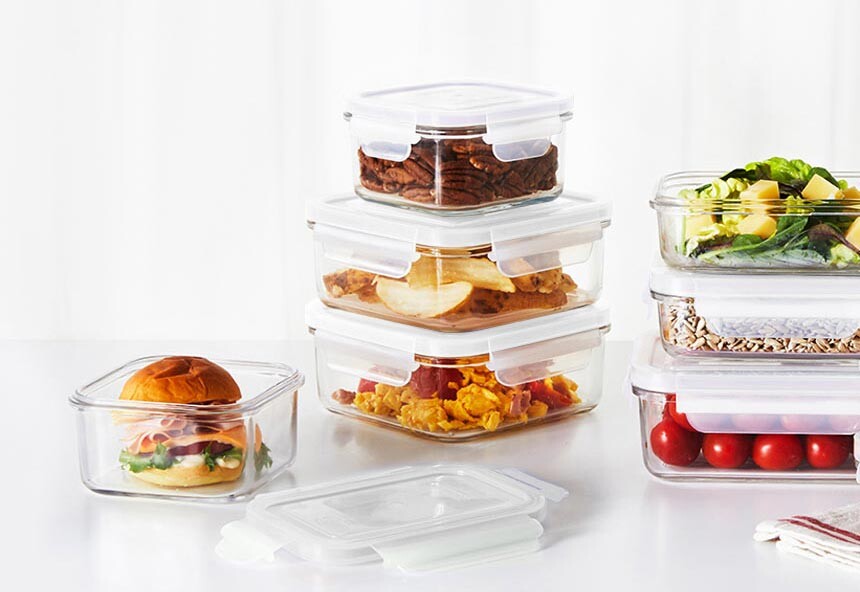
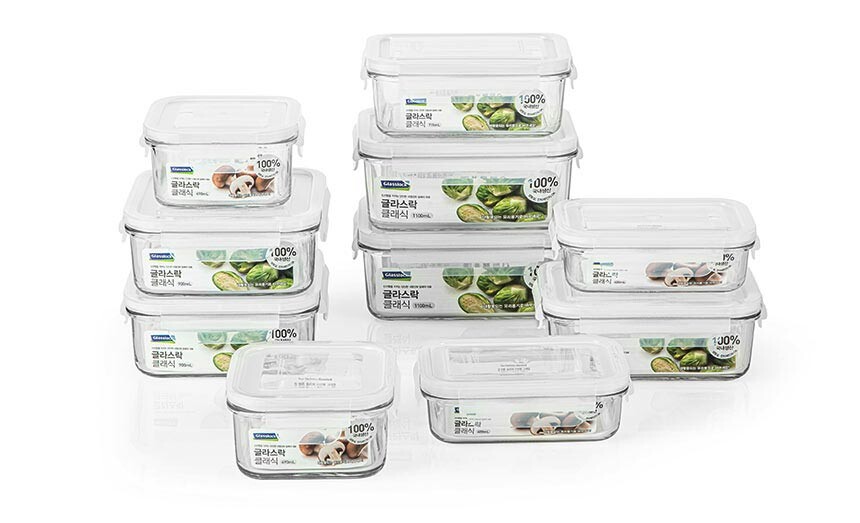
This package contains ten complete glass containers with lids. It does not use the common marketing method of counting each container and lid as two separate pieces.
The four capacities cover small side dishes, regular leftovers, prepared vegetables, and modest portions of main dishes.
| Shape and capacity | Quantity | Official exterior dimensions | Practical use |
|---|---|---|---|
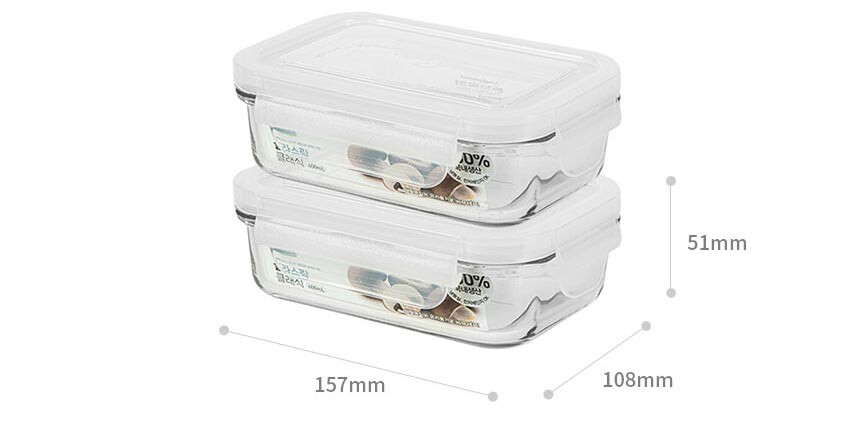
| Rectangular 400 mL | 2 | 157 × 108 × 51 mm | Sauces, small side dishes, or individual rice portions |
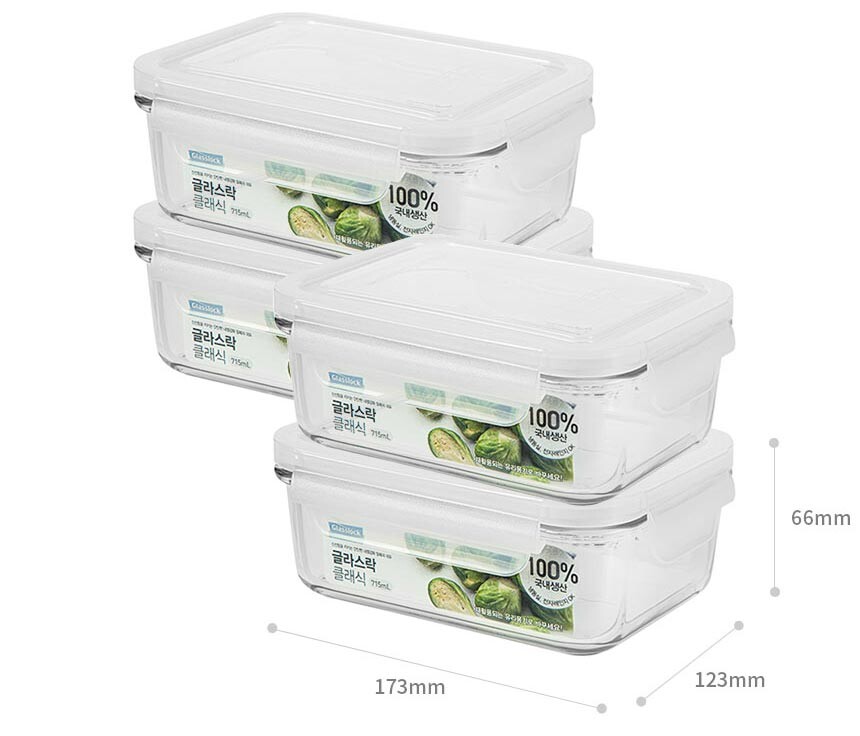
| Rectangular 715 mL | 4 | 173 × 123 × 66 mm | Regular side dishes, salads, stir-fries, and leftovers |
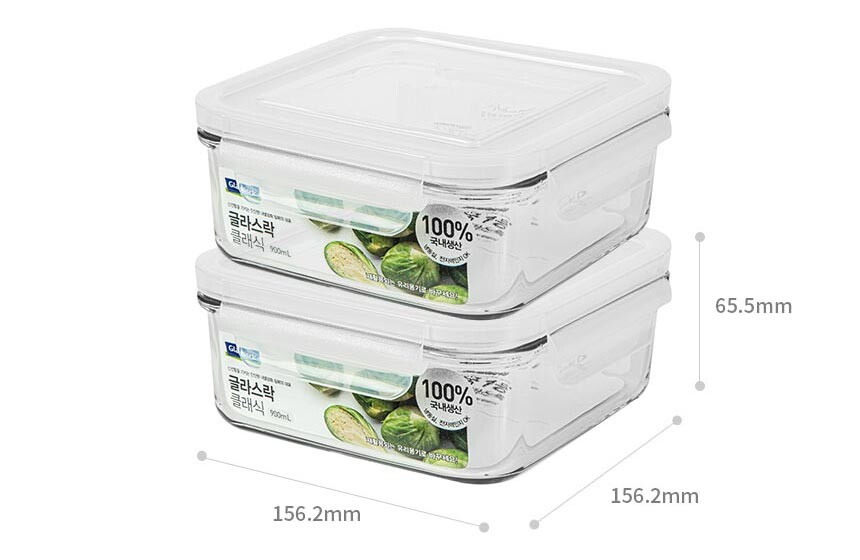
| Square 900 mL | 2 | 156.2 × 156.2 × 65.5 mm | Larger batches of vegetables or side dishes |
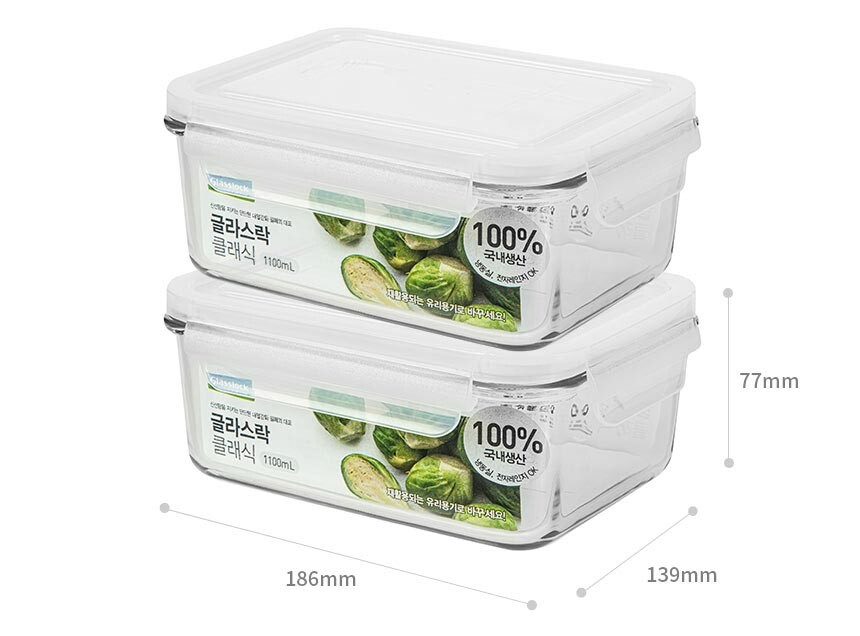
| Rectangular 1,100 mL | 2 | 186 × 139 × 77 mm | Kimchi, marinated food, or modest main dishes |
The combined nominal capacity is 7,660 mL. In practice, liquids and foods intended for freezing should not be filled to the rim.
According to the official product information, the containers use strengthened soda-lime glass bodies, polypropylene lids, and removable silicone seals. They are manufactured in South Korea.
An important distinction is that strengthened soda-lime glass is not the same as borosilicate ovenware. These containers are designed primarily for storage and microwave reheating, not for oven cooking.
Why the 715 mL container may become the most-used size
The set includes four 715 mL containers—twice as many as any other size. The Korean owner reports indicate that this is a practical choice rather than unnecessary duplication.
Reviewer B described 715 mL as the most useful capacity for a two-person household. It was large enough for regular side dishes, salads, stir-fried food, and moderate portions of leftovers without taking up excessive refrigerator space.
Reviewer D used two 715 mL containers to divide and store a relatively large piece of kimchi.
At 173 × 123 × 66 mm, this size is broad enough to make the food easy to see and serve. It is also shallow enough to avoid the forgotten-food problem that can occur with deep containers.
The remaining capacities have more specialized roles:
- 400 mL: Reviewer B considered it very small and best suited to sauces, leftover side dishes, or small portions. Reviewer D purchased two additional 400 mL containers because the size worked well for portioned rice.
- 900 mL: The square footprint provides room for a larger batch of vegetables or side dishes. Reviewer B reportedly stored two cucumbers and half an onion in one container, although the actual fit will depend on how the ingredients are cut.
- 1,100 mL: This size is better suited to kimchi or a main dish such as spicy pork. It is still too small to replace a family-size kimchi container.
This is primarily a side-dish and leftover-storage set. Large households may need additional containers above 1,100 mL.
Living in Korea, this mix of sizes makes sense to me because a Korean refrigerator often fills up with several small and medium containers rather than one or two huge leftover boxes. A little kimchi, a few banchan, cooked vegetables, sauces, and yesterday’s main dish may all need separate storage. That is why I think the four 715 mL containers are actually more useful than replacing them with one or two oversized containers. The weakness appears when a household meal-preps large batches of soup, marinated meat, or family-size kimchi—in that case, this set would need to be supplemented with something larger.
What Korean owners repeatedly noticed in daily use
Three positive themes appeared across several of the Korean reviews: clear visibility, practical sizing, and orderly refrigerator storage.
The glass bodies are transparent on all sides, allowing users to identify food without opening every container. This is particularly useful in a refrigerator containing several Korean side dishes that may look similar through an opaque lid.
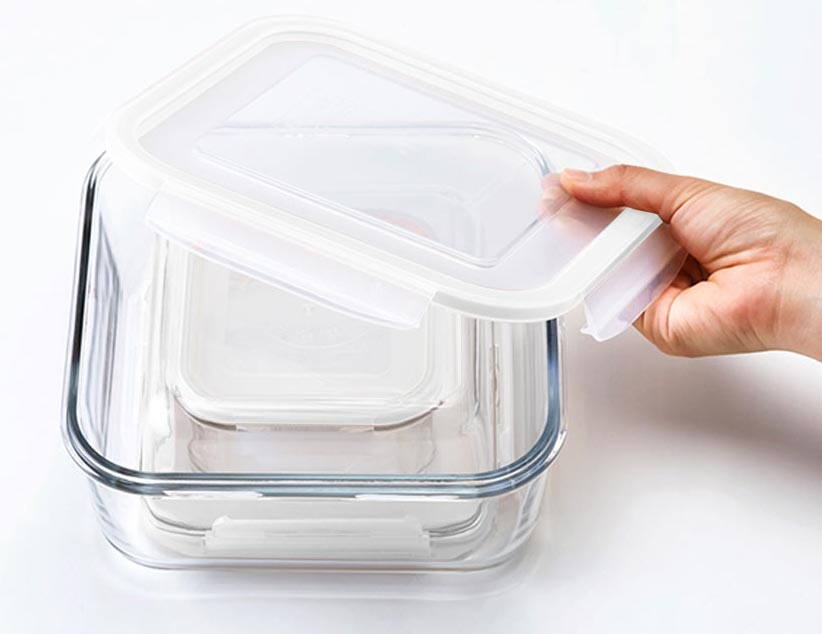
Reviewers B and C also liked the coordinated appearance created by the rectangular and square shapes. The flat bases and lids allow the containers to be stacked more securely than many round storage boxes.
The design may improve refrigerator organization, but “space-saving” should not be exaggerated. Ten rigid glass containers still require substantial cabinet space when they are empty. The bodies do not collapse or nest completely inside one another.
The white lids create a clean, restrained appearance. However, white polypropylene and silicone may reveal food stains more easily than darker materials.
None of the supplied reviews documented long-term lid discoloration. It would therefore be premature to claim that the white components will remain spotless after years of contact with kimchi, curry, or chili-based sauces.
If maximizing refrigerator space is your main priority, our LocknLock Bisfree Modular Plus review explains how its modular design compares as a lighter, more storage-focused alternative.
Where glass performs better than plastic—and where it does not
Reviewers A, B, and C had previously experienced odor or color retention in non-glass containers. They preferred glass for storing foods such as kimchi, curry, and heavily seasoned side dishes.
The nonporous glass body is generally less likely than many plastics to retain visible stains or persistent food odors. Its transparency also makes oily residue easier to detect during washing.
However, the entire container is not made from glass. Food and sauce can still contact the polypropylene lid and silicone seal. These components need careful cleaning after storing oily, spicy, or strongly aromatic food.
Weight is the unavoidable trade-off.
Reviewers B and D both identified the weight of the glass as a disadvantage. Reviewer C chose glass despite having wrist discomfort because sealing performance and resistance to food odors were more important to her.
The set may be inconvenient for:
- People with limited grip strength or wrist pain
- Children carrying food to school
- Commuters who prioritize a lightweight lunch bag
- Anyone who frequently handles containers over tile or stone floors
Strengthened glass is designed to provide better resistance to ordinary impact and temperature changes, but it is not unbreakable. A chipped or cracked container should be replaced rather than used for hot food.
How well do the four-sided lids and silicone seals work?
Each lid uses four locking tabs and a removable silicone seal. The manufacturer describes this as a four-sided locking system intended to create a secure closure.
Reviewers A, B, and C were generally positive about how the lids fitted the glass bodies.
Reviewer A had previously used food containers that required considerable force to close. She found the Glasslock lids easier to align and lock.
Reviewer C noticed less food odor inside her refrigerator after transferring side dishes into the Glasslock containers. This was one owner’s short-term observation, not a controlled sealing test. Individual results may vary depending on the food, seal condition, and refrigerator environment.
Reviewer A also addressed a more specific concern. Before purchasing the set, she had encountered several online comments claiming that the silicone seals sometimes came out when the lids were opened.
After receiving her containers, she concluded that some seals may not have been fully pressed into their channels during packaging. She pushed them firmly into place and reported that they remained seated through repeated opening.
A sensible setup procedure would be:
- Remove each silicone seal before the first wash.
- Clean and completely dry the seal and its channel.
- Press the seal evenly into the groove.
- Check that the corners are not twisted or raised.
- If a locking tab requires unusual force, reopen the lid and inspect the seal alignment.
A removable seal makes detailed cleaning possible, but it also creates additional maintenance. Moisture or food residue trapped inside the channel can produce odors even when the glass body is clean.
Microwave, freezer, dishwasher, and oven use explained
The supplied reviews contain an important contradiction.
Reviewer C stated that the containers could be used in an oven. Reviewers B and D said that oven use was prohibited. Glasslock’s supplied official usage guide does not list an oven among the approved appliances.
Based on the manufacturer’s information, the safest conclusion is clear:
Do not use the Glasslock Classic White Edition in an oven, toaster oven, on a stovetop, under a grill, or over a direct flame.
Microwave use
The glass body is intended for microwave reheating.
Do not heat food with all four locking tabs tightly sealed. Steam must have a safe route to escape. Unless the instructions supplied with the exact product state otherwise, remove the lid before microwaving.
Freezer use
The manufacturer permits freezer storage.
Leave expansion space when freezing liquids, soups, or wet food. Avoid transferring a deeply frozen container directly into intense heat because sudden temperature changes can place stress on the glass.
Dishwasher use
The official product information indicates dishwasher compatibility.
Place lightweight lids and silicone seals securely so that they cannot move inside the machine. Always follow the washing instructions supplied with the purchased set, particularly for the polypropylene lids.
Hot-water sterilization
The manufacturer’s usage guide indicates compatibility with hot-water sterilization. Avoid exposing cold glass to an abrupt temperature change, and follow the manufacturer’s handling instructions.
Oven use
Oven use is not listed as an approved function for this Classic White Edition set. One Korean review claiming otherwise conflicts with the official guidance and should not be used as a safety reference.
Five limitations worth knowing before you buy
1. The containers are heavier than plastic
This was the clearest repeated disadvantage in the Korean reviews. The weight becomes more noticeable when the 900 mL and 1,100 mL containers are filled with food.
2. The set favors small and medium portions
The included capacities work well for Korean side dishes and meals for one or two people.
The largest container holds only 1,100 mL. Households storing large amounts of soup, kimchi, or batch-cooked food will need additional high-capacity containers.
3. The silicone seals need regular maintenance
The removable construction makes thorough cleaning possible, but the seals must be dried and installed correctly.
Reviewer A’s experience suggests that a loose seal may sometimes be an installation problem rather than a permanent product defect. That does not guarantee that every loose or damaged seal can be fixed.
4. Replacement parts may not match the white set
Reviewers B, C, and D valued the ability to purchase replacement lids separately.
Reviewer D reported receiving a replacement in a different color and noted that replacement colors could be supplied at random. Buyers who want a perfectly coordinated white set should confirm the seller’s color and compatibility policy before ordering parts.
5. Overseas availability may be inconsistent
The exact Classic White Edition bundle may not be sold under the same name in every country.
International buyers should confirm the capacities, dimensions, model information, delivery cost, and return conditions instead of relying only on a similar product photograph.
Who should buy the Glasslock Classic White Edition set?
This set is best suited to:
- A single person or couple building a coordinated food-storage collection
- Households that regularly store kimchi, curry, sauces, and seasoned side dishes
- People who want to identify food without opening each container
- Users who frequently reheat leftovers in a microwave
- Anyone who values separately replaceable lids
- People who prefer matching, stackable containers for refrigerator organization
It is less suitable for:
- People who have difficulty handling heavy glassware
- Large families seeking bulk-storage containers
- Commuters wanting lightweight lunch boxes
- Cooks looking for oven-to-table glassware
- Users who dislike removing and cleaning silicone seals
What the four Korean reviews do—and do not—prove
The owner reviews provide useful qualitative information, but they are not laboratory tests. Most of them also describe recently purchased containers, so they offer more evidence about initial usability than long-term durability.
Opinions repeated in multiple reviews
- The four capacities are practical for everyday side dishes.
- The 715 mL size is particularly versatile.
- The clear bodies and matching lids create an organized appearance.
- The glass is noticeably heavier than plastic.
- Glass is preferred for strongly seasoned or highly colored food.
- Separately available replacement lids are useful.
Experience reported by one reviewer
- A loose silicone seal remained in place after it was pressed properly into its channel.
Subjective impressions
- Reduced food odor inside the refrigerator
- Satisfactory sealing performance
- Easier lid closure than some competing containers
Claims not established by the supplied evidence
- Quantified leak resistance
- Measured odor prevention
- Drop resistance
- Long-term resistance to lid staining
- The lifespan of the locking tabs
- Multi-year durability of the silicone seals
These distinctions matter. Owner experiences can help reveal practical details, but they should not be presented as controlled performance results.
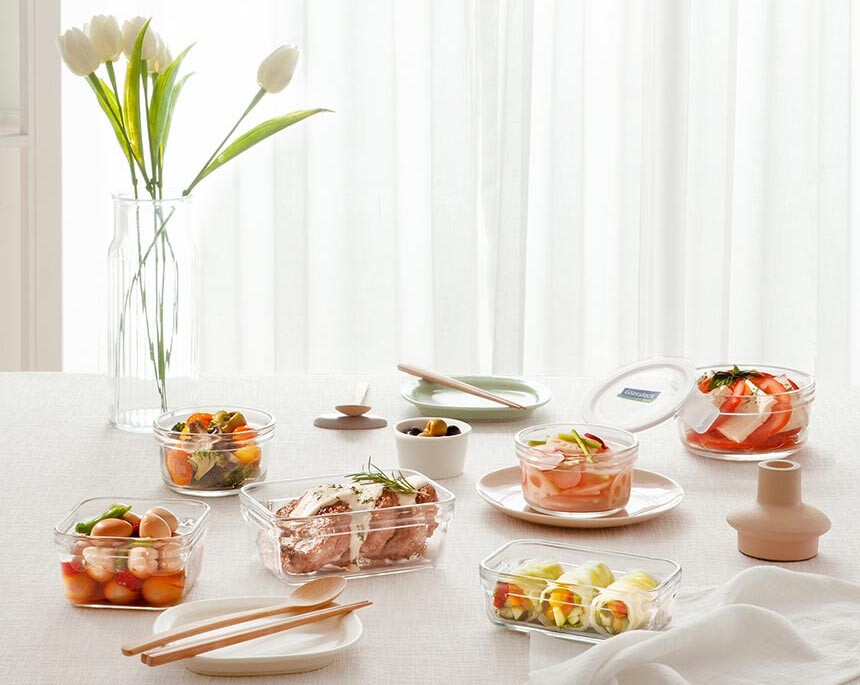
Product images courtesy of Glasslock: Glasslock Official Website
Final verdict: a strong everyday set with clearly defined limits
The Glasslock Classic White Edition 10-piece set succeeds because its configuration reflects ordinary refrigerator use.
The four 715 mL containers handle most daily storage needs, while the smaller and larger pieces cover sauces, rice, vegetables, kimchi, and modest portions of main dishes.
The transparent glass bodies make food easy to identify and are well suited to ingredients that frequently stain plastic containers. The matching white lids and stable rectangular shapes also create a more coordinated refrigerator layout.
Its weaknesses are equally practical. Glass is heavy, the silicone seals require maintenance, and the largest container is only 1,100 mL.
Most importantly, this is food-storage glassware—not oven cookware.
For a one- or two-person household seeking a first coordinated set of glass food containers, the overall configuration is sensible. Larger households and weight-sensitive users should consider supplementing it with bigger or lighter containers.
Frequently asked questions about the Glasslock Classic White Edition
Is the Glasslock Classic White Edition oven-safe?
No. The supplied official usage guide does not authorize oven use, and two owner reports specifically warn against it.
Do not use these containers in an oven, toaster oven, on a stovetop, under a grill, or over a direct flame.
Can the containers go in a microwave?
The glass bodies are intended for microwave reheating.
Do not microwave a container with all four locking tabs tightly sealed. Remove the lid unless the instructions included with the exact product provide another approved method.
Can the containers be stored in a freezer?
Yes, according to the official product guide.
Leave sufficient room for food and liquids to expand. Avoid moving a deeply frozen container directly into intense heat.
Are the containers dishwasher-safe?
The manufacturer advertises dishwasher compatibility. Follow the care instructions supplied with the product and position the lids and removable seals securely inside the dishwasher.
Which capacity is the most useful?
The 715 mL rectangular container is likely to be the everyday workhorse.
The set includes four of them, and multiple Korean reviewers found the capacity practical for side dishes, salads, stir-fried food, and leftovers.
Do the silicone seals fall out?
Reviewer A had encountered complaints about loose seals before buying the set. In her case, firmly pressing each seal into its channel resolved the problem.
This does not prove that every loose seal can be fixed, but checking the seal’s alignment is a sensible first step.
Can replacement lids be purchased separately?
The Korean owners reported that compatible replacement lids were available separately.
Availability, color, and compatibility may vary. Check the product code on the bottom of the container before ordering a replacement.
Is the set suitable for a large family?
It can handle everyday side dishes, but its largest container holds 1,100 mL.
Families that store large quantities of soup, kimchi, or batch-cooked meals will probably need additional high-capacity containers.
Since photos and text have their limits, here is a review video to give you a real sense of the product’s actual size and feel.