
LocknLock Fresh Maestro Vacuum Container Review: Smarter 3-Level Food Storage, but Is It Worth the Extra Effort?
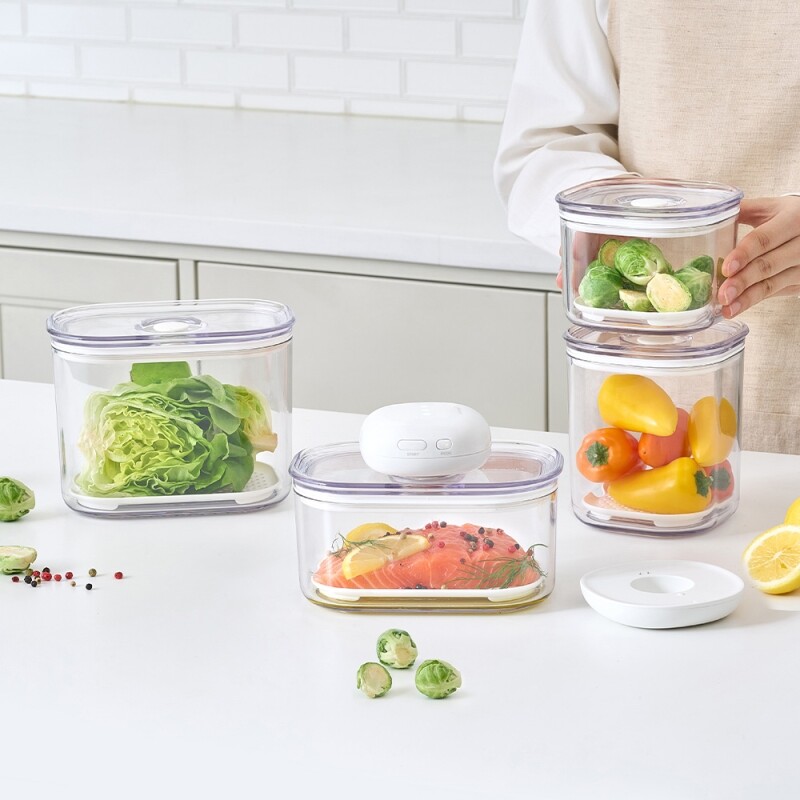
The LocknLock Fresh Maestro Vacuum Container is a premium food-storage system built around an unusual idea: delicate produce, aromatic ingredients, and dense foods should not all be stored at the same vacuum pressure.
Instead of relying on a single setting, the rechargeable pump offers three vacuum levels. LocknLock combines this with transparent modular containers, removable drainage trays, a controlled-release valve, and a broad range of sizes.
I’m K-papa, a Korea-based creator who introduces useful Korean products to international readers. For this LocknLock Fresh Maestro Vacuum Container review, I compared LocknLock’s official product information with five Korean articles. This is a research-based buying guide, not a claim of personal testing.
Quick Verdict
Best for: Households that buy produce in bulk, cook with many fresh ingredients, or regularly lose food before using it.
Biggest advantage: Three selectable vacuum levels make the system more adaptable than basic one-pressure vacuum containers.
Main drawback: Every opening requires the user to release the vacuum and then run the pump again after closing. That extra step may feel unnecessary for foods eaten within a day or two.
Not ideal for: Minimalist kitchens, very small refrigerators, or shoppers who want inexpensive containers that require no charging or maintenance.
Research-based verdict: The Fresh Maestro system makes the most sense when reducing food waste and organizing a busy refrigerator are priorities. It is harder to justify if you mainly store leftovers for short periods.
What makes the LocknLock Fresh Maestro Vacuum Container different?
Many vacuum containers have one operating mode: attach the pump and remove as much air as the system allows. Fresh Maestro adds three electronically controlled settings intended for different ingredient types.
LocknLock’s official guide presents the levels this way:
- Level 1 for aroma-sensitive ingredients: Coffee beans, green tea, hibiscus, herbs, and other foods whose fragrance or delicate structure should be protected.
- Level 2 for fresh produce: Tomatoes, bell peppers, broccoli, and similar fruits and vegetables.
- Level 3 for dry or dense foods: Examples in the official material include peanuts, farfalle pasta, and dried bananas.
The practical advantage is control. A lower setting avoids applying maximum vacuum pressure to every ingredient, while the higher modes are available when stronger air removal is appropriate.
One important discrepancy appears in the supplied Korean reviews. Two writers described Level 3 as suitable for meat and fish, while LocknLock’s main three-level illustration uses dry foods as its examples.
Because the official guide takes priority, buyers should follow LocknLock’s current food chart or operating instructions rather than treating an individual blogger’s category suggestions as definitive.


How the three-level vacuum pump works in daily use
The operating sequence is straightforward:
- Place the food in a suitably sized container and close the lid.
- Press the lid valve down to prepare it for vacuum sealing.
- Position the pump over the valve.
- Select the vacuum level with the smaller mode button, then press the larger start button.
- Wait for the pump to stop automatically when it reaches the selected vacuum level.
To open the container, lift one side of the valve. Air re-enters with an audible release, after which the lid can be removed.
One Korean reviewer supplied pressure figures of 15 kPa, 25 kPa, and 40 kPa for Levels 1, 2, and 3. However, those figures were not clearly presented in the supplied official product pages. They should therefore be treated as secondary-source information rather than confirmed specifications.
The pump’s officially stated maximum intake rate is 3.7 liters per minute. LocknLock also says a full charge supports more than 100 uses, although actual results can vary with container size, empty air volume, selected mode, battery condition, and how long the pump must run.
Charging is handled through a USB-C-connected base. The pump aligns with the base automatically, so it can remain in a convenient location instead of being connected directly to a cable after every use.
What Korean owners repeatedly noticed about the Fresh Maestro system
Four of the five supplied articles described broadly similar benefits. However, several appear to be promotional or sponsored reviews and should not be treated as independent laboratory evidence.
The most consistent observations were:
- Leafy vegetables appeared to remain usable longer than when stored conventionally.
- Clear containers made forgotten ingredients easier to spot.
- The drainage tray kept washed produce away from moisture collected at the bottom.
- Modular shapes improved refrigerator organization.
- The pump was considered simple to operate after the initial setup.
- Removable lid components made detailed cleaning more practical.
One reviewer from a two-person household reported that arugula, mushrooms, cherry tomatoes, fruit, and green onions remained in visibly better condition for about a week.
Another described storing watermelon cubes in the 4.2-liter container and using a 3.6-liter heat-resistant glass container for two small chickens.
These examples are useful for understanding capacity, but they are individual household experiences. They do not establish a universal storage life or guarantee the same outcome under different temperatures, hygiene conditions, moisture levels, or starting food quality.
Better food storage can reduce the amount of produce that gets thrown away. For scraps that cannot be avoided, see my Smartcara 400 Pro X Review: Ending Kitchen Sludge for Good to learn how a Korean food-waste processor handles wet kitchen waste.
What the “up to 50 days” freshness claim actually means
LocknLock advertises freshness retention for up to 50 days, supported by SGS testing presented in its official product material.
That claim needs context. It does not mean every food will remain safe, crisp, and flavorful for 50 days.
The supplied test chart identifies particular ingredients, preparation steps, and storage temperatures. Most entries were tested at approximately 3°C, with a stated test period of up to 50 days and a refrigerator range of 3°C to 5°C.
Examples shown in the official material include:
- Up to 50 days for selected cabbage, bell pepper, leafy vegetable, onion, mushroom, root vegetable, fruit, and cheese samples
- 35 days for Korean zucchini and cherry tomatoes
- A visual comparison involving meat stored for 21 days
- A 31-day visual example involving figs
- Separate comparisons using vacuum bags for some ingredients
LocknLock also notes that maximum storage time can vary with the food’s condition and the user’s storage environment.
“Up to 50 days” is therefore best understood as a maximum result achieved with selected foods under defined test conditions. It should not be treated as a universal shelf-life extension.
Vacuum storage reduces air exposure, but it does not sterilize food. Users must still begin with fresh ingredients, clean and dry the containers correctly, maintain a safe refrigerator temperature, and discard food showing suspicious odor, mold, texture changes, or other signs of spoilage.
Why the removable bottom tray matters more than it first appears
The perforated bottom tray is one of the system’s most practical features for fresh produce.
Washed vegetables can release water during storage. If leaves or cut surfaces remain in contact with that liquid, they may soften or deteriorate more quickly. The elevated tray separates the food from moisture collecting below.
Multiple Korean reviewers specifically connected the tray with better storage results for salad greens, green onions, herbs, and other moisture-sensitive vegetables.
The tray is removable, so the container can also be used without it for powders, dry ingredients, prepared side dishes, or foods that do not need drainage.


How strong are the transparent SAN containers?
The standard transparent containers use premium SAN, also described in the official product information as an acrylonitrile-styrene copolymer.
LocknLock states that the material is sourced from INEOS Styrolution and formed with walls approximately 4.5 mm thick.
SAN provides a glass-like transparent appearance while weighing less than glass. The wall thickness is particularly relevant because vacuum containers must tolerate repeated pressure changes without excessive flexing.
The official product material identifies the SAN range as BPA-free and suitable for:
- Refrigerator and freezer storage
- Dishwasher cleaning
- Microwave reheating
- Brief hot-water sterilization
These compatibility icons should not be interpreted as unrestricted heat resistance.
LocknLock’s care instructions say to open or remove the lid before microwave use, follow the stated temperature and time limits, and avoid using the container as cookware. The supplied instructions also recommend limiting hot-water sterilization to approximately 20 seconds.
Strongly colored or oily foods such as curry, sauces, and kimchi may stain or discolor transparent components. This is a cosmetic limitation common to many clear food containers and does not necessarily indicate material failure.
When the heat-resistant glass containers make more sense
The lineup also includes 1.95-liter and 3.6-liter rectangular wide containers made from heat-resistant glass, according to the official lineup and multiple consistent Korean reviews.
These glass containers are better candidates for foods that commonly leave odors, oil, or pigment behind, including:
- Kimchi and pickled vegetables
- Marinated meat
- Strong sauces
- Prepared side dishes
- Foods requiring more frequent reheating
Glass is heavier and more vulnerable to impact, but it is less likely to retain food color and odor than clear plastic.
Buyers do not need to choose one material for the entire kitchen. The lighter SAN containers are well suited to produce and dry ingredients, while glass can be reserved for strongly seasoned or oily foods.
Which Fresh Maestro container size fits each ingredient?
The official lineup contains twelve container shapes and capacities:
- Square: 550 mL, 950 mL, and 1.65 L
- Square wide: 1.1 L and 1.95 L
- Rectangular: 900 mL, 1.5 L, and 2.6 L
- Rectangular wide: 2.4 L and 4.2 L
- Heat-resistant glass rectangular wide: 1.95 L and 3.6 L
LocknLock’s examples pair the 550 mL square container with blueberries or whole garlic. The 1.1 L square wide container is suggested for cherry tomatoes or tofu, while the tall 1.65 L square container fits ingredients such as green onions or celery.
The 4.2 L rectangular wide model is intended for bulkier produce such as bell peppers and carrots.
Choosing the smallest suitable container has two advantages. It uses refrigerator space more efficiently and leaves less air for the pump to remove.
One Korean reviewer specifically noted that excessive empty space increased the time required to establish a vacuum.
The powder-control valve solves a small but irritating problem
Opening an ordinary vacuum container can cause air to rush inward suddenly. With flour, starch, ground spices, or powdered supplements, that airflow may scatter fine particles around the lid.
Fresh Maestro’s controlled-release valve is designed to moderate the incoming air and reduce this effect. Both LocknLock and several Korean reviewers highlighted it as a useful detail for dry ingredients.
“Reduce” is the important word. The design may limit powder movement, but it cannot guarantee a completely dust-free opening if the container is overfilled or shaken before the vacuum is released.
The lid’s silicone packing and valve can be removed for cleaning. This makes detailed cleaning easier, although it also creates more individual pieces that must be washed, dried, and reassembled correctly.
Four limitations worth knowing before you buy
1. The system adds a step every time you open a container
After removing food, the lid must be closed and the pump run again. This is reasonable for longer storage but can become repetitive with ingredients used several times a day.
2. Large containers still require substantial refrigerator space
Modular stacking improves vertical organization, but a rigid 4.2-liter container still occupies considerable volume. Measure your refrigerator shelves before purchasing a large set.
3. Vacuum performance depends on maintenance
Food residue on the valve, a damp or incorrectly seated silicone seal, or an incompletely closed lid can interfere with vacuum retention.
The removable parts improve cleanability, but users must reassemble them carefully.
4. Long storage claims require careful interpretation
Food type, starting freshness, preparation, temperature, moisture, and hygiene all affect the result. A visual freshness comparison should never replace normal food-safety judgment.
Another consideration is the cost of entering the system. Fresh Maestro requires compatible containers and a powered pump, making it more expensive and complex than ordinary airtight storage.
Current prices, package configurations, and overseas availability can change. Buyers should compare the contents of the exact set rather than relying on a single Korean retail price.
Photos and text cannot fully show the container sizes and pump operation, so the video below provides a clearer look at how the system works.
What the supplied Korean reviews do—and do not—prove
Four detailed Korean articles consistently praised the drainage tray, modular stacking, transparent construction, three vacuum modes, and ease of pump operation.
Those repeated observations help identify which features may matter in a normal kitchen. However, the articles contain enthusiastic promotional language, and some appear to have been produced around the product’s launch campaign.
Their household storage examples were not controlled experiments.
The fifth article was excluded from the main evidence base because it described the 1.5-liter model as glass and implied that no separate vacuum device was needed. Both claims conflict with the official lineup and operating instructions.
This review therefore uses:
- LocknLock’s documentation for materials, capacities, operating features, compatibility claims, and test information
- Repeated Korean user observations for handling, organization, and perceived freshness
- Single-user examples only as illustrations, not universal performance claims
- Clearly identified interpretation where the available documents do not establish a measured result
Who should buy the LocknLock Fresh Maestro Vacuum Container?
The system is a strong fit for:
- Two-person households that struggle to finish full packages of produce
- Families buying vegetables, fruit, meat, or meal-prep ingredients in bulk
- Home cooks who want ingredients visible and organized by size
- People who regularly store leafy vegetables after washing
- Coffee or tea drinkers who want adjustable vacuum storage for aromatic ingredients
- Households already using compatible vacuum bags or containers
It is less convincing for people who mostly store cooked leftovers for one or two days. Ordinary airtight glass containers may be simpler and less expensive for that job.
It may also be excessive for anyone unwilling to clean valve components, keep the pump charged, or reseal containers after each opening.
K-papa’s Take: Is Fresh Maestro Worth the Extra Effort?
From my perspective in Korea, the most convincing part of Fresh Maestro is not the “up to 50 days” headline. What matters more is whether it can solve a problem that happens repeatedly in a real kitchen: buying fresh ingredients with good intentions, using only part of them, and discovering the rest wilted or forgotten several days later. For that kind of household, the combination of visibility, moisture control, and adjustable vacuum levels makes more sense to me than the maximum storage-time claim.
If I were deciding whether the system justifies its extra cost and effort, I would look at how often the containers are opened. For ingredients used once or twice a week, resealing them with the pump seems like a reasonable trade-off. For foods opened several times a day, however, I think an ordinary airtight container would often be the more practical choice. Fresh Maestro looks most valuable when it is used selectively, not necessarily as a replacement for every container in the kitchen.

Product images courtesy of LocknLock: LocknLock Official Website
Final verdict: a thoughtful system for households that waste fresh food
The LocknLock Fresh Maestro Vacuum Container is more than a conventional storage box with a pump.
Its three pressure settings, removable drainage tray, powder-control valve, modular shapes, and broad size range address several real food-storage problems within one coordinated system.
Its strongest case is not the headline “up to 50 days” claim. The more realistic benefit is helping carefully prepared ingredients remain organized, visible, separated from excess moisture, and exposed to less air between uses.
That benefit comes with additional cost and routine. If food is normally consumed quickly, a simpler airtight container remains the more sensible purchase.
For households repeatedly throwing away wilted produce or forgotten ingredients, however, Fresh Maestro offers a coherent storage system rather than a single-purpose kitchen gadget.
Frequently Asked Questions about the LocknLock Fresh Maestro Vacuum Container
Does the Fresh Maestro keep every food fresh for 50 days?
No. LocknLock’s claim is based on selected ingredients and defined test conditions. Actual storage life depends on the food, its initial condition, preparation, refrigerator temperature, hygiene, and moisture.
What are the three vacuum levels used for?
LocknLock officially presents Level 1 for aroma-sensitive ingredients, Level 2 for fruits and vegetables, and Level 3 for dry or dense foods. Consult the current food guide for ingredients not listed in its examples.
Does the pump stop automatically?
Yes. The electric pump is designed to stop after reaching the selected vacuum level.
How long does the battery last?
LocknLock states that a full charge supports more than 100 uses. Actual battery life may vary with container size, remaining air volume, selected mode, and battery condition.
Can Fresh Maestro containers go in the microwave?
The official information identifies the SAN containers as suitable for reheating under specified restrictions. Open or remove the lid, follow LocknLock’s time and temperature limits, and do not use the container as cookware.
Can the containers be stored in a freezer?
The manufacturer lists refrigerator and freezer compatibility. Leave adequate empty space because food can expand during freezing, and avoid sudden temperature changes.
Are all Fresh Maestro containers made from glass?
No. Most models use transparent SAN. The official lineup also includes 1.95 L and 3.6 L heat-resistant glass rectangular wide containers.
Can the pump work with other vacuum products?
LocknLock presents it as compatible with its containers and vacuum bags and advertises limited cross-brand compatibility. Confirm the valve design of any third-party container before purchasing the pump for that purpose.
Is the drainage tray included with every container?
The detailed Korean sources indicate that the tray is included with the SAN models, while the glass containers are configured differently. Check the contents of the exact product or set before ordering.
Is the Fresh Maestro system worth buying overseas?
It may be worthwhile for households with high food waste. Overseas buyers should first check warranty coverage, replacement-part availability, shipping costs, charging requirements, and the exact containers included in the set.