Korean Boiled Pork Suyuk: How Is It Made and Eaten in Korean Homes?
Whenever I cook suyuk at home, my family reacts differently than they do to an ordinary meal. My family actually prefers my homemade suyuk to the suyuk we buy from restaurants.
Suyuk is not something I casually prepare every day. I usually make it when I decide to put a little more time and effort into cooking. That does not mean the recipe itself is especially difficult. All you need is a large pot, pork, a few vegetables, and some seasonings, followed by enough time to let the meat cook thoroughly.
However, even when using the same pork, the result can change depending on what you add and how long you cook it. When I first tried making suyuk, I did not really know what I was doing, and the result was disappointing. After making it many times, I eventually developed my own method that suits my family’s tastes.
What Is Korean Boiled Pork Suyuk?
Suyuk is a Korean dish made by boiling meat and then slicing it into pieces that are easy to eat. In English, it is often described as “Korean boiled pork,” but Korean suyuk usually involves more than simply boiling pork in water.
When I make pork suyuk, I add Korean radish, green onion, onion, garlic, and herbal ingredients. I also use soy sauce and doenjang, or Korean fermented soybean paste. I boil everything for about 1 hour and 30 minutes, which is the cooking time that produces the flavor I like best.
It is important to understand that this is not one standard recipe followed by every Korean household. The ingredients and seasonings vary from home to home. Some families add doenjang, while others mainly use soy sauce. The method can also differ depending on the aromas people prefer and the cut of pork they use.
I like to add a little soy sauce and dissolve some doenjang in the cooking liquid. I did not begin with a fixed recipe. I developed my current method by making mistakes and adjusting it over time.
A Dish for Days When I Have a Little More Time
Suyuk is not difficult because it requires complicated cooking techniques. However, boiling the pork takes time, and preparing the side dishes requires more work than an ordinary meal. That is why I usually make it when I want to prepare something a little special or when I have enough time to make a proper meal.
In Korea, people cook suyuk at home, but they can also order it through a delivery app when cooking is inconvenient. Based on the prices I have seen, a serving for three or four people costs around 40,000 won. The price may vary depending on the restaurant, the amount of meat, the included side dishes, and the location.
Ordering suyuk is convenient, but making it at home allows me to adjust the ingredients, seasonings, and tenderness of the meat to suit my family. My family probably prefers my suyuk because they are familiar with the way I season and cook it.
Suyuk’s Most Important Companion: Geotjeori
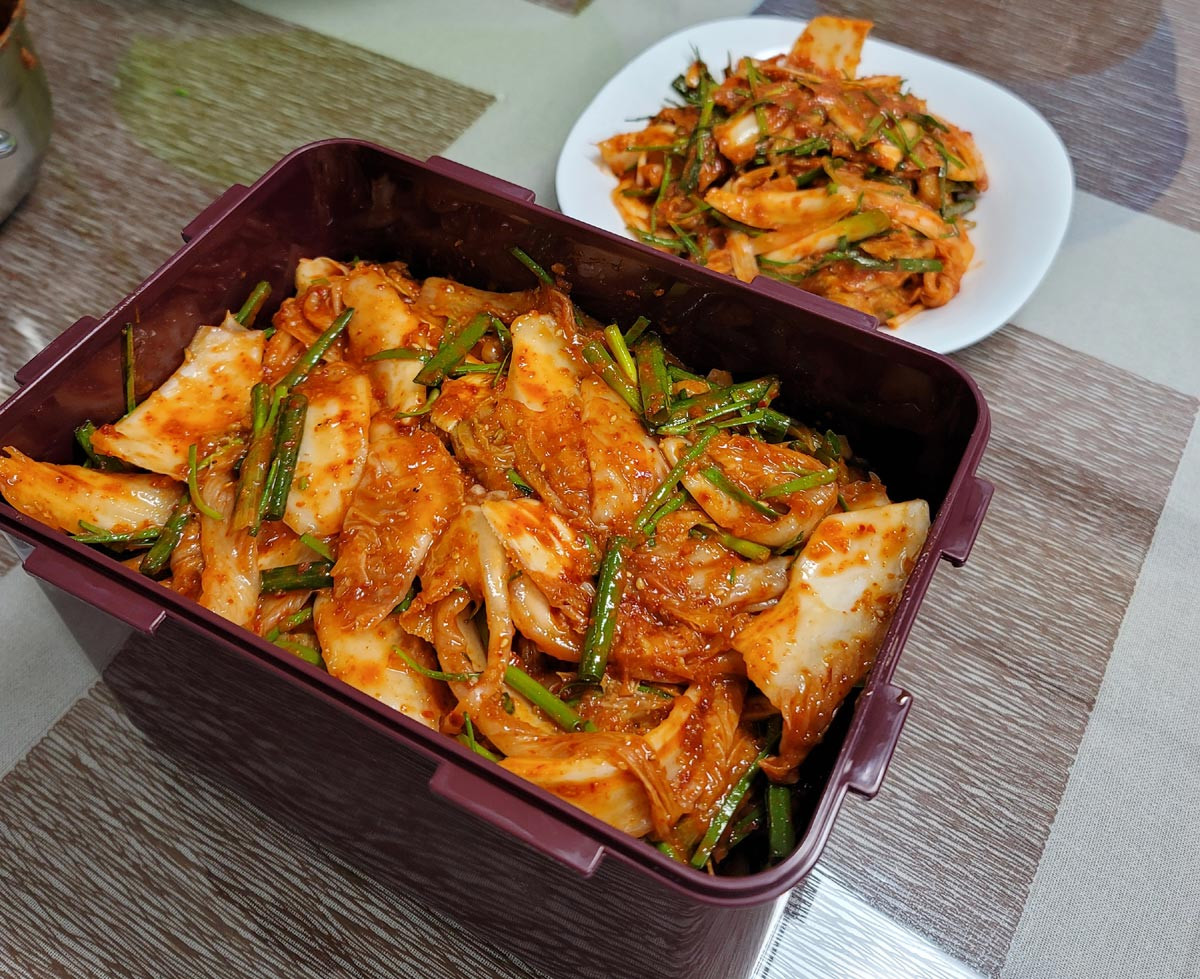
When we make suyuk at home, we often prepare geotjeori as well. Unlike kimchi that has been fermented for a longer period, geotjeori is kimchi that is seasoned and eaten while it is still relatively fresh.
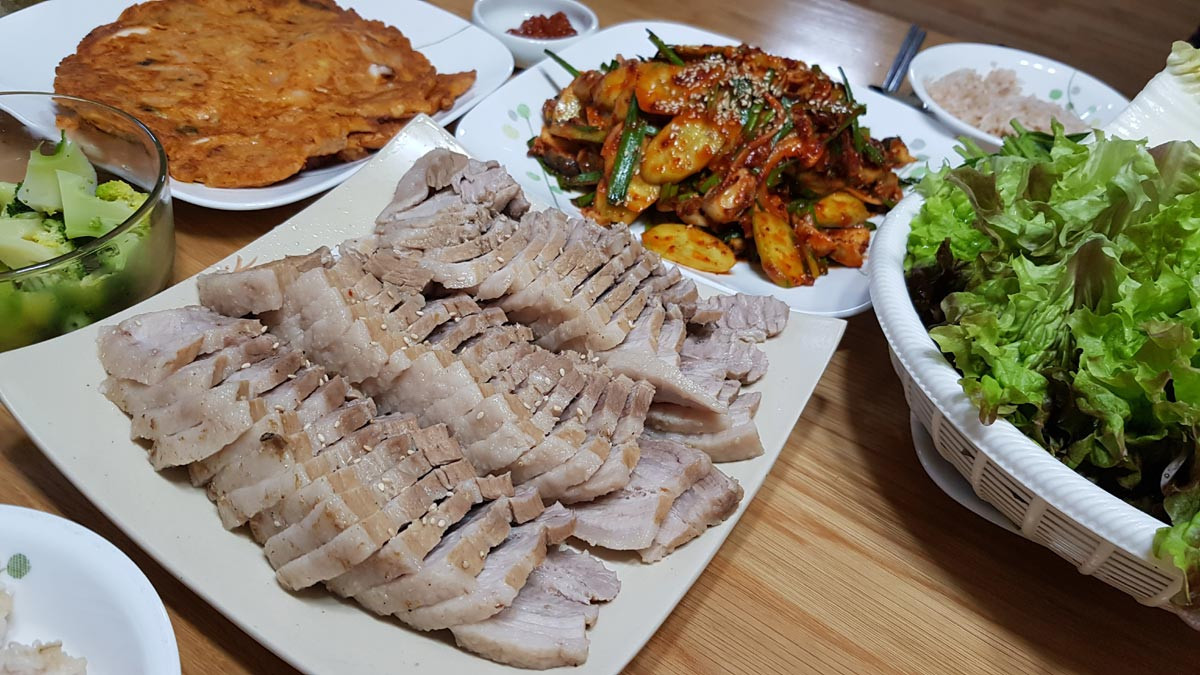
The geotjeori shown in the photo was made by my wife. When I prepare the suyuk and my wife makes the geotjeori, the meal becomes much more complete. In our home, the two go so well together that it is difficult to imagine one without the other.
We usually place some geotjeori on top of a slice of suyuk and eat them together. Suyuk itself is not strongly spicy, but the red pepper flakes and seasonings in geotjeori can make the combination taste spicy. If you are not comfortable with spicy food, start with a small amount of geotjeori rather than adding too much at once.
Suyuk prepared by K-papa and geotjeori made by his wife served together
Add Doenjang Jjigae When Eating Suyuk with Rice
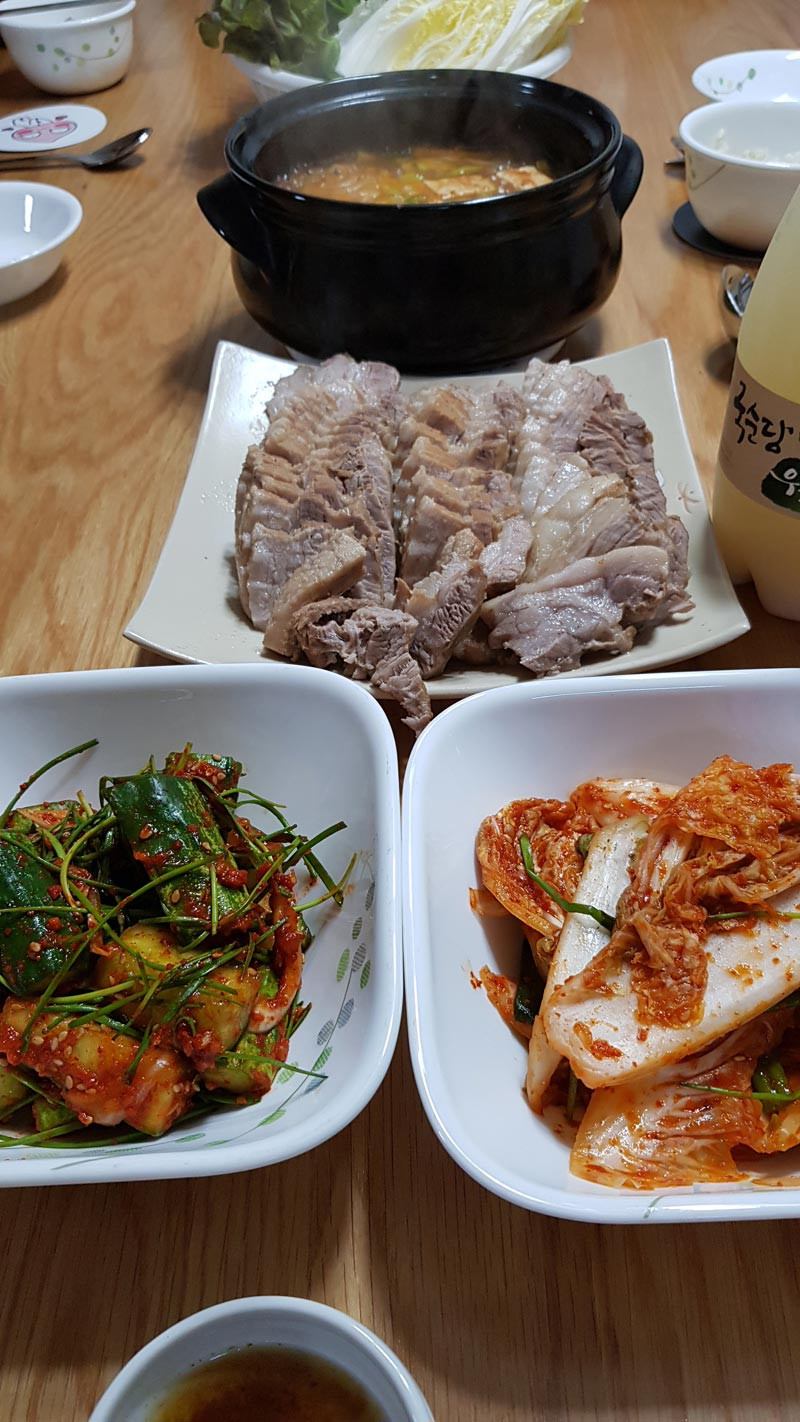
Suyuk and geotjeori can be enough on their own, but when my family eats suyuk with rice, we also prepare doenjang jjigae, or Korean soybean paste stew. The food in the black earthenware pot shown in the photo is doenjang jjigae.
A ttukbaegi is a thick Korean earthenware pot commonly used to serve stews and soups while keeping them hot. Eating a slice of suyuk with geotjeori and then having some warm doenjang jjigae makes the spread feel more like a complete meal than simply food served with alcohol.
This does not mean that doenjang jjigae appears on every Korean suyuk table. It is simply a combination that my family enjoys. Other households may prepare kimchi, leafy vegetables for wraps, garlic, chili peppers, or a separate dipping sauce.
My Choice Between Soju and Makgeolli
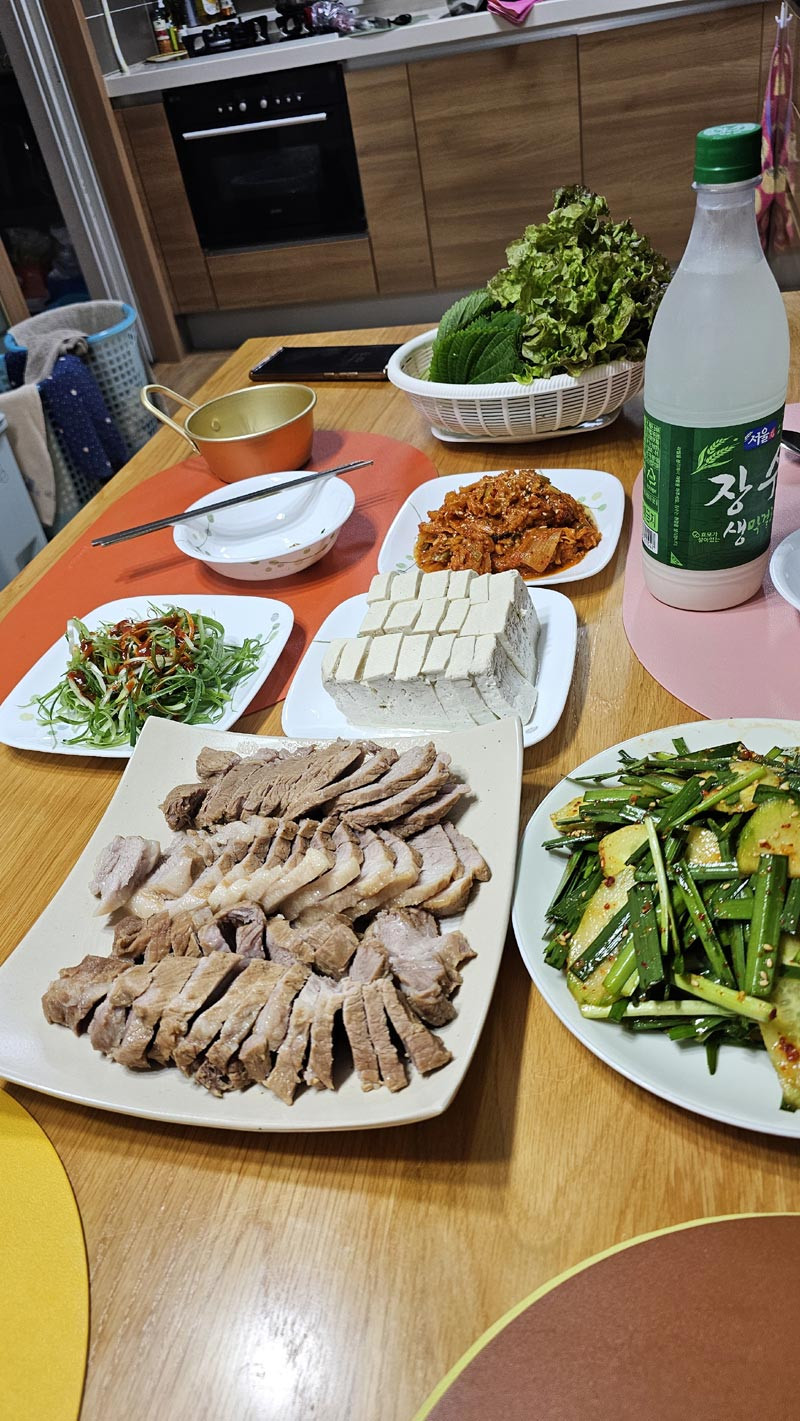
In Korea, suyuk can be enjoyed as part of a meal or with alcohol. If I were choosing between soju and makgeolli to accompany suyuk, I would personally recommend makgeolli.
That is my personal preference rather than an objective answer. If you do not enjoy makgeolli or do not drink alcohol, rice and doenjang jjigae are more than enough. Suyuk does not have to be eaten as a drinking snack.
Does Suyuk Have to Be Made with Pork?
I make pork suyuk at home, but the cooking method is not limited to pork. Suyuk can also be made with beef, although using beef may cost more than using pork.
English-speaking readers will probably encounter suyuk most often as a pork dish, but the word itself should not be understood as referring exclusively to one type of meat. The cooking experience and photos in this article are based on the pork suyuk that I make myself.
What to Know Before Making Suyuk Outside Korea
Suyuk is a Korean dish that is relatively approachable to make outside Korea. It does not require any special cooking equipment. You can get started as long as you have a pot large enough to hold the meat.
If you are making it for the first time, keep the following points in mind.
- The 1 hour and 30 minute cooking time in this article is based on the ingredients and cooking method I use. The necessary cooking time may vary depending on the size and cut of the meat and the heat level.
- If Korean herbal ingredients are difficult to find, you do not have to use them.
- Doenjang and soy sauce both add saltiness, so it is better not to add too much at once.
- Suyuk itself is not spicy, but the geotjeori served with it may contain spicy seasonings.
- Pork must be cooked thoroughly. If you are making suyuk for the first time, using a food thermometer can help you check whether the center of the meat has reached a safe temperature.
Doenjang and soy sauce contain soy. Depending on the product, they may also contain wheat or other allergens, so check the ingredient label if you have food allergies. Because suyuk is made with pork or beef, it is not suitable for a vegetarian diet.
K-papa’s Easy Suyuk Recipe for Beginners
When I make suyuk at home, I usually add doenjang, soy sauce, Korean radish, green onion, onion, and garlic to create the flavor my family likes. However, if you are making suyuk for the first time, you do not need to start with so many ingredients.
This is especially helpful if you are making suyuk outside Korea, where doenjang and other Korean ingredients may not always be easy to find. For a simpler first attempt, I recommend starting with basic ingredients such as pork, green onion, and salt.
Ingredients
Serves 2–3
- About 600 g (1.3 lb) pork belly
- 1 large green onion
- 1 tablespoon salt
- Enough water to fully cover the pork
- 5 tablespoons mirim (optional)
Pork belly works well for suyuk because its higher fat content helps the meat stay relatively tender and moist after boiling. You can also use other cuts, such as pork shoulder or pork neck, but the final texture will vary depending on the amount of fat in the meat.
1. Bring the Water to a Boil
Fill a large pot with enough water to fully cover the pork and bring it to a boil.
Once the water is boiling, add the pork and the green onion, cut into a few large pieces. Add 1 tablespoon of salt. If you have mirim, you can add it at this point, but it is optional.
2. Cook Over Medium Heat for About 50 Minutes
Once the water returns to a boil after adding the pork, reduce the heat to medium. Cover the pot and cook for about 50 minutes.
Avoid keeping the heat too high, as the water may evaporate too quickly. Instead, maintain a steady boil over medium heat.
The exact cooking time can vary depending on the thickness and size of the pork, the cut of meat, and your stove, so consider 50 minutes a general guideline rather than a fixed rule.
3. Turn Off the Heat and Let It Rest for 10 Minutes
After cooking the pork for about 50 minutes, turn off the heat and leave it in the pot for another 10 minutes before taking it out.
4. Slice and Serve
Remove the pork from the pot and slice it into pieces that are easy to eat. I prefer slices that are not too thick, so they are easy to enjoy in one bite.
You can serve this simple suyuk with kimchi alone. If you have lettuce or other leafy vegetables and ssamjang, they also make great accompaniments. If you also have geotjeori, that is my favorite way to enjoy suyuk.
K-papa’s Tip
If this is your first time making suyuk, do not feel that you need to add a long list of ingredients.
Start with something simple like pork, green onion, and salt. Once you become comfortable making it, you can experiment the next time by adding ingredients such as doenjang, soy sauce, garlic, or onion to find the flavor you prefer.
Who Might Enjoy Suyuk—and Who Might Find It Less Suitable?
Suyuk can be a good introduction for people who are curious about Korean food but find intense spiciness difficult. Red pepper flakes are not required in the suyuk itself, and you can control the overall heat by adjusting the amount of geotjeori you eat with it.
It is also a good option for anyone who wants to make a Korean home-style meal with ingredients available outside Korea. However, it may not suit someone looking for a dish that can be prepared quickly. I boil the pork for 1 hour and 30 minutes, and preparing geotjeori and doenjang jjigae makes the entire meal take even longer.
If you do not enjoy fatty meat, choose the cut of pork carefully. The most suitable cut will depend on your preferred texture and how much fat you like.
Why I Continue Making Suyuk at Home
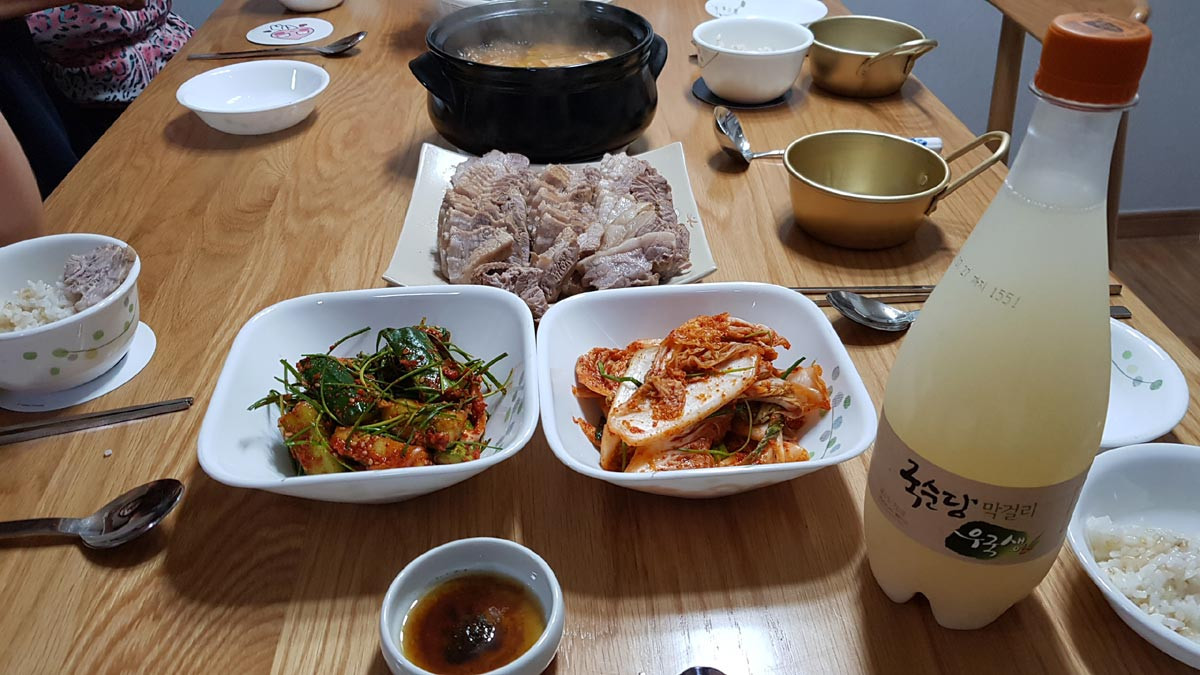
I did not know how to cook suyuk properly when I first started. My family now prefers my suyuk to the versions we buy, but that is not because I found a good recipe on my first attempt. I reached this point by repeatedly adjusting the cooking time and seasonings until I found a method that suited my family.
I think that is part of what makes suyuk enjoyable to cook. Rather than having one fixed recipe that everyone must reproduce exactly, it can reflect the ingredients and flavors preferred by each household.
Even if you are making Korean food for the first time, you can try suyuk as long as you have a large pot and some pork. You do not need to prepare geotjeori and doenjang jjigae on your first attempt. Start by making the suyuk itself, and add your favorite kimchi or another side dish the next time.
If you make it repeatedly, as we have in our home, you may eventually develop your own suyuk recipe.
Frequently Asked Questions
Is suyuk spicy?
Suyuk itself is not necessarily spicy. However, geotjeori kimchi and other seasonings served with it may contain Korean red pepper flakes. If you are sensitive to spicy food, you can adjust the amount of these accompaniments.
Why are suyuk and geotjeori eaten together?
In our home, we enjoy pairing softly boiled and sliced pork with freshly seasoned geotjeori. However, geotjeori is not required, and the side dishes served with suyuk can vary between households and restaurants.
Is suyuk only made with pork?
No. This article and its photos feature pork suyuk, but suyuk can also be made with beef. The cost of the ingredients and the cooking method may differ.
Can I make suyuk outside Korea?
Yes. You can make suyuk if you have a large pot and a suitable cut of meat. Doenjang and soy sauce may be available at Asian grocery stores or through online retailers, but check each product’s ingredient and allergen information before using it.