Samgyeopsal, Korea’s Soul Food: Why Do Koreans Grill It Together?
“What should we have for dinner tonight?”
When I ask my children this question on a weekend evening, “Samgyeopsal!” is a common answer. I love it, and so do my children, so whenever we grill samgyeopsal at home, it turns into a small family party.
It is difficult to name just one food that Koreans love most. Everyone has different tastes, and preferences vary between generations and families. Still, if someone asked me to name one Korean soul food, grilled samgyeopsal would be hard to leave out.
How much samgyeopsal have I eaten in my lifetime? I have never kept an exact record, but a rough calculation tells me that I have probably eaten at least 60 to 70 kilograms by myself. That is how often samgyeopsal has appeared in my daily life and on my family’s table.
What Is Samgyeopsal?
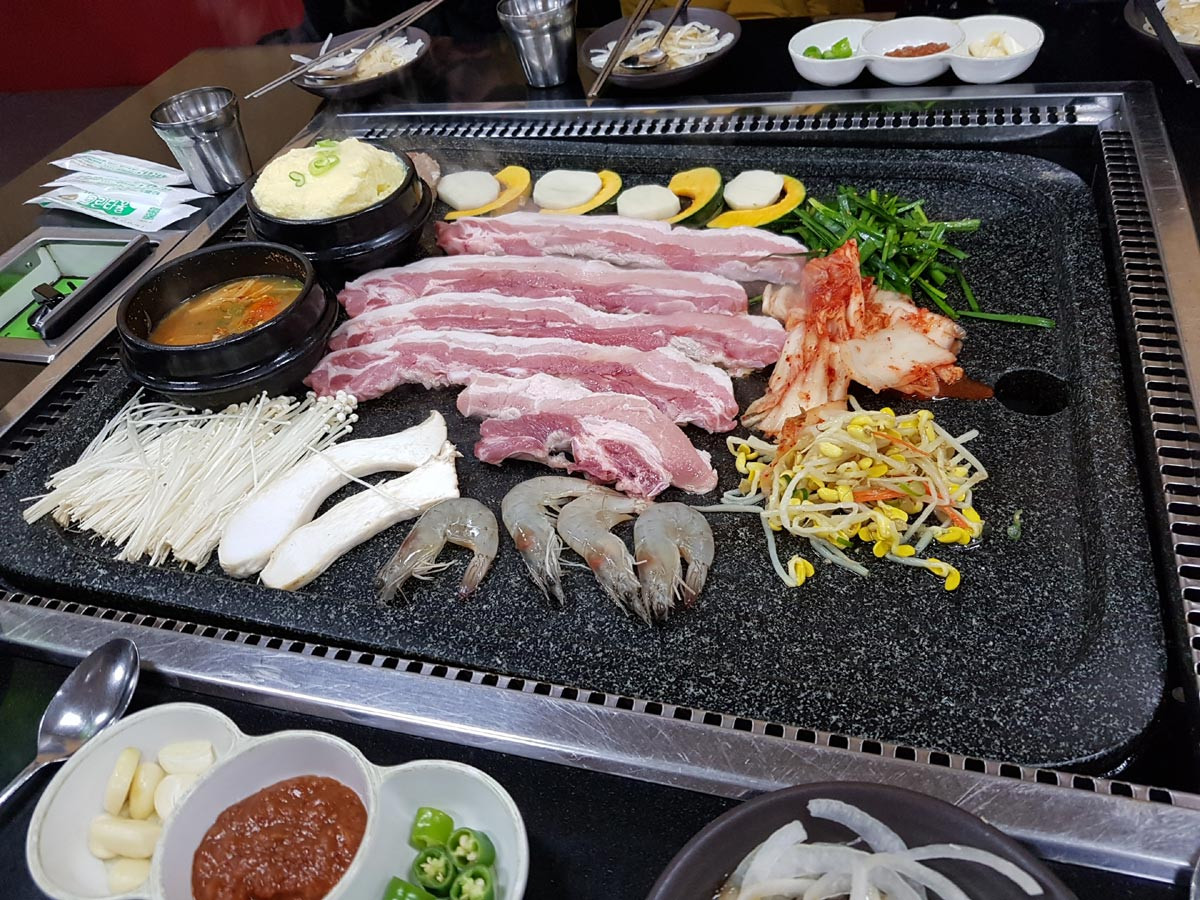
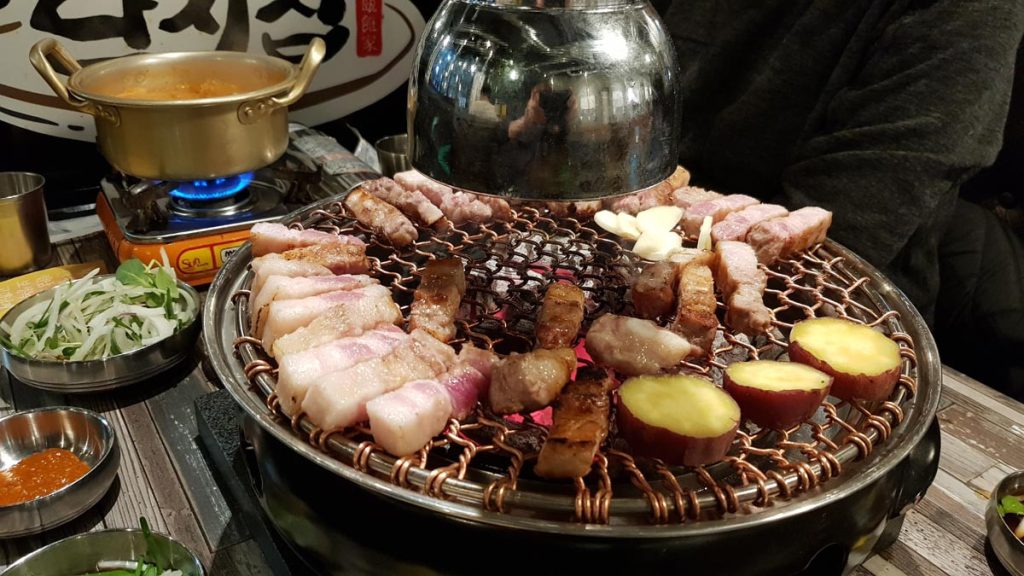
Samgyeopsal is the Korean name for pork belly. It is known for its visible layers of meat and fat. In Korea, it is commonly served in either thick or thin slices and grilled at the table.
In English, it is usually introduced as samgyeopsal or Korean grilled pork belly. Although it refers to the same cut of meat known as pork belly in English, samgyeopsal in Korea often means more than the cut itself. It can also refer to the experience of grilling and sharing the meat together at the table.
Another feature of Korean barbecue is that samgyeopsal is often grilled without a strong marinade, sometimes with only a little salt sprinkled over it. Instead, diners adjust the flavor of each bite by dipping the grilled meat in salt or ssamjang or eating it with vegetables, garlic, and kimchi.
The way samgyeopsal is eaten varies between households and restaurants. Some people dip it lightly in salt to enjoy the flavor of the pork, while others put several ingredients inside a lettuce wrap. Some like to grill kimchi alongside the meat, while others prefer fresh kimchi. Samgyeopsal can also be dipped in a mixture of sesame oil, salt, and pepper.
In Korea, Samgyeopsal Is Food to Be Shared
You can eat samgyeopsal alone, but in Korea, it is more commonly associated with family members, friends, or coworkers sitting together around a shared grill.
At a restaurant, a grill is usually placed in the center of the table. Customers may grill the raw pork themselves, or a staff member may cook it for them. While the meat is cooking, everyone eats the side dishes and talks. Roles often develop naturally: one person grills the pork while someone else places garlic or kimchi on the grill.
At home, samgyeopsal can be cooked on a portable gas burner, an electric grill, or in a frying pan. When we begin grilling it at our house, an ordinary weekend dinner quickly becomes a little livelier. The children wait for the pork to cook, someone turns the slices so they do not burn, and someone else prepares the plates and side dishes.
That is why samgyeopsal feels less like a finished dish served on a plate and more like a meal in which the family shares the cooking process from the beginning.
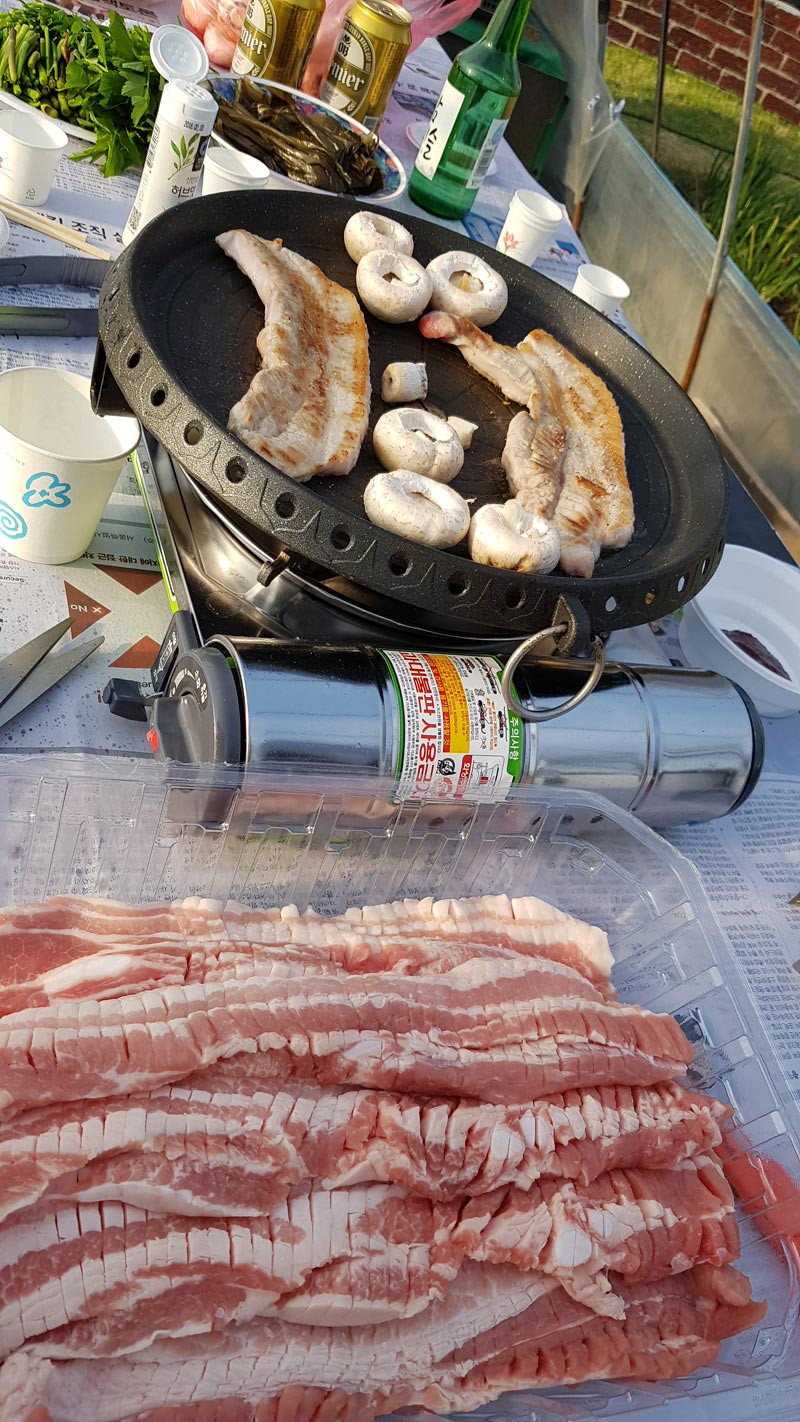
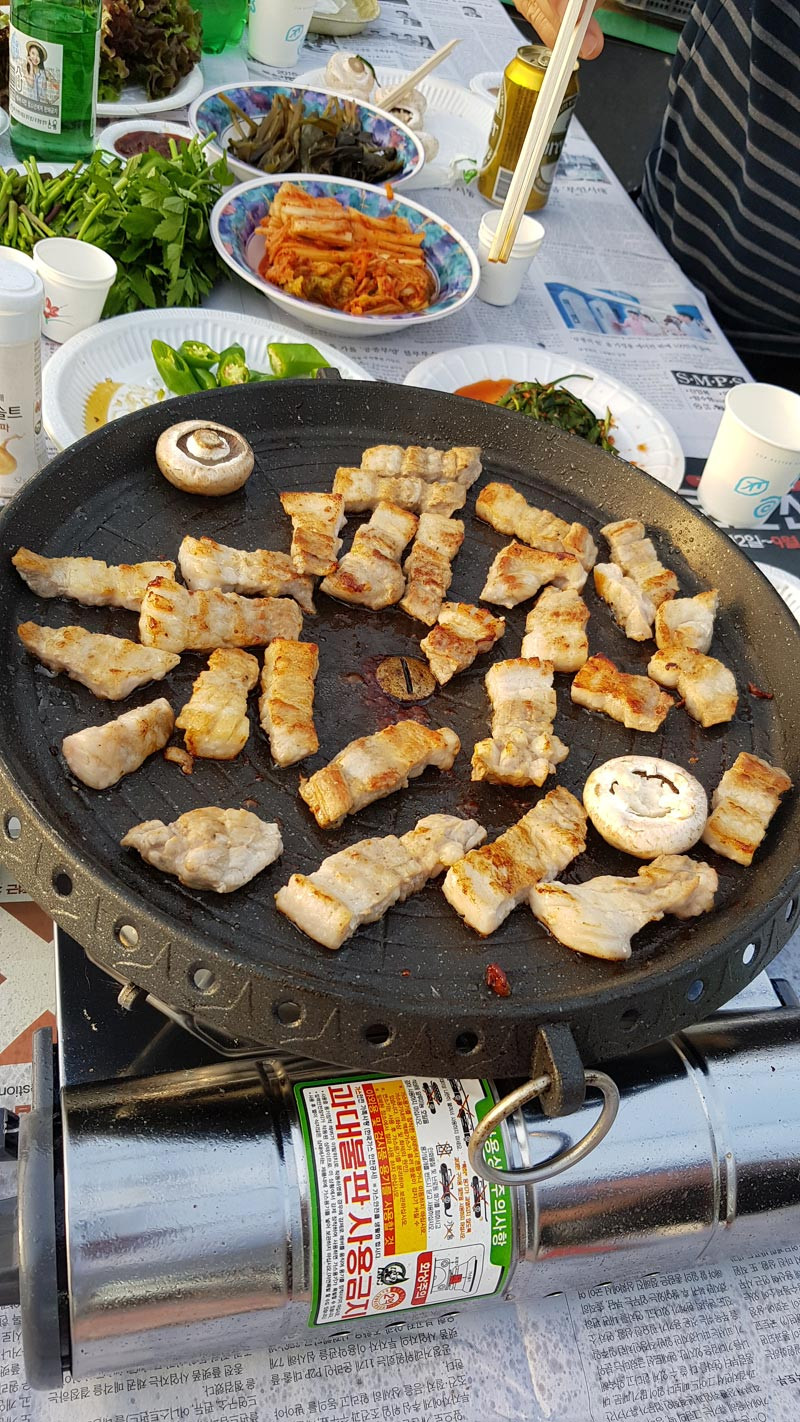
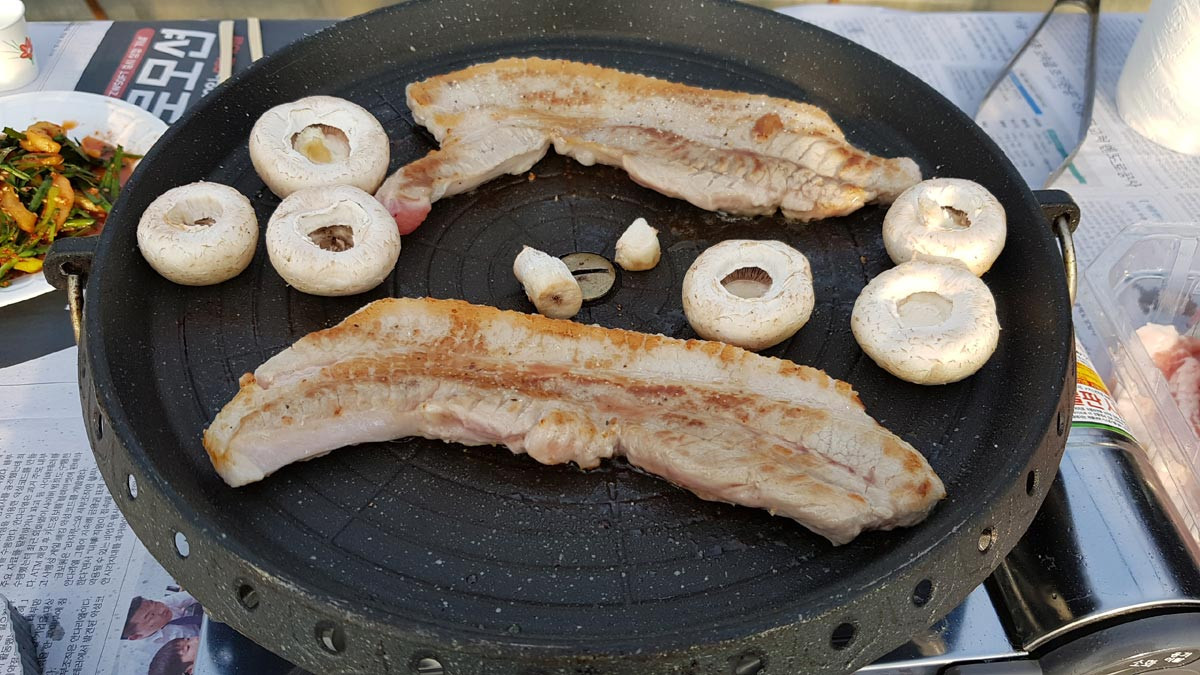
Grilling Samgyeopsal Well Is a Small but Valuable Skill in Korea
In Korea, who sits in front of the grill can matter more than you might expect. The person in charge needs to turn the pork at the right time, cut it into bite-sized pieces, and share the properly cooked pieces with everyone else.
I sometimes exaggerate this by saying, “In Korea, a man who grills samgyeopsal well is loved.” This does not mean that men must cook the meat at every Korean family meal or gathering. Who takes charge of the grill depends on the people and the situation. Still, grilling the pork without burning it and sharing it with the rest of the group is often seen as a small act of consideration.
The same can be true on a date. If you volunteer to grill the meat but keep burning it—or eat by yourself without taking care of the other person—it may be difficult to make a good impression. On the other hand, placing a perfectly cooked piece of pork on your date’s plate first might win their heart more naturally than words can.
I was not always good at grilling samgyeopsal. When I was in my early twenties, I once grilled it during a university group retreat. I did not know when to turn the pork, so I either flipped it too often or burned one side completely black. After years of eating it with my family, however, I gradually became the person who naturally takes charge of the grill.
Now I am quite used to grilling at the pace my children eat, cutting the pork before it becomes overcooked, and sharing it evenly. I also grilled all the samgyeopsal shown in the photos I took for this article. At least at my family’s table, I think I can now call myself a samgyeopsal grilling pro.
How Do Koreans Eat Samgyeopsal?
Someone trying samgyeopsal for the first time might look at the pork on the grill and assume that it is a simple meal. In reality, the table usually offers many different ways to enjoy the meat.
The simplest method is to dip a piece of well-cooked samgyeopsal lightly in salt or ssamjang. Ssamjang is a rich Korean dipping sauce made with doenjang, or fermented soybean paste, and is commonly served with grilled meat and vegetables.
Wrapping the pork in vegetables is also common. Place a piece of samgyeopsal on lettuce or a perilla leaf, add ssamjang or garlic according to your preference, and eat the wrap in one bite. In Korea, this is commonly called ssam ssameokda, which means “to make and eat a wrap.”
You do not need to put every side dish into a single wrap. If it is your first time eating samgyeopsal, try the different flavors in this order:
- Start with the samgyeopsal by itself so you can taste the pork.
- Dip the next piece lightly in salt or ssamjang.
- Then wrap a piece in lettuce or a perilla leaf.
- Add stronger ingredients, such as kimchi or garlic, a little at a time.
- When my children eat samgyeopsal, I recommend dipping it in sesame oil.
Trying it this way makes it easier to discover which combinations suit your taste. Koreans do not all eat samgyeopsal in the same way. I do not stick to just one method either. I enjoy different combinations depending on the side dishes prepared that day.
When Samgyeopsal Meets Spicy Jjukkumi Bokkeum
One of my favorite combinations is samgyeopsal with spicy jjukkumi bokkeum. Jjukkumi are small octopuses, and in Korea, they are often stir-fried in a spicy sauce.
One of the photos shows samgyeopsal served together with jjukkumi. This is not a standard combination found at every samgyeopsal restaurant or in every Korean home. It suits people like my family who enjoy eating meat with spicy stir-fried seafood. This combination also goes well with soju, so I always enjoy the meal with a glass of it.
When the richness of samgyeopsal begins to feel heavy, spicy jjukkumi bokkeum can completely change the character of the next bite. If you are not accustomed to spicy food, however, it is better to add only a little jjukkumi at first.
This combination offers a different kind of pleasure from dipping samgyeopsal in salt or wrapping it in vegetables. I would especially recommend it as a new combination for someone who has already eaten samgyeopsal several times.
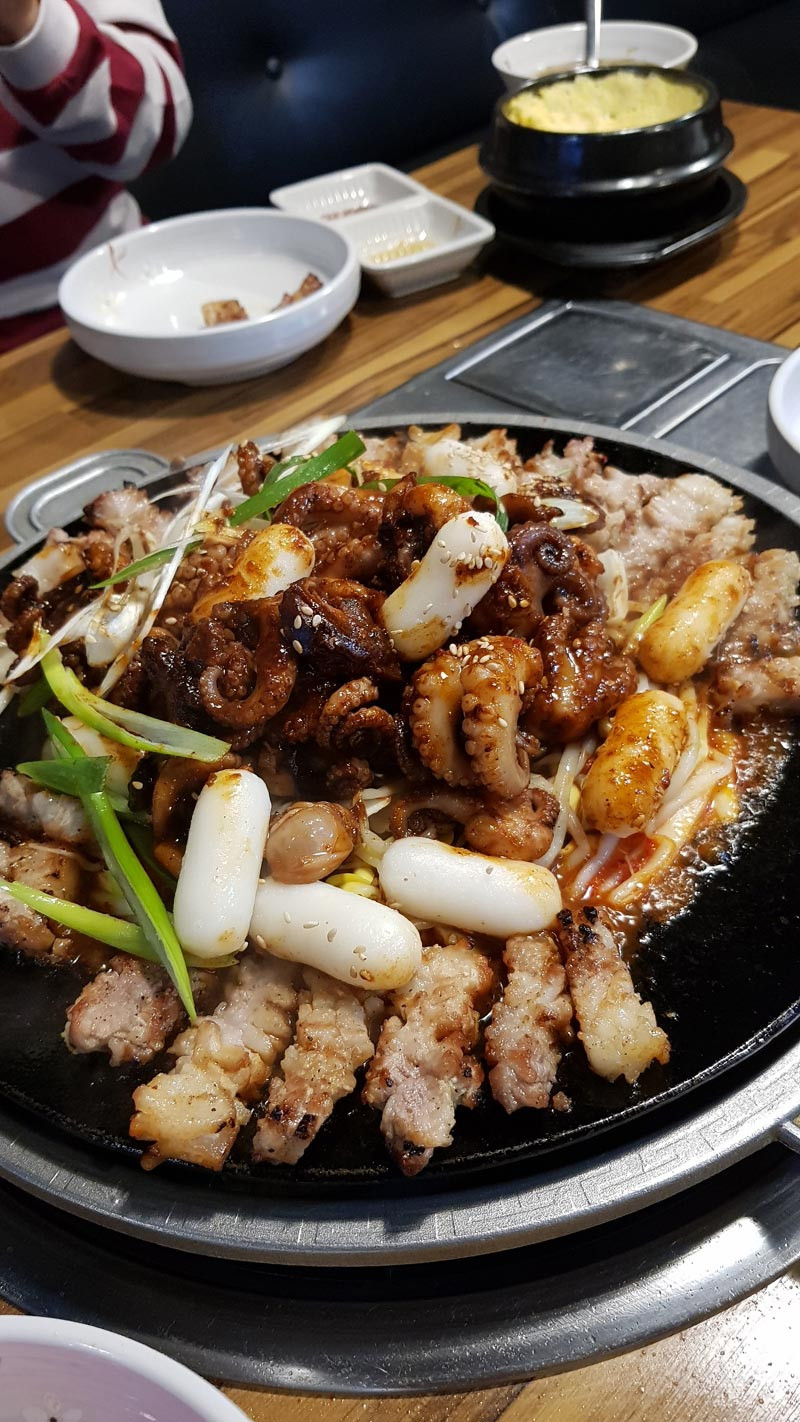
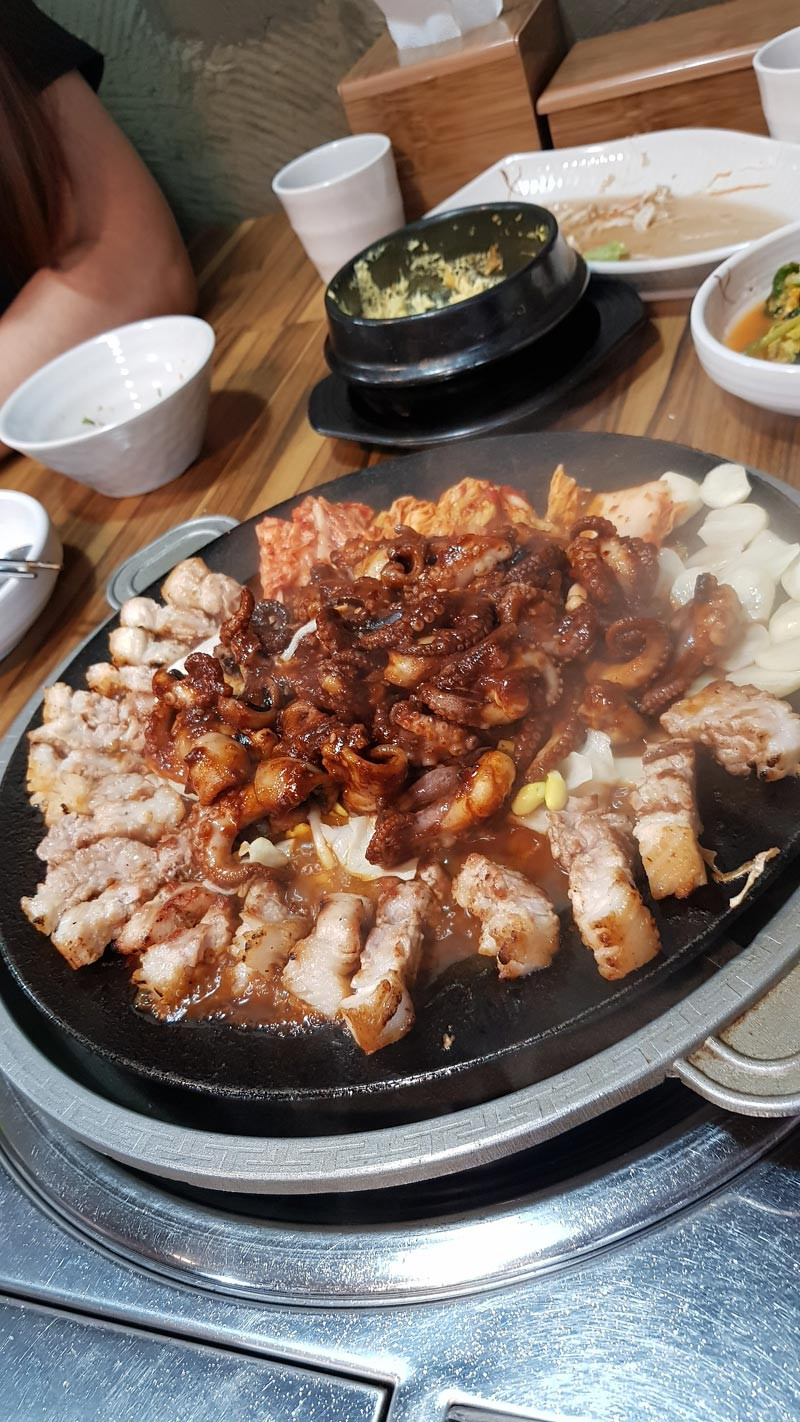
Grilled samgyeopsal served with spicy jjukkumi bokkeum
Eating Samgyeopsal at Home vs. at a Restaurant
One advantage of eating at a samgyeopsal restaurant is that the grill and ventilation system are already prepared, and you do not need to make several side dishes yourself. At some restaurants, the staff will also cook the meat for you, making it a relatively convenient option for a foreign visitor trying samgyeopsal for the first time.
At home, you can choose the thickness of the pork and the side dishes your family prefers. It is also easy to add a dish your family enjoys, such as jjukkumi bokkeum. Most importantly, there is no fixed mealtime, so you can grill slowly and talk as you eat.
On the other hand, grilling samgyeopsal at home can leave cooking odors and grease behind. Because the fat may splatter, it is a good idea to clear the area around the table and ventilate the room. If too much rendered fat collects on the grill, you also need to pay attention to safety while cooking.
Here is one tip from our home: when the smell lingers indoors, we often light a candle because we feel it helps. We always light a candle after grilling samgyeopsal.
Despite these inconveniences, we often grill samgyeopsal at home because our children love it. There is plenty to clean up after the meal, but when I see my family happily waiting for the pork to cook, I find myself choosing it again for another weekend dinner.
Practical Tips for Foreigners Trying Samgyeopsal for the First Time
- Keep utensils for raw meat separate from eating utensils.
Avoid using the same tongs or chopsticks that touched raw pork to pick up cooked meat for eating. Keeping the tongs used for raw meat separate from your eating chopsticks is safer. - Make sure the pork is fully cooked.
Because samgyeopsal is pork, it should be cooked thoroughly. Instead of judging it only by the outside and eating it too quickly, check the cut surface as well. - Do not overcrowd the grill.
If you place too many pieces on the grill at once, it can be difficult to cook them evenly and remember which pieces went on first. Begin with a manageable amount and add more as you eat the cooked pieces. - Do not make your ssam too large.
When making your first wrap, adding too much pork and too many side dishes can make it difficult to eat in one bite. One piece of samgyeopsal with a small amount of sauce is enough to start. - Taste spicy side dishes before adding more.
The flavor and heat level of ssamjang, kimchi, and jjukkumi bokkeum can vary depending on the product and recipe. If you are not used to spicy food, taste a small amount first and add more gradually.
Who Might Enjoy Samgyeopsal—and Who Might Find It Too Heavy?
I would especially recommend samgyeopsal to:
- People who enjoy grilling meat themselves at the table
- People who like combining meat with different sauces and vegetables
- People who want to take their time talking over a meal with family or friends
- Travelers who want to experience a style of dining familiar to people in Korea
On the other hand, samgyeopsal may feel somewhat heavy to those who do not enjoy fatty cuts of meat. It is also unsuitable for people who do not eat pork or follow a vegetarian diet.
Ssamjang and some side dishes may contain ingredients related to individual allergies or dietary restrictions. When eating at a restaurant, check the ingredients in the sauces and side dishes as well as the meat.
For Me, Samgyeopsal Is a Memory of Weekend Evenings
Samgyeopsal is not a ceremonial food reserved only for expensive or special occasions, nor is it something that must be eaten quietly according to a fixed set of rules. At least for my family, it is a familiar meal that brings everyone together on a weekend evening.
I have eaten a great deal of samgyeopsal over the years, and I expect that I will continue grilling it for my family. When my children say, “Let’s have samgyeopsal,” I will prepare the pork, sit in front of the grill, and cook and share it one piece at a time.
If you visit Korea, I recommend trying samgyeopsal at least once. Rather than treating it as another famous Korean food to check off your list, experience it as a shared meal: grill a piece for someone else at the table and try different combinations of side dishes.
Once you enjoy the entire process, you may understand a little more naturally why Koreans love samgyeopsal so much.
Frequently Asked Questions
Is samgyeopsal the same as bacon?
Both can come from the belly of a pig, but they are generally prepared differently. Korean samgyeopsal is usually unseasoned, unsmoked pork grilled at the table. Rather than expecting it to taste like bacon, it is better to think of it as Korean grilled pork belly.
Do Koreans always wrap samgyeopsal in lettuce?
No. Wrapping it in lettuce or perilla leaves is common, but many people eat it with only salt or ssamjang or pair it with kimchi. During a single meal, diners may switch between several different ways of eating it.
Is samgyeopsal spicy?
Unseasoned samgyeopsal itself is not spicy. However, the overall meal can become spicy depending on the kimchi, ssamjang, or spicy stir-fried dishes served with it.
Do customers have to grill the meat themselves at a samgyeopsal restaurant?
It depends on the restaurant. At some places, customers grill the meat themselves, while at others, staff members cook some or all of it. If it is your first visit, wait briefly to see whether a staff member places the meat on the grill, or ask whether you should cook it yourself.