Korean Kimbap: Why It Means More Than Just a Quick Meal
Korean kimbap is one of the most familiar foods in Korea. You can easily buy a roll at a bunsik restaurant, a casual Korean eatery specializing in affordable dishes, or at a convenience store. However, homemade kimbap has a slightly different meaning from ordinary fast food.
Everyone in my family loves kimbap. When I ask my children what they want to eat, they often choose it. Even when we have no special plans to go out on a holiday, making kimbap can make an ordinary day feel a little different.
Anyone who has made kimbap at home, however, knows that it is not as simple as it may appear. You need to cook the rice, prepare each filling separately, arrange everything neatly on a sheet of seaweed, and then roll it all together. The finished kimbap may disappear quickly, but each roll requires more time and preparation than many people realize.
That is why homemade kimbap is more than just a quick way to fill my stomach. To me, it is a meal prepared for the whole family, with each person’s preferences wrapped into every roll.
What Is Korean Kimbap?
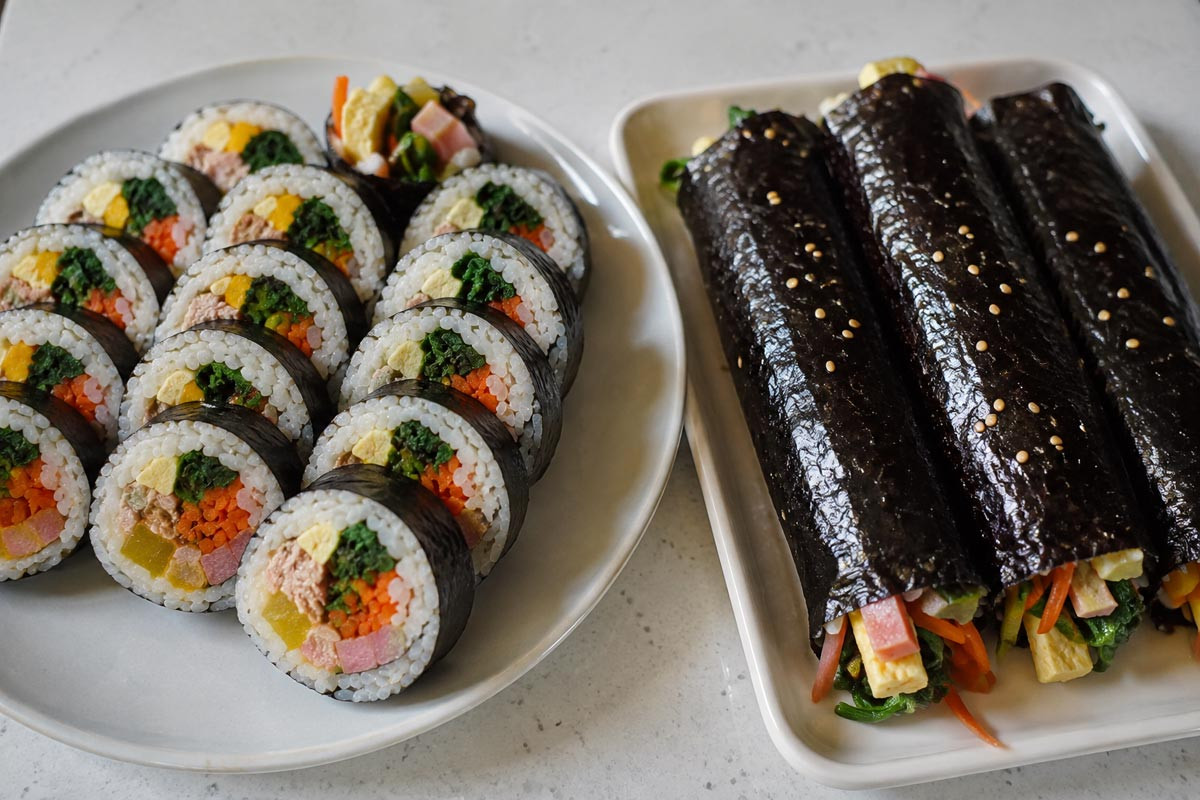
Kimbap is a Korean dish made by spreading seasoned rice thinly over a sheet of dried seaweed, adding ingredients such as vegetables, egg, ham, fish cake, and pickled radish, and then rolling and slicing it into bite-sized pieces.
Korean kimbap is different from Japanese sushi rolls. Its defining feature is the way the textures of several ingredients come together in one bite, while a final coating of sesame oil brings its savory, nutty flavor to its peak.
The ingredients also vary from one household to another. Some families add spinach, while others use cucumber. Ham may be replaced with beef or tuna, and parents may add a slice of cheese for a child who loves cheese. Part of kimbap’s appeal is that it does not have to follow one fixed formula. It can change according to each family’s preferences.
When Do Koreans Eat Kimbap?
Kimbap is commonly eaten as a simple lunch or snack in Korea, but for many Koreans, it is also a food filled with memories of school picnics and family trips.
When I was a child, I remember my mother waking up early in the morning to prepare kimbap whenever I had a school picnic. Opening my lunchbox and seeing the neatly arranged pieces of kimbap naturally connected the excitement of picnic day with the care my mother had put into making them.
Even today, many Korean families prepare and pack kimbap before going on an outing or taking a long trip. It is easy to pick up and eat by hand, and because each roll contains several different ingredients, there is little need to prepare many separate side dishes.
Kimbap is convenient and enjoyable to eat outdoors, but it can also change the mood of a meal at home. When my family occasionally makes kimbap on a holiday, it feels as if we are having a picnic or enjoying a little indoor camping experience. It may be the same dining table we use every day, but once kimbap is served, the meal feels a little more special.
Why Does Homemade Kimbap Feel Different?
Kimbap purchased from a bunsik restaurant or through a delivery service is quick and convenient. The ingredients are evenly arranged, and you can order just one roll and eat it immediately.
When you make kimbap at home, however, you can add as much of each family member’s favorite ingredient as you like. If someone loves cucumber, you can add more of it. If a child likes cheese, you can make a separate cheese kimbap roll. You can also use leftover side dishes or ingredients already sitting in the refrigerator.
In our home, we usually make about five rolls, which is enough for one meal. Rather than preparing a large quantity at once, we make the amount our family can enjoy while it is at its best.
Once I place the finished kimbap on a plate, my family members pass by the table and pick up one or two pieces at a time. Five rolls that initially seemed like more than enough sometimes disappear much faster than expected. For the person who prepared them, that reaction makes all the work feel worthwhile.

The Basic Kimbap We Make at Home
Our homemade kimbap does not contain fancy or expensive ingredients. We mainly use ingredients that are easy to find in Korea, such as egg, ham, fish cake, cucumber, carrot, and pickled radish.
To make about five rolls, I prepare the following ingredients:
- 5 sheets of seaweed for kimbap
About 800 grams of cooked rice - 3 eggs
- 5 strips of kimbap ham
- 5 strips of pickled radish
- 2 sheets of fish cake
- 1 to 2 cucumbers
- Stir-fried carrots or carrot râpée
- Salt, sesame oil, and sesame seeds
- A little soy sauce, cooking wine, and oligosaccharide syrup for seasoning the fish cake
First, slice the cucumber into long, thin strips. Sprinkle it with salt, let it sit briefly, and then squeeze out the excess moisture. Add a little salt to the eggs, cook them, and cut them into strips suitable for kimbap. Lightly fry the ham in a pan. Stir-fry the fish cake with soy sauce and cooking wine, then add a small amount of oligosaccharide syrup at the end for sweetness and a glossy finish.
Season the warm rice with salt, sesame oil, and sesame seeds. Mix it gently so that the grains are not crushed, and then allow it to cool slightly. Placing very hot rice directly on the seaweed can make it become soggy.
Place the seaweed with its rough side facing upward and spread the rice thinly and evenly over it. Arrange the prepared ingredients on top, hold them in place with your hands, and roll everything firmly so that the fillings do not shift.
Finally, brush a thin layer of sesame oil over the finished rolls and sprinkle them with sesame seeds. This brings out the savory aroma that is characteristic of homemade kimbap.
I strongly recommend never skipping the sesame oil on the outside.
Small Tips I Have Learned From Making Kimbap
When making kimbap for the first time, it is easy to assume that adding more fillings will automatically make it taste better. However, if you add too much, the seaweed may tear and the roll can become difficult to close.
Spreading the rice too thickly is another common mistake. Too much rice weakens the flavors of the other ingredients and makes the kimbap unnecessarily large. Spreading the rice thinly enough that a little of the seaweed remains visible makes the roll easier to shape and allows you to taste the texture of each filling more clearly.
It is also important to remove as much moisture as possible from watery ingredients such as cucumber. Allowing the rice and cooked fillings to cool slightly before rolling can also help prevent the seaweed from becoming soggy.
If you want the sliced kimbap to look more colorful, avoid placing ingredients of similar colors next to one another. Separating the yellow egg, orange carrot, and green cucumber or spinach creates a brighter and more distinct cross-section.
Eating Kimbap With Fish Cake Soup
In our home, we sometimes prepare a warm fish cake soup to serve with kimbap.
Kimbap alone can make a complete meal, but adding a warm broth makes the meal feel more comforting. When the rice and seaweed in kimbap feel a little dry in the mouth, a spoonful of fish cake soup pairs with it especially well.
Fish cake soup is a relatively simple dish made by simmering fish cake and green onion in a broth prepared with dried anchovies or kelp. As shown in the photo, placing the fish cakes on skewers also makes it easy for family members to take one at a time.
It would not be an exaggeration to say that fish cake soup is primarily about enjoying the broth. That is precisely why it goes so well with kimbap, which can feel slightly dry on its own.
When eating kimbap outside the home, Koreans often pair it with ramyeon or tteokbokki. At home, however, I feel that a warm fish cake soup with milder seasoning complements kimbap without overpowering its original flavor.
Do Koreans Eat Kimbap With Kimchi?
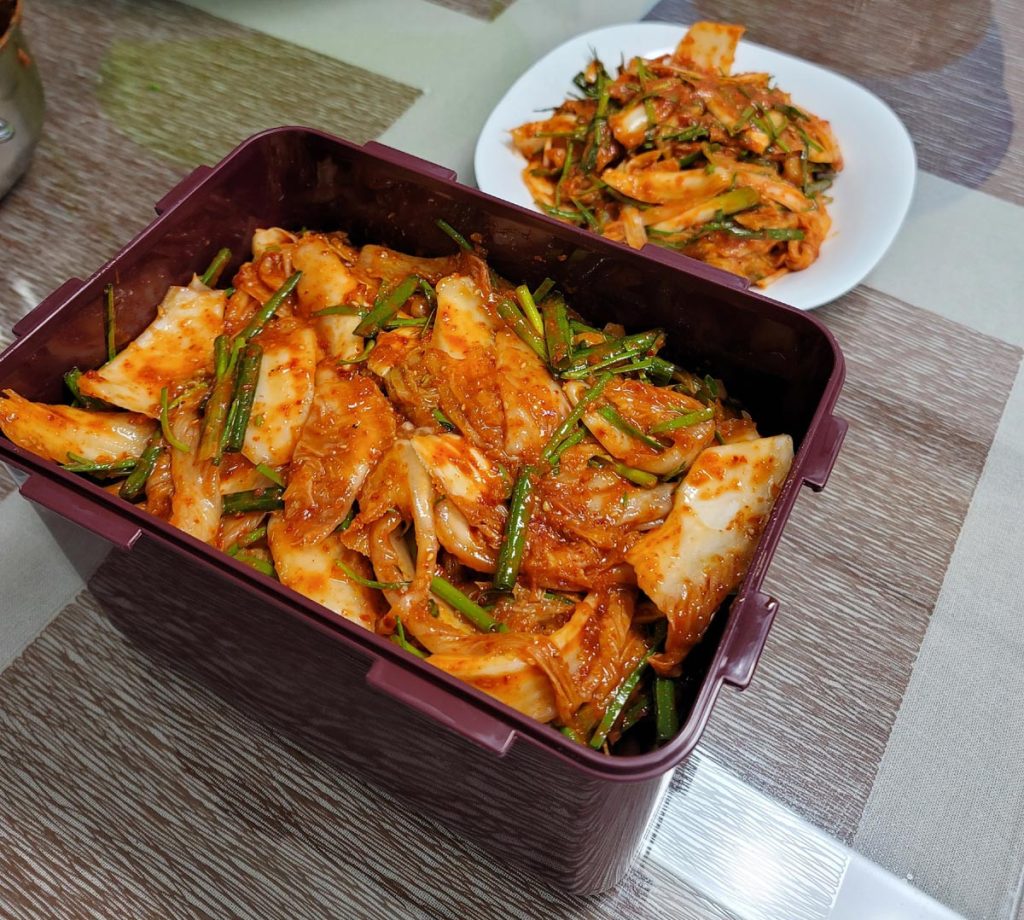
Kimbap already contains a tangy and crunchy ingredient in the form of pickled radish, so it can be eaten without any additional side dishes. Nevertheless, Korean families sometimes bring out kimchi to eat with it.
In our home, we sometimes serve kimbap with kimchi that we have made ourselves. While the sesame oil and egg give kimbap a savory and mild flavor, kimchi adds spiciness and a crisp texture.
Depending on the fillings, kimbap may not need kimchi at all. However, if you enjoy spicy food or want a combination that feels more like a Korean home-cooked meal, serving a little kimchi on the side is worth trying.
This is partly a joke, but kimchi might make you eat even more kimbap, so be careful if you are on a diet.
Easy Inari-Wrapped Kimbap for a Busy Day
Traditional homemade kimbap takes time because each ingredient must be prepared separately. On a busy day, you can use sheets of seasoned fried tofu to make a simpler type of inari-wrapped kimbap.
This type is easier to prepare than traditional kimbap, so I make and eat it fairly often.
To make it, first roll rice inside a sheet of seaweed and then wrap the outside with a sheet of seasoned fried tofu. If you keep the fillings as simple as those shown in the photo, the preparation becomes much easier.
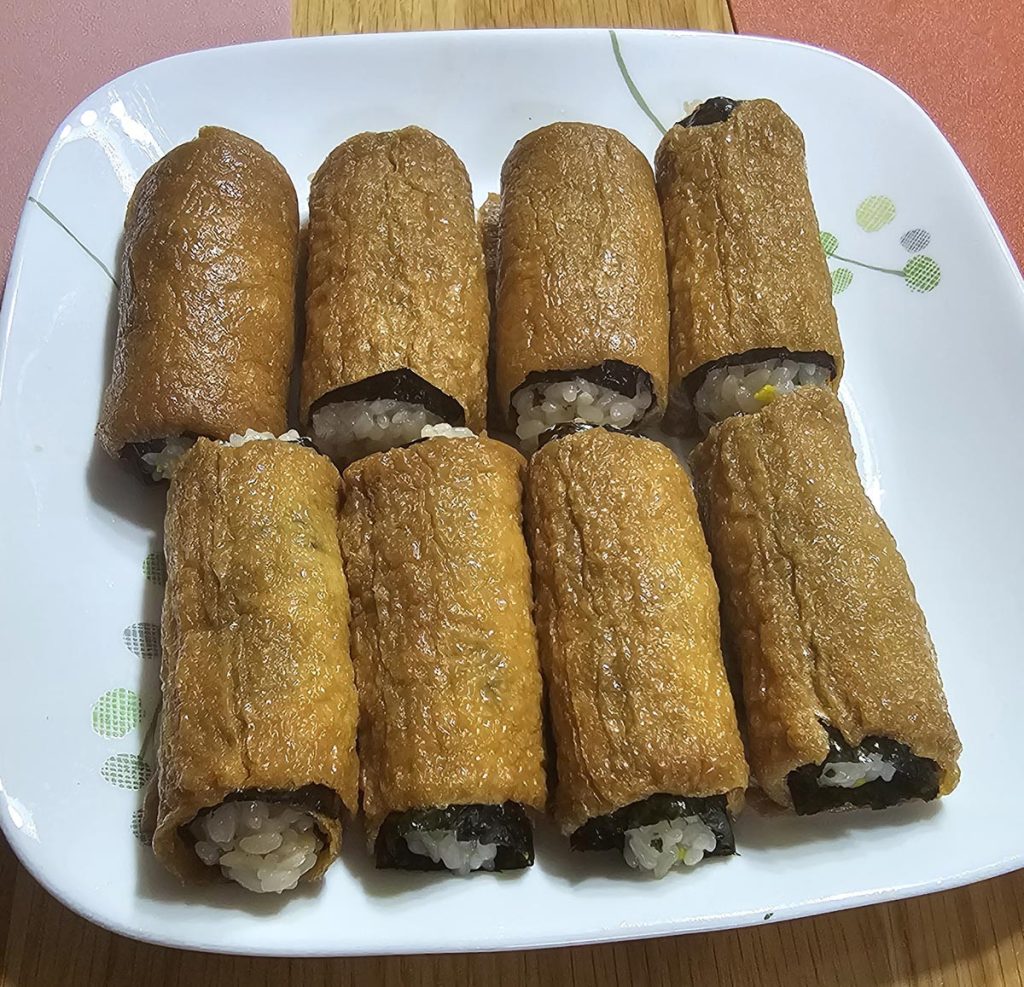
How to Make Simple Inari-Wrapped Kimbap
- Mix warm rice with a little salt or inari sushi seasoning, sesame oil, and sesame seeds.
- Spread the rice thinly over a sheet of seaweed and roll it into a small cylinder.
- Gently squeeze the excess seasoning liquid from a sheet of fried tofu.
- Place the small kimbap roll on the fried tofu sheet and wrap it tightly.
- Cut it into bite-sized pieces or serve it as a small roll.
You can add ingredients that do not need to be cooked, such as cucumber, pickled radish, or imitation crab, to provide more texture and color. However, because the seasoned fried tofu and packaged sauce are already flavorful, it is best not to add too much seasoning to the rice at the beginning.
The fried tofu has a sweet and savory flavor that is easy for children to enjoy. This variation is also useful when you want to prepare a simple meal or snack without spending time on numerous fillings.
Is Kimbap Always a Healthy Food?
Kimbap contains rice, vegetables, egg, and sometimes meat or fish cake. For that reason, it can appear to be a well-balanced food, but not every type of kimbap is necessarily light or healthy.
Ham, fish cake, pickled radish, and seasoned fried tofu may contain significant amounts of sodium. The calorie content can also vary depending on how much rice and sesame oil are used. Kimbap made with ingredients such as tuna mayonnaise or breaded pork cutlets may feel heavier than basic kimbap because of the sauces and fried fillings.
When making kimbap at home, you can adjust it by using less rice, adding more vegetables, or reducing the amount of processed meat. However, I do not think the value of kimbap needs to be judged solely by whether it qualifies as a healthy food. Kimbap is an everyday meal that brings together convenience, flavor, family preferences, and personal memories.
Tips for Trying Kimbap for the First Time
If you are trying Korean kimbap for the first time, the following tips may be helpful:
- Kimbap is usually eaten at room temperature without being heated or frozen, and it does not need to be dipped in soy sauce like sushi.
- Eating an entire piece in one bite allows you to experience the flavors of all the fillings together.
- In addition to basic kimbap, you can find many variations, including tuna kimbap, cheese kimbap, beef kimbap, and pork cutlet kimbap.
- Kimbap tastes best shortly after it is made, when the aroma of the seaweed and sesame oil is fresh and the vegetables still have their texture.
- Because the rice can harden over time, it is best to eat leftover kimbap on the same day whenever possible.
- Do not leave kimbap at room temperature for an extended period. Eat it as soon as possible after it is made, and refrigerate it if storage is necessary.
Refrigerated kimbap can develop hard rice. In our home, we sometimes dip leftover pieces in beaten egg and fry them in a pan. The result feels like a different dish from freshly made kimbap, but it is a practical way to enjoy the leftovers warm instead of throwing them away.
A Family’s Preferences Wrapped Into Every Roll
At first glance, kimbap appears to be a very simple food. It may look like nothing more than seaweed, rice, and a few fillings rolled together and sliced.
When making kimbap at home, however, you naturally begin thinking about the different preferences of each family member. You add cheese for one person, leave out cucumber for someone who dislikes it, and include extra carrots or spinach for someone who enjoys vegetables.
I believe these small choices can be expressions of care and love for one’s family.
Although several kimbap rolls may look identical from the outside, they can be slightly different inside. The person who makes them remembers which roll belongs to whom, while family members look for the ones containing their favorite ingredients.
This is why homemade kimbap carries a different feeling from kimbap purchased at a store. It contains not only flavor, but also the time spent choosing and preparing ingredients with one’s family in mind.
Why Korean Kimbap Means More Than Just a Quick Meal
Kimbap can be a convenient food purchased quickly from a convenience store, but it can also be a homemade meal that takes considerable time to prepare for a family.
For Koreans, kimbap can be a school picnic lunch or a meal prepared before setting out on a trip. On a holiday without any special plans, it can create the feeling of a small picnic at home. On a busy day, a single roll can be a filling meal.
For my family, kimbap is not simply something we eat quickly. Preparing all the different ingredients requires effort, but watching my family enjoy the finished rolls makes me want to make them again.
A piece of kimbap contains more than rice and fillings. It holds the care of remembering someone’s preferences, the time spent eating together, and the everyday life of a Korean family that can make an ordinary day feel a little more special. It is a food filled with a distinctly Korean expression of love.