
Are Korean Home-Cooked Meals Always Elaborate? From Simple Breakfasts to Birthday Feasts for Parents
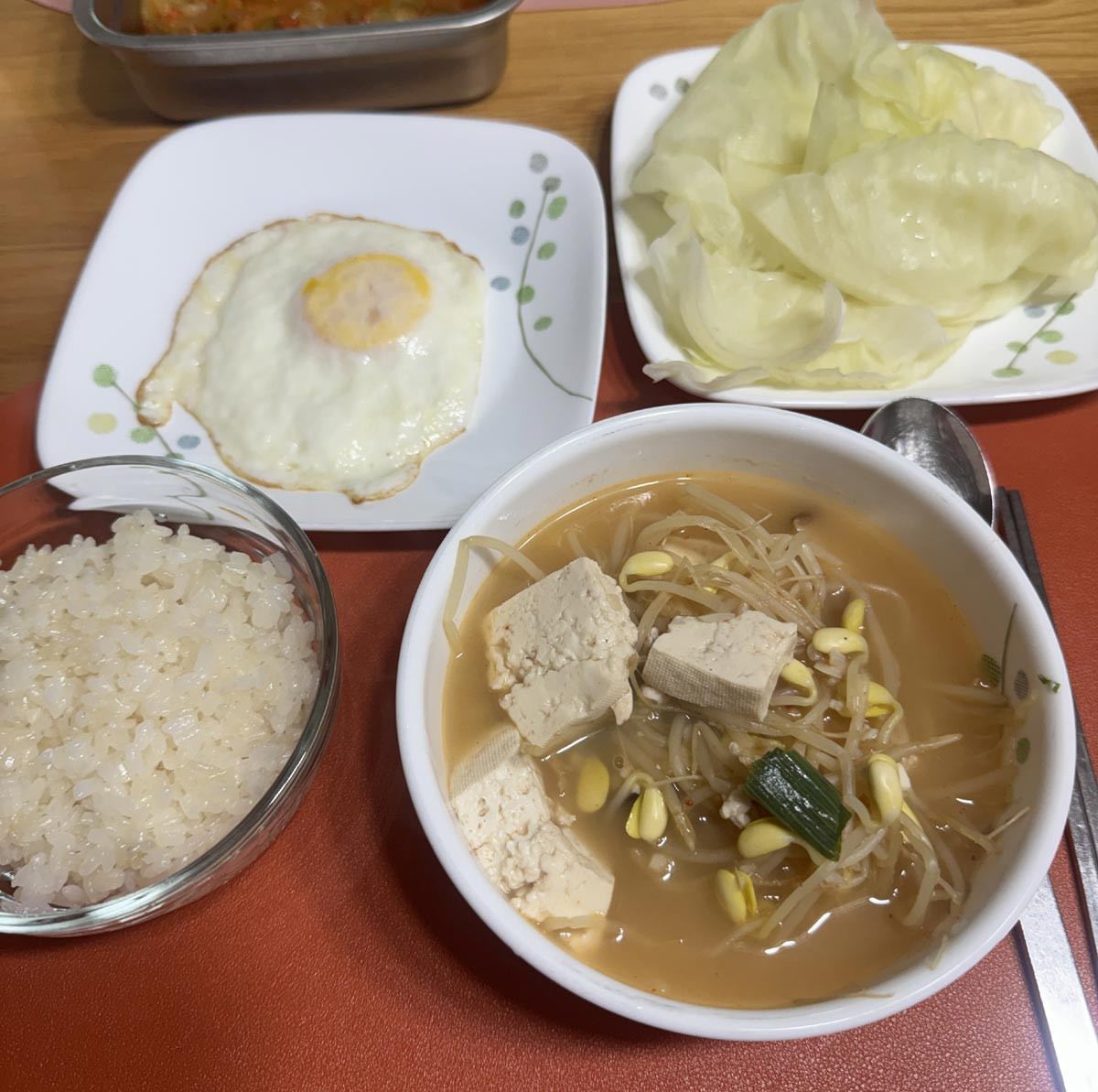
The home-cooked breakfast I prepare is sometimes very simple. A meal is complete with rice, a light soybean sprout soup, a fried egg, and one vegetable dish.
On days when we prepare a birthday meal for our parents, however, the table looks completely different. Choosing the dishes, shopping for ingredients, preparing them, and cooking everything takes a great deal of time. When I compare an ordinary breakfast with a birthday feast, it almost seems strange to call them both “Korean home-cooked meals.”
To me, however, both are home-cooked meals prepared for my family.
Korean Home-Cooked Meals Are Not Always as Elaborate as Hanjeongsik
Photos introducing Korean food overseas often show tables crowded with rice, soup, meat, fish, kimchi, and numerous side dishes. You can certainly find tables like these in Korean homes, but not every family prepares such an elaborate spread for every meal.
Our family also eats relatively simple breakfasts. Rice, soup, and a fried egg can be enough for one meal. The soup I prepare most often is soybean sprout soup. It is simple to make, and I consider it a wholesome choice. If we have side dishes left over from the previous day, I may serve those as well. What appears on our table depends on how much time we have and what everyone’s schedule looks like.
I tend to put a little more thought into dinner than breakfast. In particular, when preparing meals for my growing children, I consider which foods to serve together. Some evenings we have meat, while on other days I serve fish, soup, and vegetable side dishes.
Of course, not every Korean parent plans meals according to the same standards. The foods a family eats regularly and the way they cook them vary from household to household. Family size and daily routines also influence what Korean home food looks like.

Our Home-Cooked Meals Combine What My Wife and I Each Cook Best
My wife and I are good at different kinds of cooking. I feel more confident making stir-fried dishes than soups, while my wife is better at dishes with broth.
Whenever I make doenjang jjigae, or Korean soybean paste stew, a surprising amount is left over. I think my version probably does not suit my family’s tastes very well. I used to feel a little disappointed about it, but it has now become one of the amusing stories in our family.
The response is completely different when I make jeyuk-bokkeum, a spicy stir-fried pork dish. Everyone eats well, and the plates are left clean. The same person cannot cook every dish equally well. At our table, the stir-fried dishes I make well and the soups my wife cooks well complement each other.
These roles are not fixed in advance. Sometimes whoever has time that day cooks, and the menu may depend on what ingredients remain in the refrigerator. In our home, a home-cooked meal is not a perfect spread prepared every day by one person. It is food shaped around the way our family lives.
Why Korean Families Sometimes Grill Meat at the Table
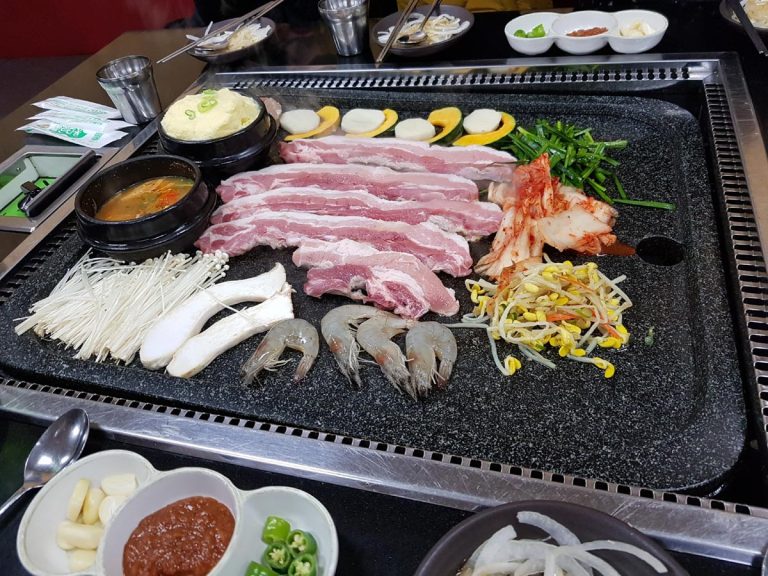
Cooking equipment for grilling meat sometimes appears on our dinner table. We may use a portable gas stove and grill pan or an electric grill.
We could cook all the meat in the kitchen and bring it to the table on a plate. However, grilling it at the table allows the family to sit together and wait as the meat cooks. Instead of cooking everything at once, we grill a little at a time according to how quickly we are eating. This also allows us to enjoy the meat while it is still hot.
We prepare leafy vegetables such as lettuce and perilla leaves, along with kimchi, garlic, mushrooms, and various condiments. Everyone can then create the combination they prefer. One person may wrap the meat in a leaf, while someone else may eat it simply with rice and kimchi. Even when we sit at the same table, each of us may eat the meal a little differently.
Grilling meat indoors does have one drawback: odors and smoke can linger. On days when we grill meat, we open the windows and ventilate the room after eating. I also personally light several candles. This is simply a method we use in our home, not a guaranteed way to remove cooking odors. Still, I often feel that it helps reduce the smell, so I use this method regularly. When using candles, I keep flammable objects away from the flames and always extinguish them before leaving the room.
How Is an Everyday Meal Different From a Birthday Feast?
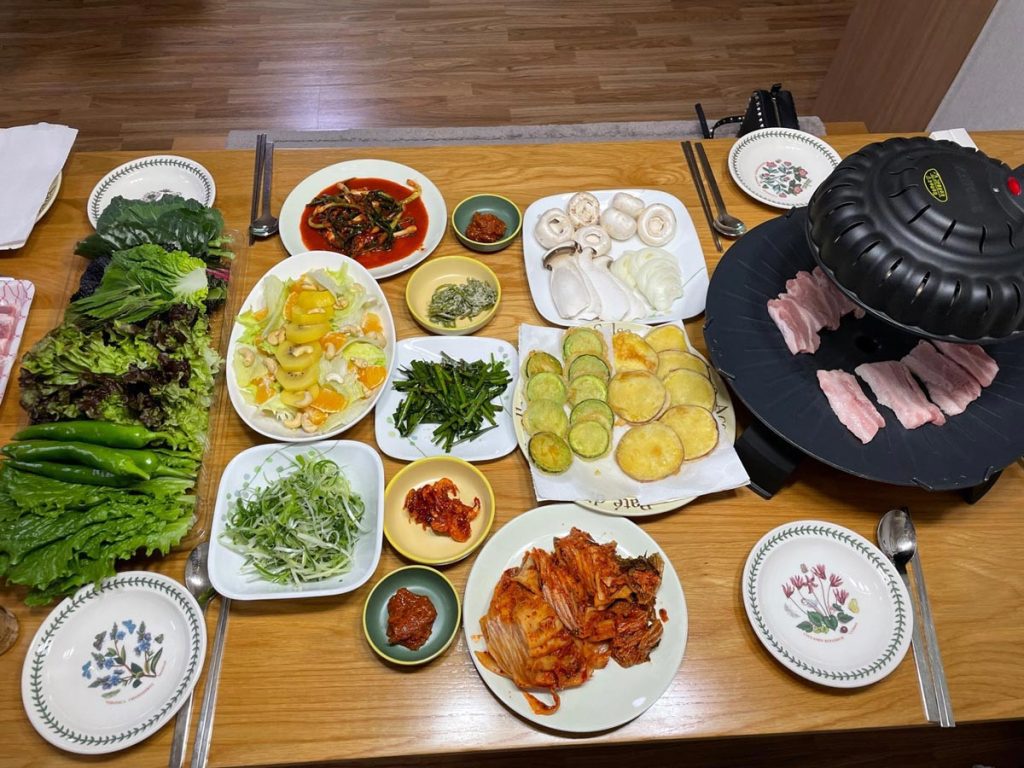
In Korea, some families prepare food and share a meal to celebrate their parents’ birthdays. Not every household cooks the same dishes or sets a large table, but my wife and I prepare more dishes than usual for our parents’ birthdays.
The birthday feast in the photo was also prepared by my wife and me. It includes many dishes, some of which require considerable preparation and cooking time. Among the foods shown, the galbijjim, or braised short ribs, and the spicy marinated crab required the most preparation and time. When we make the dishes one by one, we can become tired before the meal has even begun.
Another birthday table includes meat, fish, seafood, japchae, and fried dishes, all of which require different cooking methods. Even in our home, this is not an ordinary dinner that we prepare regularly. We devote more time and effort to it because a birthday is a special occasion.


We usually serve a birthday feast for dinner, but on some occasions, we begin cooking in the morning and continue until shortly before dinner. There are moments during the preparation when it feels exhausting. However, when I see our parents and family enjoying the food, much of that tiredness fades away.
This is also what matters most to me about home cooking. The number of dishes or how impressive the table looks is less memorable than the person we were thinking of while preparing the meal.
Home-Cooked Food Is Not Automatically Healthy
Cooking at home allows us to choose the ingredients and seasonings ourselves. We can adjust the spiciness and saltiness to suit our family and serve meat with vegetables. I always try to consider my family’s overall nutritional balance, and this ability to make our own choices is a clear advantage of home cooking.
However, food is not automatically healthy simply because it was prepared at home. A home-cooked dish can still contain a lot of oil, salt, or sugar, and some meals may be centered heavily on meat. On simpler days, the limited variety of food may not provide an ideal nutritional balance either.
When preparing meals for my family, I try to consider both flavor and the overall composition of the meal. Still, preparing an ideal table every time is not realistic. We eat simply on busy days and make a little more effort for relaxed dinners or special occasions. This is also part of what Korean home-cooked meals look like in my own experience.
What Overseas Readers Should Know About Photos of Korean Home Food
To understand Korean home food, it is best not to judge it from a single photograph of an elaborate birthday feast. A table filled with many dishes may represent a special occasion. At the same time, a small meal of rice, soup, an egg, and vegetables can be just as authentic as an everyday Korean family meal.
A table with numerous side dishes also does not necessarily mean that one person cooked everything from scratch that day. Foods such as kimchi may be prepared in advance and eaten over several meals. Families may also serve leftovers from the previous day. Some dishes may be purchased from a supermarket or a Korean side-dish shop.
Above all, there is no single meal that can represent every Korean home. Some families frequently eat soups and stews, while others prefer grilled or stir-fried dishes. A household with children will also have a different table from that of someone living alone. Region, generation, and the cook’s preferences can all make a difference.
What Home-Cooked Meals Mean to Our Family
On some days, our family meal is simply rice, soup, and a fried egg. In the evening, we may prepare meat and vegetables and grill the meat together at the table. For our parents’ birthdays, we spend much more time preparing a far larger selection of food.
What connects these different tables is not the number of side dishes or a particular cooking method. It is the fact that someone considered the family and prepared a meal for them.
I cannot cook every dish well. The doenjang jjigae I make is often left unfinished, but when I prepare jeyuk-bokkeum, I see empty plates. My wife and I are also skilled at different dishes. Those differences are part of our family’s home cooking.
If you are discovering Korean home-cooked meals for the first time, I hope you will look beyond elaborate tables and also notice the smaller meals served on ordinary days. They offer a closer view not only of what people in Korea actually eat, but also of how one family lives together.
To me, Korean home cooking is more than food. It is an expression of a family’s love.