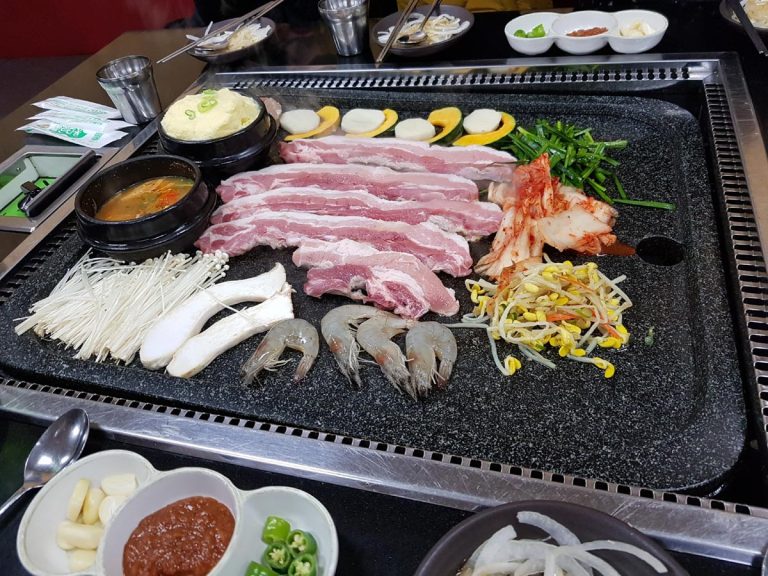
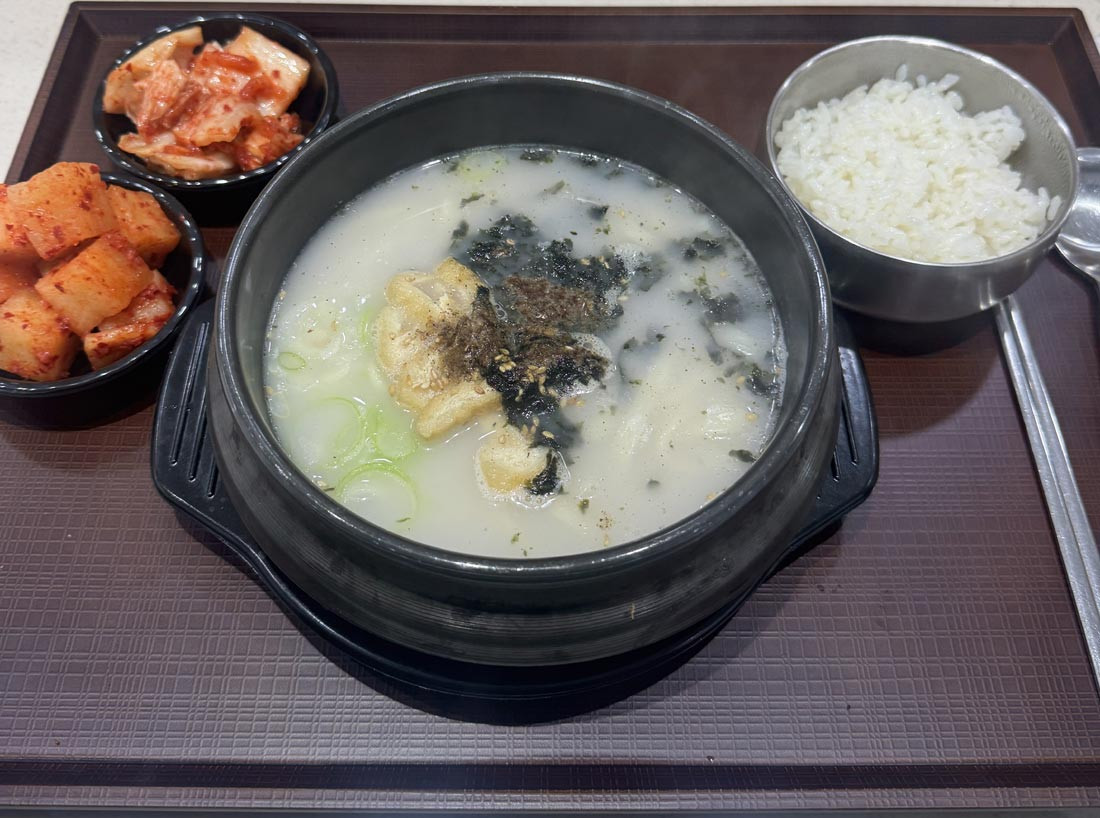
Korean Soup Dishes: Why Do Koreans Serve Soup with Rice?
Even when several delicious side dishes are on the table, a meal still feels a little incomplete to me without soup.
Rice is the staple food in Korea. Rice and side dishes are enough to make a meal, but without some broth, the food can feel slightly dry to me. That is why I enjoy taking a bite of rice and then having a spoonful of warm soup.
This habit probably began during my childhood. When my mother prepared a meal, she often placed soup next to the rice and side dishes. It might have been kimchi soup, soybean sprout soup, or soybean paste soup. The menu changed, but the sight of warm soup on the table was always familiar.
Even now, I feel more comfortable eating a meal that includes rice, side dishes, and soup than one without soup. To me, Korean soup dishes are not merely another type of food. They are part of a way of eating that I have followed for most of my life.
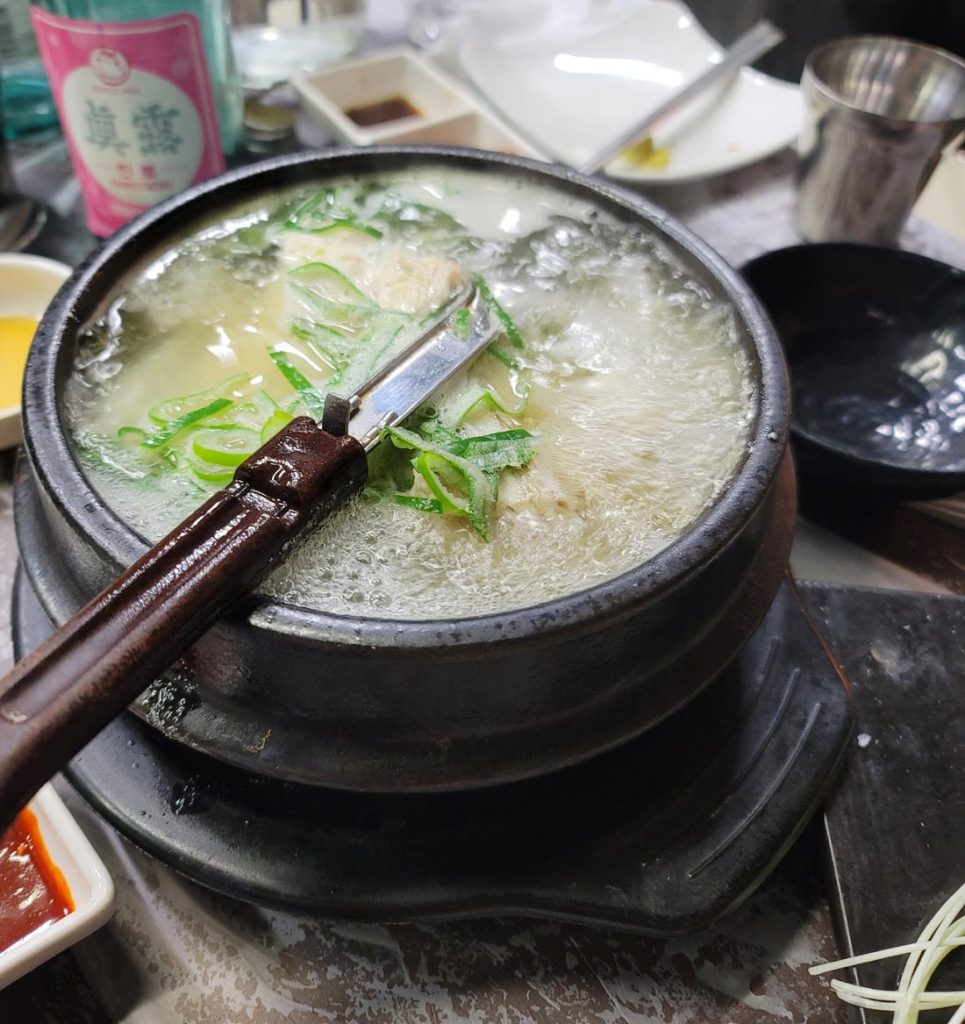
Korean Soup Dishes Come in Different Forms
When Korean soup dishes are explained in English, it is easy to translate all of them simply as “soup.” At a Korean table, however, different names such as guk, tang, and jjigae are used.
Guk (국) generally refers to a soup served with rice. Miyeokguk, or seaweed soup; kongnamulguk, or soybean sprout soup; and bugeoguk, or dried pollock soup, are examples commonly found on Korean home dining tables.
Tang (탕) also has plenty of broth, but dishes such as seolleongtang and galbitang are often more substantial and can serve as the main part of a meal. The distinction between guk and tang is not always clear and can depend on the particular dish and dining situation.
Jjigae (찌개) generally contains less broth and has a stronger seasoning than guk. Dishes such as kimchi jjigae and doenjang jjigae may be placed in the middle of the table and shared. However, the amount of broth and the strength of the seasoning can differ by household, restaurant, and recipe.
Koreans do not necessarily classify these dishes according to a strict set of rules whenever they eat them. Some dishes overlap in their names, preparation methods, and the ways in which they are served.
International readers do not need to memorize the exact boundaries between them. It is enough to understand that Korean soup dishes range from lighter soups served beside rice to tang and jjigae dishes that can become the center of a meal.
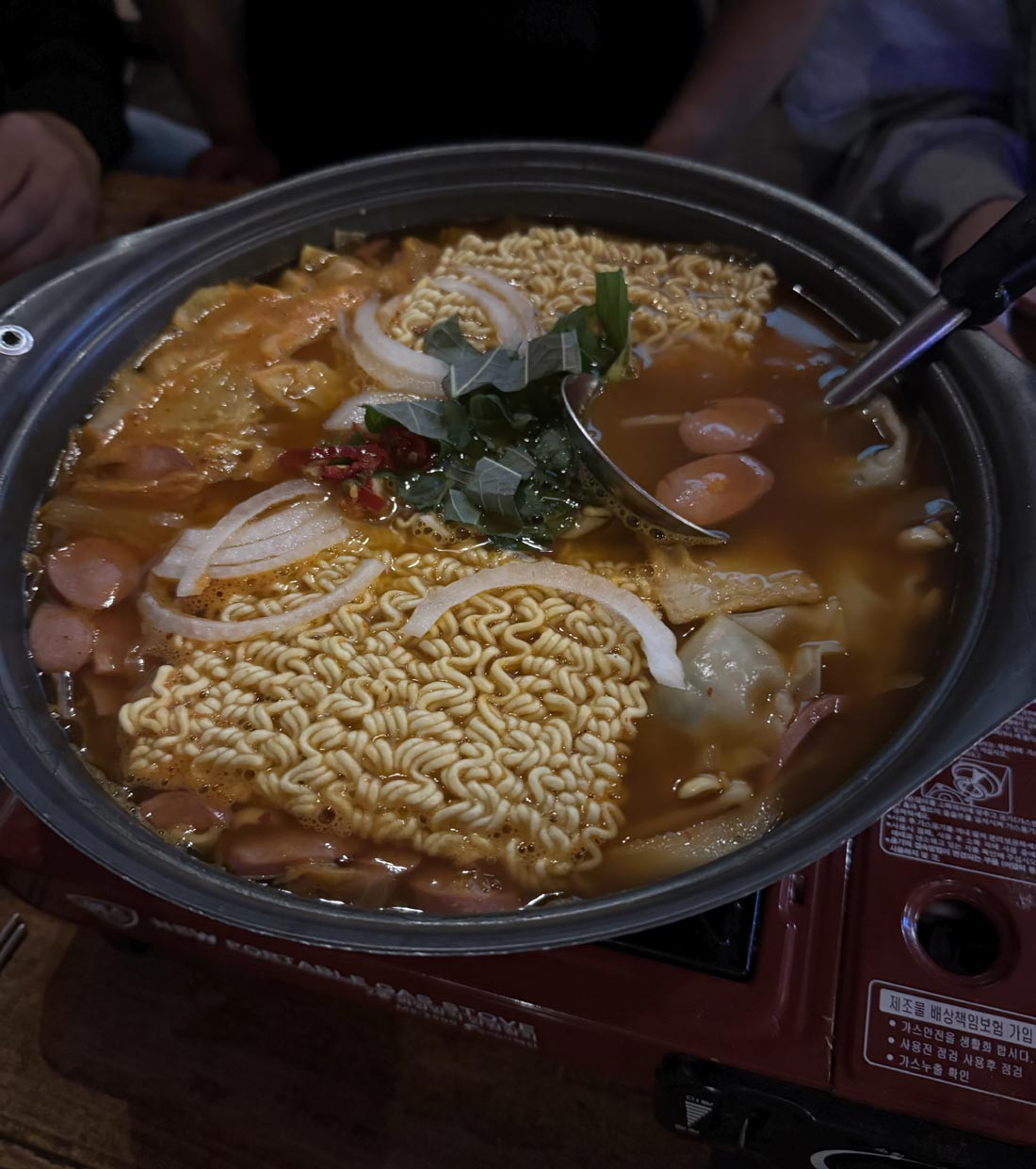
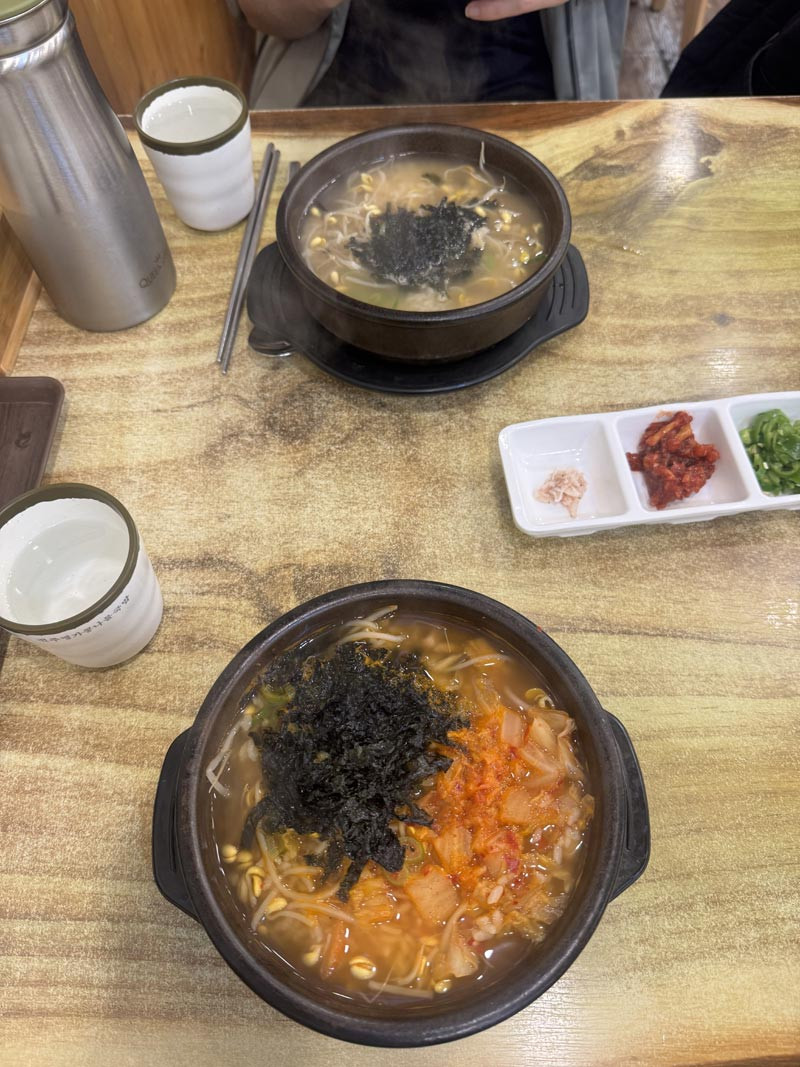
How Are Korean Soup Dishes Different from Soups in Other Countries?
It would not be accurate to claim that Korean soup dishes are automatically more varied or special than soups from other countries. Many cultures have soups served with meals, and their ingredients and preparation reflect local food traditions.
The difference is easier to see in the place soup occupies at the table than in the broth itself.
In the Korean meals that are familiar to me, rice sits at the center, with soup and several side dishes surrounding it. Soup is not usually a separate course that is eaten before the rest of the meal and then removed. It remains beside the rice and side dishes throughout the meal.
A person might eat a spoonful of rice and then take a spoonful of broth. Ingredients such as tofu and soybean sprouts can also be eaten almost like side dishes. Some people add rice to the soup a little at a time. Others dislike rice becoming soft in the broth and keep the two separate until the end of the meal.
The way people eat soup depends on personal preference. What matters is that soup is not necessarily treated as a separate menu item from rice. It fits naturally into the rhythm of the entire meal.
Of course, not every Korean eats soup at every meal. Some households often have simple meals without it, while some people limit the amount of broth they consume to reduce their sodium intake. I cannot speak for every Korean. However, soup was a familiar part of the table in the home where I grew up, and it remains familiar at my family’s table today.
The Misconception That Korean Soup Dishes Are Always Hot
When people hear the word “soup,” they may first imagine a steaming hot bowl. Korea certainly has many hot soups and stews that are comforting in cold weather or enjoyable with rice.
Korean soup dishes, however, are not always hot or warm.
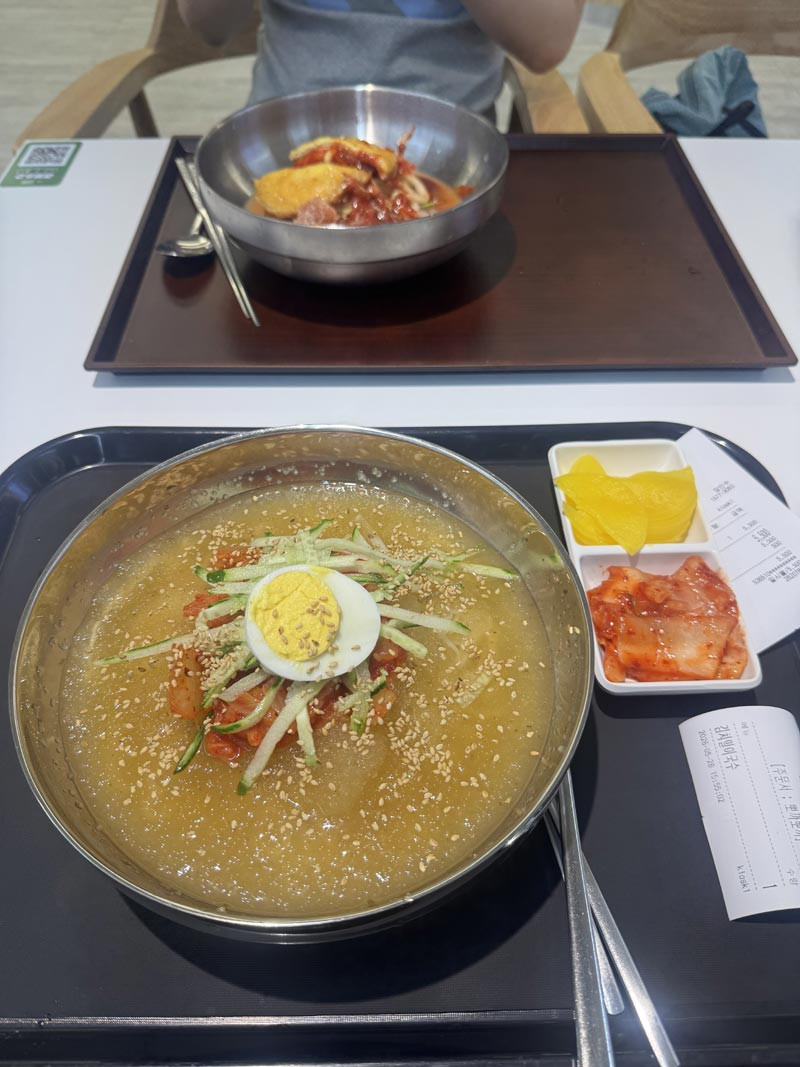
Naengmyeon is a well-known noodle dish served in cold broth. Depending on the restaurant, the broth may contain ice cubes or have a lightly frozen, slushy texture. Chogyeguksu is another noodle dish served in chilled broth. During the summer, when hot soup may feel too heavy, these cold dishes offer a completely different kind of refreshment.
The Korean expression siwonhada, commonly translated as “refreshing,” can also be unfamiliar to international diners. Koreans use it not only for cold foods but also to describe the clean and relieving sensation they experience while eating hot broth. In this context, the word describes more than temperature. It can also express how clear, light, or satisfying the broth feels.
Therefore, when a Korean eats hot soybean sprout soup or dried pollock soup and says, “The broth is siwonhada,” it does not mean that the soup is cold.

My Favorite Soup: My Wife’s Dried Pollock and Soybean Sprout Soup
The best soup maker in our home today is my wife.
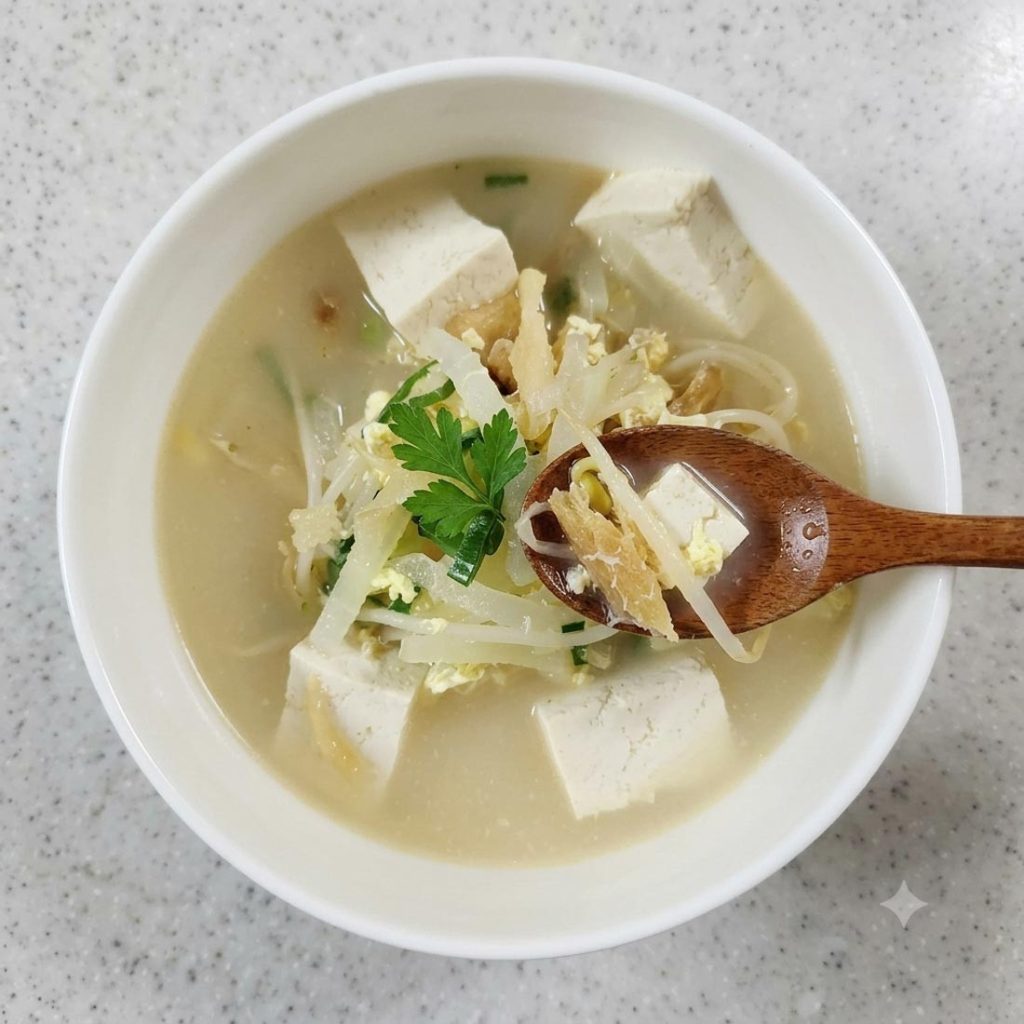
Of all the soups she prepares, my favorite is dried pollock and soybean sprout soup. When she adds soft tofu, the bowl feels even more filling.
If I drink too much the night before, this soup often appears on the breakfast table the following morning. In Korea, food eaten to soothe the body after drinking is called haejangguk (해장국). The word does not necessarily refer to one specific dish. It can describe several kinds of soup eaten after drinking alcohol.
For me, my wife’s dried pollock and soybean sprout soup is the most welcome kind of haejangguk. When I eat its warm, refreshing broth, I feel as though the fatigue from the previous night’s drinking has disappeared.
I am not claiming that this soup cures a hangover or provides any particular health benefit. My reason for liking it is much more personal. It connects my childhood memories of my mother placing soup on the table with the present-day moments when my wife prepares a warm bowl while thinking of me.
I may not always say it out loud, but whenever I eat this soup, I feel grateful to my wife.
A Simple Look at How We Make Dried Pollock and Soybean Sprout Soup at Home
The important part of making dried pollock and soybean sprout soup is not elaborate presentation but preparing the ingredients and adding them in the proper order.
First, lightly moisten the dried pollock strips with water to soften them. Check for any remaining bones and cut the strips into manageable lengths. Add oil to a pot and stir-fry the pollock before pouring in water or prepared broth. Add the soybean sprouts and tofu, cook them thoroughly, and then finish the soup with green onion and seasoning.
Adding Korean radish makes the soup more substantial, but ingredients and cooking sequences can differ from one household to another. Some families season the soup with salt, while others use Korean soup soy sauce or different seasonings.
This should therefore be understood as a simple overview of how dried pollock and soybean sprout soup is prepared, rather than as the one correct recipe followed by every Korean household.
Dried Pollock and Soybean Sprout Soup Recipe for International Readers
Here is a simple version of my wife’s dried pollock and soybean sprout soup that international readers can follow. The ingredients and seasoning methods may differ among Korean households.
Ingredients
- 100 g dried pollock strips or hwangtae strips
- 100 g soybean sprouts
- 100 g Korean radish
- 1/4 block tofu
- 1 large green onion
- 4 cups anchovy broth, approximately 800 ml
- 2 tablespoons perilla oil
- 2/3 teaspoon salt to start, with more added according to taste
One tablespoon equals 15 ml, and one teaspoon equals 5 ml.
Instructions
- Prepare the dried pollock.
Lightly rinse the dried pollock strips and squeeze out the excess water. Check the softened strips for any remaining bones, remove them, and cut the pollock into pieces approximately 3 to 4 cm long. - Prepare the vegetables and tofu.
Thinly slice the radish into bite-sized pieces. Cut the tofu into small cubes, slice the green onion, and rinse the soybean sprouts. - Stir-fry the pollock and radish.
Add 2 tablespoons of perilla oil to a pot. Add the dried pollock and stir-fry it for approximately 3 to 4 minutes. Add the radish and continue cooking for about 3 more minutes. - Add the broth and simmer.
Pour in 4 cups of anchovy broth and add 2/3 teaspoon of salt. Once the broth begins to boil, reduce the heat to medium, cover the pot, and simmer for approximately 15 minutes. - Add the soybean sprouts and tofu.
Add the soybean sprouts and tofu and cook for another 3 to 4 minutes. Add the green onion and cook for an additional 1 to 2 minutes. Taste the soup and adjust the seasoning if necessary. - Serve it with rice.
Serve the soup hot with a bowl of rice. You can keep the rice and soup separate or add a little rice to the soup according to your preference.
A Bowl of Soup Can Carry More Than Flavor
In Korea, soup can be an ordinary part of an everyday meal while also being associated with particular occasions.
Many families eat seaweed soup on birthdays, and some people look for dried pollock soup or soybean sprout soup the morning after drinking. Hot tang or jjigae may come to mind on a cold day, while chilled broth dishes such as naengmyeon and chogyeguksu can be appealing during hot weather.
However, people do not all choose the same food for the same occasion. Some people do not eat seaweed soup on their birthdays, while others prefer something other than soup after drinking.
For me, the special meaning of Korean soup dishes is found less in grand traditions than in repeated moments from everyday life. It comes from the table my mother prepared during my childhood, the breakfasts my wife makes today, and the spoonfuls of soup I naturally eat between bites of rice and side dishes.
I do not believe a meal without soup is wrong. A warm bowl of soup simply makes a meal feel more comfortable and complete to me.
Tips for Trying Korean Soup Dishes for the First Time
If you are trying Korean soup or stew for the first time, there are a few things worth knowing.
First, you do not have to finish all the broth. Some dishes can be strongly seasoned or high in sodium, so you can eat as much or as little as suits your taste and dietary habits.
Second, even if a pot of jjigae is placed in the middle of the table, it may be customary to transfer it into individual bowls, depending on the restaurant or household. Watching how the people around you eat can help.
Third, clear or pale broth is not necessarily vegetarian. It may contain anchovy broth, meat stock, fish sauce, or other animal-derived ingredients. If you follow a vegetarian diet or have food allergies, ask about the broth and seasonings.
Fourth, red broth may be spicy, but color alone does not always indicate how spicy a dish will be. A pale soup can also be spicy if it contains black pepper or Cheongyang chili peppers.
Finally, do not feel pressured to understand the exact distinction among guk, tang, and jjigae. It is more useful to consider which ingredients the dish contains, how it is eaten with rice, and whether it is served as an individual bowl or shared with other people.
Why I Prefer a Meal with Soup
I do not like soup only because it makes rice easier to eat.
A table with soup has been a familiar part of my meals since childhood. Today, it also reminds me of the care my wife puts into cooking for our family. In particular, the dried pollock and soybean sprout soup I find on the table after a night of drinking feels like a meal prepared by someone who noticed how I was feeling and wanted to take care of me.
Someone trying Korean soup dishes for the first time does not need to begin by tasting as many famous varieties as possible. Try taking a spoonful of soup beside a bowl of rice, then return to the rice and side dishes. This can help you understand more naturally what role soup plays at a Korean dining table.
During the summer, do not limit yourself to steaming hot soups. Consider trying naengmyeon with ice in its broth or a chilled bowl of chogyeguksu as well. Korean soup dishes cannot be explained through only one temperature or one way of eating.