Minimal Works Guava 3 Review: The Roomier 2023 Korean Tent Built for Three-Season Comfort and Colder Camps
The wind picks up after midnight, shoes are piled inside a cramped vestibule, and three campers are trying to change clothes without elbowing each other. This is where a compact tent can stop feeling “minimal” and start feeling restrictive.
I’m K-papa, a Korea-based creator who introduces useful Korean products to international readers. For this Minimal Works Guava 3 review, I compared the latest official specifications with detailed reports from Korean campers, including feedback on both the original Guava 3 and the larger Guava 4.
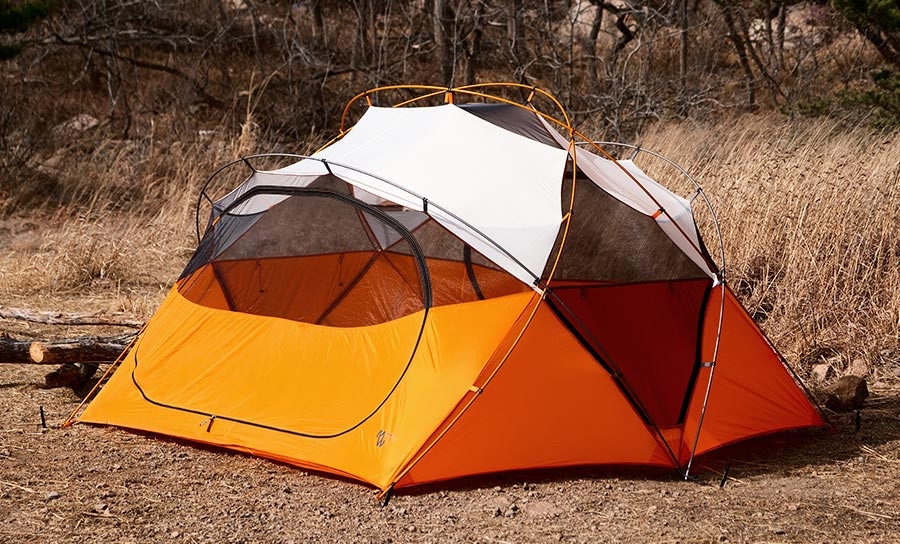
The renewed Minimal Works Guava 3 addresses that problem with a taller, larger inner tent, two vestibules, and a double-cross pole structure intended to create more usable space than a basic three-person backpacking dome. It also uses a solid inner with multiple mesh openings, giving campers more control over airflow when temperatures change.
There is one important detail before we go further: this is a research-based review, not a hands-on test. The assessment below combines the current manufacturer specifications with four Korean reports. Two cover the original Guava 3, while two discuss the larger Guava 4 and provide useful context about the Guava tent family.
The current product is the redesigned 2023 Guava 3. Its dimensions differ considerably from the older model covered in the Korean reviews.
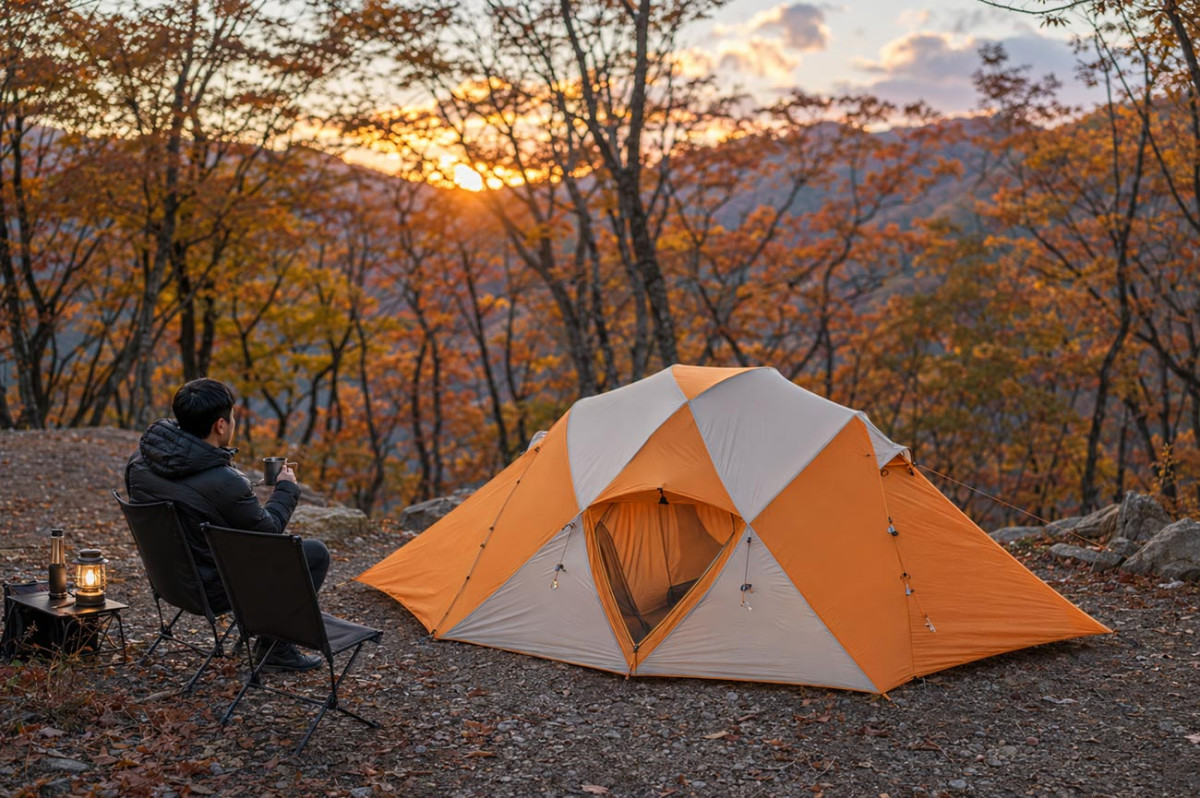
The Guava 3 grew up in 2023
Calling the current Guava 3 a minor update would undersell what changed. Minimal Works increased both the floor area and ceiling height of the inner tent.
According to the manufacturer, the original 2017 inner measured 225 × 205 × 110 cm. The renewed version measures 260 × 213 × 130 cm. That gives campers an additional 20 cm of headroom, along with more length and width.
| Version | Inner-Tent Dimensions | What the Change Means |
|---|---|---|
| 2017 Guava 3 | 225 × 205 × 110 cm | Lower ceiling and more compact sleeping area |
| 2023 renewed Guava 3 | 260 × 213 × 130 cm | More headroom, a longer floor and easier movement inside |
The 130 cm peak height will not let an adult stand upright, but it should make sitting, changing clothes and organizing sleeping gear less awkward. That extra vertical space matters when three people need to spend time inside because of rain or cold weather.
The redesigned tent is also longer when packed. The current official storage dimensions are 60 × 25 × 18 cm, compared with the 45 × 20 cm packed measurement reported for the older model. Buyers reading older reviews should not assume that the new Guava 3 will occupy the same amount of backpack space.
Current Minimal Works Guava 3 specifications
The figures below come from the current manufacturer product materials rather than measurements taken by K-papa.
| Specification | Current Guava 3 |
|---|---|
| Sleeping capacity | 3 people |
| Pitch dimensions | 400 × 270 × 137 cm |
| Inner-tent dimensions | 260 × 213 × 130 cm |
| Packed dimensions | 60 × 25 × 18 cm |
| Weight | 3.7 kg, excluding pegs |
| Fly material | Nylon 20D ripstop with PU/silicone coating |
| Inner material | Nylon 20D |
| Pole material | Duralumin |
| Structure | Freestanding double-wall tent |
| Included poles | 3 |
| Included pegs | 16 |
| Included guylines | 8 |
| Doors and vestibules | Front and rear |
| Dedicated groundsheet | Not listed among the included components |
At 3.7 kg before adding the pegs, this is not an ultralight shelter. Splitting the body, fly and poles between two people may make it more manageable for group backpacking, but solo hikers focused on minimum pack weight have much lighter options.
The 400 × 270 cm pitched footprint deserves attention as well. The inner is reasonably compact, but the vestibules and fly extend the required campsite area. Check tent-pad dimensions before taking it to a wooden platform or a tightly spaced campground.

The pole structure is doing more than making the tent look distinctive
The Guava 3 uses a double-cross pole arrangement with additional side poles. Minimal Works says this structure is designed to create a strong frame and a more spacious interior. A swivel hub connects the main pole assembly, while the side poles help pull the walls outward.
That shape is a major part of the tent’s appeal. Many lightweight domes narrow quickly above the floor, leaving three occupants with enough sleeping width but very little shoulder room. The Guava 3’s crossed frame should produce steeper walls and make more of the floor area usable.
Two Korean reviewers of the original Guava 3 also discussed the Dino Talon & Fix connection system. They separately described the pole ends as secure once attached, with less chance of one end slipping out while the opposite side is being tensioned. The current manufacturer materials continue to show the same named system, so this feedback remains relevant to the renewed tent.
It should still be assembled carefully. Duralumin poles are light for their strength, but any tent frame can be damaged by forcing a joint, bending an incompletely connected section or pitching on unsuitable ground.
Three people can fit, but “three-person” needs some context
The current inner floor is 213 cm wide and 260 cm long. On paper, that is a practical three-person layout, especially when compared with narrow backpacking tents that allocate little more than one sleeping pad per occupant.
Still, the number printed in a tent’s name is a sleeping-capacity rating, not a promise of personal space. Three wide pads, bulky winter sleep systems or a large amount of equipment could make the interior feel busy.
The Guava 3 makes that situation easier by providing vestibules at both ends. One older Guava 3 reviewer showed that each vestibule could hold sizeable backpacks, keeping wet shoes and equipment outside the sleeping area. Because that report concerns the earlier model, it should be treated as useful design context rather than a measured storage test of the renewed version.
For two campers, the new inner should feel particularly generous. For three adults, it looks workable if most equipment stays in the vestibules. A family with a young child may also appreciate the layout, although pad dimensions should be checked before buying.
Solid fabric and mesh openings make seasonal changes easier
The Guava 3 is designed differently from a summer tent with an almost entirely mesh inner. It uses a solid nylon inner, mesh doors at the front and rear, side mesh windows and external ventilation points.
That combination gives campers several ways to manage airflow:
- Keep more of the solid fabric closed in cool or windy conditions.
- Open the mesh panels when temperatures rise.
- Use the front and rear doors to encourage cross-ventilation.
- Adjust the side vents to help release warm, humid air.
Both original Guava 3 reports emphasized the amount of ventilation available despite the solid inner. The manufacturer’s current images confirm that the renewed design retains large mesh sections and side ventilation.
No tent can eliminate condensation. Occupancy, humidity, temperature, wet clothing and campsite selection all affect moisture buildup. The Guava 3 gives users several ventilation options, but those openings still need to be managed according to the weather.
It is also safer to describe this as an all-season-oriented design rather than an expedition winter tent. The solid inner and structured frame may suit cooler camping better than a mesh-heavy summer shelter, but the provided materials do not include a snow-load rating, wind-speed rating or specialist mountaineering certification.
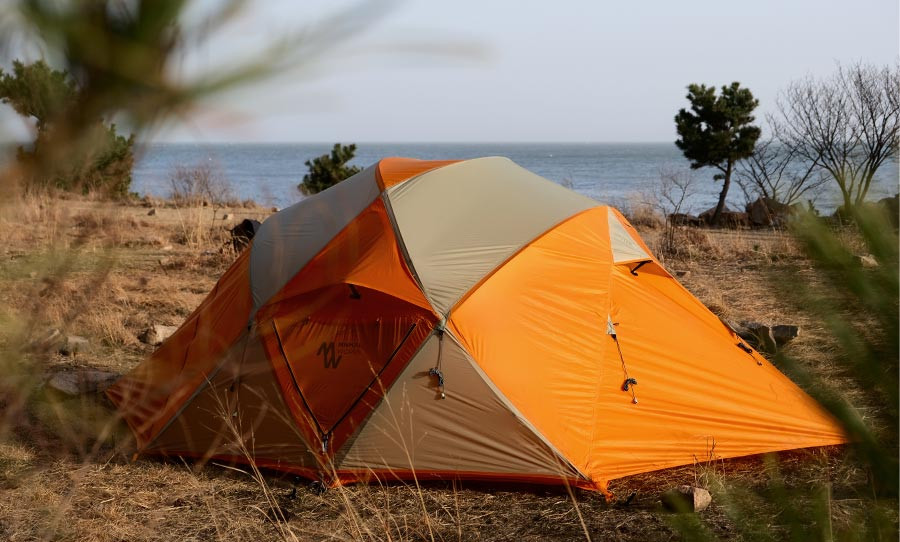


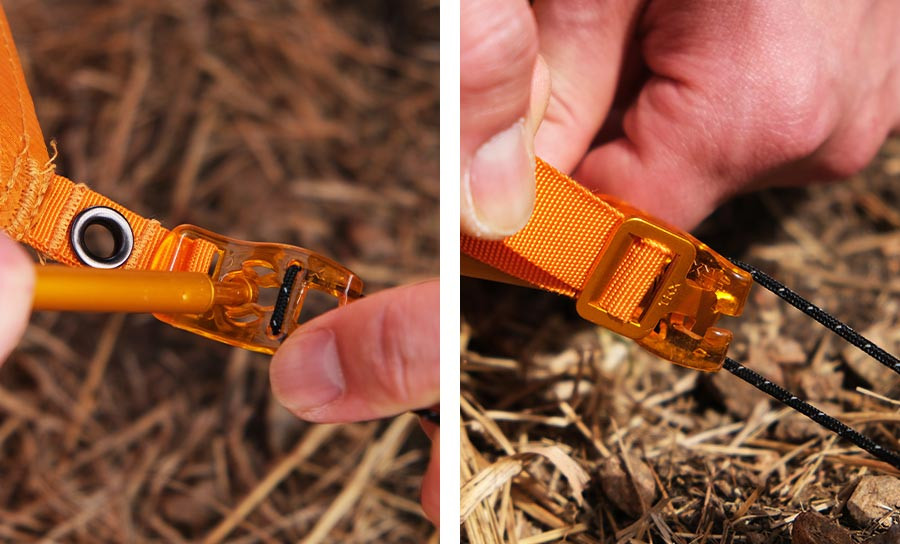
Image credit: Minimal Works Official Website
Two doors solve several small campsite frustrations
Front-and-rear symmetry sounds like a minor design choice until the weather changes direction or someone needs to leave during the night.
With an entrance and vestibule on each end, campers can divide equipment between two storage areas and avoid climbing over one another. The tent can also be oriented with more flexibility because there is no single mandatory entrance.
The symmetrical layout was praised in an older Guava 3 report, which noted that it simplified initial positioning and allowed campers to choose an entrance according to the surrounding conditions. That observation relates to the original model, but the same two-door layout is visible in the renewed design.
The double doors also help during warm weather. Opening both sides should produce better cross-ventilation than relying on one entrance and a small roof vent.

A quick buying guide to the renewed Minimal Works Guava 3, including its key specifications, strengths, tradeoffs, and ideal users.
What Korean reports clarify, and what they cannot prove about the renewed tent
The available Korean material does not represent four current-model owner tests. That distinction matters.
Reviews A and B cover the original Guava 3. Reviews C and D focus on the Guava 4, a larger tent with a different capacity and inner design. The Guava 4 reports are helpful for understanding recurring family traits, such as the hubbed frame, side-opening storage bag and emphasis on interior volume, but they cannot establish the renewed Guava 3’s real-world weather performance.
| Decision Area | What Users Appreciated | The Limits to Keep in Mind |
|---|---|---|
| Pitching system | Two original Guava 3 reviewers liked the secure pole connection and hubbed frame | Neither review tested the taller 2023 model |
| Interior shape | Reports across the Guava family described good usable space for their respective capacities | Guava 4 space impressions should not be transferred directly to the Guava 3 |
| Ventilation | Both original Guava 3 reports highlighted its large doors and mesh openings | Condensation performance was not measured under controlled conditions |
| Storage bag | Guava 3 and Guava 4 reports praised the side-opening bag | The current model is larger when packed |
| Weather protection | One Guava 4 owner reported staying dry through sustained rain | This was one user’s Guava 4 experience, not a waterproof test of the renewed Guava 3 |
| Portability | Reviewers considered the older tents relatively portable for their space | The current Guava 3 weighs 3.7 kg without pegs and packs to 60 cm long |
The most dependable conclusion comes from combining current official specifications with only those older observations tied to features that remain in the new design.
The weight may be the biggest dealbreaker
A three-person tent weighing 3.7 kg without pegs sits outside today’s ultralight category. Add 16 pegs, the dedicated groundsheet if purchased separately, and normal moisture or dirt after camping, and the carried weight will rise further.
That does not automatically make it too heavy. Weight has been spent on a taller inner, two vestibules, solid fabric and a multi-pole freestanding structure. Campers deciding between comfort and minimum weight need to determine which side matters more.
The Guava 3 makes the most sense for:
- Couples who want more sleeping and gear space
- Three-person groups willing to divide the load
- Parents camping with one young child
- Campers who use both established campgrounds and shorter backpacking routes
- People who prefer a solid inner for cooler conditions
- Buyers who value two doors and vestibules
It is less suitable for:
- Solo ultralight backpackers
- Long-distance hikers counting every gram
- Campers who want standing height
- Groups that regularly use very small tent platforms
- Four adults expecting comfortable sleeping space
- Buyers looking for a low-cost, basic summer dome
A lighter three-person backpacking tent would be the better alternative when carried weight takes priority. A four-person dome or small family shelter would make more sense if three adults want to keep bulky luggage inside or if four people will use the tent regularly.
If you usually camp alone and prioritize a lighter, more compact shelter, the KOVEA Core Lite 1.5 offers a more relevant alternative to the roomier but heavier Guava 3. Read my full KOVEA Core Lite 1.5 review to see how its solo-focused design compares.
Do not forget the groundsheet and campsite footprint
The current manufacturer component list includes the fly, inner tent, three poles, eight guylines, 16 pegs and a storage bag. A groundsheet is not included in that list.
Older Guava reports show a dedicated groundsheet that could be connected to the pole system, and one reviewer demonstrated a fly-and-groundsheet shelter configuration. Accessory compatibility can change between model generations, so buyers should confirm that any groundsheet is specifically intended for the renewed 2023 Guava 3.
The full 400 × 270 cm pitch also needs more ground than the inner dimensions suggest. This may be inconvenient at compact backpacking sites, but the extra area creates the two vestibules that make the tent more practical for a group.
Since photos and text have their limits, here is a review video to give you a real sense of the product’s actual size and feel.
Is the renewed Minimal Works Guava 3 worth buying?
The Guava 3 is worth considering if you want a spacious three-person tent with a solid inner, two vestibules and a frame that prioritizes interior volume over ultralight weight.
The 2023 redesign fixes one of the clearest limitations of the original model by raising the inner height from 110 to 130 cm and enlarging the floor. That should make a meaningful difference during bad-weather downtime and shared family trips.
Its compromises are just as specific. The tent is heavier and bulkier than the older reviews might lead you to expect, the dedicated groundsheet appears to be separate, and the large pitched footprint will not fit every tent platform. There is also no supplied wind, snow-load or hydrostatic-head figure that would justify presenting it as a technical expedition shelter.
For two campers who prefer extra room, it is a comfortable-looking option. For three people, it provides a sensible balance of sleeping space, vestibule storage and weather flexibility. Weight-focused hikers should keep looking.
Frequently Asked Questions About the Minimal Works Guava 3
Is the Minimal Works Guava 3 really suitable for three adults?
Yes, the renewed Guava 3 is designed as a three-person tent, with a 260 × 213 cm inner floor. Three adults should check the combined width of their sleeping pads before ordering. The layout will be easier to manage when backpacks and footwear are stored in the two vestibules.
What changed on the 2023 Minimal Works Guava 3?
The 2023 Guava 3 received a larger and taller inner tent along with a revised design. The old inner measured 225 × 205 × 110 cm, while the renewed version measures 260 × 213 × 130 cm. Current buyers should use the new specifications rather than dimensions quoted in older Korean reviews.
How much does the renewed Guava 3 weigh?
The current Guava 3 weighs 3.7 kg excluding pegs, according to Minimal Works. The complete carried weight will be higher once the 16 pegs, an optional groundsheet and any separate accessories are included. This places it closer to a comfort-focused group tent than an ultralight three-person shelter.
Is the Minimal Works Guava 3 a four-season tent?
It has several features useful beyond summer, including a solid inner, mesh panels that can be closed and a structured double-cross frame. However, the supplied materials do not provide a formal winter, wind-speed or snow-load rating. It should not be treated as an expedition shelter without additional verified performance data.
Can the Guava 3 be used in warm weather?
Yes, its front and rear mesh doors, side mesh windows and external vents provide several airflow options. Campers will still need to adjust the openings according to rain, humidity and wind. The solid inner will generally retain more protection than a mostly mesh summer tent.
Does the Guava 3 include a groundsheet?
No groundsheet appears in the current official component list. The listed package includes the fly, inner, three poles, eight guylines, 16 pegs and a storage bag. Confirm the correct renewed-model groundsheet before purchasing because accessories made for the older Guava 3 may not match the larger 2023 inner.
Can international customers buy the Minimal Works Guava 3?
International availability varies by country. The product has been listed through Amazon in at least some markets, while Minimal Works also operates official regional and Korean stores. Check the model dimensions carefully because older and renewed Guava 3 listings may coexist.
Is the Guava 3 good for solo backpacking?
It is generally too heavy and spacious for a weight-conscious solo backpacker. A solo camper could use it for extra comfort at established campsites, but carrying a 3.7 kg tent before pegs and accessories is difficult to justify when much lighter one- and two-person shelters are available.

Image credit: Minimal Works Official Website
How I Researched This Review
This is a research-based review. K-papa did not purchase, pitch or personally test the Minimal Works Guava 3.
I compared the current Minimal Works product information with four Korean reports:
- Korean review A: Original Guava 3 overview and setup
- Korean review B: Original Guava 3 and older Guava comparison
- Korean review C: Guava 4P initial pitching report
- Korean review D: Guava 4 camping report
The two Guava 3 reports describe the original model, not the larger 2023 redesign. I used the current manufacturer figures whenever dimensions or weight differed. The Guava 4 reports were treated only as supporting context about the broader Guava design family, and their space or weather experiences were not presented as renewed Guava 3 test results.