Kovea Guibada Mini Review: Who Is the Small Size Really For?
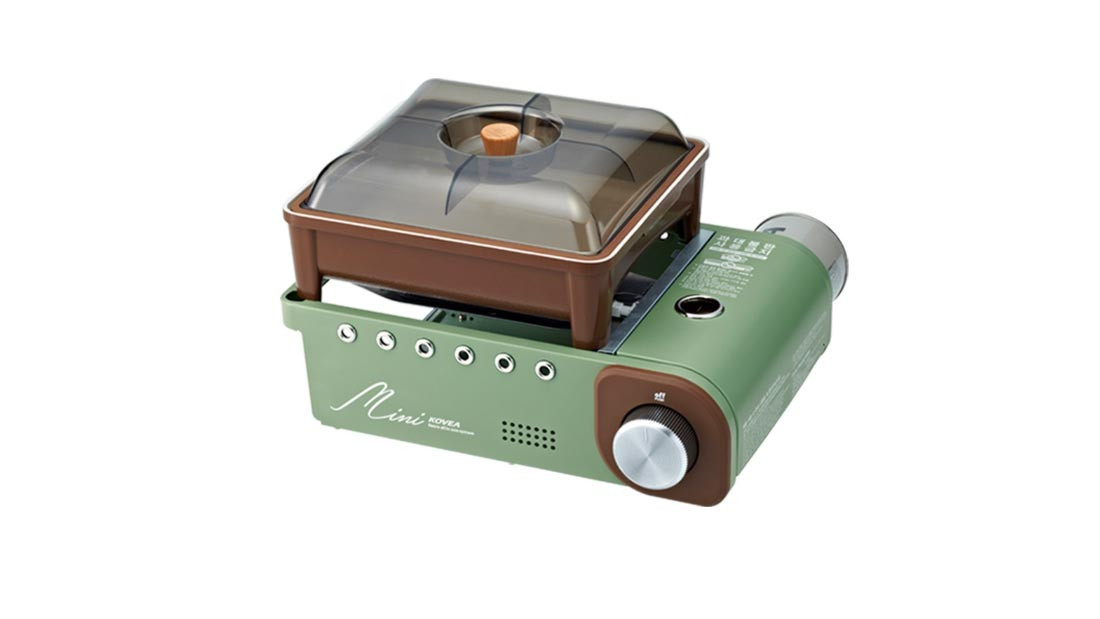
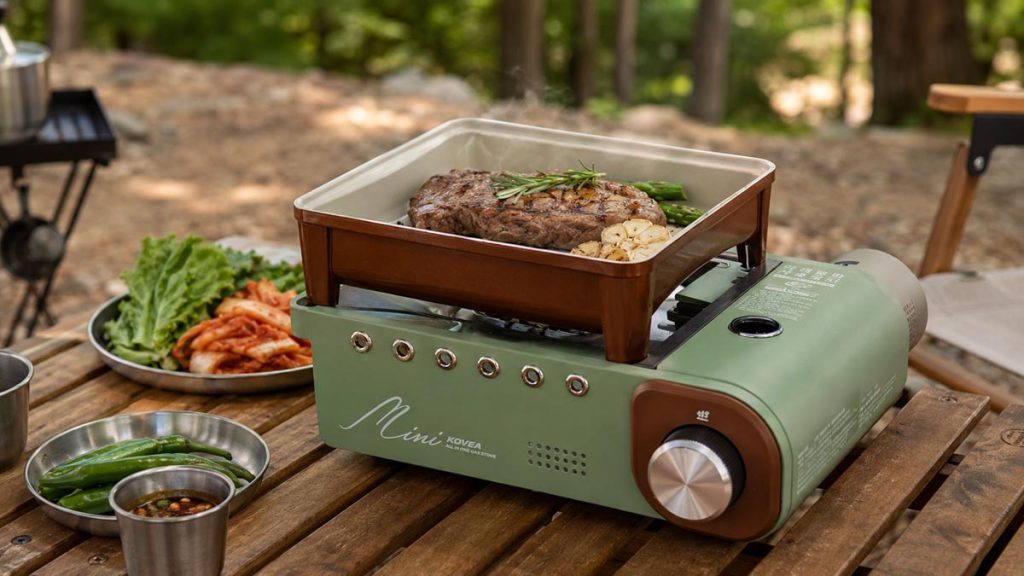
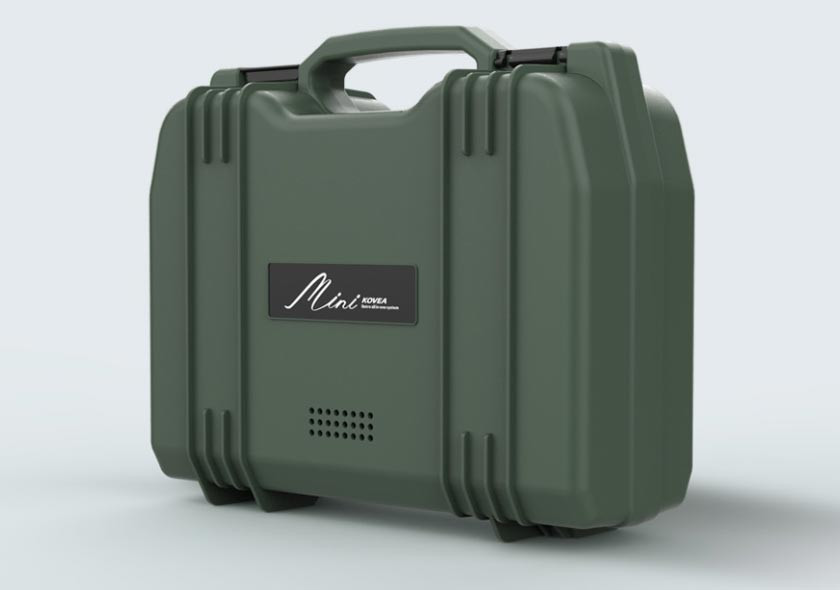
The Kovea Guibada Mini is best understood as a compact cooking station for one or two people—not as a smaller substitute for a full family grill. It combines a butane stove, ceramic-coated pan, pot support, multipurpose lid, and carrying case, reducing the number of separate items needed for a simple campsite meal.
That convenience is the strongest argument in its favor. The main compromise is equally clear: the cooking surface that makes it easy to carry can become restrictive when several people want to eat at once.
This Kovea Guibada Mini review is based on Kovea’s product information and four Korean owner reports covering meals such as ramen, tteokbokki, dumplings, fried rice, and grilled meat. I live in South Korea and examine Korean products for international readers, but I have not personally cooked with this model. Any firsthand observations discussed below belong to the Korean owners whose reports were reviewed.
The Short Answer: Excellent for Small Meals, Easy to Outgrow
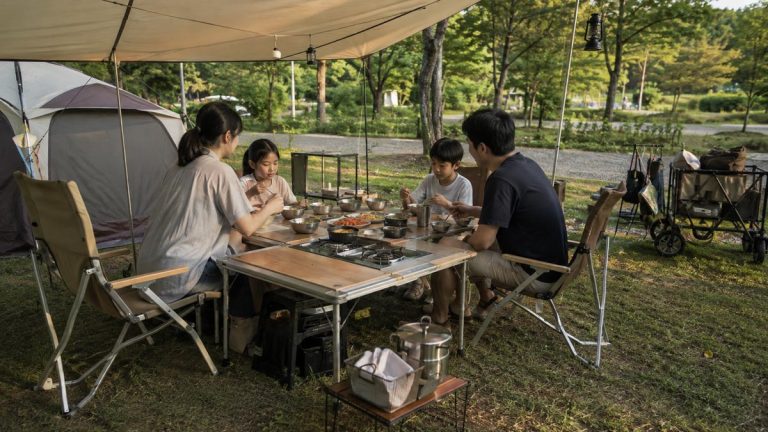
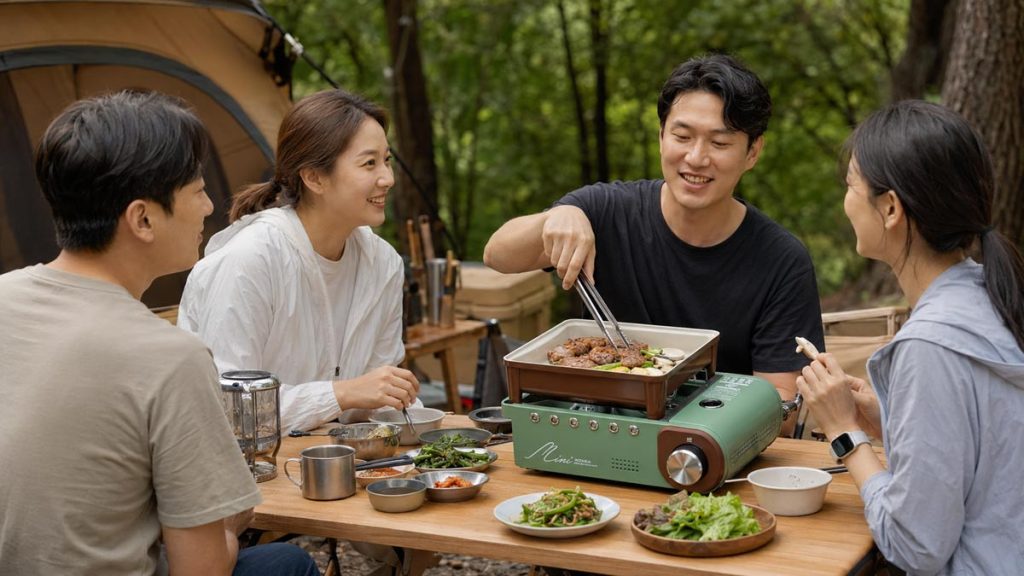
The Kovea Guibada Mini makes the most sense for solo campers, couples, light eaters, and car campers who want to prepare straightforward meals without packing a separate stove and large cookware set.
Kovea identifies the Mini as model KGG-1805 and positions it as the one-to-two-person member of the Guibada range. The company says the Mini was introduced in 2018, while the larger M and L models are intended for groups of two to three and three to four people, respectively.
The Mini is worth considering if your normal camp menu looks like this:
- One or two packs of ramen
- A small stew or tteokbokki
- Fried rice or another compact one-pan meal
- A modest amount of meat cooked in batches
- Food heated in a small compatible pot or steamer
It becomes less convincing when the stove needs to feed three or four hungry people continuously. One Korean owner who had used both the larger Guibada L and the Mini liked the Mini for quick meals with children but eventually purchased an M-size model because grilling meat for a family of four felt too restrictive.
That example captures the buying decision well. Buy the Mini because you genuinely cook small meals—not because you hope a compact pan will somehow behave like a family-size grill.
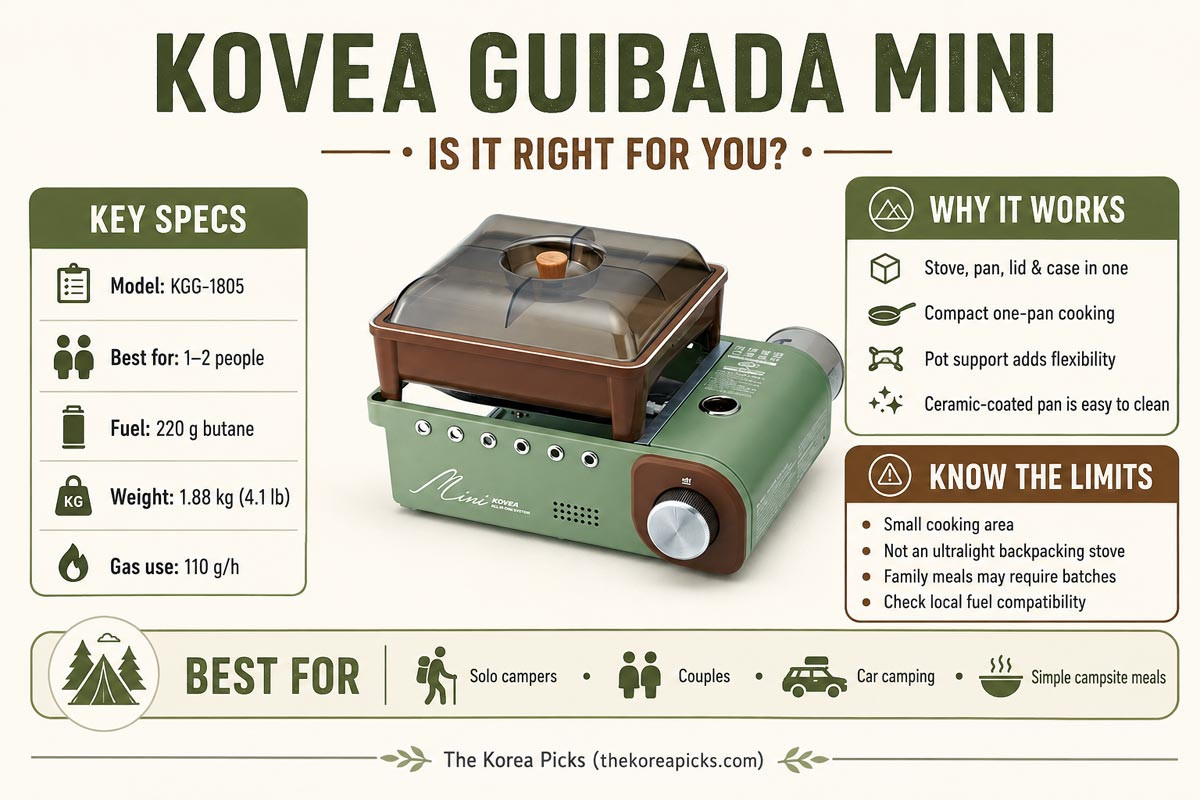
The Kovea Guibada Mini works best for one or two campers who value compact, all-in-one cooking over a large cooking surface.
What the All-in-One Design Actually Replaces
The Guibada Mini is more than a tabletop burner with a pan placed on top. Its appeal comes from how the supplied parts work together as a single packed system.
The commonly listed configuration includes:
| Component | Practical purpose |
|---|---|
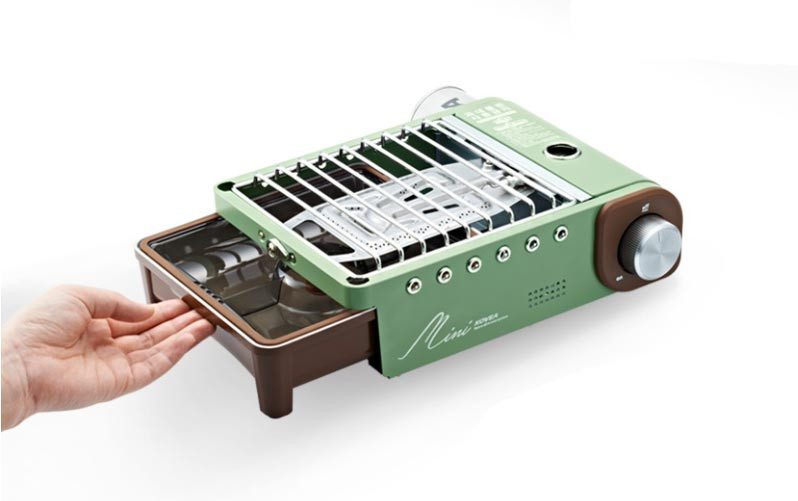
| Main burner body | Houses the burner, ignition control, and butane-canister connection |
| Ceramic-coated hot-pot pan | Handles noodles, stew, stir-frying, and small grilling portions |
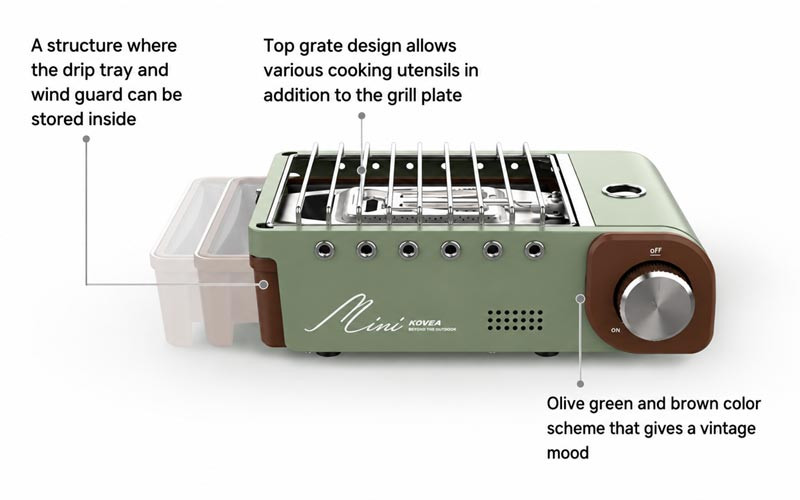
| Pot support | Allows suitable third-party cookware to be used after removing the supplied pan |
| Lid/food tray | Covers appropriate wet dishes and can be reversed for serving |
| Carrying case | Keeps the main components together during transport |
Kovea specifically describes the lid as usable as a food tray. Korean owners also highlighted its divided underside, which can hold small servings of sauces or side dishes after cooking.
This is a meaningful space-saving feature for minimal car camping. One owner explained that a previous cooking box contained a large burner, multiple pots, a griddle, plates, utensils, and other equipment. The Mini allowed that setup to be reduced to the stove system, a small extra pan, and basic tableware.
There is an important distinction, though: fewer packed objects do not necessarily mean a lightweight system. An eBay listing for the KGG-1805 specifies a weight of approximately 1.88 kg, or 4.1 pounds. That is reasonable for a car-camping cooking system, but far heavier than the small canister stoves used for backpacking.
This is compact in organization and footprint. It is not an ultralight hiking stove.
How Much Can You Realistically Cook?
The recurring pattern across the Korean reports is that the Mini handles one-to-two-person food portions comfortably, while larger group meals require batches or a bigger model.
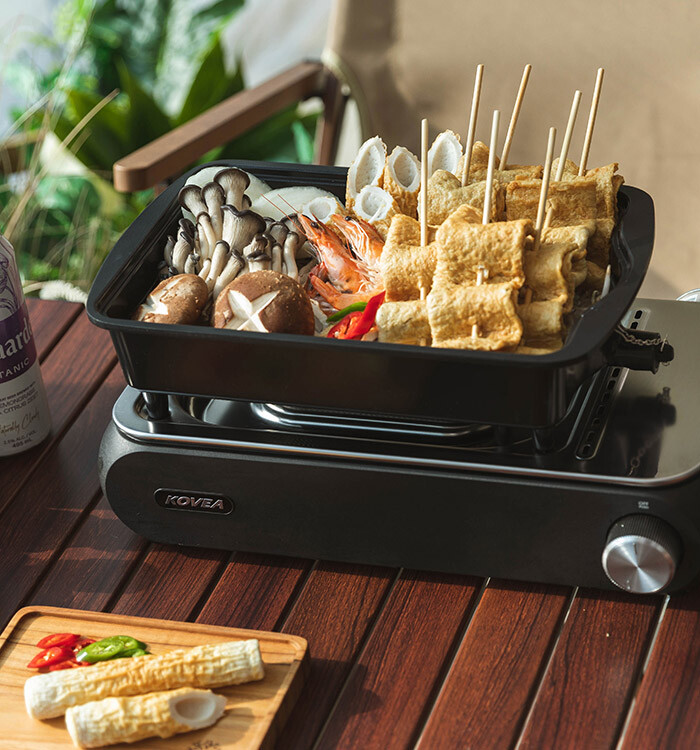
Several owners used it for one or two packs of ramen. The supplied pan includes a 550 ml water reference mark, which is convenient when preparing a single Korean instant-noodle serving. Owners also reported using the pan for tteokbokki, fried rice, beef, and other simple meals.
One report described boiling approximately 500 ml of water indoors in around three minutes and completing ramen with additional ingredients in roughly six minutes. Those times represent one owner’s conditions, not a controlled performance test. Wind, air temperature, remaining fuel, cookware temperature, and the specific recipe can all change the result.
More useful than the exact timing is the consistency of the reports: owners generally considered the burner adequate for small meals despite initial concerns about its size. Its elongated burner shape is intended to distribute heat beneath the rectangular pan rather than concentrating everything under one small central point.
Still, “adequate for two” should not be interpreted as “ideal for every two-person meal.” Two people cooking several rounds of meat may find the small surface frustrating. Two people sharing noodles, stew, dumplings, or a quick breakfast are much closer to its intended use.
The Mini therefore performs best when food can be cooked and eaten from one pan. If your campsite routine involves a large griddle, multiple dishes running simultaneously, or continuous cooking for a group, the all-in-one convenience starts to disappear.
The Ceramic Pan Is Convenient, but It Still Needs Care
The supplied ceramic-coated pan is central to the Mini’s value. Without it, this would largely be another portable butane burner.
Korean owners repeatedly described the pan as easy to clean and resistant to sticking during ordinary use. One long-term owner reported that the coating had not visibly peeled despite years of use, although normal wear remained. That is encouraging individual evidence, but it is not a durability guarantee for every unit.
Ceramic coatings still benefit from careful handling:
- Avoid metal utensils that can scratch the cooking surface.
- Use a soft sponge and ordinary mild detergent.
- Do not pour cold water into a very hot pan.
- Avoid storing hard accessories where they can rub against the coating.
- Follow Kovea’s instructions regarding compatible foods and use of the lid.
One Korean report showed a warning that the polycarbonate lid should not cover dry or oil-heavy cooking. Heat and direct contact with the hot pan or splattering oil may deform it. International buyers should read the supplied manual rather than assuming that the lid can be treated like a metal grill cover.
Owners also mentioned discoloration or soot around the burner after use. That does not automatically mean that the pan coating has failed, but abnormal flames, persistent heavy soot, gas odors, or fire near the canister connection should never be dismissed as cosmetic. Stop using the stove and consult the manual or qualified service support if its combustion appears abnormal.
This article may contain affiliate links. If you buy through them, The Korea Picks may earn a commission at no extra cost to you. This does not affect the independence of this review.
The model, included accessories, and color can vary between international listings. Check that the seller is offering the KGG-1805 configuration you expect rather than a larger Guibada model.
Fuel Compatibility Is the Biggest Overseas Buying Check
For a Korean buyer, the use of a common 220 g liquefied-butane canister is straightforward. For an overseas buyer, it may be the most important reason to pause before ordering.
Listings for the KGG-1805 specify 220 g butane fuel and gas consumption of approximately 110 g per hour. A simple division might suggest about two hours of theoretical output from a full 220 g canister, but real operating time depends on flame level, temperature, canister behavior, and usable remaining fuel. It should not be treated as a guaranteed runtime.
Before importing the stove, confirm all of the following:
- The required bayonet-style butane canister is legally sold in your country.
- Locally available canisters physically match the connection specified in the manual.
- The stove complies with rules that apply where you intend to use it.
- The seller ships the stove without a fuel canister.
- Returns are practical if the wrong regional version arrives.
- Kovea or the seller will provide meaningful warranty support in your country.
Do not attempt to force an incompatible canister into the connection or improvise an adapter not approved by the manufacturer.
Korean owners described the magnetic canister connection as simple to engage. The design is also reported to disconnect the canister if internal pressure becomes excessive. That feature does not replace correct installation, ventilation, leak checks, stable placement, and the safety directions supplied with the stove.
Portable gas appliances also require special caution around tents, vehicles, enclosed rooms, and combustible surfaces. Follow the manufacturer’s manual and your local fire-safety guidance. Never rely on a Korean blogger’s indoor setup as proof that the same use is permitted or safe in another country.
Video source: This Korean-language owner review is included for additional visual context. The opinions expressed in the video belong to its creator and do not necessarily reflect the views of The Korea Picks.
Small Details That Affect Everyday Use
A product can be compact yet still create small frustrations, and the Korean reports identify several points worth knowing.
First, a standard butane canister may extend beyond the compact body. That is a consequence of making the burner housing shorter, but it affects how much clear table space the setup needs. Keep the protruding canister away from cookware, windshields, direct sun, and other heat sources.
Second, the lightweight body may shift while the control knob is being turned. One owner said the stove needed to be steadied during ignition. A flat, stable, heat-resistant surface is therefore more important than the retro styling might suggest.
Third, third-party cookware requires restraint. One Korean owner’s photographed instructions indicated cookware with a diameter of 20 cm or less. Buyers should verify the limit in the manual supplied with their particular version. Oversized pans can make a small stove unstable and may reflect excessive heat toward the canister compartment.
Fourth, grilling is not automatically mess-free. The ceramic pan reduces the need to pack separate cookware, but oily meat still creates grease, splatter, and cleanup. If your main purpose is frequent high-volume grilling, a larger grill with more cooking area and a dedicated grease-management system may be easier to live with.
Finally, the carrying case is useful because the components store as one unit. Even so, check that every latch is fully closed before lifting it. One report mentioned hearing about cases opening in transit, although the writer had not personally experienced that problem.
Mini or Larger Guibada: Choose by Meal, Not Head Count Alone
The Mini is officially positioned for one or two people, but appetite and menu matter more than a label.
Choose the Kovea Guibada Mini when:
- You usually camp alone or with one other person.
- Your meals fit into one small pan.
- You value a tidy, self-contained case.
- You travel by car, van, or short-distance setup rather than carrying everything on foot.
- You can obtain the correct 220 g butane canisters locally.
- You accept that grilling for several people will require batches.
Consider the larger Guibada Ceramic or another M-size cooking system when:
- You regularly feed three or more people.
- Grilled meat is a central part of the meal.
- You want more room for ingredients to cook without crowding.
- The stove will serve as the main cooking station for a family campsite.
- Cooking capacity matters more than minimizing storage volume.
The larger model is not automatically better. A solo camper heating one serving of noodles may find a large pan slower to clean and awkward to pack. The Mini’s advantage is proportionality: its pan, burner, and storage format make sense when the meal itself is small.
For readers deciding between sizes, see the Kovea Guibada Ceramic review and its larger cooking format.
Buying Decision: Buy, Consider, or Skip
Buy the Kovea Guibada Mini if you are a solo camper or couple who wants one organized system for noodles, stew, breakfast, and occasional small-batch grilling. Its real benefit is not maximum burner output. It is the ability to open one case and have the core cooking pieces ready.
Consider it carefully if you are a small family. It may work for two children’s noodles or a quick snack, as one Korean parent reported, but feeding the whole family can expose the pan’s limits. Decide based on the largest meal you cook regularly, not the smallest meal that technically fits.
Skip it if you need an ultralight backpacking stove, regularly cook for three or four adults, cannot source the correct butane canister, or expect straightforward domestic warranty service after importing a Korean-market unit.
Overseas availability exists, but listings can differ in color, accessories, shipping terms, import treatment, and return conditions. Compare the photographs and model number with Kovea’s KGG-1805 information before ordering.
If the Mini fits your usual meal size, check the total price, delivery terms, and return conditions for your location.
How I Researched This Review
This is a research-based review, not a personal hands-on test. I compared Kovea’s official English-language information for the Guibada Mini and Guibada range with four Korean owner reports.
The official material was used for the model identity, intended group size, product concept, and included functions. The Korean reports were used to identify recurring practical patterns: convenience for ramen and small one-pan meals, satisfaction with compact storage, generally adequate small-meal performance, easy cleanup, limited family-size grilling space, and the need to handle the lid and coating carefully.
Individual cooking times, long-term coating condition, and unverified defect stories were not treated as universal product facts.
DID YOU KNOW? Korea
“Guibada” is written as 구이바다 in Korean. The name combines gui—food cooked by grilling or roasting—with bada, the Korean word for “sea.”
Compact tabletop gas cooking also fits naturally into Korean food culture. Meals such as ramen, stew, tteokbokki, and grilled meat are often cooked close to the table and shared while still hot. That helps explain why a small burner-and-pan system can be useful at home as well as at a campsite.
K-papa’s Quick Korean Lesson!
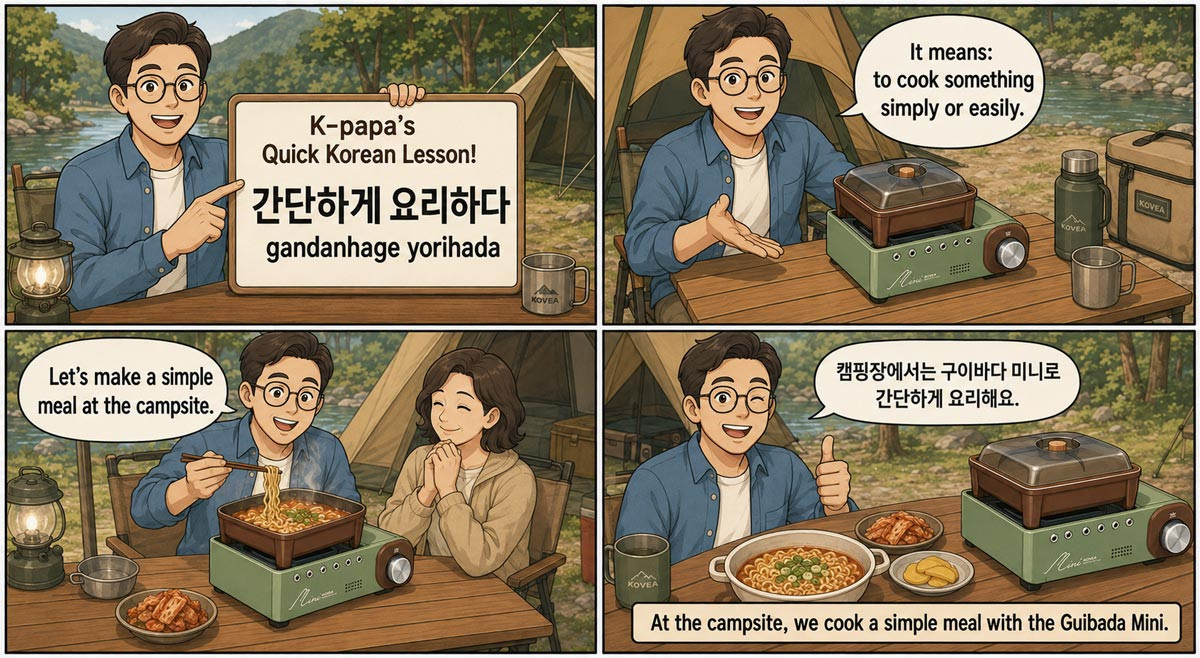
Korean phrase: 간단하게 요리하다
Romanization: Gandanhage yorihada
Pronunciation: gahn-dahn-ha-geh yoh-ree-ha-da
Meaning: To cook something simply or easily
Example: 캠핑장에서는 구이바다 미니로 간단하게 요리해요.
At the campsite, we cook a simple meal with the Guibada Mini.
About the Author
K-papa is a creator living in South Korea who examines Korean products and everyday culture for international readers. His reviews separate verified specifications, recurring user experiences, and editorial judgment so readers can make a practical buying decision. Learn more about K-papa and The Korea Picks.