Understanding Korean Floor Heating: Why Radiators Never Became the Default
The first thing many visitors notice in a Korean home during winter is not a machine, a fireplace, or a radiator attached to the wall. It is the floor.
You take off your shoes, step inside, and feel warmth coming through your socks. A few minutes later, you may find yourself sitting on the floor without even thinking about it. That small reaction explains more about Korean homes than a long list of architectural terms ever could.
Korean floor heating is commonly called ondol (온돌). The word often brings to mind a traditional hanok house with a wood-burning kitchen and stone channels beneath the rooms. Modern apartments no longer send smoke under the floor, of course. Most use hot water pipes connected to a boiler. But the basic idea has survived: instead of placing the main source of warmth on a wall, Koreans warm the surface on which daily life happens.
As a Korean father, I have lived with this system for so long that I usually notice it only when it is missing. Then winter arrives, the floor feels cold, and the whole room somehow seems less welcoming. To understand why radiators never became the default in Korea, you have to look beyond heating technology. The answer is tied to climate, old house design, shoe-free living, family habits, and a cultural preference for warmth that begins at ground level.
The Short Answer: Korean Life Has Always Been Close to the Floor
Radiators work by heating a metal surface that warms the nearby air and surrounding room. Ondol takes a different approach. Heat spreads under a broad section of the floor and rises gradually into the living space.
That difference matters in any house, but it matters even more in a culture where people traditionally sat, ate, rested, and slept close to the floor. A wall radiator could warm a room, yet it would not solve the most immediate problem in an old Korean home: the cold surface touching the body.
For generations, the floor was not simply something people walked across. It functioned almost like a large shared piece of furniture. Meals could be served on a low table. Bedding could be unfolded at night and stored away in the morning. Children played there, and family members gathered there. Heating the floor therefore meant heating the place people actually used.
This is the central reason Korean floor heating feels less like a household appliance and more like part of the home itself.
Ondol Began Long Before the Modern Korean Apartment
Traditional ondol used heat and smoke from a fire, often associated with the kitchen hearth. The hot gases moved through flues beneath a raised masonry floor before leaving through a chimney. Stones absorbed the heat and released it slowly into the room above.
The history is very old. Korea’s national heritage authorities trace primitive forms of ondol to the Bronze Age and the period before the Three Kingdoms. It developed over centuries rather than appearing as a single invention at one moment. By the time it became a defining feature of Korean housing, it had already shaped how rooms were built and how people used them.
There was a practical logic behind it. Korean winters can be dry and bitterly cold, especially in inland and northern regions. Old houses needed a way to make limited fuel do more than cook a meal. A system that could use the heat from a fire and hold some of that energy in a thick floor was extremely valuable.
Traditional ondol was ingenious, but it was not identical to the clean, controllable system found in a new apartment. Temperatures could vary, smoke leakage was a risk if the structure was damaged, and heating required physical work. Romantic images of a glowing hanok room can hide those inconveniences.
What survived was not every old component. It was the preference for a warm floor.
Modern Ondol Uses Hot Water, Not Smoke
In most contemporary Korean homes, a gas boiler heats water and circulates it through pipes embedded beneath the flooring. Some apartment complexes use central or district heating instead of an individual household boiler, but the heat is still commonly delivered through the floor.
The modern arrangement is a form of hydronic radiant heating. The floor becomes a wide, low-temperature heat-emitting surface. Unlike a small radiator that is visibly concentrated in one area, the heating infrastructure is largely hidden.
This creates a room that feels different. There is no hot metal unit occupying part of the wall, no need to arrange furniture around it, and usually no fan blowing warm air. The warmth can feel gentle and settled rather than immediate and forceful.
However, “gentle” does not mean instant. A floor has thermal mass, so it usually takes time to warm up. It can also continue releasing heat after the boiler stops. Anyone staying in a Korean apartment for the first time should remember this. Turning the thermostat much higher because the room has not warmed in ten minutes may produce an uncomfortably hot floor later.
I have made a milder version of that mistake myself. On a cold evening, it is tempting to raise the setting and expect a quick answer. An hour later, the children are kicking off their blankets and I am wondering why the room suddenly feels like spring. Ondol rewards patience more than aggressive thermostat changes.
A Shoe-Free Home Makes Warm Floors More Valuable
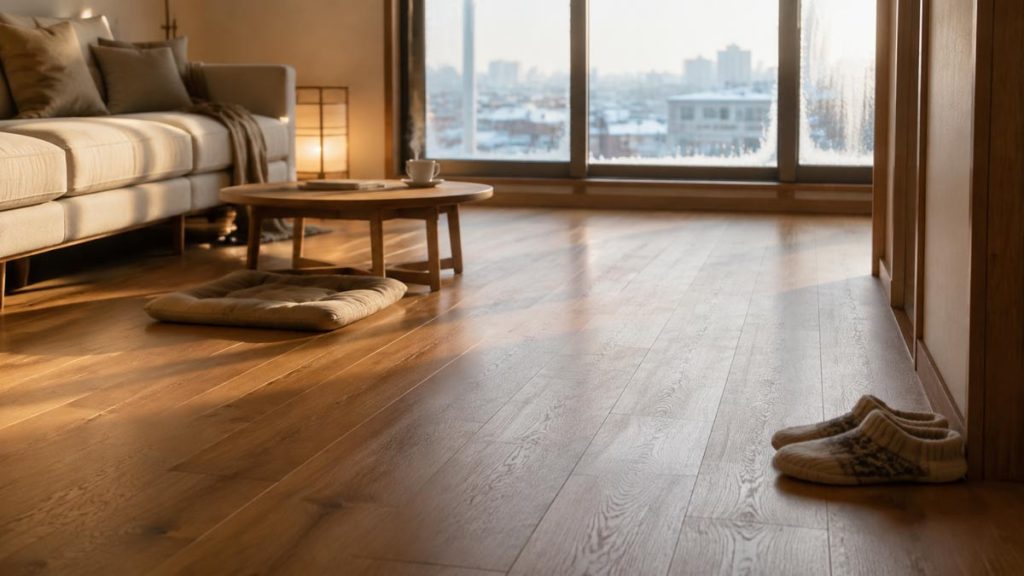
Koreans generally remove their shoes at the entrance. This custom keeps outdoor dirt away from the main living space, but it also means that feet are in direct contact with the indoor floor through socks or slippers.
In a shoes-on household, a cold floor may be a background issue. In a Korean home, it is noticed immediately.
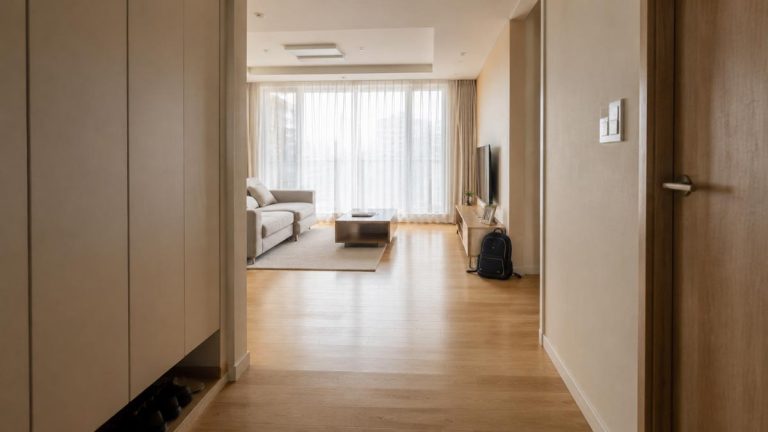
The entrance itself often makes the transition visible. The hyeongwan (현관), or entry area, is usually set lower than the interior floor. Shoes remain near the door, and people step up into the clean living area. From that point onward, the floor is not treated as a dirty boundary beneath daily life. It is part of the usable domestic space.
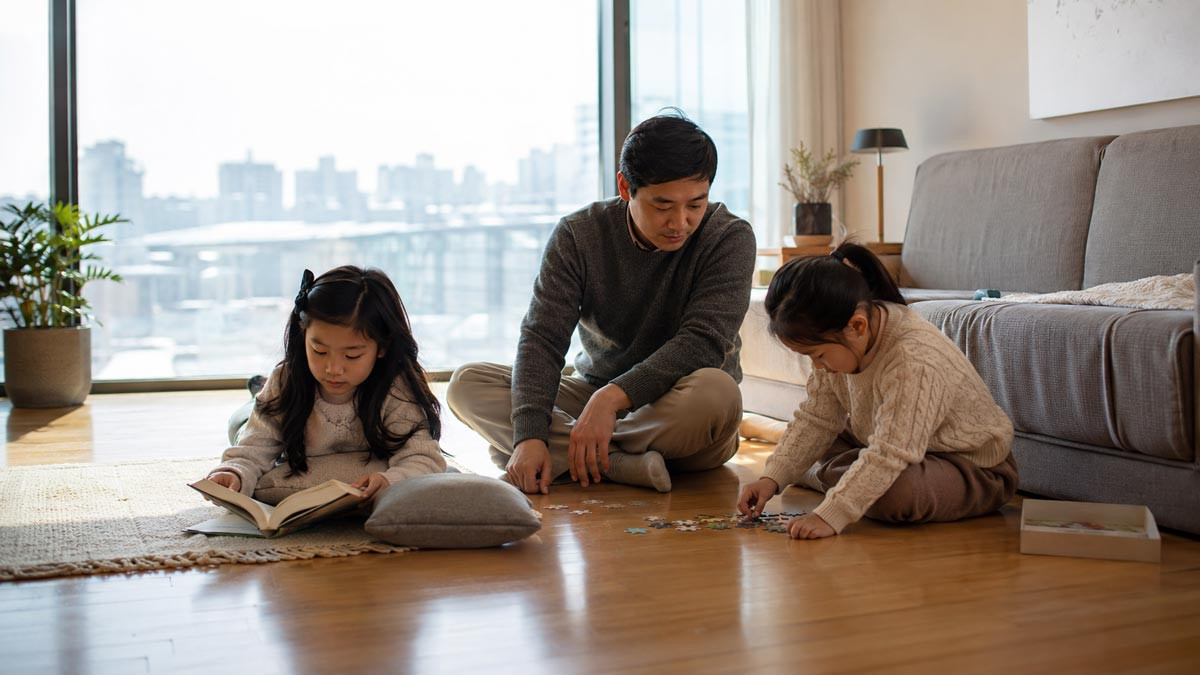
This is why visitors may see Korean children drawing, reading, assembling toys, or watching television on the floor even when a sofa is nearby. Adults sit there too. A parent may fold laundry on it. A family may spread out food for a casual meal. During winter, the warmest patch naturally attracts people.
In my home, the floor becomes a kind of unofficial family meeting place on cold days. Nobody announces that we should gather there. It just happens. A child lies down with a cushion, someone brings a blanket, and before long the living room looks more relaxed than any furniture catalog would recommend. That is the part of ondol that technical diagrams fail to show.
Why Radiators Were Not the Natural Winner in Korea
Radiators are neither primitive nor ineffective. They remain a sensible solution in many countries, especially in buildings designed around them. Korea’s preference for underfloor heating does not mean one system is universally superior.
The key point is that radiators developed within a different domestic context.
In many European homes, daily life historically centered on chairs, tables, and raised beds. Heating the room air and the occupied zone around furniture worked well. Existing buildings also had wall positions, pipe layouts, and construction practices suited to radiators. Once a heating system becomes embedded in millions of buildings, it gains momentum.
Korea followed its own path. Ondol was already deeply connected to housing and behavior before rapid urbanization transformed the country. When large apartment developments expanded in the twentieth century, Koreans did not have to abandon the comfort they knew. The old smoke-flue system could be replaced by hot-water pipes while preserving floor-level heat.
Modernization changed the machinery without erasing the expectation.
There are also practical advantages to keeping heating elements out of sight. Korean apartments are often designed to use limited space efficiently. A radiator takes up wall area and can restrict the placement of beds, cabinets, or desks. Underfloor pipes leave the walls visually and physically open.
That does not mean the floor is free from restrictions. Thick rugs and certain types of furniture can affect heat transfer, and drilling into a floor without knowing the pipe layout would be a serious mistake. The system saves visible space, but it asks residents to remember what is hidden below.
Warm Feet Can Change How the Whole Room Feels
People often describe ondol as “more comfortable,” but comfort is difficult to measure with one simple claim. It depends on insulation, floor material, water temperature, room layout, outdoor weather, and personal preference.
Still, there is an intuitive reason many people enjoy radiant floors: the warmth starts where the body meets the building. Cold feet can make an otherwise acceptable room feel unpleasant. A gently warm floor can make a moderate air temperature feel cozy.
Hydronic radiant floors distribute heat across a large surface and warm the room from below. Materials such as tile conduct heat effectively, although Korean homes also use various engineered flooring finishes designed for residential ondol systems.
The sensation is especially noticeable in the morning. Getting out of bed in winter is never my favorite moment, but stepping onto a warm floor makes it slightly less cruel. That may sound like a small luxury. Repeated every day for an entire winter, it becomes part of how people judge whether a home feels comfortable.
The opposite is also revealing. When the boiler has been off for a long time, the room may not look different at all, yet it feels emotionally empty. The cold seems to rise through the feet. I think this is why Koreans sometimes talk about a warm home in a way that includes more than air temperature. Warmth carries a sense of being settled, fed, and looked after.
The Heating System Quietly Shaped Korean Furniture
Ondol did not merely respond to floor-based living. It reinforced it.
Traditional Korean rooms used low tables, floor cushions, folding screens, chests, and bedding that could be stored during the day. Heavy, permanently arranged furniture was less necessary. A single room could change function: living area in the daytime, dining space at mealtime, and sleeping room at night.
Modern Korean homes now contain sofas, Western-style beds, dining tables, and office chairs. Daily life is no longer exclusively floor-centered. Even so, many older habits remain. People still sit against the sofa instead of on it. Guests may sleep on a padded floor mat. Grandparents may prefer the floor because the warmth feels soothing. Babies and toddlers often spend a great deal of supervised playtime on mats spread across it.
There is a funny scene that I suspect many Korean families recognize: a perfectly good sofa stands in the living room while two or three people sit on the floor, using the sofa as a backrest. From a furniture-buying perspective, it makes no sense. From an ondol perspective, it makes complete sense.
Is Korean Floor Heating More Energy-Efficient?
This question needs a careful answer. Underfloor heating is not automatically cheaper or greener simply because the pipes are hidden beneath the floor.
Efficiency depends on the heat source, boiler performance, insulation, building design, control settings, floor covering, local energy prices, and how residents use the system. A poorly insulated apartment with an excessively high thermostat can waste plenty of energy. A radiator system in a well-insulated building may perform very efficiently.
Radiant floors can work with relatively moderate water temperatures and provide broad heat distribution. Their thermal mass can also retain warmth. But that same thermal mass creates slower response times. If a resident frequently switches the system on and off or wants to heat a room for only a short period, a faster system may be easier to control.
Korean households often manage costs by heating zones separately, lowering the setting when appropriate, and avoiding dramatic thermostat changes. Controls vary by home, so visitors should ask the host or accommodation manager before pressing unfamiliar buttons. In some systems, a setting may refer to room temperature; in others, residents can choose heating-water or floor-related modes. Guessing is not always wise.
My own rule is simple: I aim for a floor that feels comfortably warm, not hot. If the floor feels luxurious enough to roast sweet potatoes on, the setting has probably gone too far.
Common Surprises for Foreign Visitors
The first surprise is often that the floor may feel warmer than the air. Someone accustomed to strong forced-air heating may wait for a blast that never comes, even while the room is gradually becoming comfortable.
The second is the delay. Radiant floors do not always respond as quickly as wall heaters or fan-based systems. Give the system time before raising the temperature again.
The third surprise is sleeping close to the heated surface. In a hanok stay or a home using floor bedding, the warmth can feel wonderful at first. If the setting is too high, however, it may become dry and uncomfortable overnight. Use a proper sleeping mat or bedding layer rather than lying directly on a hot floor.
Visitors are sometimes confused by the boiler controller as well. Korean labels may include 난방 (nanbang, heating), 온수 (onsu, hot water), 외출 (oechul, away), or 예약 (yeyak, timer/reservation). The exact behavior of “away” and timer modes can vary by manufacturer. A translation app helps, but instructions from the host are better.
One more practical point: do not assume that opening a window while leaving the floor heating high will cool the room efficiently. Because the heated floor keeps releasing stored warmth, you may waste energy and still feel too hot later. Lower the setting first and ventilate briefly when needed.
What Korea Kept While Everything Else Changed
South Korea’s housing changed at remarkable speed. Courtyard houses gave way to dense apartment towers. Kitchens moved away from open fires. Families bought beds, sofas, air conditioners, robot vacuums, and smart-home controls. The country became visually modern in just a few generations.
Yet the floor remained warm.
That continuity is what makes ondol so interesting. It is not a museum object surviving only in palaces or traditional guesthouses. It is an old idea translated into pipes, thermostats, boilers, apartment slabs, and everyday routines.
The heritage matters, but I do not think most Koreans wake up in January feeling proud of ancient engineering. We simply want the floor to warm up. Culture often survives this way—not through constant ceremony, but because something continues to work and still feels right.
Radiators could heat a Korean apartment. Forced air could heat it too. But neither would reproduce the exact relationship between warmth and domestic space that Koreans have built over centuries. Ondol fits the climate, but it also fits bare feet, floor cushions, children playing below sofa level, bedding laid out for guests, and the quiet pleasure of sitting on a warm surface after coming in from the cold.
K-papa’s Final Thought
If you visit Korea in winter, try not to think of ondol as just another heating system. Notice what people do because of it.
Watch where a family gathers. Look at how the entrance separates outdoor shoes from the living space. See how easily a room changes purpose when the floor is clean, open, and warm. You may realize that Korean floor heating has shaped much more than winter comfort.
For me, its value becomes clearest late at night. The house is quiet, the lights are low, and warmth is still rising gently through the floor. There is no visible flame and no radiator humming in the corner. Still, the home feels awake enough to take care of the people inside.
That feeling—not just efficiency or tradition—is the real reason ondol never disappeared.