Common Mistakes Foreign Campers Make in Korea
Camping in Korea can feel strangely familiar at first.
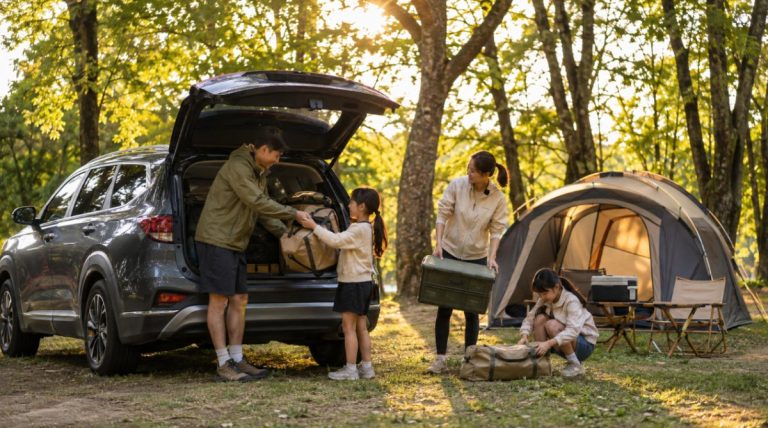
There are tents, folding chairs, coolers, campfires, families cooking outside, and people trying to escape the city for a weekend. If you have camped in the United States, Canada, Australia, or Europe, you may arrive thinking, I know how camping works.
And mostly, you do.
The trouble is in the small details.
A campsite that looks ordinary in photos may have a wooden deck instead of soil. The campground shop may close earlier than you expected. Your tent may technically fit the site dimensions but leave almost no usable space. And the Korean address saved in your phone can suddenly become much more important when a taxi driver has no idea what the English campground name means.
I’m K-papa, a creator living in South Korea. What I find interesting is that many common mistakes foreign campers make in Korea are not dramatic rule violations. They are usually reasonable assumptions that simply do not match the way a particular Korean campground works.
Here are the mistakes I would try hardest to avoid.
Common Mistakes Foreign Campers Make in Korea Before They Even Arrive
Some camping problems begin long before the tent comes out of the bag.
Mistake 1: Looking at the campsite number but not the actual site surface
This sounds almost embarrassingly simple, but it can change your entire setup.
Korean campgrounds can have sites on grass, gravel, bare ground, concrete-like surfaces, or raised wooden decks. Two sites at the same campground may even offer completely different setups.
A tent that is easy to secure on soil may become awkward on a wooden deck if you brought only normal ground stakes. A large tent that technically fits the listed dimensions can also feel surprisingly cramped once doors, guy lines, chairs, and cooking space are added.
Before going, I would check three things:
site dimensions, surface type, and your tent’s actual footprint.
Not just the number printed on the tent package.
This is the sort of mistake that looks trivial when planning at home and suddenly feels very important when everyone else is already cooking dinner and you are still wondering where to attach a guy line.
Mistake 2: Saving only the English name of the campground
Google Maps and English travel apps are useful, but I would never rely on the English campground name alone in Korea.
Save the campground’s:
- Korean name
- Korean street address
- phone number
- reservation confirmation
- check-in information
Take screenshots as well.
Why screenshots?
Because the moment you really need the information is often the moment you discover that mobile reception is weak, a reservation site wants you to log in again, or the person helping you does not recognize the English spelling you are showing them.
This is one of my favorite low-tech travel habits in Korea: screenshot first, relax later.
It costs nothing and has rescued many potentially awkward situations.
Mistake 3: Assuming the Campground Store Will Save You
Korean camping can look extremely convenient. Some popular campgrounds have small shops selling drinks, ramen, charcoal, ice, snacks, and basic camping supplies.
That can create false confidence.
A campground store is not necessarily a miniature supermarket.
Opening hours, inventory, and available supplies vary considerably. The one thing you desperately need may be precisely the thing they do not sell.
Personally, I think a campground shop should be treated as a bonus, not a packing strategy.
If something is essential—medication, a specific fuel type, food for a dietary restriction, batteries, rain gear, or equipment needed to sleep comfortably—bring it with you.
Finding an extra bag of chips is easy.
Discovering at 9:30 p.m. that the shop does not have the item your entire setup depends on is less charming.
Mistake 4: Underestimating Korean Summer Humidity
Foreign visitors often check the temperature and think they understand the weather.
In Korea, I pay attention to something else too: humidity.
A Korean summer night at a campground can feel very different from what the temperature number suggests. After rain, the air can feel heavy, clothing may not dry as quickly as expected, and the inside of a poorly ventilated tent can become uncomfortable surprisingly fast.
Then there are insects.
Mosquitoes do not care that your campsite looked peaceful and romantic on Instagram.
For summer camping, I would think about airflow, insect protection, drinking water, shade, and how food will stay safely chilled—not only the daytime temperature.
And if heavy rain is in the forecast, take it seriously. Korea’s summer weather can change the mood of an outdoor trip very quickly.
There is a point where “adventurous camping weather” stops being fun.
Knowing when that point has arrived is part of being a good camper.
Mistake 5: Packing for the Afternoon but Forgetting the Temperature After Sunset
The opposite problem happens during spring and autumn.
A sunny afternoon can be wonderfully comfortable, especially in September or October. It is easy to sit outside in a T-shirt and wonder why you packed so many layers.
A few hours later, you may understand.
Temperatures can feel much cooler after sunset, particularly at mountain, forest, or riverside campgrounds.
Do not judge the entire trip by the weather you feel when you arrive.
Check the overnight low.
This sounds obvious, but camping has a wonderful talent for turning obvious things into problems at midnight.
Common Mistakes Foreign Campers Make in Korea at the Campsite
Once you arrive, the biggest problems are often logistical rather than cultural.
Mistake 6: Assuming “auto camping” means sleeping in your car
You may encounter the term auto camping (오토캠핑) frequently when searching Korean campgrounds.
Foreign visitors can interpret this differently.
In Korea, an auto campsite generally refers to a site where vehicle access or parking is integrated with the camping setup. It does not automatically mean that the campground is specifically designed for sleeping inside your vehicle.
That distinction matters.
If you plan to use a camper van, rooftop tent, trailer, or sleep-in-car setup, check what the specific campground permits rather than relying on the English interpretation of “auto camping.”
One translated word can hide a surprising number of assumptions.
Mistake 7: Not checking where the car goes after unloading
You drove to the campground, so naturally the car stays beside the tent, right?
Not necessarily.
Some sites allow vehicles at or beside the pitch. Others have separate parking arrangements or restrict vehicle movement within certain areas.
This becomes especially important when you have packed as though your trunk will function as a giant storage cabinet all weekend.
If the car ends up farther away, every forgotten item suddenly involves a walk.
Before arrival, check:
Can I park at my site? If not, where is the parking area?
Your future self carrying the cooler may thank you.
Mistake 8: Bringing a huge tent simply because the reservation says it fits
Korean campers love impressive setups. You may see large family tents, shelters, tables, storage boxes, lantern stands, and beautifully organized outdoor kitchens.
That does not mean bigger is always better.
Site measurements can be deceptive if you only compare them with the footprint of your tent.
You still need room to enter and exit. Guy lines need space. Depending on the setup, you may want chairs, a table, or an awning. The neighboring campsite also deserves to remain the neighboring campsite.
My preference is simple: I would rather have a slightly smaller setup that feels comfortable than spend the weekend negotiating with tent fabric every time I walk around it.
Camping should create breathing room, not another small apartment.
Mistake 9: Treating the communal sink like your private kitchen
Shared facilities are one of those places where tiny actions affect everyone.
After Korean-style camping meals—pork belly, stew, grilled meat, spicy sauces—a cooking setup can become wonderfully messy.
The problem comes when all of that mess is transferred to a communal sink without thinking about the next person.
Remove food scraps first. Avoid leaving grease, noodles, vegetable pieces, or sauce behind. Follow whatever waste-separation system the campground provides.
You do not need to understand every part of Korean culture to recognize the basic principle.
Someone else will use that sink five minutes after you.
Leave it the way you would hope to find it.
Mistake 10: Assuming every open space is part of your campsite
This one is easy to do, especially at a beautiful riverside or forest campground.
There is your assigned pitch—and then there is that lovely empty space beside it.
It can be tempting to move chairs, tables, drying racks, games, or cooking equipment farther outward.
But an apparently unused area may be a pathway, another site’s boundary, an emergency access route, or common space.
Korean campsites can feel busy on weekends, and a little spatial awareness goes a long way.
If you are unsure where your site ends, ask.
Five seconds of awkward translation is better than spending the evening slowly realizing that everyone is walking around your table.
Mistake 11: Planning the trip so tightly that checkout becomes stressful
This is less a rule than a K-papa recommendation.
Give yourself more time to pack than you think you need.
Camping gear has a mysterious ability to expand overnight.
The neatly packed car you arrived with somehow becomes a collection of damp tent fabric, half-empty water bottles, kitchen equipment, garbage bags, blankets, and one object nobody remembers bringing.
If checkout is at a specific time, do not begin dismantling everything five minutes before you need to leave.
I prefer the end of a camping trip to feel slightly lazy.
Coffee first. Look around. Start packing before the clock becomes an enemy.
The trip is not improved by winning a race against checkout time.
Mistake 12: Assuming One Korean Campground Represents All of Them
Perhaps this is the biggest mistake.
A municipal campground beside the Han River, a private forest campground in Gapyeong, a coastal site, and a mountain campground may operate very differently.
Facilities differ.
Site surfaces differ.
Parking arrangements differ.
Cooking restrictions can differ.
Check-in procedures differ.
Even regulations for tents in public spaces can be location-specific. For example, Seoul has imposed specific size, opening, location, and operating-hour requirements for shade tents in designated areas of Hangang parks. Those rules should not simply be assumed to apply to every campground in the country. Seoul Metropolitan Government
That is why my most important advice is also the least exciting:
Read the rules for the actual campground you booked.
Not a campground you visited last year.
Not a YouTube video about another province.
Not a list titled “10 Rules for Camping in Korea.”
Your campground.
What I Would Check the Night Before Camping in Korea
I do not think foreign visitors need a giant rulebook. A short final check is more useful.
Before leaving, I would confirm:
- the Korean campground name and address
- reservation details
- site number and dimensions
- ground or deck surface
- parking arrangement
- check-in and checkout times
- overnight weather
- essential food and supplies
- the campground’s current cooking and fire restrictions
- any rules specific to tents, trailers, vehicles, or pets
Ten minutes of checking can eliminate most of the frustrating surprises in this article.
And then you can get back to the reason you went camping in the first place.
To sit down.
Eat something good.
Watch the light disappear behind the mountains.
And, for a little while, stop checking your phone.
K-papa’s Take: Don’t Try Too Hard to Camp “Like a Korean”
If this is your first camping trip in Korea, there is something I hope you do not worry about too much.
You do not have to imitate the elaborate Korean camping setups you see online.
You do not need matching furniture. You do not need twelve lanterns. And you definitely do not need to turn your first night outdoors into a performance.
What matters more is paying attention.
Look at how the campground is organized. Read the information you are given. Ask when you are uncertain. Leave shared spaces clean. Check the weather. Give neighboring campers a little room.
That is enough.
Living in Korea has made me appreciate how much of camping is not really about equipment. The best nights are usually remembered for much smaller things—the smell of dinner outside, a cool breeze after a hot day, or that moment when everyone finally sits down because there is nothing left to set up.
You can make a few mistakes and still have a wonderful trip.
Just try not to make the ones that could have been avoided with a screenshot and a weather forecast.
Final Thoughts: Most Camping Mistakes in Korea Are Easy to Avoid
The common mistakes foreign campers make in Korea usually come from assumptions, not bad behavior.
A familiar-looking campground can operate differently from the one you know at home. A wooden deck changes how you pitch a tent. Korean terminology may mean something slightly different in practice. Summer humidity can surprise you. And a tiny campground store should never be responsible for saving dinner.
None of this should make camping in Korea feel intimidating.
Actually, I think the opposite is true.
Once you stop expecting every campground to work exactly like the ones back home, the experience becomes easier—and more interesting.
Prepare for the specific place you booked, keep a little flexibility in the plan, and let Korea do the rest.
Your campsite does not need to be perfect.
It just needs to be somewhere you are happy to wake up tomorrow morning.