
Understanding Korea’s Floorless Shelter Camping Culture
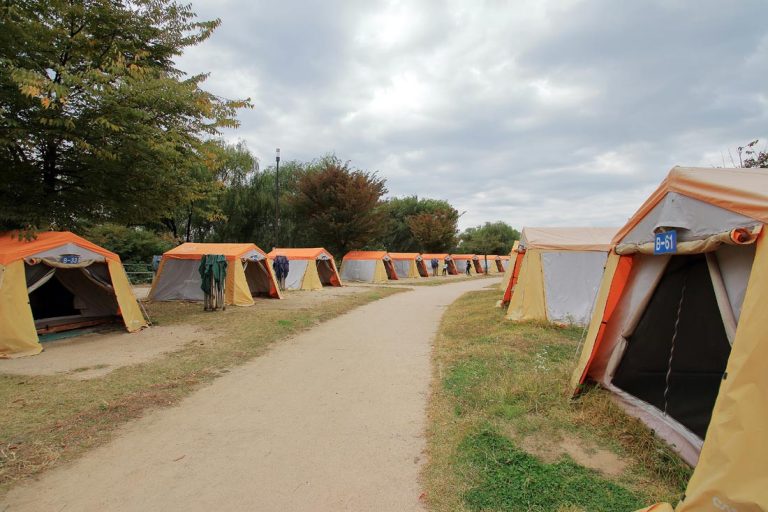
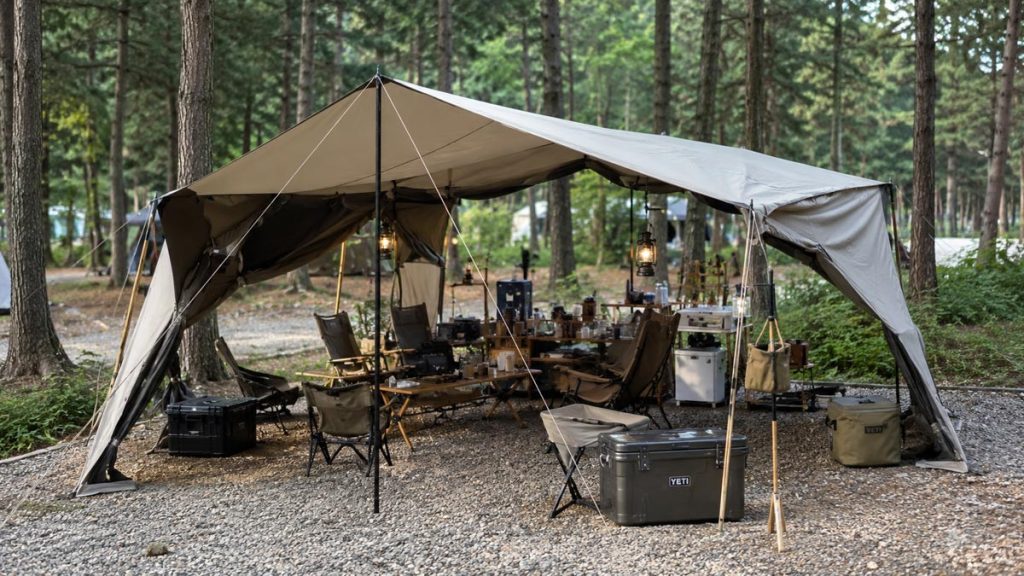
Spend a weekend at a popular campground in South Korea and you may notice something unusual. Instead of rows of small dome tents, many sites are occupied by large, carefully arranged shelters. Some look almost like temporary outdoor living rooms, with tables, chairs, lanterns, cooking equipment, storage boxes, and coolers all organized beneath one roof.
Then comes the part that sometimes surprises campers from overseas: many of these shelters do not have a permanently attached floor.
Floorless shelters have become a familiar part of Korean camping, particularly among car campers. They are not simply oversized tents with something missing. For many Korean campers, the open floor is exactly what makes the shelter useful.
To understand why, you have to look beyond the tent itself and consider how camping is actually practiced in Korea.
A Shelter and a Sleeping Tent Are Not Always the Same Thing
One of the easiest mistakes to make is assuming that every large fabric structure at a Korean campsite is primarily intended for sleeping.
Often, it isn’t.
A traditional camping tent usually combines several jobs. It provides weather protection, privacy, insect protection, and a sleeping space, while an integrated floor separates the occupants from the ground.
A Korean-style floorless shelter can serve a different purpose.
Think of it more as an outdoor living space protected from sun, wind, and rain.
Campers can place chairs directly on the ground, move tables around, bring storage boxes inside, and create separate cooking and relaxing areas. A smaller inner tent or sleeping compartment may then be installed inside or beside the shelter.
That distinction explains a lot.
The shelter becomes the living room. The inner tent becomes the bedroom.
What I Noticed After Spending Time Around Korean Campsites
When I first became interested in camping, I tended to think about tents primarily in terms of sleeping capacity. How many people can sleep inside? How waterproof is it? How difficult is it to pitch?
Over time, especially while camping with family, I started paying much more attention to what happens during all the hours when nobody is sleeping.
That changed the way I looked at shelters.
On a family camping trip, there are shoes going on and off, children moving around, food being prepared, chairs being repositioned, boxes being opened, wet equipment coming in after rain, and someone inevitably looking for an item buried at the bottom of a storage container.
A large floorless shelter handles that kind of movement surprisingly well.
Personally, I think this is one reason the concept fits Korean family camping so naturally. The space doesn’t feel as precious as the clean floor inside a sleeping tent. You can simply walk in with camping shoes, move a chair, bring in a muddy storage box, and continue with the evening.
It feels less like protecting a tent and more like using a room.
Korean Car Camping Makes Larger Shelters Practical
There is another important piece of the puzzle: car camping.
A large part of recreational camping in Korea takes place at organized campgrounds where people drive relatively close to their assigned sites. That changes the equipment equation considerably.
If you are backpacking several kilometers into the mountains, every kilogram matters.
If your equipment is traveling in the trunk of a car, however, weight becomes only one consideration. Comfort, usable space, weather protection, and convenience can become much more important.
That creates room for larger shelters, long tables, multiple chairs, storage systems, lantern stands, cooking equipment, and other gear that would be unrealistic for a backpacker.
Once campers begin carrying that much equipment, having one protected central area starts making sense.
A floorless shelter provides exactly that.
The Ground Becomes Part of the Campsite
Removing a sewn-in floor changes how people use the space.
With a conventional tent, there is usually a clear psychological boundary: outside is dirty, inside is clean.
A floorless shelter softens that boundary.
Campers can walk in and out without constantly removing shoes. Chair legs sit directly on the ground. Heavy boxes don’t need to be lifted carefully over a tent floor. Tables can be repositioned without worrying as much about damaging coated fabric underneath them.
For families, I find this especially practical.
Camping with children rarely stays perfectly organized. A shelter that tolerates constant movement can make the campsite feel considerably less stressful.
Of course, that doesn’t mean Korean campers simply accept dirt everywhere. Many use separate ground sheets, rugs, mats, inner tents, or partial flooring depending on the season and campsite.
The important difference is flexibility.
The camper decides which parts of the space need a floor.
One Shelter Can Change With the Season
Korea has four distinct seasons, and camping conditions can change dramatically throughout the year.
Summer can be hot and extremely humid. The monsoon season brings prolonged rain. Autumn can be cool and dry, while winter camping may involve temperatures well below freezing.
A flexible shelter system works surprisingly well across those changes.
During warmer months, large doors and panels can often be opened to increase airflow. The shelter functions almost like a shaded pavilion.
When rain arrives, the panels can be closed while tables, chairs, and equipment remain protected inside.
During colder seasons, campers may configure the same shelter differently, adding ground protection or an inner sleeping area and reducing open exposure.
That adaptability is one of the strongest arguments for the floorless design.
Rather than forcing one interior configuration throughout the year, the shelter becomes a shell that campers can rearrange according to weather and purpose.

Why Not Just Use a Large Traditional Tent?
A large family tent can certainly provide many of the same benefits, and floorless shelters are not automatically better.
But a permanently attached floor introduces some practical limitations.
Imagine bringing a heavy storage box covered with dirt into a tent. Or moving a metal table repeatedly across the floor. Cooking equipment, wet shoes, chair legs, spilled food, and muddy gear all require more attention when there is a fabric floor underneath everything.
A floorless shelter is generally more forgiving.
This becomes particularly useful when the shelter is functioning as the campsite’s kitchen and dining room rather than simply as a sleeping area.
There is also more freedom in arranging equipment. Campers can use cots, low tables, IGT-style modular systems, large coolers, cabinets, or different chair layouts without designing everything around a fixed floor.
The Rise of the “Outdoor Living Room”
There is also a cultural and aesthetic side to this trend.
Modern Korean camping often places considerable emphasis on creating a comfortable campsite rather than simply establishing a place to sleep.
Walk through a busy campground on a Saturday afternoon and you may see warm lantern lighting, coordinated chairs and tables, wooden accessories, neatly arranged cookware, storage systems, rugs, and carefully chosen color combinations.
Some campsites genuinely resemble small outdoor apartments.
A large shelter provides the architecture for that space.
This doesn’t mean every Korean camper camps this way. Backpackers, minimalist campers, solo campers, and lightweight enthusiasts have their own approaches.
But among family and car campers, the idea of creating a comfortable temporary living area has become highly visible.
The popularity of floorless shelters makes much more sense when viewed through that lens.
Floorless Doesn’t Mean Trouble-Free
There are disadvantages, and they shouldn’t be ignored.
Heavy rain can cause water to flow underneath a poorly positioned shelter. Uneven or muddy ground can make the interior uncomfortable. Insects have more opportunities to enter. Cold air can travel along ground level in winter.
Site selection therefore matters.
A camper needs to pay attention to drainage, ground conditions, wind direction, ventilation, and weather forecasts. Depending on the conditions, an additional groundsheet or inner tent may be necessary.
There is another issue that deserves special attention: heating and cooking.
A large shelter may feel spacious and well ventilated, but it is still an enclosed or semi-enclosed fabric structure when the panels are closed. Combustion appliances can create fire and carbon-monoxide hazards. A floorless design should never be treated as proof that indoor combustion is automatically safe.
Ventilation and manufacturer safety instructions remain essential.
Floorless Shelters Aren’t Necessarily for Everyone
For someone who primarily backpacks, changes campsites every night, or wants the fastest possible setup, a large shelter may be unnecessary.
Traditional tents also have obvious advantages when insect protection, a sealed sleeping environment, or simplicity is the priority.
That is why I don’t see this as a question of whether floorless shelters are “better” than conventional tents.
They solve a different problem.
If your idea of camping is hiking into the mountains with everything on your back, the Korean shelter approach may seem excessive.
If your idea of camping is spending two nights with your family at one site—cooking together, sitting around a table, escaping afternoon rain, and talking under lantern light late into the evening—the appeal becomes much easier to understand.
What This Tells Us About Korean Camping Gear
This is also why looking at Korean camping products without looking at Korean camping culture can be misleading.
A large shelter might appear unnecessarily complicated when viewed only through specifications such as packed weight or setup time.
But equipment is designed around behavior.
Korean car campers often need gear that works in dense, organized campgrounds, handles rapidly changing weather, fits family routines, and creates a comfortable communal space for hours at a time.
The floorless shelter is a good example of equipment evolving around those priorities.
And once you understand that, other Korean camping trends begin to make more sense too: low furniture, modular tables, rechargeable lanterns, organized storage systems, and equipment designed to create a cohesive campsite rather than simply survive outdoors.

A Different Definition of Comfort Outdoors
I sometimes think the most interesting thing about Korean camping is that comfort isn’t necessarily treated as the opposite of being outdoors.
For some campers, bringing a table, good lighting, comfortable chairs, and a spacious shelter might seem like carrying too much civilization into nature.
Many Korean campers see it differently.
The campsite becomes a temporary home, but one where you can still hear rain hitting the shelter roof, smell the forest after sunset, and step outside into cool morning air.
A floorless shelter sits somewhere between those two worlds.
It doesn’t completely separate you from the ground beneath your feet, yet it creates enough protection to cook, talk, eat, and spend an entire day outside comfortably.
After seeing how families actually use these spaces, I think that’s the real reason floorless shelters have found such a natural place in Korean camping.
They aren’t simply tents without floors.
They’re rooms without houses.
A Slice of Korea
At many Korean campgrounds, setting up camp can be almost as important as the camping itself. Families may spend considerable time arranging tables, chairs, lanterns, storage boxes, and cooking equipment before finally sitting down.
To a first-time visitor, the amount of gear can look surprising. But once everything is arranged beneath a large shelter, the intention becomes clearer: the campsite is designed as a place where the family will actually live for the weekend, not merely sleep overnight.
K-papa’s Quick Korean Lesson
Korean phrase: 거실처럼 써요
Romanization: Geosilcheoreom sseoyo
Pronunciation: guh-shil-chuh-rum ssuh-yo
Meaning: “We use it like a living room.”
Example:
이 쉘터는 넓어서 거실처럼 써요.
I shelter-neun neolbeoseo geosilcheoreom sseoyo.
“This shelter is spacious, so we use it like a living room.”
About the Author
K-papa is a creator living in South Korea who writes about Korean camping gear, kitchens, homes, and everyday products from a local perspective. The Korea Picks focuses on helping overseas readers understand not only Korean products, but also the culture and everyday habits behind the way those products are actually used.