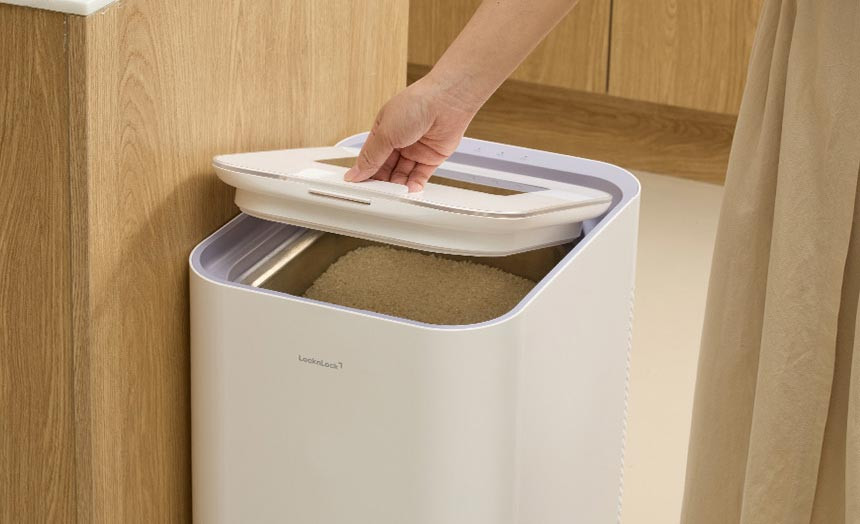
LocknLock Vacuum Rice Fridge Review: Better Rice Storage, but Is It Worth the Space?
If you are reading this LocknLock Fresh Stainless Vacuum Rice Fridge Review, the real question probably is not whether an appliance can keep rice cool. It is whether dedicating money and kitchen space to a 20 kg rice refrigerator gives you a meaningful advantage over an airtight container, a vacuum bin, or simply keeping rice in your regular refrigerator.
I’m K-papa, a creator living in South Korea. For this review, I compared LocknLock’s Korean product information with multiple Korean user reports, including short-term impressions and a two-year ownership report. I have not personally used this rice fridge, so the comments below separate verified specifications from owner experiences and my own editorial judgment.
The short answer: this is a specialized appliance that makes the most sense for households buying relatively large bags of rice, especially when refrigerator space is already tight or Korea’s hot, humid summers make room-temperature storage uncomfortable. Its combination of low-temperature storage and vacuum control is more interesting than either feature by itself.
But there is a catch that matters more than the feature list suggests: the inner rice chamber is not removable for washing.
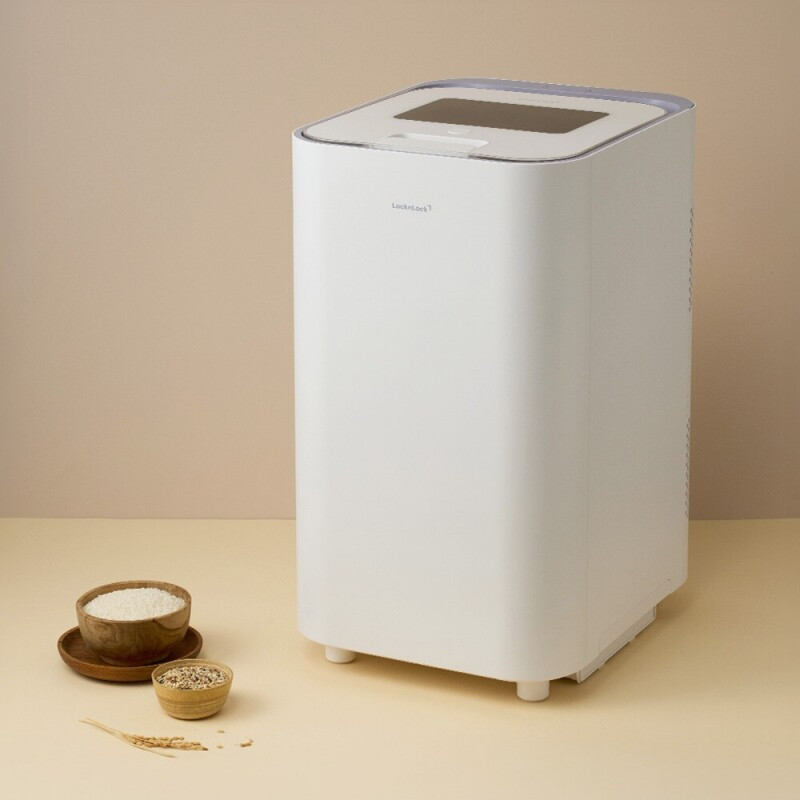
Product images courtesy of LocknLock official website.
LocknLock Vacuum Rice Fridge Review: What You Are Actually Paying For
A normal sealed rice container primarily isolates rice from the surrounding environment. The LocknLock takes a more active approach.
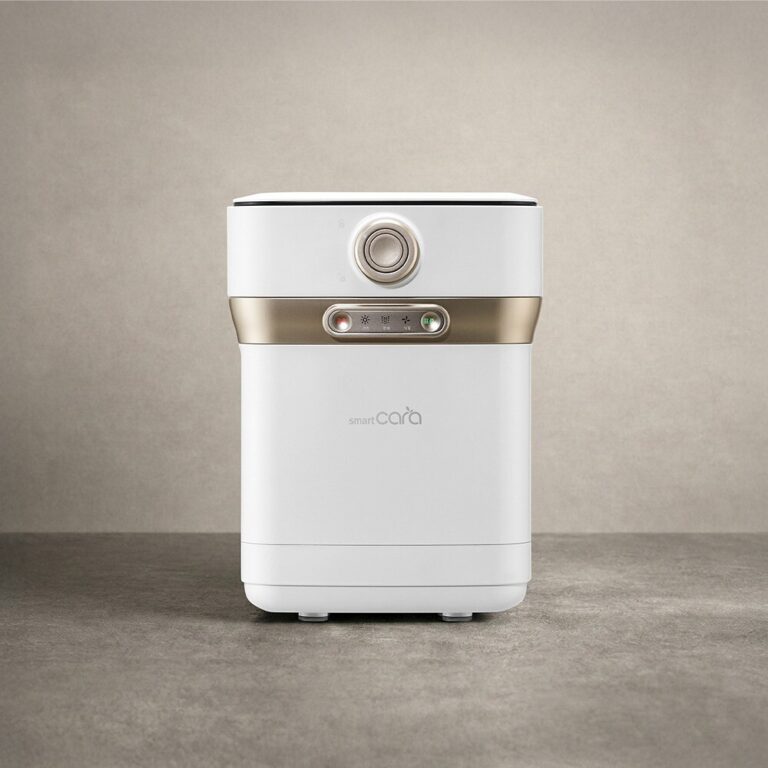
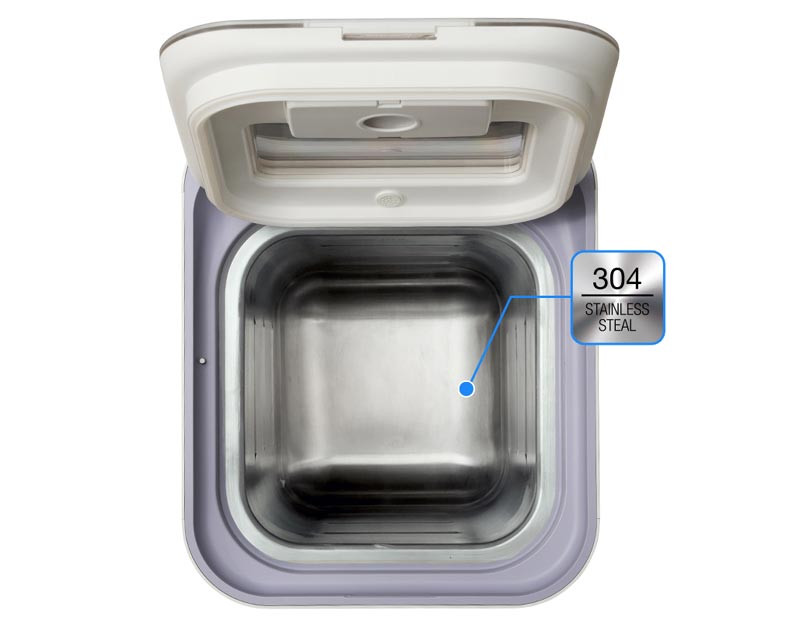
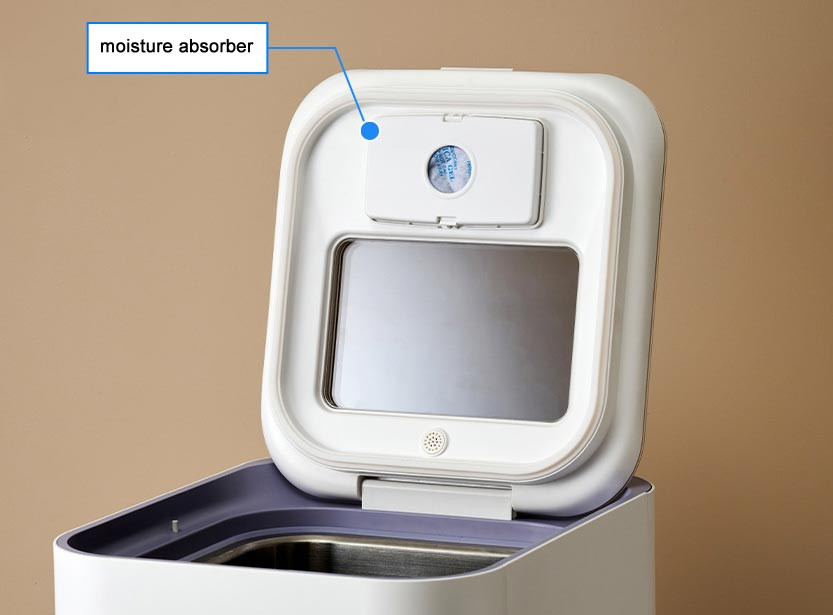
LocknLock lists four main elements: a smart vacuum system, low-temperature storage, a stainless steel 304 interior, and moisture management.
The official specifications and functions relevant to the buying decision include:
| Specification | LocknLock Fresh Stainless Vacuum Rice Fridge |
|---|---|
| Rice capacity | 20 kg |
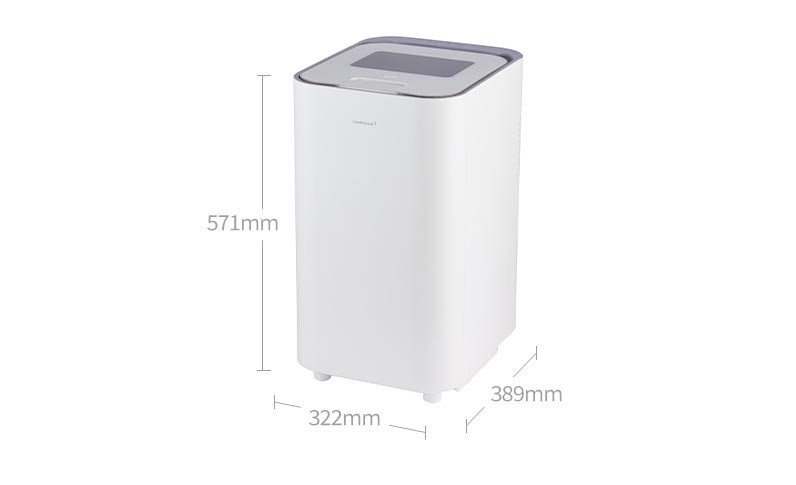
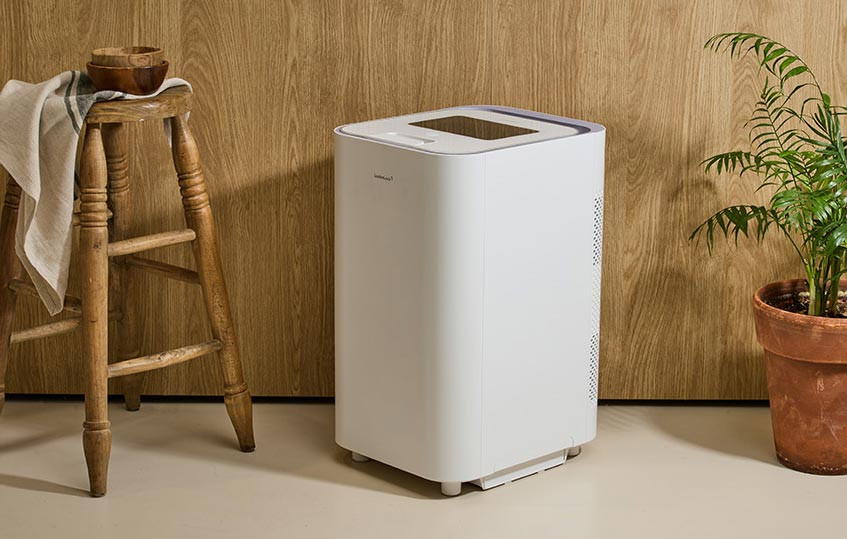
| Dimensions | 322 × 389 × 571 mm |
| Storage temperature | 12–18°C |
| Cooling system | Dual Peltier semiconductor cooling |
| Vacuum pressure | Up to -20 kPa |
| Vacuum monitoring | Internal pressure checked automatically every 12 hours |
| Interior | Stainless steel 304 |
| Rice-level check | Transparent window in lid |
| Moisture management | Reusable silica-gel desiccant and external water tray |
The important distinction is that this isn’t simply a refrigerated box.
LocknLock says its system periodically monitors pressure and restores the vacuum when necessary, while the dual Peltier cooling system is designed to distribute cool air around the container. In other words, it attacks several storage variables at the same time rather than asking you to find a cool location and rely entirely on an airtight lid.
That convenience is the strongest argument for the appliance.
For someone who buys a small bag of rice and finishes it quickly, however, it is also precisely why the product can be excessive. You would be paying for active temperature and vacuum management to solve a storage problem you may barely have.

The 12–18°C Storage Range Makes More Sense in a Korean Summer
Rice storage can become a much bigger concern once a Korean summer turns hot and humid.
One of the Korean sources I reviewed discussed research comparing milled rice stored at different temperatures and pointed toward refrigerated, sealed storage as the straightforward household solution. That broader principle matters here: temperature and storage conditions influence how quickly rice quality changes.
LocknLock’s solution is a dedicated 12–18°C storage environment, rather than the much colder temperature of a normal household refrigerator.
Its Peltier system is also worth understanding before treating “rice fridge” as equivalent to a miniature kitchen refrigerator. Peltier semiconductor cooling tends to suit relatively compact appliances where modest cooling, lower vibration, and simpler construction are useful. LocknLock itself notes that this approach can be more affected by ambient temperature than a conventional compressor system.
That creates an important buying condition.
The manufacturer specifically recommends using the appliance in a dry, well-ventilated environment and gives an ambient-temperature guideline of approximately 20–30°C. So the refrigeration function should not be interpreted as permission to place the unit anywhere regardless of the surrounding conditions.
Two short-term Korean users reported that the appliance reduced the hassle of portioning rice into multiple containers and moving those containers in and out of a conventional refrigerator. That may actually be the more persuasive benefit than a claim about better-tasting rice.
The workflow becomes simpler: pour in a large quantity, keep it in one controlled environment, and take out what you need.
Vacuum Storage Is Useful, but It Changes a Small Daily Habit
Close the lid and the vacuum motor operates automatically. To open it again, you first press the release button and wait for the vacuum to disengage.
That extra step is minor, but it happens every time you access the rice.
One Korean long-term owner described waiting roughly five seconds, while another short-term report described around ten seconds. Rather than treating either number as a guaranteed opening time, the useful takeaway is simply this: the lid does not open instantly like a conventional rice bin.
The manufacturer also instructs users to press both sides of the lid firmly when closing it rather than relying on the handle alone. Proper sealing matters because the vacuum motor can continue operating if the system cannot reach or maintain its target pressure.
This is a good example of the trade-off behind the product.
You get automated pressure management, but in return you accept a slightly more deliberate open-and-close routine.
The two-year owner said the delay initially felt inconvenient but eventually became familiar. That is much more useful buying information than pretending the vacuum system is completely frictionless.
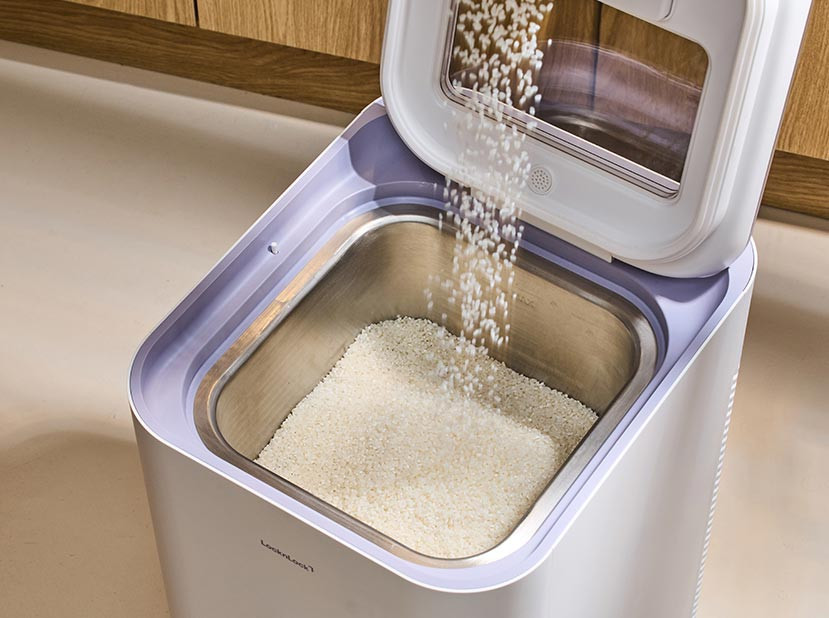
Product images courtesy of LocknLock official website.
The 20 kg Capacity Solves One Storage Problem and Creates Another
Twenty kilograms is substantial capacity.
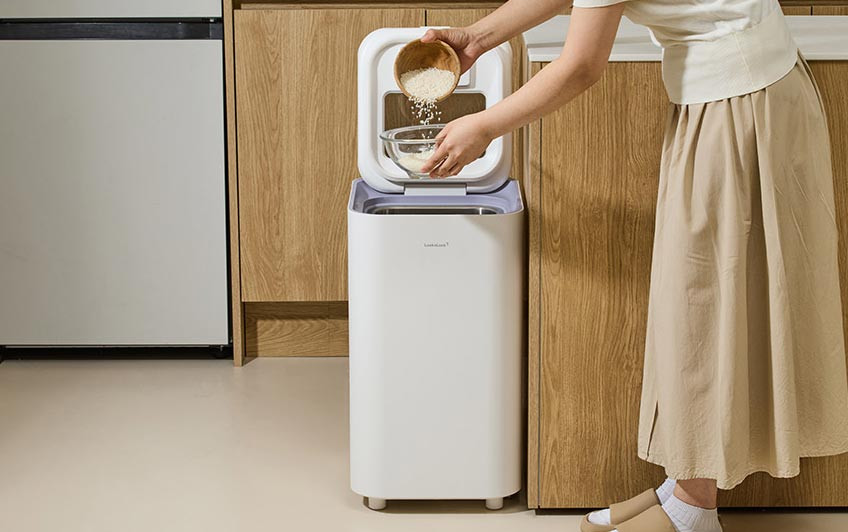
One short-term user reported being able to transfer an entire 20 kg bag into the container below its maximum fill line. A two-year user considered the capacity comfortably sufficient for a two-person household.
Yet capacity isn’t automatically an advantage.
At 322 × 389 × 571 mm, this is a real floor-standing appliance, not something you casually tuck behind a toaster. One long-term owner specifically identified the amount of space it occupies as a disadvantage, even though its tall shape made the footprint feel somewhat less intrusive.
That leads to what I think is the most useful K-papa way of looking at this product.
Living in Korea, I think the interesting comparison isn’t “rice fridge versus no rice fridge.” Many Korean apartment households already have appliances competing for limited kitchen, utility-room, or pantry space. The better question is whether this appliance saves more valuable refrigerator space than the floor space it consumes elsewhere. If you normally divide 10 or 20 kg of rice among containers inside your main refrigerator, that exchange can make sense. If your refrigerator already has plenty of room, the argument becomes much weaker.
This is also why I wouldn’t judge the 20 kg capacity as universally better. A household that routinely finishes only a small amount of rice would probably gain more from buying smaller bags and using a good airtight container than from owning another powered appliance.
The Stainless Interior Is Appealing; the Cleaning Limitation Isn’t
The rice-contacting interior uses stainless steel 304.
That’s a reassuring material choice for a container designed for long-term food storage, and several Korean users highlighted it positively.
But this is also where the most meaningful negative evidence appears.
The manufacturer says the main unit cannot be washed with water. Its cleaning guidance calls for unplugging the appliance and wiping away contaminants from the interior and exterior with a soft, dry cloth.
The two-year owner identified the inability to remove and wash the inner container as the product’s biggest disappointment.
That matters.
A large rice container inevitably accumulates rice dust and small particles. Some buyers will be perfectly comfortable wiping the interior after emptying it. Others will strongly prefer taking the entire food-contact bin to a sink and washing it.
If you belong to the second group, don’t dismiss this as a minor inconvenience simply because the interior is stainless steel. It’s a fundamental maintenance characteristic of the design.
LocknLock does provide additional moisture management. A silica-gel desiccant is installed in the lid area, and the official instructions show that it can be dried in a microwave for approximately three minutes when regeneration is needed. There is also an external water tray for condensation.
One short-term owner specifically mentioned emptying this tray in humid conditions. That’s another small piece of ownership work that isn’t obvious from a beauty shot of the appliance.
What Korean Owners Tell Us That the Specification Sheet Doesn’t
The most valuable source in this group was the two-year ownership report because it gives us something that three or four weeks of use cannot: perspective after the novelty has disappeared.
That owner reported no rice-weevil problems during the two years of use and no repair or service visit. The owner also said electricity costs had not increased enough to be personally noticeable.
Those are encouraging observations, but they should not be converted into universal claims. One household’s two-year record does not establish a failure rate, and “I didn’t notice an electricity increase” is not the same thing as measured power-consumption data.
The shorter-term owners were more enthusiastic about convenience. They liked avoiding refrigerator portioning, having the rice close to the rice cooker, viewing the remaining amount through the lid, and loading a large bag at once.
They also described the rice and cooked-rice quality positively.
I’d be more cautious with that last point. Freshness and cooked-rice taste can also depend on rice variety, milling date, water ratio, rice cooker, and storage history. The user reports show satisfaction; they do not prove that this appliance alone will make everyone’s rice taste better.
Interestingly, the longer ownership report makes the buying case stronger precisely because it is less enthusiastic. The owner still disliked the size, cleaning restriction, and opening delay, yet considered the core storage performance satisfactory enough to say they would buy it again.
That’s a much more useful endorsement than “everything is great.”
Product images courtesy of LocknLock official website.
Buy It, Consider a Simpler Option, or Skip It?
Buy it if you routinely purchase 10–20 kg of rice, keep it long enough for storage conditions to matter, lack refrigerator space for bulky rice containers, and place a high value on automated low-temperature plus vacuum storage.
Consider it carefully if storage performance matters to you but kitchen or utility-room space is limited. Measure the intended location against the 322 × 389 × 571 mm dimensions first, including enough practical room to open the top.
Choose a cheaper vacuum rice bin if you mainly want improved sealing but don’t need active cooling.
Choose airtight containers in your existing refrigerator if you have sufficient refrigerator space and don’t mind portioning rice. This is a much simpler solution and avoids adding another powered appliance.
Buy smaller quantities of rice instead if your household consumes rice slowly. Reducing the amount that needs long-term storage may solve the underlying problem more economically.
Skip this model if being able to remove and thoroughly wash the entire rice container is important to you. That limitation doesn’t disappear no matter how useful the vacuum or cooling systems are.
There is another practical issue for international readers: I have not verified overseas retail availability, local warranty coverage, or a reliable international purchase channel for this Korean model. Check voltage, service coverage, return conditions, and local availability before importing one.
If you’re more interested in vacuum storage without dedicating space to another appliance, you can also see my LocknLock Fresh Maestro Vacuum Container Review. It solves a different storage problem, but the comparison helps clarify whether you actually need refrigeration or mainly want better sealing.
How I Researched This Review
I did not personally test the LocknLock Fresh Stainless Vacuum Rice Fridge.
I compared LocknLock’s Korean product information with four Korean-language sources supplied for this review: short-term owner reports, a two-year ownership report, and a broader discussion of summer rice-storage options. I gave greater weight to the long-term report for durability and maintenance questions and treated individual observations about taste, electricity use, noise, and pest prevention as owner experiences rather than guaranteed product performance.
Where short-term and long-term reports differed – such as the approximate time required to release the vacuum – I did not turn either estimate into a fixed specification.
FAQ
Does the LocknLock Fresh Stainless Vacuum Rice Fridge hold 20 kg of rice?
It is sold as a 20 kg model, and one Korean user reported loading a 20 kg bag below the maximum fill line. Actual usable capacity can still vary slightly with the rice and how the container is filled, so follow the maximum-fill marking.
Does it keep rice at normal refrigerator temperature?
No. LocknLock specifies a 12–18°C low-temperature storage range for this model. It uses a dual Peltier semiconductor cooling system rather than the compressor system commonly found in household refrigerators.
Can you remove the stainless steel rice container and wash it?
The reviewed material does not indicate a removable, washable inner bin. LocknLock instructs users to disconnect the power and wipe the interior, and a two-year owner specifically cited the inability to remove and wash the container as a major disadvantage.
Is it completely silent?
I would not describe it that way. A two-year user reported a brief operating sound after closing the lid but did not personally find it disturbing. That’s useful anecdotal evidence, not a laboratory noise measurement.
Is a dedicated rice fridge better than keeping rice in a normal refrigerator?
Not for everyone. If you have plenty of refrigerator space, sealed refrigerated containers remain a straightforward solution. The LocknLock becomes more compelling when you regularly store large quantities and want to free that refrigerator space while keeping temperature and vacuum management automated.
DID YOU KNOW? Korea
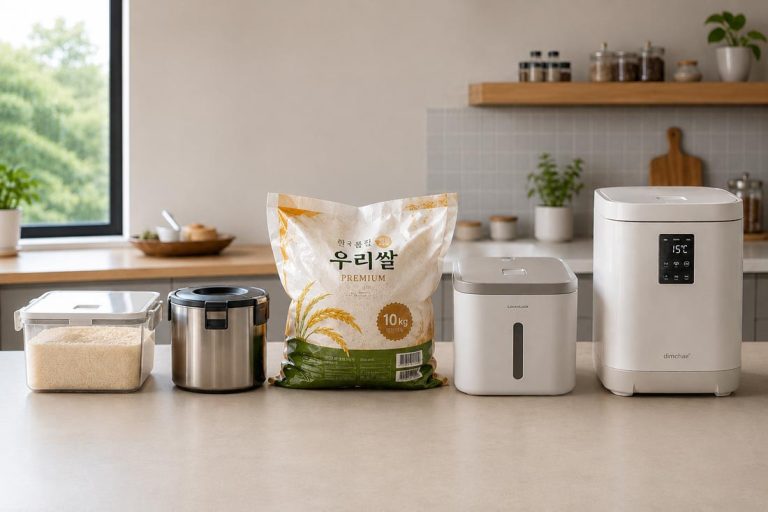
Rice storage can be a surprisingly practical household issue in South Korea because summer weather can become both hot and humid, while many families still purchase rice in relatively large bags.
That helps explain why the Korean market includes everything from basic airtight rice bins to vacuum containers and dedicated temperature-controlled rice appliances. The most sophisticated option isn’t automatically the best one, though. How quickly a household eats its rice and where it can store it matter just as much as the technology.
K-papa’s Quick Korean Lesson!

Korean phrase: 쌀은 어디에 보관해요?
Romanization: Ssareun eodie bogwanhaeyo?
Pronunciation: Ssal-eun uh-dee-eh bo-gwan-hae-yo?
Meaning: “Where do you store the rice?”
Example:
새로 이사한 집에서 주방을 정리하면서 가족에게 “쌀은 어디에 보관해요?”라고 물어볼 수 있어요.
When organizing the kitchen in a new home, you can ask, “Where do you store the rice?”
About the Author
K-papa is a creator living in South Korea who examines Korean products and everyday culture for international readers. His reviews separate verified specifications, recurring user experiences, and editorial judgment so readers can make a practical buying decision. Learn more about K-papa and The Korea Picks.