Minimal Works Superposition Review: A Spacious TC Shelter With a Serious Weight Trade-Off
The central question behind this Minimal Works Superposition review is simple: does its unusually open, pole-free living area justify carrying and pitching a 17 kg premium TC shelter?
I’m K-papa, a creator living in South Korea. This is an early review and editorial analysis based on Minimal Works’ official product information, setup images, and available Korean coverage—not a hands-on field test. Because long-term owner evidence is still limited, I’ll separate confirmed specifications from practical interpretation and identify the points that buyers should verify before ordering.
The Superposition makes its strongest case to campers who want one large space that can change character throughout a trip. Close the removable door panels and it becomes a substantial group shelter. Open the ends and it feels more like a shaded gathering space. Arrange two cots along the sides and it can support an uncluttered sleeping layout without placing a center pole between them.
That versatility is meaningful. It also comes with a 17 kg packed weight, a large 560 × 410 cm footprint, weather limitations typical of a cotton-blend shelter, and an overseas purchasing situation that may be less convenient than buying an established global model.
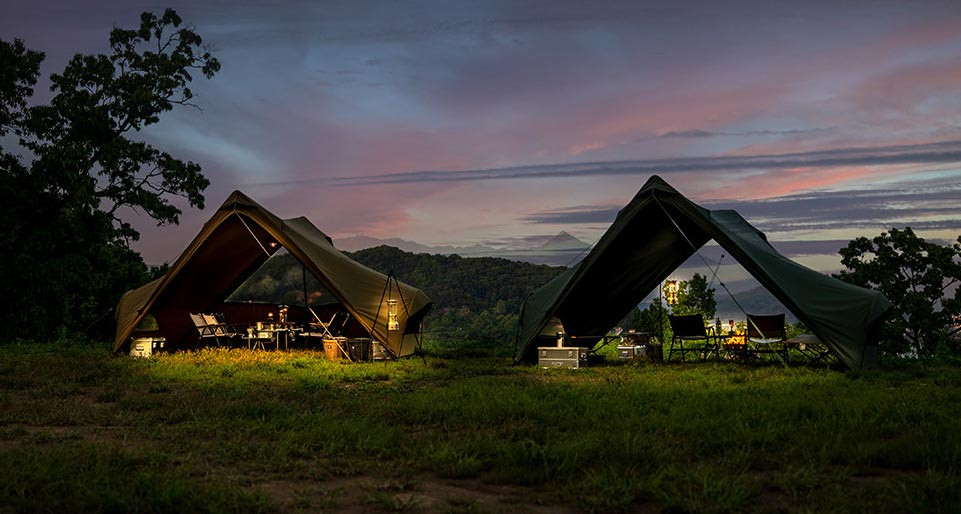
Product images courtesy of the Minimal Works official website.
Early Verdict: Space Is the Reason to Consider the Superposition
The Superposition is not the sensible choice for someone who simply needs an affordable place to sit out of the sun. Smaller tarps and conventional dome shelters can do that with less weight, less ground space, and usually less financial risk.
Its appeal is more specific.
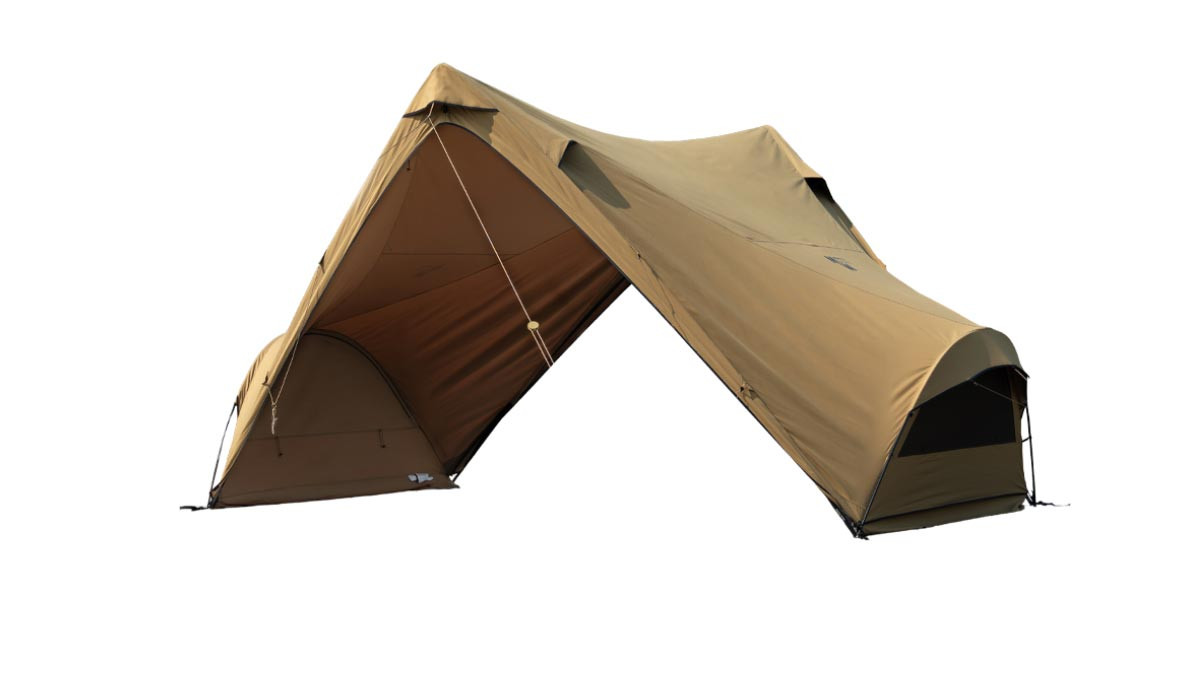
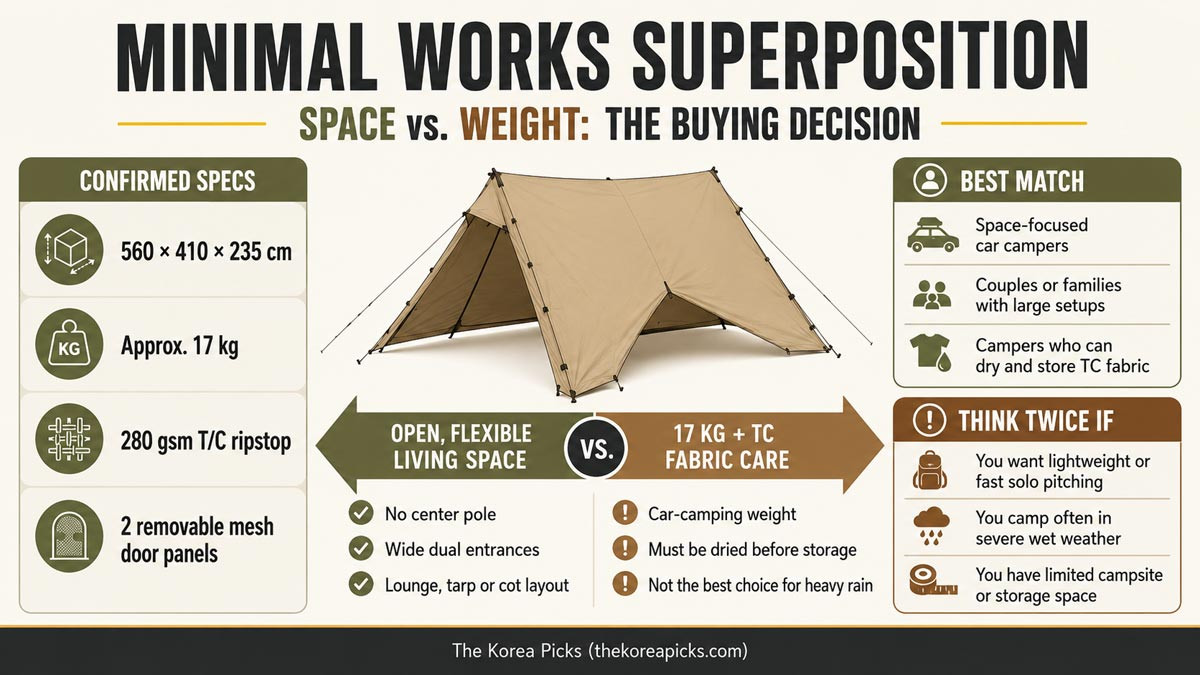
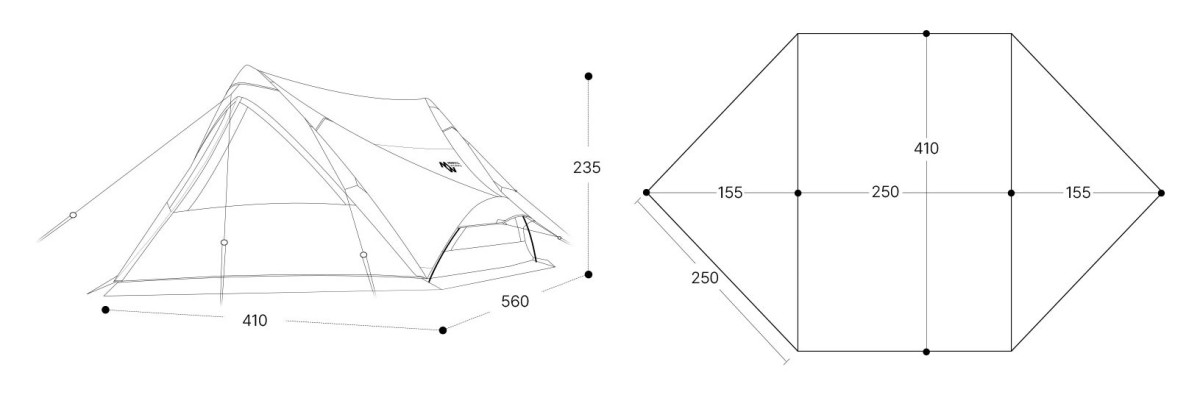
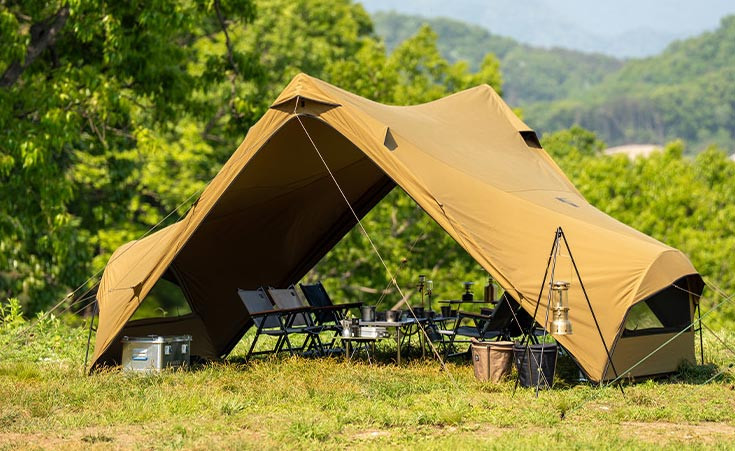
Minimal Works has created a high-roofed shelter with no permanent pole occupying the center of the living area. The official dimensions are 560 cm long, 410 cm wide, and 235 cm high. Those numbers suggest enough room for a proper lounge, dining setup, or cot-based camp, but the bigger difference is how much of that footprint remains usable.
A traditional center-pole shelter can look enormous on paper while forcing furniture and walking paths around one structural obstacle. The Superposition instead uses four main poles and two side poles to create its shape. That gives campers more freedom to place a table in the middle, keep both ends open as walkways, or run cots along the sides.
My editorial view is that this is where the product either earns its premium or loses the argument completely. If you regularly rebuild your campsite for meals, social time, and sleeping, the open floor can make the shelter easier to live with. If your setup consists of two chairs and a compact table, much of this space—and much of the 17 kg you carried to the site—will be unnecessary.
The Pole-Free Center Changes More Than the Floor Plan
“More space” can be a vague marketing claim. Here, there is a practical reason behind it.
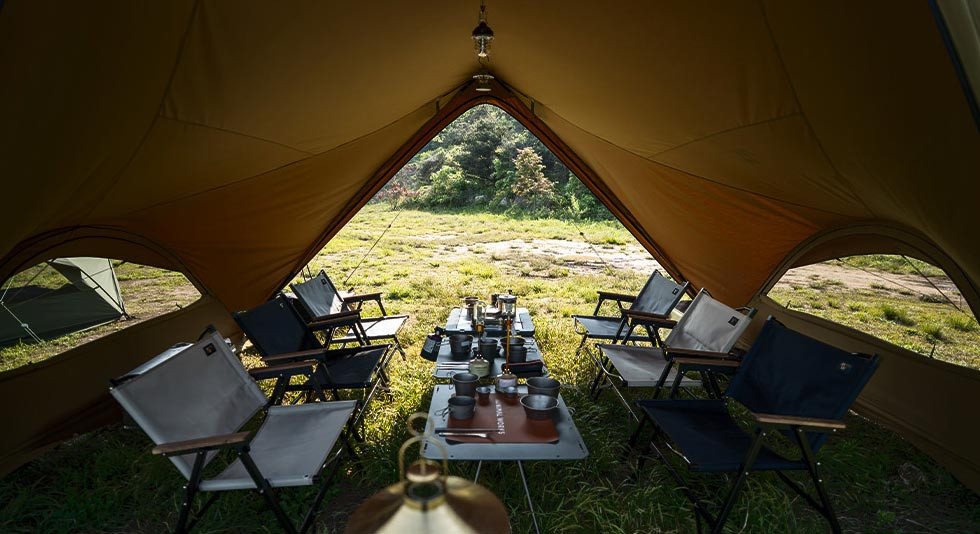
Removing a center pole means campers do not have to split their furniture into awkward zones. A long table can sit close to the middle. People can move from one end to the other without stepping around a pole or guy line inside the shelter. Cots can also face one another with a central passage between them.
The 235 cm peak height matters as well. It should make standing and changing positions more comfortable than in a low tarp or compact tunnel shelter. However, buyers should not interpret the maximum height as 235 cm of vertical clearance across the entire interior. The Superposition has sloping roof panels, so headroom decreases toward the outer edges.
This creates an important distinction between floor area and comfortably occupied area. Low equipment, storage boxes, and cots can use the edges efficiently. Taller campers and standing activities will naturally move toward the center.
Minimal Works also shows side round-end extensions designed to recover some of the area that might otherwise be lost near the sloping walls. That appears useful, but the actual benefit will depend on how tightly the shelter is pitched and how much clearance the chosen furniture requires.
The published component weights also tell us something about setup:
| Component | Official weight |
|---|---|
| Main skin | 7,840 g |
| Door panel | 2,310 g each × 2 |
| Pole set | 4,380 g |
| Total stated weight | Approximately 17 kg |
This is not a quick solo shelter in the ultralight sense. Even if an experienced camper can pitch it alone, its fabric area and multiple structural poles suggest that two people will have an easier time controlling the shelter, especially when wind is present. No verified setup time was available in the supplied material, so any precise “minutes to pitch” claim would be guesswork.
TC Fabric Brings Comfort, Weight, and Weather Responsibility
The Superposition uses 280 gsm T/C ripstop fabric, a cotton-and-polyester blend. This material choice is central to the product rather than a minor specification.
A TC shelter can feel more comfortable for extended campsite living because the fabric behaves differently from a thin synthetic fly. It creates a softer interior appearance and is often chosen by campers who value a substantial, home-like shelter over the smallest possible packed load.
The cost is obvious in the weight. At approximately 17 kg before adding furniture, a groundsheet, and other camp equipment, the Superposition belongs in car-camping territory. It is not intended for backpacking or for campsites that require a long carry from the parking area.
Minimal Works states that the fabric has a water-repellent treatment and can be used in rain. The company also recommends avoiding use when heavy rain or concentrated downpours are expected. That distinction matters: water resistance does not make a large TC shelter the equivalent of a storm-focused synthetic tent.
Cotton-blend fabric also requires responsible drying and storage. Packing it while damp can create odor, staining, or mildew risk. The larger the shelter, the more difficult it may be to find enough space to dry it fully at home.
For Korean campers with balconies, yards, or access to a suitable drying area, that may be manageable. International buyers living in apartments should think about post-trip care before focusing only on the attractive campsite photographs.
In my judgment, the TC construction is worth accepting when the shelter will remain set up for long, relaxed stays and the owner has a reliable drying routine. For frequent one-night trips or unpredictable wet-weather camping, a lighter synthetic shelter may be the more practical purchase even if its interior feels less distinctive.
Product images courtesy of the Minimal Works official website.
Two Removable Doors Let the Shelter Shift Roles
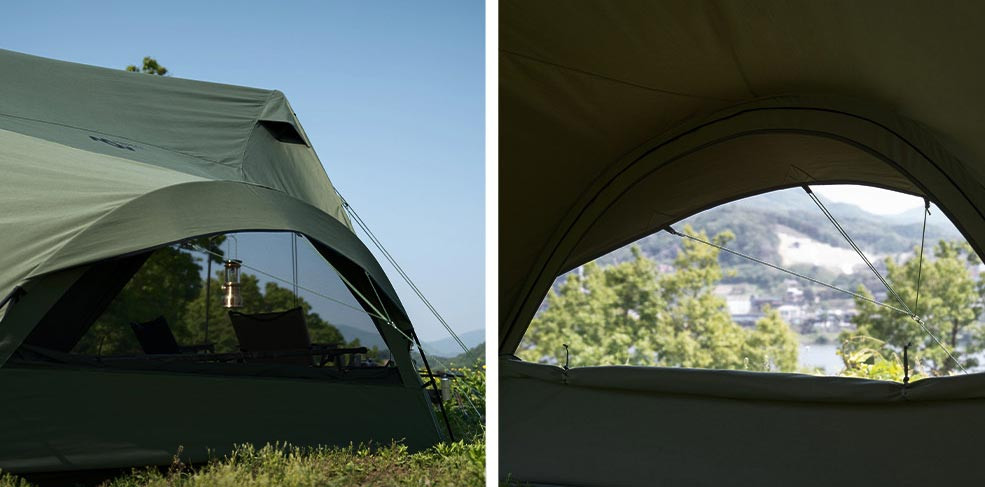
Each end of the Superposition can be opened widely, and the supplied door panels are removable. This gives the shelter several useful configurations rather than locking it into one enclosed shape.
With both ends open, it functions much like an elongated tarp. Air and people can move through the center, and a larger group can gather without relying only on the nominal enclosed footprint.
With one end closed, campers gain a more protected back wall while keeping the opposite side open toward the scenery. Closing both ends creates a more contained shelter for cooler or breezier conditions.
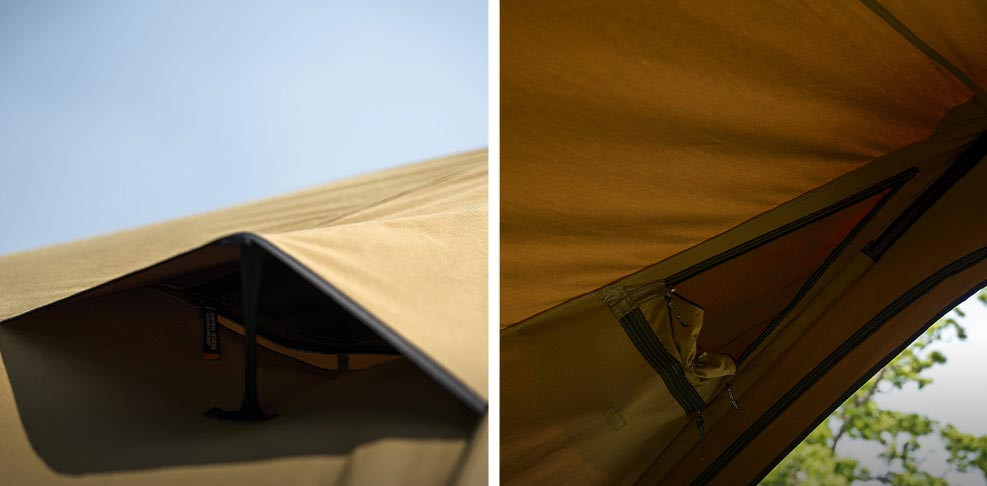
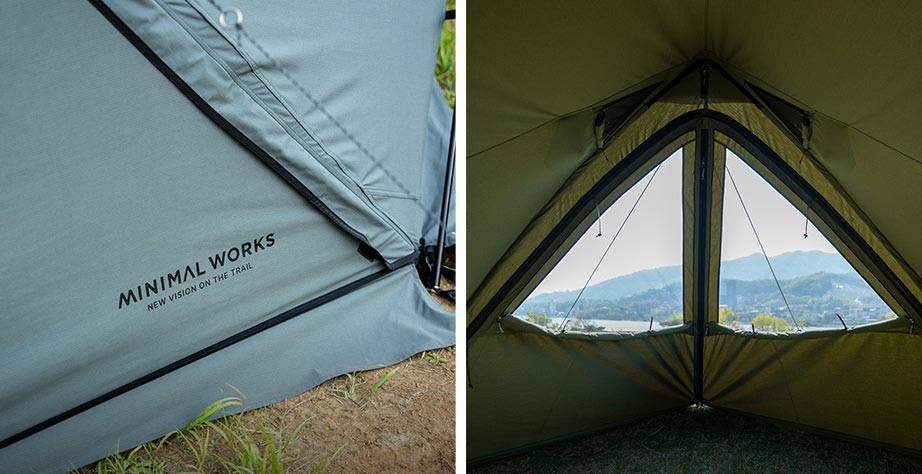
The door panels include mesh, allowing some airflow while reducing direct insect access. Side ventilation and upper entrance vents provide additional paths for warm, humid air to escape. These openings should help manage condensation, but they cannot guarantee a dry interior. Occupancy, ground moisture, temperature change, and how much ventilation remains open will all affect condensation.
The modular doors create another trade-off. A removable component is useful only when the camper remembers to pack it, has somewhere clean to store it, and is willing to reconfigure the shelter as conditions change. Campers who prefer an integrated, zip-and-go structure may find a conventional living shelter easier.
The Superposition therefore rewards an active setup style. It suits people who enjoy adjusting their shelter to the sun, breeze, group size, and view rather than pitching one configuration and leaving it untouched.
Video source: This Korean-language owner review is included for additional visual context. The opinions expressed in the video belong to its creator and do not necessarily reflect the views of The Korea Picks.
What Fits Inside—and What the Photos Do Not Prove
Minimal Works presents several suggested arrangements, including a spacious two-person lounge and a layout with two cots along the sides. The images support the idea that the center can remain open even when sleeping furniture is installed.
A four-person daytime setup also looks plausible. The 560 × 410 cm footprint offers room for several chairs and a central table, particularly when one or both doors are removed.
That does not automatically make it a four-person sleeping tent.
The Superposition is primarily a floorless shelter. A family intending to sleep inside must still plan for insects, groundwater, wind-blown dirt, privacy, and separation between cooking and bedding. Cots can solve the ground-contact issue, but they do not provide the sealed protection of an inner tent.
The available Korean blog source suggested that multiple cots or an inner-tent arrangement may be possible, but it did not provide measured clearances or long-term field evidence. Buyers should confirm the exact dimensions of their cots or inner tent instead of relying on a wide-angle campsite photo.
A sensible planning approach would be:
- Two people: generous space for cots, chairs, storage, and a central table.
- A couple with one or two children: potentially workable with carefully selected sleeping equipment.
- Four adults sleeping inside: confirm cot dimensions and walking clearance before buying.
- A larger daytime group: open-door tarp mode is likely more convincing than trying to enclose everyone overnight.
Campers looking for a more conventional large shelter with clearer separation between living and sleeping zones may also want to read the Minimal Works Shelter GHE Review. The Shelter GHE and Superposition solve different problems: one follows a more familiar shelter format, while the other prioritizes an open, adaptable central space.
Small Details Support Long Camps, but Check What Is Included
The official package includes the main skin, two joint components, four main poles, two side poles, eight strings, two door panels, and a storage bag. Minimal Works states that pegs are not included.
That last point should not be overlooked. A shelter of this size needs anchoring appropriate to the campsite surface and expected weather. Buyers should budget for suitable pegs rather than treating them as an optional finishing accessory.
The main poles are listed as aluminum, with 30 mm tubing identified in the official specifications. The shelter also includes an adjustable daisy-chain-style hanging system for lanterns and small camping accessories. Minimal Works’ product images show its Air Hanger cord used for this purpose, but that item is sold separately.
Color-matched cords and branded tensioning hardware give the shelter a coordinated appearance. Three colors are shown: Tan, Olive, and Charcoal. These details will matter to campers who build a visually consistent campsite, though they do not change the shelter’s fundamental performance.
The more meaningful buying check is repair and replacement support. The official listing identifies the poles as made in South Korea, while the skin and storage bag are made in China. International customers should ask the seller whether replacement poles, door panels, joint parts, and warranty service can be obtained in their country.
Overseas availability and affiliate distribution were not confirmed for this review. Import duties, oversized shipping charges, and return costs could materially change the value equation.
Buy, Consider, or Skip the Minimal Works Superposition?
Buy it if your priority is a large, visually distinctive TC shelter with a genuinely open center. It makes the most sense for car campers who use substantial furniture, enjoy changing between enclosed and open configurations, and have enough space to dry and store a 17 kg cotton-blend shelter.
Consider it carefully if you camp as a family. The floor area may support a flexible lounge-and-sleeping arrangement, but you should map your exact cots or inner tent against the 560 × 410 cm footprint. Also confirm campsite pad dimensions; a shelter this large may not fit comfortably on compact or bordered pitches once guy lines are included.
Skip it if you want a lightweight shelter, fast solo pitching, minimal maintenance, or reliable use during severe rain. A smaller synthetic shelter will be easier to transport and dry. A conventional enclosed tent will also be more straightforward if sleeping protection matters more than an open social space.
Anyone mainly trying to improve sleep comfort may gain more from upgrading the sleeping system than from buying a larger shelter. The Helinox Cot One Convertible Review explains the trade-offs of a premium cot that packs relatively small while keeping sleepers off the ground.
The Superposition is not compelling because it tries to do everything. It is compelling because it gives space-conscious car campers a rare combination: the atmosphere of a sculpted TC shelter, the utility of a large tarp, and a center that remains available for people rather than structural hardware.
That combination can justify the premium for the right campsite. It cannot justify the weight, maintenance, and import complications for everyone else.
Product images courtesy of the Minimal Works official website.
How I Researched This Review
I did not purchase, pitch, or sleep in the Minimal Works Superposition. This early review was prepared from the manufacturer’s official specifications, package details, setup photographs, fabric guidance, and configuration examples, along with one Korean blog article discussing the original Superposition and the separate Superposition Air.
Claims relating specifically to the newer Air model were not treated as specifications for this product. Where the supplied sources did not establish setup time, long-term durability, severe-weather performance, or exact sleeping capacity, those points remain unverified and are presented as buyer checks rather than facts.
Frequently Asked Questions
Is the Minimal Works Superposition an air tent?
No. The standard Superposition reviewed here uses aluminum main and side poles. The Superposition Air discussed in some recent Korean coverage is a separate model, so buyers should not apply its frame or setup claims to this version.
Is the Superposition suitable for four people?
It appears well suited to a four-person daytime lounge or dining setup. Sleeping capacity depends on cot or inner-tent dimensions, storage needs, and the amount of walking space required. Minimal Works does not provide a simple verified sleeping-capacity rating in the supplied material.
Can the Superposition be used in rain?
The 280 gsm TC ripstop fabric has a water-repellent treatment, and Minimal Works says it can be used in rainy conditions. The company recommends avoiding use when heavy rain is expected. The shelter should also be dried completely before storage.
Does it include the door panels and pegs?
Two removable door panels are included. Pegs are not included, according to the official package information.
Is it practical for solo camping?
A solo camper could enjoy an exceptionally spacious setup, but the approximately 17 kg weight and large fabric area make it an inefficient choice for most one-person trips. The smaller Superposition Solo or another compact shelter may be more practical unless living space is the main priority.
DID YOU KNOW? Korea
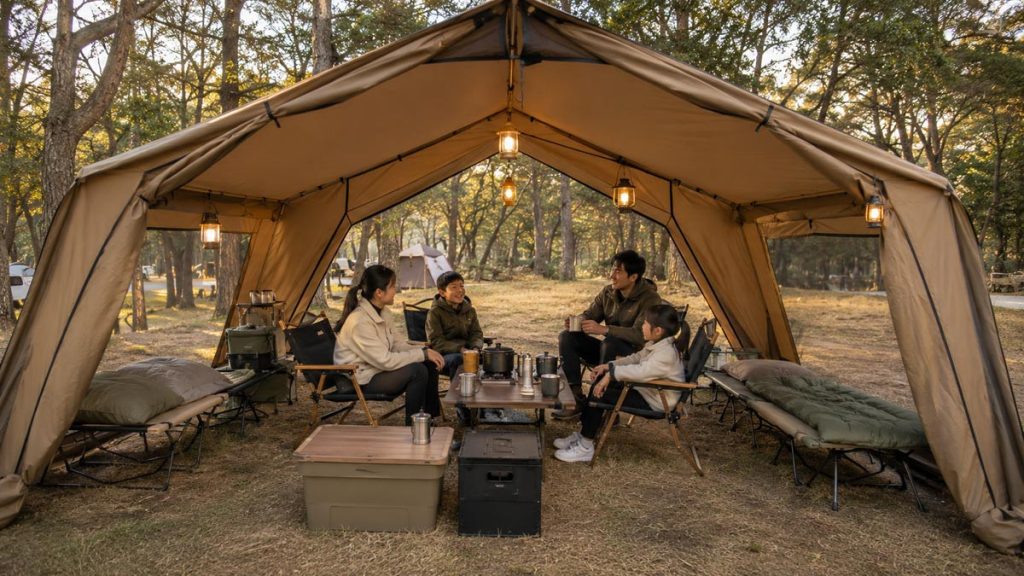
Large floorless shelters are a visible part of Korea’s highly organized car-camping culture. Many campers arrange tables, chairs, lighting, storage boxes, and sleeping equipment as a temporary outdoor living room rather than using the shelter only as a place to sleep.
This helps explain why adaptable products such as the Superposition attract attention in Korea. Their value is not measured only by how many people technically fit inside, but by how comfortably the campsite can move from cooking and conversation to nighttime rest.
This is also why a shelter like the Superposition makes more sense when viewed through Korean car-camping culture than through an ultralight camping mindset.
K-papa’s Quick Korean Lesson!

Korean phrase: 공간이 넓어요
Romanization: Gonggani neolbeoyo
Pronunciation: gong-gan-ee null-buh-yo
Meaning: The space is roomy.
Example:
이 쉘터는 중앙에 폴대가 없어서 공간이 넓어요.
I shelter-neun jungang-e poldaega eopseoseo gonggani neolbeoyo.
This shelter feels roomy because there is no pole in the center.
About the Author
K-papa is a creator living in South Korea who examines Korean products and everyday culture for international readers. His reviews separate verified specifications, recurring user experiences, and editorial judgment so readers can make a practical buying decision. Learn more about K-papa and The Korea Picks.