Why Rice Cookers Never Leave Korean Kitchen Counters
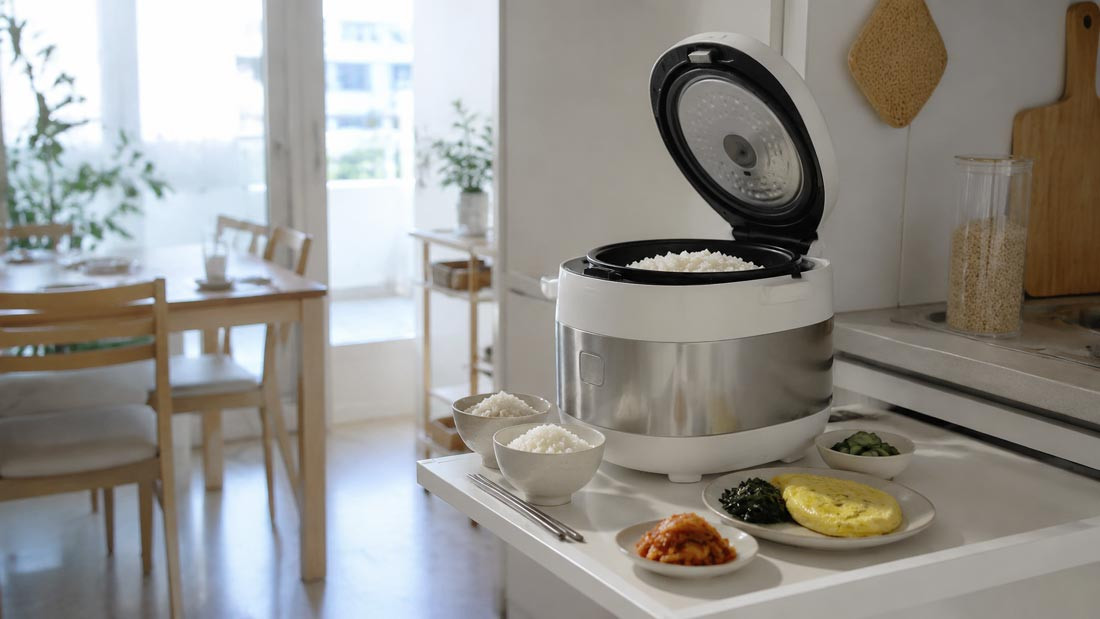
Walk into an ordinary Korean home and you may notice something before anyone begins cooking: the rice cooker already has a permanent place.
It is rarely hidden in a cabinet and brought out only when needed. It usually sits on the kitchen counter, a pull-out appliance shelf, or a small utility cart close to the dining area. Even in compact apartments where every centimeter matters, families somehow find room for it.
Why rice cookers never leave Korean kitchen counters has less to do with Koreans being fascinated by kitchen gadgets than it does with the role rice plays in a meal. The rice cooker is not just another appliance. It quietly manages the food around which the rest of dinner is organized.
I’m K-papa, a creator living in South Korea. From my perspective, the easiest way to understand Korea’s rice-cooker culture is to stop thinking of the appliance as a machine used once a day. It is closer to a small household station that cooks, waits, reheats, and keeps the next meal within reach.
That is why putting it away after every use would feel almost as inconvenient as storing the refrigerator after breakfast.
In a Korean Meal, Rice Is Often the Starting Point
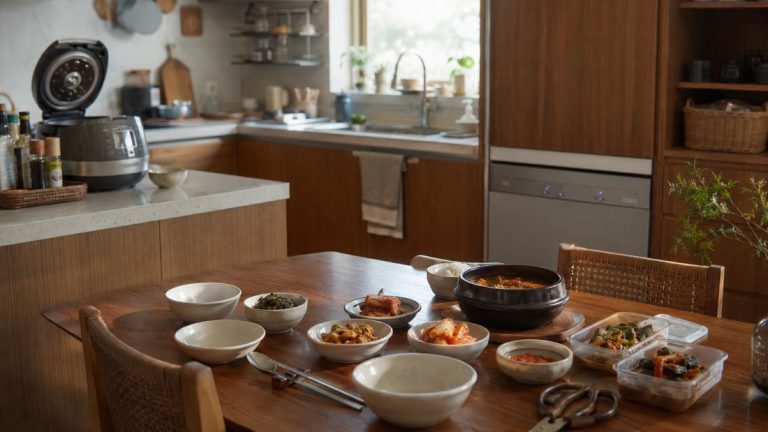
A traditional Korean table may include soup, kimchi, grilled meat, seasoned vegetables, eggs, or fish. Yet the small bowl of rice often gives those dishes their place in the meal.
Kimchi is intense by itself. Salty side dishes are designed to be eaten in small amounts. Soup may be seasoned with the expectation that it will accompany rice. Even leftover grilled meat can become a complete meal again when warm rice is available.
This does not mean every Korean eats rice at every meal. Bread, noodles, salads, delivery food, and convenience-store meals are all part of modern Korean life. Per-person rice consumption has also declined over time as eating habits have become more varied.
Rice still retains a special practical position, however. It can turn several small dishes in the refrigerator into breakfast, lunch, or dinner without requiring an entirely new menu.
There is also a revealing phrase in Korean: 밥 먹었어요? (Bap meogeosseoyo?), which literally asks, “Did you eat rice?” In natural conversation, it usually means, “Have you eaten?”
The word bap can refer specifically to cooked rice, but it can also represent a meal itself. That linguistic overlap says something important. Rice is not simply one carbohydrate among many in the older structure of Korean eating. It has long been closely associated with the idea of being properly fed.
That helps explain why a machine dedicated to preparing it earned permanent counter space.
The Real Luxury Is Not Cooking Rice—It Is Having Rice Ready
A basic pot can cook excellent rice. Koreans did not adopt electric rice cookers because cooking rice on a stove is impossible.
The larger advantage is timing.
A household can wash the rice, add water, choose a setting, and continue preparing soup or side dishes without monitoring another pot. Some cookers also offer preset timers, allowing the cooking cycle to finish near breakfast or dinner.
Once the rice is ready, the machine can switch to a keep-warm mode. This changes the rhythm of the kitchen.
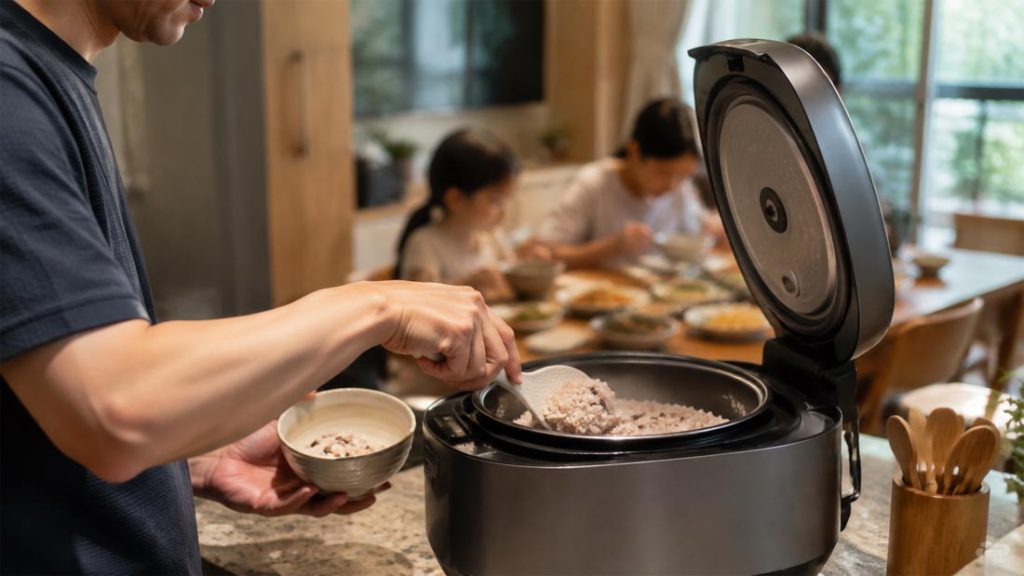
Family members do not always arrive home together. One person may eat before an evening class, another after working late, and someone else may want only a small portion. A rice cooker allows the rice to wait for the household instead of requiring the whole household to wait for the rice.
That convenience sounds small until it happens every day.
To me, this is the part foreign buyers sometimes miss when they compare a Korean pressure rice cooker with a cheap countertop model. They focus on whether both appliances can cook white rice. Of course they can.
The better question is: how often does your household need warm rice to fit around different schedules?
If the answer is “once every few weeks,” an expensive Korean model may be unnecessary. If rice appears at breakfast and dinner, dependable timing and warming become much more valuable.
Why the Cooker Stays Visible Even in a Small Apartment
Korean kitchens are not always spacious. Many apartments have limited counter space, and smaller homes may offer very little room between the sink, cooktop, microwave, and refrigerator.
A frequently used appliance must therefore earn its position.
The rice cooker usually does.
Putting a substantial pressure cooker into a cabinet after every meal would mean lifting it out, finding a heat-safe location, plugging it in, allowing steam clearance, and waiting for it to cool before storing it again. If the keep-warm function is being used, storage is not possible anyway.
Accessibility matters for another reason: the inner pot needs to travel repeatedly between the cooker and the sink. Rice must be measured and washed, water added, cooked rice served, and the pot eventually cleaned. Hiding the appliance across the kitchen would create extra movement during a task that may happen daily.
Its placement is therefore practical rather than decorative.
Some kitchens include a sliding appliance shelf designed to pull forward while a rice cooker releases steam. Other households use a dedicated cabinet section or utility trolley. This keeps the cooker available without sacrificing the main food-preparation area.
That arrangement also recognizes something basic about pressure models: steam needs space. Placing a cooker directly beneath a low cabinet and repeatedly releasing hot moisture toward the underside is not ideal. The appliance should be positioned according to the manufacturer’s clearance and ventilation guidance.
The best location is not merely wherever the cooker fits. It is where the lid can open fully, steam can escape safely, and the inner pot can reach the sink without an obstacle course.
Korean Rice Cookers Are Designed Around Different Ideas of “Good Rice”
Rice texture is personal.
Some people want white rice that is soft and slightly sticky. Others prefer firmer, more separated grains. Mixed-grain rice can require different pressure and soaking conditions from ordinary white rice. Brown rice, germinated brown rice, porridge, and rice intended for freezing may all benefit from different cooking programs.
This is where premium Korean rice cookers separate themselves from the simplest one-button models.
Current machines from Korean manufacturers may use pressure cooking, induction heating, or selectable pressure levels. Some models include menus for white rice, mixed grains, porridge, germinated brown rice, or portions intended to be frozen and reheated.
Cuchen, for example, describes models that automatically select between pressure modes or allow different pressure levels to produce different textures. Cuckoo’s overseas models similarly advertise induction heating, pressure cooking, warming, and grain-specific programs.
These features should not be treated as proof that the most expensive cooker always makes the best rice. More settings create more control, but they also add cost, size, cleaning points, and a learning curve.
The value depends on what actually goes into the pot.
A household that cooks the same white rice once or twice a week may be satisfied with a basic cooker. A family rotating between white rice, brown rice, beans, barley, and multigrain blends has a stronger reason to consider a pressure or induction model.
In other words, the sophistication of the appliance should match the complexity of the household’s rice habits.
“Keep Warm” Is Useful, but It Does Not Stop Time
The keep-warm function is central to Korean rice-cooker culture, but it is sometimes misunderstood.
It preserves convenience. It does not keep cooked rice in its just-finished condition forever.
As rice remains warm, moisture can gradually shift. The surface may dry, rice near the edges may change color, and aroma or texture can deteriorate. Results vary with the model, the amount of rice, the warming temperature, the lid seal, and how often the cooker is opened.
Families respond in different ways.
Some cook enough rice for the same day and use the warming function between meals. Others portion fresh rice into containers, freeze it promptly, and reheat individual servings later. Modern rice cookers may even include settings intended to produce rice that freezes and reheats more successfully.
Neither routine is automatically correct for everyone.
Keeping rice warm is helpful when several people will eat within a reasonably close window. Freezing portions can make more sense for one-person households, couples who eat rice irregularly, or anyone who dislikes the texture of rice held warm for too long.
This is one reason rice-cooker culture has not disappeared as Korean households become smaller. The appliance has adapted. Compact three-serving models, specialized grain settings, and freezer-oriented programs speak to a different household from the large cookers associated with earlier family kitchens.
The counter remains occupied, but the machine sitting there may be smaller and used differently.
Pressure, Voice Guidance, and the Familiar Sounds of Home
A Korean pressure rice cooker is not always a quiet background object.
It may click as pressure changes, release steam near the end of the cycle, play a melody, or announce its status in Korean. For someone encountering one for the first time, the voice and sudden steam release can feel surprisingly dramatic.
In a Korean home, those sounds can become part of the domestic background.
The cooker’s announcement tells people that dinner is close. The smell of fresh rice begins to spread while the final side dishes reach the table. Someone opens the refrigerator for kimchi. Bowls appear. The appliance has not simply completed a technical process; it has signaled the transition from cooking to eating.
This is where my feelings about the rice cooker become less analytical.
A beautiful kitchen appliance can impress you for a few days. A useful one quietly joins the rhythm of the household. The rice cooker belongs to the second category. It does not need to be exciting. Its value is that everyone understands what its sound means.
Dinner is nearly ready.
The Inner Pot Deserves More Attention Than the Control Panel
Premium rice cookers are often marketed through pressure levels, induction systems, touchscreen controls, and long lists of menu options. Those features are easy to compare in a store.
The parts that require regular cleaning deserve equal attention.
A pressure model may include an inner lid, steam cap, moisture collector, pressure packing, and other removable components. Starch residue and condensation can collect around these areas. If they are ignored, odors and hygiene problems may develop, and the cooker may no longer perform as intended.
The inner pot also needs sensible care. Many models use a coated surface that should not be scraped aggressively with metal utensils or abrasive cleaning tools. A damaged pot may be replaceable, but availability and cost vary by model and country.
Before buying, check four practical things:
- Can the inner lid be removed easily?
- Are the steam components simple to access?
- Is a replacement inner pot available?
- Can the pressure gasket or packing be purchased locally?
These questions become especially important for overseas buyers interested in a Korean-market model. An imported cooker may look attractive, but voltage compatibility, interface language, warranty service, replacement parts, and electrical certification can matter more than one additional rice program.
A cooker that produces excellent rice but becomes difficult to maintain is not a smart long-term purchase.
A Bigger Cooker Is Not Automatically More Korean—or More Useful
Large rice cookers made sense for larger households and frequent shared meals. They can still be appropriate for families, gatherings, or people who cook rice in batches.
But buying a large capacity “just in case” can create its own compromises.
Small quantities may not match the model’s ideal cooking range. The appliance takes up more counter space, the inner pot is heavier to wash, and the buyer pays for capacity that may rarely be used.
For one or two people, a compact cooker can be the better cultural fit for modern Korea than an oversized model. Korean living is not frozen in an image of a large family gathered around the same table every evening. Solo households, couples, delivery meals, meal kits, and frozen portions are now part of the picture.
The rice cooker survives because it is flexible, not because every household still eats in exactly the same way.
If I were advising a friend, I would start with the number of people who regularly eat rice—not the maximum number of guests who might visit twice a year. Then I would ask how often they cook mixed grains, whether they freeze portions, and how much cleaning they will realistically tolerate.
That conversation would reveal more than comparing twenty menu buttons.
Do You Need a Korean-Style Rice Cooker?
A Korean-style pressure or induction rice cooker is worth considering if rice is a regular part of your meals and texture matters to you. It becomes especially useful when you cook mixed grains, want preset timing, or need warm rice available for family members eating at different times.
A simpler model is probably enough if you:
- Cook rice only occasionally
- Usually prepare one uncomplicated type of rice
- Freeze every batch immediately
- Have very limited counter space
- Prefer minimal cleaning and fewer removable parts
- Do not have dependable access to replacement components
You may not need a rice cooker at all if stovetop rice already fits comfortably into your routine. Korean kitchen culture can explain why an appliance is popular without proving that every international reader should buy one.
That distinction matters for The Korea Picks. My goal is not to turn every ordinary Korean household object into a compulsory purchase. Sometimes the useful conclusion is simply that an appliance solves a problem you do not have.
For Korean families that eat rice regularly, however, the problem is real and repetitive: fresh rice must be ready at the right time without demanding constant attention. The rice cooker handles that job so consistently that removing it from the counter would make the kitchen less convenient almost immediately.
Why the Rice Cooker Has Kept Its Place
Rice cookers remain on Korean kitchen counters because they sit at the meeting point of food, time, and family routine.
They make a staple easier to prepare while other dishes are cooking. They hold it for household members with different schedules. Advanced models adjust heat and pressure for different grains and preferred textures. Smaller models and freezer-friendly programs have adapted the appliance to modern households.
Yet the deeper reason is simpler.
The cooker stays because it is used.
Not displayed. Not saved for special occasions. Used, cleaned, refilled, and used again.
In a kitchen where rice helps transform soup, kimchi, vegetables, eggs, or yesterday’s leftovers into a complete meal, the appliance responsible for that rice is not likely to disappear into a cabinet.
It has already earned its space.
DID YOU KNOW? Korea
In Korean, cooked rice is called 밥 (bap). The word can also mean a meal more generally.
That is why 밥 먹었어요? (Bap meogeosseoyo?) is normally understood as “Have you eaten?” rather than the narrower “Have you eaten rice?”
Depending on the relationship and situation, asking about someone’s meal can be a simple greeting or a warm expression of concern. Food and care often meet in very ordinary Korean sentences.
About the Author
K-papa is a creator living in South Korea who examines Korean products and everyday culture for international readers. His articles separate verified information, recurring cultural patterns, and personal interpretation so readers can understand Korean life without exaggerated claims. Learn more about K-papa and The Korea Picks.