15 Things You’ll Only Find in a Korean Kitchen
Walk into a Korean kitchen, and at first, nothing may seem especially unusual. There is a refrigerator, a sink, a stove, a microwave, and probably more storage cabinets than anyone admits to needing.
Look a little closer, though, and the differences start to appear.
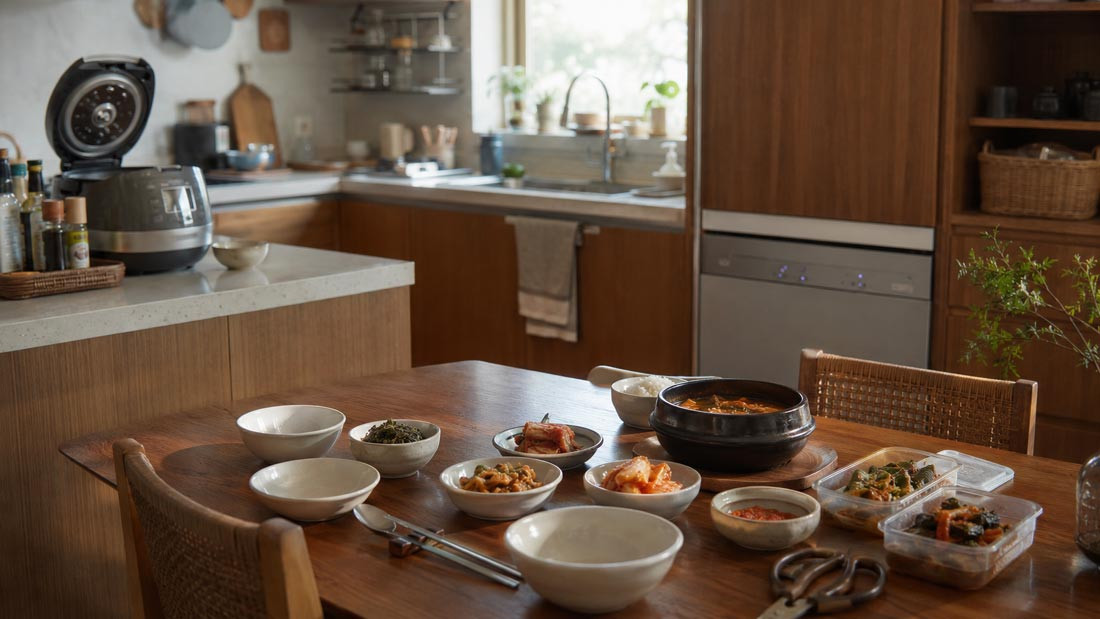
There may be a second refrigerator whose main job is keeping kimchi happy. Scissors might be sitting next to the chopsticks at the dinner table. A rice cooker may have a permanent place on the counter, while a collection of tiny containers fills half the refrigerator.
I’m K-papa, a Korean creator living in Korea with my wife and two daughters. To me, most of these things felt completely ordinary for years. They were simply part of home.
It was only when I started thinking about how foreigners see Korean homes that I realized something: a Korean kitchen quietly tells you a lot about the way Koreans eat, shop, cook, and live.
So rather than giving you another list of trendy Korean kitchen gadgets, let me show you 15 things that feel especially at home in a Korean kitchen—and why they are there.
1. A Refrigerator Just for Kimchi
Yes, many Korean households really do have a separate kimchi refrigerator.
A kimchi refrigerator is designed to maintain temperatures suited to storing and fermenting kimchi and other foods. Modern models can also be used for vegetables, meat, drinks, and other ingredients.
For someone seeing one for the first time, owning two refrigerators may sound excessive.
For many Korean families, it really isn’t.
Kimchi isn’t something we eat once in a while. It can appear at breakfast, lunch, and dinner. Some households also keep several varieties at the same time—baechu kimchi, kkakdugi, yeolmu kimchi, and more.
In my home, opening the refrigerator and wondering where another container of kimchi is going to fit is a very Korean little moment. Somehow, we usually find space.
2. A Rice Cooker That Never Gets Put Away
Some kitchen appliances come out when you need them and disappear back into a cabinet.
The rice cooker is different.
In many Korean homes, it practically owns a piece of the kitchen counter.
Koreans eat plenty of noodles, bread, and other foods these days, but rice is still at the center of countless home meals. Modern Korean rice cookers can also keep rice warm for hours and often offer settings for different grains or cooking styles.
Growing up, I never really thought of a rice cooker as a “kitchen appliance.”
It was just… there.
Even now, hearing the small sound of a rice cooker finishing while the rest of dinner is being prepared gives me a strangely comforting feeling. It means the meal is almost ready.
3. Stainless Steel Chopsticks
Visitors to Korea sometimes notice something as soon as they sit down at a restaurant:
The chopsticks are metal.
Korean chopsticks are commonly made from stainless steel, unlike the wooden or bamboo chopsticks more commonly associated with some other Asian cuisines.
They can feel slippery at first.
I’ve watched people unfamiliar with them confidently pick up a piece of food, get it halfway to their mouth… and lose it.
Don’t worry. You get better.
At home, stainless steel chopsticks are practical, washable, reusable, and simply part of everyday Korean tableware.
4. Kitchen Scissors That Actually Belong at the Table
This is one of my favorites because foreigners sometimes look genuinely surprised by it.
Koreans use kitchen scissors—a lot.
We cut kimchi with them. We cut meat with them. We cut noodles. At Korean barbecue restaurants, scissors are routinely used to cut meat directly on the grill.
And yes, sometimes they come right to the dining table.
Once you become accustomed to cutting food with kitchen scissors, you start wondering why a knife and cutting board were necessary for so many small jobs in the first place.
This is one Korean kitchen habit I would happily defend.
5. A Thin Golden Pot for Ramyeon
If you watch enough Korean dramas or variety shows, you’ve probably seen one.
A lightweight gold-colored aluminum pot filled with bubbling ramyeon.
In Korea, these inexpensive pots have become strongly associated with instant noodles. They’re light, heat quickly, and have an unmistakably nostalgic appearance.
Do you absolutely need one to make Korean ramyeon?
Of course not.
Does ramyeon somehow look more delicious when it is bubbling inside one?
As a Korean, I’m going to say yes.
Science may disagree.
6. Ttukbaegi: The Little Pot That Comes to the Table
A ttukbaegi is a Korean earthenware pot used for dishes such as doenjang jjigae, sundubu jjigae, and other hot stews.
The wonderful thing about it is that cooking and serving become almost the same action.
The stew can arrive at the table still aggressively bubbling.
When I see a ttukbaegi coming toward me at a restaurant, there is always that tiny conflict in my head: That looks delicious. I should wait.
Then I take a bite too soon anyway.
Hot Korean soups and stews are an important part of everyday meals, and ttukbaegi fits that culture perfectly.
7. More Banchan Containers Than You Think You Need
Open a Korean refrigerator and you may discover a small world of containers.
One has kimchi.
Another has seasoned vegetables.
Another contains yesterday’s side dish.
And then there are three mysterious containers that somebody in the family knows about but you don’t.
This comes from banchan, the Korean culture of serving multiple side dishes with rice and a main dish.
Many banchan are prepared ahead and stored in the refrigerator, so good food-storage containers are genuinely useful in Korean homes.
As a father of two daughters, I know the funny side of this well. You open the fridge looking for one thing and start moving containers like you’re solving a puzzle.
8. Gochujang, Doenjang, and Ssamjang
If you want to understand a Korean kitchen, look at its sauces and pastes.
Three names appear again and again:
- Gochujang – Korean red chili paste
- Doenjang – fermented soybean paste
- Ssamjang – a savory dipping paste commonly eaten with grilled meat and vegetables
These aren’t ingredients purchased for one special recipe and then forgotten at the back of a cabinet.
They are building blocks of Korean cooking.
A spoonful can turn vegetables, meat, rice, or soup into something unmistakably Korean.
9. Sesame Oil in the “Just a Little More” Category
Sesame oil has an incredible ability to announce itself.
Open the bottle, and you know it’s there.
It is commonly used as a finishing flavor in Korean dishes including bibimbap, seasoned vegetables, and various meat dishes.
The funny part is how personal the amount becomes.
Recipes can give measurements, but Korean home cooking often reaches the stage where someone says, “조금만 더”—just a little more.
That “little more” can be very subjective.
The smell of sesame oil mixed with warm rice is one of those aromas that instantly feels like Korean home food to me.
10. A Water Purifier Taking Up Valuable Kitchen Space
In many modern Korean homes, you’ll find a countertop or under-sink water purifier.
Some provide cold water. Others offer hot water instantly, and certain models provide multiple temperature settings.
This may seem like a luxury until you become accustomed to it.
Want drinking water? Press a button.
Need hot water? Press another.
After living with one for years, waiting for water to boil can suddenly feel strangely old-fashioned.
Korea’s water purifier market is also closely connected to the country’s appliance rental and regular maintenance culture, which is why these machines are so visible in Korean homes.
11. Food-Waste Bags or a Food-Waste Processor
This is a less glamorous part of the Korean kitchen—but perhaps a more interesting one.
South Korea has a separate food-waste disposal system, so dealing with leftover food becomes part of the household routine.
Depending on where someone lives, food waste may be handled using designated bags, collection containers, RFID-based disposal equipment, or other local systems.
And nobody particularly enjoys it.
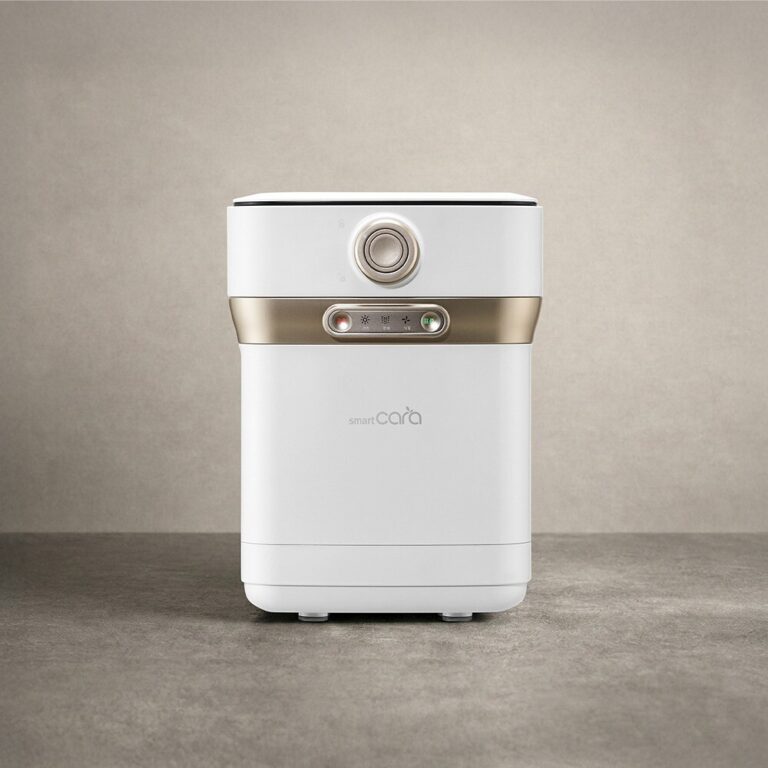
That inconvenience has helped make food-waste processors and dryers increasingly interesting household appliances.
This is something visitors may never notice in a restaurant, but once you live in a Korean apartment, food waste becomes a surprisingly real part of kitchen life.
12. Rubber Gloves in a Very Noticeable Color
A stylish Korean kitchen may be white, beige, stainless steel, or natural wood.
And then there are the rubber gloves.
Quite often, they are impossible to ignore.
Bright pink and other vivid colors have long been familiar sights around Korean sinks. They’re used for washing dishes and various cleaning jobs.
It is such a small object that Koreans rarely think about it.
But sometimes the most ordinary objects tell you more about real life than expensive appliances do.
A beautifully staged kitchen belongs in a catalog.
Rubber gloves hanging near the sink?
Now someone actually lives there.
13. A Grill Pan Ready for Korean BBQ
Not every Korean family grills meat at home, especially because smoke and odor can be an issue in apartments.
But tabletop grilling remains a familiar part of Korean food culture.
Portable burners, electric grills, and specialized grill pans make it possible to cook samgyeopsal or other meats right at the table.
And that changes the atmosphere of dinner.
Everyone watches the same grill. Someone inevitably becomes responsible for the meat. Another person starts eating pieces before enough are ready.
In my opinion, Korean BBQ is as much a social activity as a cooking method.
The kitchen simply supplies the equipment.
14. A Drawer Full of Long Stainless Steel Spoons
Korean sujeo usually refers to the spoon-and-chopstick set used for a meal.
The spoon matters more than many first-time visitors expect.
Korean meals frequently include rice, soup, and stew, so a long-handled stainless steel spoon is an everyday tool rather than an occasional piece of cutlery.
Watch a Korean meal and you’ll see people naturally move between spoon and chopsticks depending on the food.
It feels completely automatic to us.
Trying to explain exactly when to use each one is surprisingly harder than simply doing it.
15. A Refrigerator Door Covered With Real Family Life
This last one isn’t uniquely Korean, and that’s exactly why I wanted to include it.
Real Korean kitchens aren’t museum displays.
There may be school notices, delivery magnets, children’s schedules, receipts, family photos, medicine reminders, or a note someone forgot to throw away.
In a home with children, the kitchen can become part restaurant, part storage room, part family command center.
Our kitchen isn’t always perfectly organized. Honestly, I think that is what makes it feel like home.
And if you visit Korea and only see perfectly staged kitchens in advertisements, you miss this side of Korean life completely.
What a Korean Kitchen Really Tells You About Korea
The interesting thing about a Korean kitchen isn’t any single appliance or utensil.
It is how everything connects.
The rice cooker reflects how important rice remains to everyday meals. Small storage containers reveal the culture of banchan. Kitchen scissors suit the communal way many Korean foods are eaten. Ttukbaegi reflects our love of food that stays almost dangerously hot. Even food-waste equipment tells you something about how Korean cities manage everyday household life.
I’ve lived around these things for so long that most of them barely register with me.
But writing this list made me look around my own kitchen differently.
The objects that seem too ordinary to mention are often the ones that reveal the most about a country.
So if you ever visit a Korean home, don’t just look at what’s being served on the table.
Take a quick look around the kitchen too.
You might learn more about everyday Korea there than you expect.
K-papa’s Take
If I had to choose the three things that make a kitchen feel most Korean to me, I wouldn’t choose the newest or most expensive appliances.
I’d choose the rice cooker, the containers of banchan in the refrigerator, and a pair of kitchen scissors within easy reach.
They’re not exciting.
They’re not particularly Instagram-worthy either.
But that’s exactly the point.
They are part of the quiet, ordinary rhythm of eating at home in Korea—and sometimes ordinary life is the most interesting culture to share.