Why Korean Campers Spend More on Camping Gear Than You Expect
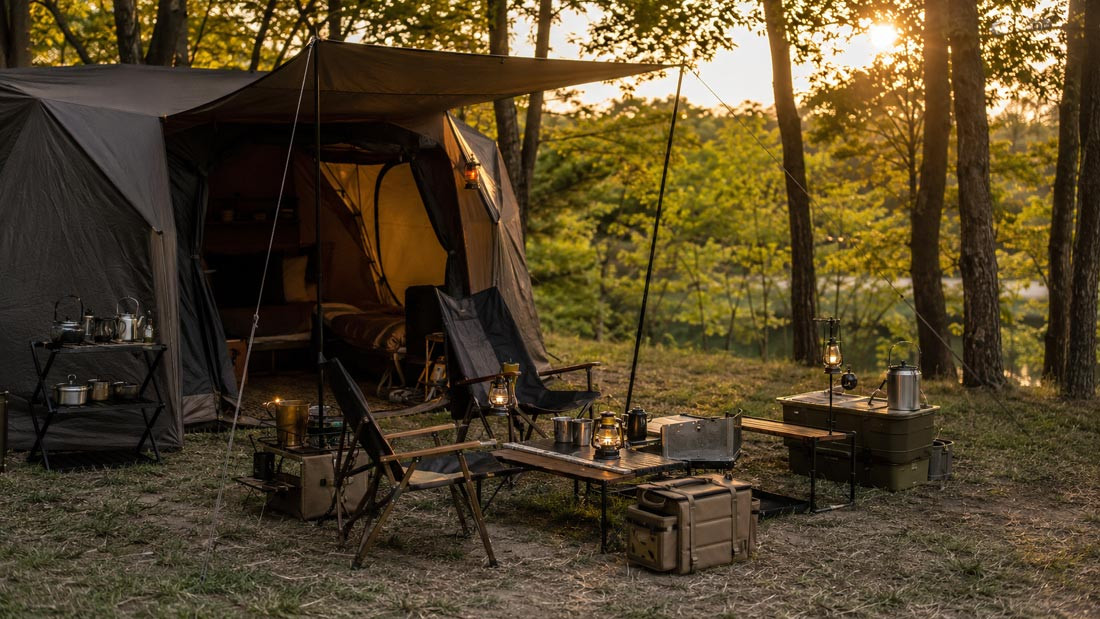
Walk through a popular campground in South Korea on a Saturday afternoon and you may notice something before you even smell the barbecue: some campsites look incredibly polished. A carefully chosen tent, matching chairs, a compact table, warm lanterns, storage boxes, and a few clever tools can make one small patch of grass feel almost like a temporary living room.
That can lead to an obvious question. Why do some Korean campers spend so much on camping gear?
The easy answer would be “because they like expensive equipment.” I don’t think that explains much at all.
I’m K-papa, a creator living in Korea, and the more I have watched camping become part of everyday leisure culture here, the more I have come to see the spending differently. For many enthusiasts, a tent or chair is not simply an object used outdoors. Camping can overlap with interior design, collecting, photography, family time, and the simple pleasure of building a space that feels like your own.
Not every Korean camper spends heavily, of course. Plenty of people camp with modest setups, rent equipment, or buy only what they need. But among serious enthusiasts, there are a few reasons premium gear can feel surprisingly easy to justify.
Korean Camping Gear Is Often Part of the Hobby, Not Just a Tool
When I first became interested in camping equipment, I tended to think in a very practical way. A chair is for sitting. A lantern makes light. A table holds dinner. If two products do roughly the same job, why pay much more for one of them?
Then you spend more time around people who genuinely love camping, and that logic starts to feel incomplete.
Think about someone who loves coffee. To a casual drinker, a basic brewer may be enough. To an enthusiast, the grinder, kettle, beans, scale, brewing method, and even the cup are all part of the enjoyment. The same thing happens with camping.
A camper may care about how smoothly a chair folds, how a table fits into a modular setup, how much space a packed item takes in the car, or whether the color of a new storage box works with equipment already owned. None of those details is essential to sleeping outdoors. Yet they can matter enormously when camping itself becomes the hobby.
That distinction helps explain the spending better than price alone.
A Campsite Can Become a Small Personal Space
One thing I find especially interesting about Korean camping is the attention some campers give to the atmosphere of their site.
There is a big emotional difference between simply putting up a tent and creating a place where you actually want to spend the entire evening.
The chair height works with the table. The lantern gives off a softer light. Small items are stored instead of scattered around. Maybe the colors match; maybe they don’t. The point is that the space has been considered.
I understand the attraction. Daily life around Seoul and other Korean cities can feel fast, crowded, and scheduled. When the weekend finally arrives, arranging a campsite exactly the way you like it can be strangely satisfying. For a night or two, this tiny outdoor space belongs to you.
In that situation, paying more for a piece of gear can feel less like buying another household object and more like improving a room you regularly enjoy.
And yes, sometimes the room has no walls.
Design Can Matter Almost as Much as Specifications
If you only compare camping products by weight, dimensions, and materials, some buying decisions in Korea may seem puzzling. Two chairs can look similar on a specification sheet while producing very different levels of excitement among enthusiasts.
Design is part of the reason.
Camping equipment spends a lot of time in view. You sit beside it, photograph it, pack it, unpack it, and often arrange several pieces together. A good-looking product therefore has value beyond a nice product page.
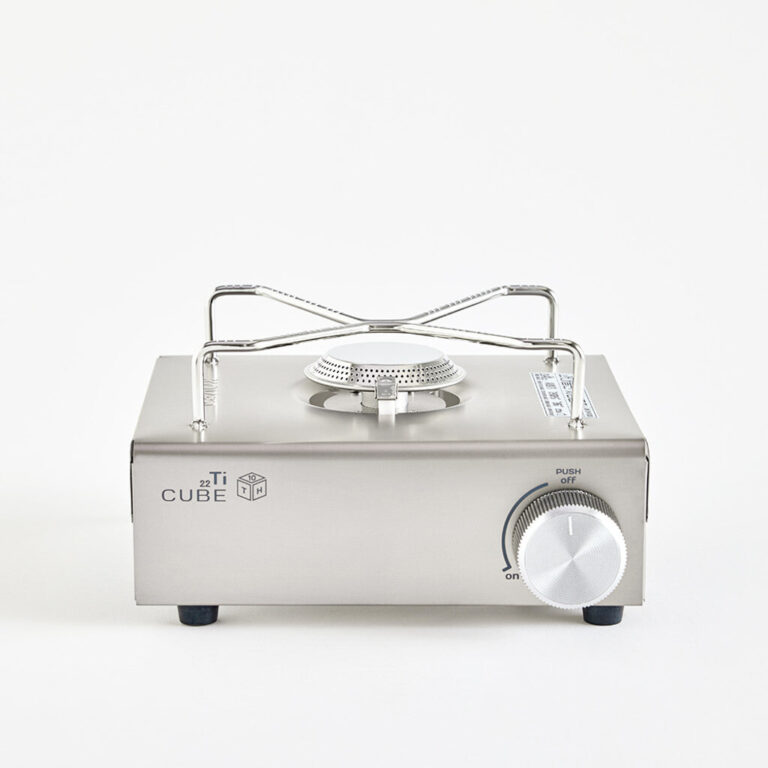
This is also why one purchase can lead to another. A new table may make an old storage setup feel awkward. A compact stove may encourage someone to reorganize the entire cooking area. A different tent color can suddenly make matching accessories much more tempting than they were last month.
I’ve had moments looking at camping gear where I caught myself thinking, “Do I actually need this, or do I just really like the way it fits the setup?”
Honestly, that is a dangerous question for the wallet.
But it is a very human one.
Why Premium Gear Can Feel Like a Long-Term Purchase
There is another side to the story that is less about appearance: many campers don’t evaluate price one trip at a time.
If someone expects to camp repeatedly for several years, paying more for an item that feels durable, packs efficiently, or is pleasant to use can seem reasonable. A small annoyance that means nothing on one weekend can become frustrating after dozens of setups and pack-downs.
This is where tiny improvements start to have real value.
A mechanism that is easier to operate when you’re tired. A chair that packs into a cleaner shape. A table that integrates with equipment you already own. Fabric that is easier to maintain. Hardware that feels solid in the hand.
None of these features magically makes an expensive product a good purchase. Premium pricing can absolutely exceed the practical benefit. Brand reputation can add a premium too.
Still, enthusiasts often judge value by frequency of use rather than by the number printed on the price tag. If a favorite chair comes out on nearly every trip for years, its cost can feel very different from an expensive gadget forgotten in a closet after two weekends.
The Upgrade Cycle Is Real — and It Can Get Expensive
Here’s the funny part: many campers don’t start with a premium setup.
They start with enough.
A basic tent. Some chairs. A table. A burner. Maybe a lantern. It works. Everyone eats. Everyone sleeps. Mission accomplished.
Then the small discoveries begin.
The chair is bulkier than expected. The table is just a little too tall. The storage box wastes trunk space. The lantern is bright but somehow makes dinner feel like it is being served under office lighting.
So one item gets replaced.
Then another.
This is why experienced enthusiasts can end up owning gear that looks excessive to a beginner. The collection may not have appeared after one giant shopping trip. It can be the result of years of small upgrades, failed experiments, changing preferences, and the irresistible sentence: “This version fixes the one thing I don’t like about mine.”
I think anyone with a serious hobby will recognize that sentence immediately.
Korean Brands Make the Rabbit Hole Even Deeper
Korea also has a broad domestic camping market, and that makes browsing gear unusually entertaining for someone who enjoys equipment.
You’ll encounter products designed around compact packing, modular camp furniture, lighting, cooking, storage, and increasingly refined outdoor aesthetics. Some Korean brands are familiar internationally, while others may be almost unknown to shoppers outside Korea.
For me, this is one of the most interesting parts of writing about Korean camping products for overseas readers. A product does not have to be revolutionary to reveal something about what local campers care about. Sometimes a clever attachment, a particular table format, or an unusually tidy storage solution says more about the market than a dramatic new technology does.
Choice also creates temptation. When there are several ways to improve one small part of a setup, “good enough” suddenly has a lot of competition.
Social Media Adds Inspiration, but It Isn’t the Whole Explanation
It would be tempting to blame expensive camping setups on Instagram, YouTube, or other social platforms. Beautiful campsite photos certainly make new equipment visible, and seeing someone else’s setup can introduce a product you didn’t know existed five minutes earlier.
But I think saying Korean campers buy premium gear simply to show off online misses the more interesting point.
People were collecting, modifying, comparing, and talking passionately about hobby equipment long before today’s social feeds. Camping gear happens to be highly visual, so the effect is easier to see.
A thoughtfully arranged campsite photographs well because it already has a visual identity. Social media can amplify that desire, but it doesn’t create every reason behind it.
Sometimes people simply enjoy beautiful objects. Sometimes they love technical details. Sometimes buying a lighter or smarter piece of gear gives them an excuse to look forward to the next trip.
I’ve felt that last one myself. A new piece of camping equipment can make Friday arrive a little too slowly.

Family Camping Changes the Value Equation
As a father, I also look at camping spending through a family lens.
When several people share a campsite, comfort problems multiply quickly. One uncomfortable chair is annoying. Several uncomfortable chairs, hungry kids, cluttered cooking gear, and a cold evening can turn “family relaxation” into something that feels suspiciously like work.
That doesn’t mean families need premium gear. They absolutely don’t.
But it does help explain why convenience can become valuable. Equipment that reduces setup frustration, organizes a shared space, or makes sitting outside more comfortable may matter more to a family than it does to someone taking a quick solo trip.
My own view has changed here. I used to see convenience features as extras. Now I think the right convenience can sometimes be the feature you appreciate most — especially when everyone is tired and you still have to pack the car.
Expensive Doesn’t Automatically Mean Better for You
This is the part I would tell any overseas reader before becoming fascinated by a beautiful Korean camping setup: don’t copy the shopping list before you understand the camping style.
An expensive table can still be the wrong height for you. An ultralight chair may sacrifice the kind of comfort you actually want. A large tent can be fantastic at a spacious car-camping site and miserable if storage at home is already tight.
And a perfectly coordinated campsite will not rescue a trip if you dislike the actual process of camping.
If I were starting again, I would spend less time asking “What is the best gear?” and more time asking three simpler questions:
- What annoys me most about my current setup?
- What do I use on nearly every trip?
- Will this new item solve a real problem, or am I just excited because it is new?
That last question has saved me from a few purchases. Not all of them, unfortunately.
What Overseas Shoppers Can Learn From Korean Camping Culture
You don’t need to imitate a premium Korean campsite to take something useful from it.
The lesson I like most is that gear should support the kind of outdoor experience you actually want. For one person, that means owning as little as possible and hiking farther. For another, it means building a comfortable family basecamp and cooking a long dinner under warm lights. Both are camping. Neither approach is automatically more authentic.
Korean camping enthusiasts can be especially interesting because they often push hard on details: portability, organization, modularity, design, and how several products work together as a system.
Those ideas can help even if you never buy a Korean product.
Look at the way your equipment interacts. Notice what you repeatedly struggle with. Spend more only where the improvement matters to you.
That is a much healthier approach than chasing somebody else’s perfect setup.
So, Why Do Some Korean Campers Spend So Much?
After watching camping culture in Korea, I don’t think there is one dramatic answer.
Part of the spending is practical. Part of it is aesthetic. Part of it is the natural upgrade cycle that happens when people become serious about a hobby. And part of it is emotional — the pleasure of choosing an object carefully, taking it outdoors, and watching it become part of weekends you remember.
That last part is easy to underestimate.
When I look at a beautifully arranged campsite now, I don’t immediately think, “That’s a lot of expensive gear.” I wonder which pieces the owner loves, which ones were mistakes, which survived years of trips, and which purchase made no logical sense but still makes them smile every time they unpack it.
Because every hobby has something like that.
Camping just happens to put it all out on the grass where everyone can see it.
FAQ: Do all Korean campers use expensive equipment?
No. Korean camping styles and budgets vary widely. Premium setups are highly visible, especially online, but many campers use affordable gear, mix brands, rent equipment, or gradually build a collection over time.
FAQ: Is Korean camping gear worth buying from overseas?
It can be, particularly when a product offers a design, packing format, or feature that suits your setup. But overseas buyers should check shipping cost, warranty coverage, replacement parts, voltage requirements for electrical products, and local availability before paying a premium.
FAQ: Should beginners buy premium camping gear first?
Usually, it makes more sense to learn your preferences before spending heavily. Start with the essentials, notice what actually limits your comfort or convenience, and upgrade the equipment you use most often.